

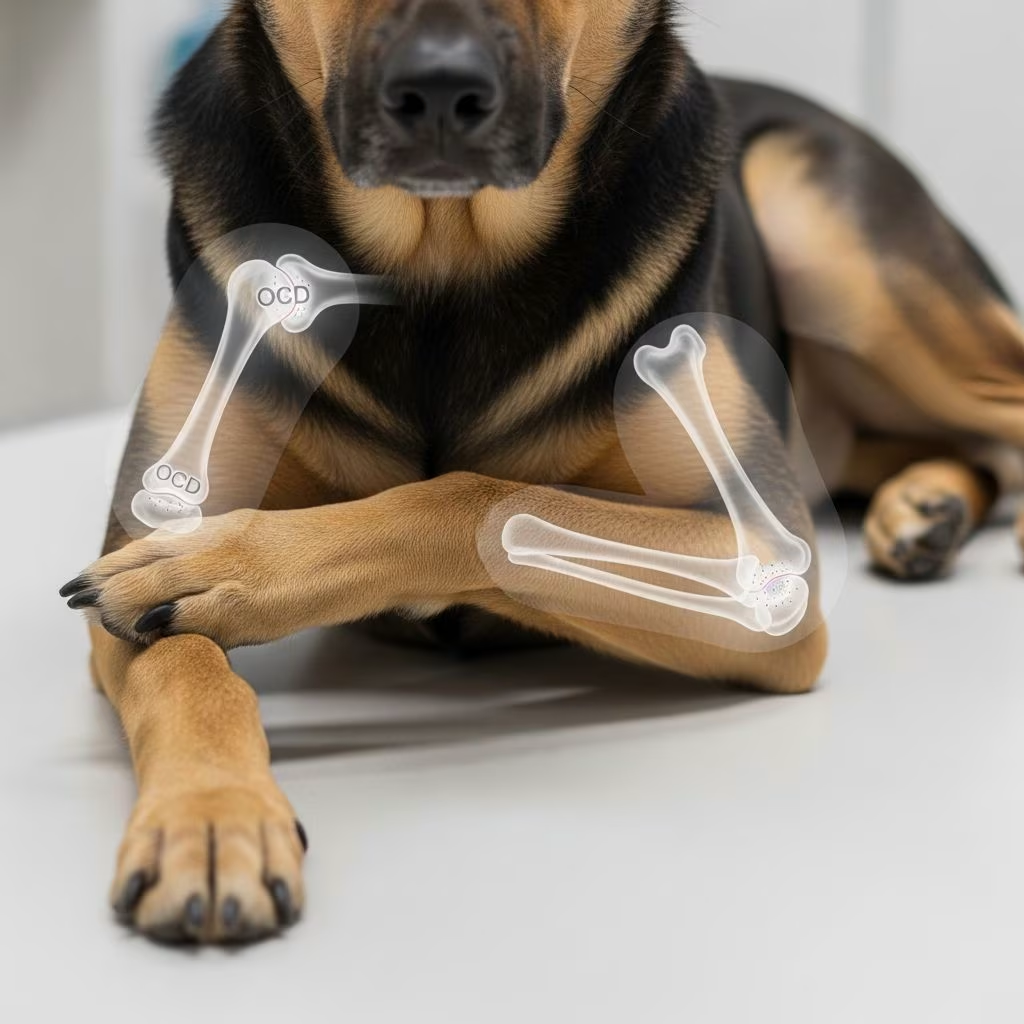
Osteochondritis dissecans (OCD) represents a prevalent developmental orthopedic issue in dogs, primarily targeting the shoulder and elbow joints in young, large-breed individuals. This condition arises from flawed cartilage growth on joint bone ends, leading to separation and potential joint damage.
The Nature of OCD in Canine Joints
OCD stems from abnormal endochondral ossification, where cartilage thickens excessively, weakens, and cracks, sometimes detaching as fragments known as joint mice. Shoulders and elbows bear the brunt due to high mechanical stress during rapid growth phases. Genetic predisposition dominates, notably in Labradors, Rottweilers, and giant breeds, overriding dietary or exercise influences. Hormonal factors and minor traumas may exacerbate but do not initiate the disorder.
Recognizing Symptoms in Shoulder OCD
Shoulder OCD typically manifests in dogs aged 4-10 months, with subtle onset. Key indicators include:
- Intermittent forelimb lameness, worsening post-exercise
- Morning stiffness or hesitation rising
- Reduced enthusiasm for play, mimicking laziness
- Muscle atrophy in the affected shoulder
- Pain on joint flexion-extension
Bilateral involvement occurs in up to 20-30% of cases, complicating detection. Untreated, it progresses to chronic arthritis.
Elbow OCD: Distinct Presentation and Challenges
Elbow OCD often emerges slightly later, around 6-12 months, with more pronounced signs due to the joint’s complex structure. Owners notice:
- Persistent lameness after activity
- Joint effusion or thickening
- Restricted motion and palpable pain
- Reluctance to bear weight on the limb
- Occasional popping sensations
This form associates with fragmented coronoid processes, heightening dysplasia risks.
Diagnostic Approaches for Accurate Identification
Veterinary assessment begins with orthopedic exams, revealing pain, crepitus, or instability. Radiographs identify cartilage defects, mineralized flaps, or subchondral bone changes, though early cases demand contralateral limb views. Advanced CT or MRI excels in delineating fragment size and location, vital for surgical planning. Arthroscopy provides definitive visualization, enabling concurrent therapy. In pups under 6 months, open growth plates obscure X-rays, necessitating serial imaging.
Non-Surgical Management Strategies
Mild cases may respond conservatively, especially if fragments remain stable. Protocols encompass:
- Strict 4-8 week crate rest
- Weight optimization to lessen joint load
- NSAIDs for inflammation control
- Supervised physiotherapy introduction
Success rates hover at 20-50%, lower for elbows versus shoulders. Persistent lameness warrants escalation.
Surgical Interventions: The Gold Standard
Arthroscopy dominates treatment, supplanting open arthrotomy for minimal invasion. Procedure details:
| Joint | Key Steps | Benefits |
|---|---|---|
| Shoulder | Flap debridement, fragment removal, curettage | Excellent prognosis; 90%+ lameness resolution |
| Elbow | Fragment excision, coronoid assessment | Guarded; 70-85% improvement |
Post-op, fibrocartilage may regenerate over defects. Complications like infection or persistent swelling affect <2%.
Rehabilitation and Long-Term Care
Recovery spans 3-6 months, emphasizing:
- Leash-only walks for 8-12 weeks
- Hydrotherapy for low-impact strengthening
- Modalities: laser, ultrasound, neuromuscular electrical stimulation
- Graduated return to activity
Joint supplements (glucosamine, omega-3s) and controlled diets support cartilage health lifelong.
Prognosis and Breed-Specific Insights
Shoulder OCD yields good-to-excellent outcomes with early arthroscopy, minimal arthritis in 80%. Elbow cases fare guardedly, with concurrent dysplasia reducing success to 60-75%. Large breeds like Great Danes face higher recurrence; early neutering timing influences via growth hormone. Owners committing to rehab see optimal mobility restoration.
Preventive Measures for At-Risk Pups
Screen breeding stock via OFA/ PennHIP certifications. Moderate exercise avoids trauma in fast-growers. Balanced, non-excessive nutrition prevents imbalances. Prompt lameness evaluation in youth averts progression.
Frequently Asked Questions
Is OCD hereditary in dogs?
Yes, strongly genetic, particularly in retrievers and giants; breeding affected lines risks propagation.
Can diet cause OCD?
No, genetics prevail; high-calcium diets may contribute marginally but not primarily.
How soon after symptoms should surgery occur?
Ideally within 1-2 months for best cartilage healing and arthritis prevention.
Will my dog fully recover?
Shoulders: often yes; elbows: significant improvement common, full athletics rarer.
What breeds are most prone?
Labradors, Golden Retrievers, Rottweilers, Bernese Mountain Dogs, Great Danes.
Navigating Costs and Insurance
Arthroscopy ranges $2,500-$6,000 per joint, plus rehab. Pet insurance offsets burdens if pre-existing exclusions avoided. Early detection via routine checks saves long-term expenses.
References
- Understanding Osteochondritis Dissecans (OCD) in Dogs — Animal Surgical Center. 2023. https://asc.vet/blog/understanding-osteochondritis-dissecans-ocd-in-dogs-essential-info-for-pet-parents/
- Diagnostic and surgical arthroscopy in osteochondrosis lesions — PubMed (Veterinary Surgery). 1998-01-01. https://pubmed.ncbi.nlm.nih.gov/9463864/
- Exploring Treatment Options For Osteochondrosis In Dogs — Texas A&M College of Veterinary Medicine & Biomedical Sciences (.edu). 2023. https://vetmed.tamu.edu/news/pet-talk/osteochondrosis/
- Osteochondritis Dissecans (OCD) in Dogs — Premier Veterinary Group. 2023. https://www.premiervets.net/blog/osteochondritis-dissecans-in-dogs
- Osteochondritis Dissecans (OCD) in Dogs — VCA Animal Hospitals. 2023. https://vcahospitals.com/know-your-pet/osteochondritis-dissecans-or-ocd-in-dogs
- Osteochondrosis of the Shoulder — American College of Veterinary Surgeons (.org). 2023. https://www.acvs.org/small-animal/osteochondrosis-of-the-shoulder/



