

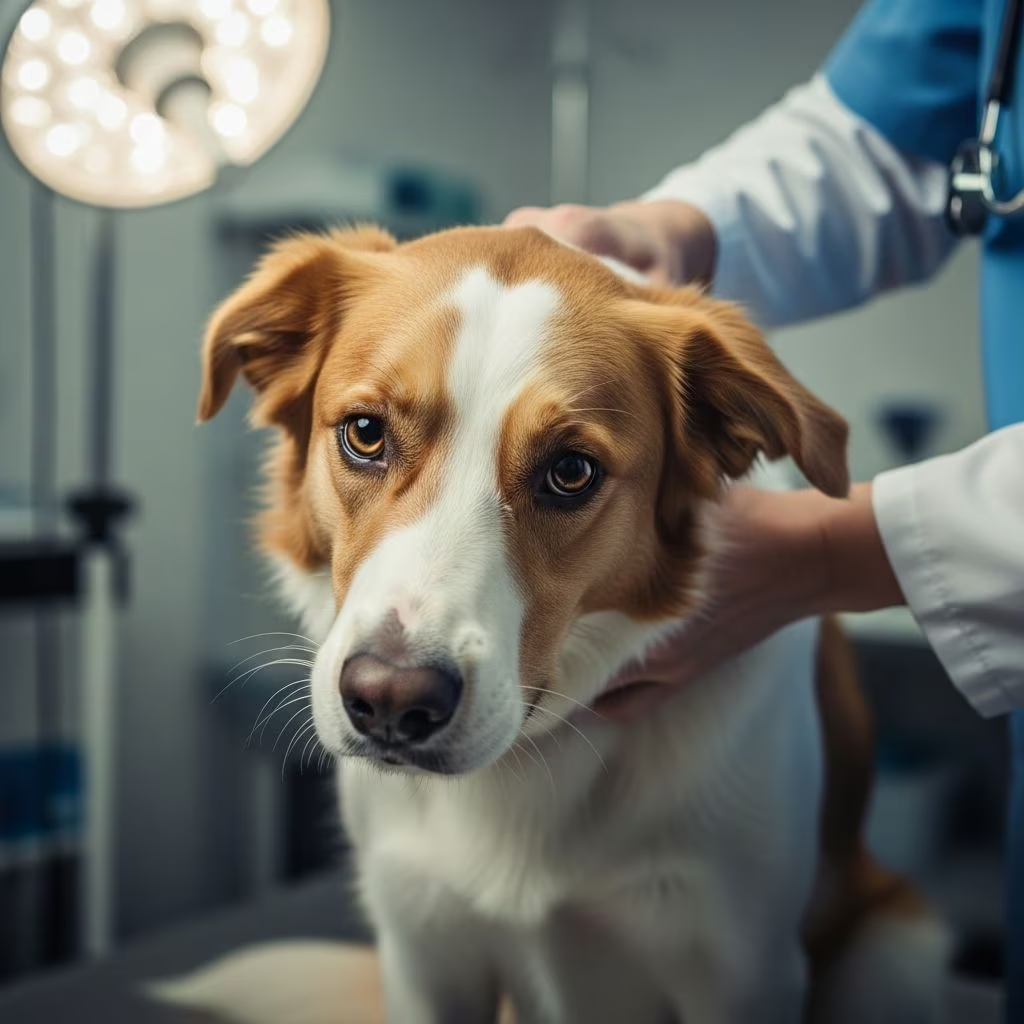
Neck pain affects dogs of all sizes and ages, often stemming from spinal disc problems, congenital defects, or injuries that compress nerves or the spinal cord. Early recognition of symptoms like reluctance to move or yelping can lead to timely veterinary intervention, preventing progression to severe mobility loss.
Understanding the Anatomy of a Dog’s Neck
The canine neck comprises seven cervical vertebrae linked by ligaments and cushioned by intervertebral discs that absorb shocks during movement. These discs consist of a tough outer layer and a gel-like center, which can degenerate over time or due to trauma, leading to herniation that presses on the spinal cord or nerve roots. In small breeds, instability at the atlanto-axial joint—between the first two vertebrae—poses a unique risk, while larger breeds face issues from elongated necks or bony overgrowths.
This delicate structure supports head movement essential for eating, playing, and exploring, making any disruption highly disruptive to a dog’s quality of life. Factors like genetics, rapid growth from improper diets, and repetitive strain exacerbate vulnerabilities.
Primary Causes of Neck Discomfort in Dogs
Several conditions contribute to neck pain, categorized by breed predisposition and underlying mechanisms. Intervertebral disc disease tops the list, but congenital anomalies and degenerative changes also play significant roles.
Intervertebral Disc Disease (IVDD)
IVDD occurs when disc material deteriorates or extrudes, compressing the spinal cord. Common in breeds with long backs and short legs like Dachshunds, it can strike suddenly or develop gradually. Genetic predisposition accelerates disc calcification, reducing flexibility and increasing rupture risk.
- Types: Hansen Type I (sudden extrusion in young dogs) and Type II (chronic bulging in older dogs).
- Risk factors: Obesity, jumping from heights, and high-impact activities.
Wobbler Syndrome (Cervical Spondylomyelopathy)
Prevalent in large breeds such as Great Danes and Doberman Pinschers, this involves spinal canal narrowing from disc protrusion, ligament thickening, or vertebral instability. Neck flexion worsens compression, causing intermittent pain and ataxia. Genetic factors combined with rapid growth from high-protein diets contribute.
Congenital Malformations
Small toys like Chihuahuas and Yorkshire Terriers suffer from atlanto-axial subluxation, where the dens—a stabilizing peg on the axis vertebra—fails to form properly, destabilizing the skull-neck junction. Cranial occipital malformation syndrome (COMS) features a misshapen skull base trapping cerebrospinal fluid, irritating the brainstem.
Other Contributors
Trauma from falls or fights, infections like discospondylitis, arthritis, and tumors also provoke pain. Inflammatory conditions such as meningitis or tick-borne diseases add to the list, often mimicking primary spinal issues.
Spotting the Warning Signs
Dogs mask pain, but observant owners notice subtle cues progressing to obvious distress. Key indicators include:
- Rigid posture or arched back to minimize motion.
- Yelping when turning the head or shaking ears.
- Reluctance to lower head for food/water or climb stairs.
- Incoordination, dragging feet, or limb weakness.
- Muscle spasms, trembling, or guarding the neck.
- Behavioral shifts: irritability, lethargy, or appetite loss.
In severe cases, paralysis or incontinence signals an emergency requiring immediate care.
Diagnostic Approaches for Accurate Identification
Veterinarians start with a physical exam, palpating the neck for pain points and assessing gait. Neurological tests evaluate reflexes and proprioception.
| Test | Purpose | Findings |
|---|---|---|
| Radiographs (X-rays) | View bone alignment and disc spaces | Detects malformations, fractures, or spondylosis |
| MRI or CT Scan | Soft tissue and cord visualization | Confirms disc herniation, cord compression |
| Myelogram | Contrast dye for cord outline | Identifies exact compression site |
| Cerebrospinal Fluid Tap | Check for inflammation/infection | Ruled out meningitis or neoplasia |
These tools pinpoint the issue, guiding tailored therapy.
Treatment Options: From Conservative to Surgical
Management varies by severity and cause, aiming to reduce pain, alleviate compression, and restore function.
Non-Surgical Interventions
Mild cases respond to strict crate rest (4-6 weeks), NSAIDs like carprofen for inflammation, muscle relaxants, and pain meds. Physical therapy including laser therapy, underwater treadmill, and acupuncture aids recovery. Weight management and anti-inflammatory diets support healing.
- Strict rest prevents re-injury.
- Supervised rehab builds strength gradually.
Surgical Solutions
For moderate-to-severe compression, surgeries like ventral slot decompression remove herniated material or stabilize joints with pins/plates. Wobbler cases may need fusion or laminectomy. Success rates exceed 80% with experienced neurosurgeons, though rehab follows.
Supportive Home Care
Use harnesses over collars, provide orthopedic beds, and elevate food bowls. Avoid stairs and high jumps during recovery.
Breed-Specific Risks and Prevention Strategies
Certain breeds face heightened susceptibility:
- Small Breeds: Chihuahuas, Pomeranians—monitor for congenital instability; gentle handling key.
- Large/Giant Breeds: Dobermans, Danes—balanced puppy diets prevent rapid growth.
- Dachshund-types: Limit rough play; maintain ideal weight.
Prevention includes regular vet checkups, weight control, core-strengthening exercises, and breed-appropriate nutrition. Early spaying/neutering may influence growth plates.
Long-Term Management and Prognosis
With prompt treatment, most dogs regain near-normal function. Recurrence risks drop with lifestyle changes. Chronic cases benefit from ongoing physiotherapy and meds. Owners report improved mobility and happiness post-intervention.
Prognosis excels for non-paralyzed dogs (90%+ recovery); delayed care worsens outcomes.
Frequently Asked Questions (FAQs)
What should I do if my dog yelps when I touch its neck?
Stop handling and contact a vet immediately—could indicate disc slip or injury.
Can neck pain resolve without surgery?
Yes, many mild cases heal with rest and meds, but diagnostics confirm suitability.
Is wobbler syndrome fatal?
Not typically; surgery stabilizes most dogs, preventing progression.
How can I prevent IVDD in my pet?
Maintain healthy weight, use ramps for cars/beds, and avoid high jumps.
Does age affect recovery from neck issues?
Younger dogs often recover faster, but seniors benefit from conservative care.
Addressing neck pain promptly enhances your dog’s comfort and longevity. Consult professionals for personalized advice.
References
- A Pain in the Neck – Back and Neck Problems Affect Dogs, Too — Morris Animal Foundation. 2023. https://www.morrisanimalfoundation.org/article/dog/neck-and-back-pain
- Dog neck and back pain: symptoms and treatments — Fetch Pet Insurance. 2024. https://www.fetchpet.com/canada/the-dig/dog-neck-back-pain
- What Gives a Dog a Pain in the Neck? — Animal Medical Center New York. 2017-08-23. https://www.amcny.org/blog/2017/08/23/gives-dog-pain-neck/
- Neck and back pain in dogs: symptoms and how to help — Michigan Animal Hospital. 2022-03-30. https://www.michigananimalhospital.com/site/blog/2022/03/30/neck-and-back-pain-in-dogs-symptoms-and-how-to-help
- Cervical Spondylomyelopathy (Wobbler syndrome) — Fitzpatrick Referrals. 2024. https://www.fitzpatrickreferrals.co.uk/neurology/cervical-spondylomyelopathy-wobbler-syndrome/
- Alleviating Neck and Back Pain — PetLight Therapy Center. 2023. https://petlight.vet/neck-back-pain/
- A Clinical Approach to Canine Neck Pain — MSPCA-Angell. 2022. https://www.mspca.org/angell_services/a-clinical-approach-to-canine-neck-pain/



