

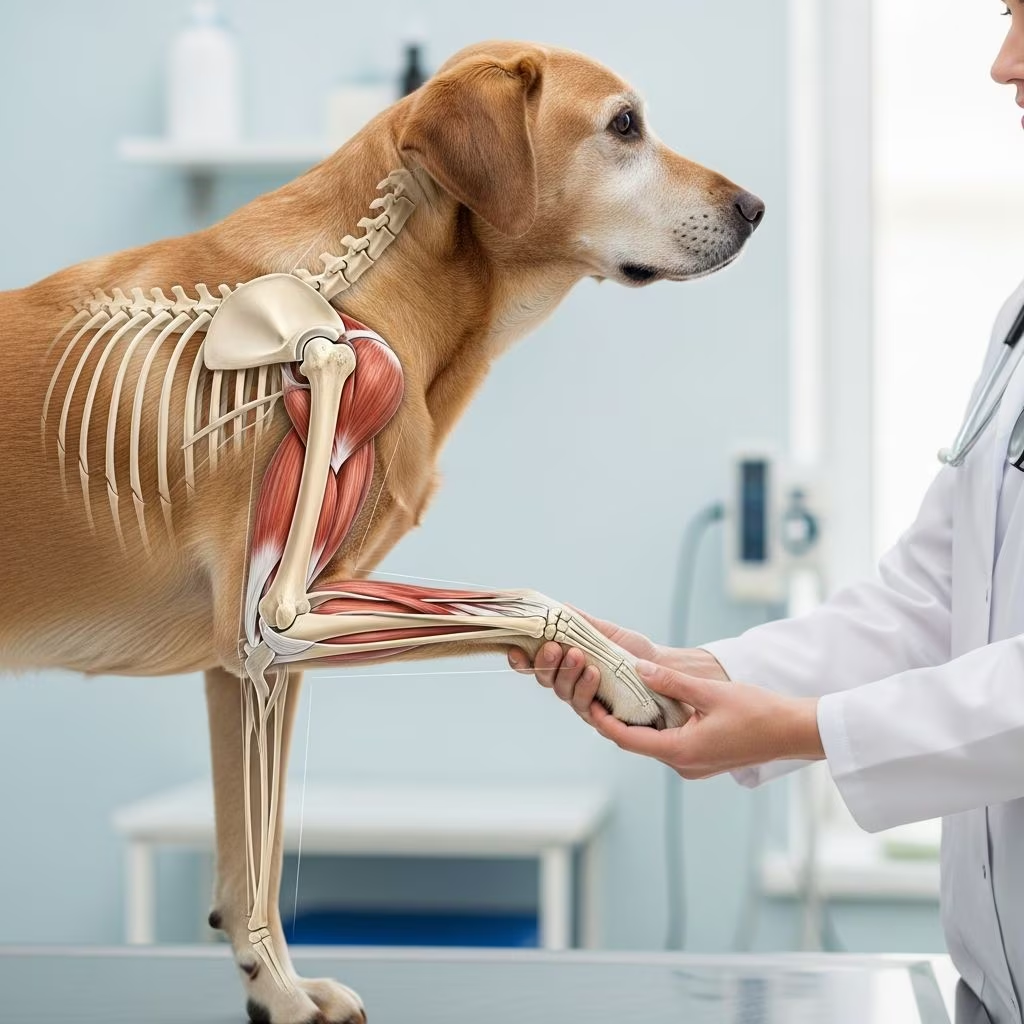
Dogs rely on their musculoskeletal system for mobility, play, and daily activities. Problems in bones, joints, or muscles can lead to pain, lameness, and reduced quality of life. This guide examines key disorders, their origins, signs, and management options to help owners support their pets effectively.
Fundamentals of Dog Musculoskeletal Anatomy
The musculoskeletal framework in dogs comprises bones providing structure, joints enabling movement, and muscles powering motion. Synovial joints, like elbows and hips, allow wide ranges of motion with cartilage cushioning bone ends. Fibrous joints offer stability, while cartilaginous ones connect vertebrae. Disruptions from injury, growth errors, or inflammation impair function.
- Bones: Long bones in limbs grow via plates active in youth.
- Joints: Capsules, ligaments, and synovial fluid maintain smoothness.
- Muscles: Fibers contract for movement, supported by tendons.
Bone Growth and Developmental Abnormalities
Young dogs, particularly large breeds, face risks from rapid growth. Angular limb deformities arise when radius and ulna growth mismatches, common in Bulldogs or Basset Hounds, causing bowed legs and elbow misalignment. Lameness and joint pain signal issues; X-rays guide corrective osteotomies for alignment.
Hypertrophic osteodystrophy targets growth zones in giant puppies, sparking fever, swelling, and appetite loss. Episodes recur, sometimes deforming bones; supportive care aids recovery. Panosteitis, or ‘pano,’ inflames long bone marrow in adolescents like German Shepherds, yielding shifting lameness without treatment need as growth ends.
| Condition | Affected Breeds | Main Signs | Treatment Approach |
|---|---|---|---|
| Angular Deformities | Bulldogs, Dachshunds | Bowed limbs, pain | Surgical correction |
| Hypertrophic Osteodystrophy | Large/giant breeds | Fever, swelling | Supportive rest |
| Panosteitis | German Shepherds | Shifting lameness | Self-resolving |
Joint Instabilities and Degenerative Changes
Joints suffer from trauma, malformation, or wear. Hip dysplasia, inherited in large breeds like German Shepherds, features shallow sockets leading to laxity and arthritis. Dogs show hindlimb weakness, bunny-hopping gait; radiographs confirm, with surgery or meds for management.
Cranial cruciate ligament (CrCL) tears cause stifle instability, frequent in active dogs, prompting sudden lameness and effusion. Exam reveals drawer motion; TPLO surgery restores stability. Degenerative joint disease (DJD), or arthritis, erodes cartilage, stiffening large joints with age or post-injury. Weight control and supplements ease pain.
Muscle Weaknesses and Inflammatory Conditions
Muscle disorders range from inherited to acquired. Great Dane myopathy induces tremors and atrophy post-exercise, diagnosed via biopsy. Polymyositis, immune-linked, brings systemic weakness, fever, and dysphagia in adults. Corticosteroids suppress inflammation.
Tendon issues include biceps brachii inflammation in mature hounds, from overuse or fragments, yielding shoulder pain and atrophy. Endoscopy assesses; rest or surgery heals. Achilles disruptions in athletes drop the hock, demanding surgical repair.
Diagnostic Methods for Musculoskeletal Problems
Vets start with history and gait analysis. Palpation detects heat, swelling, or instability. Radiographs visualize bones, joints, and mineralization. Ultrasound probes soft tissues; advanced CT/MRI detail complex cases. Bloodwork flags infection or autoimmunity; biopsies confirm muscle pathology.
- Physical Exam: Assess lameness grade, joint laxity.
- Imaging: X-rays for fractures, arthroscopy for interiors.
- Lab Tests: Muscle enzymes for myopathies.
Treatment Strategies and Recovery Outlook
Conservative care suits mild cases: rest, NSAIDs like carprofen, and physical therapy build strength. Joint supplements with glucosamine aid cartilage. Surgery tackles deformities, ligament repairs (TPLO), or mass excisions.
Post-op rehab includes controlled exercise, hydrotherapy. Prognoses vary: excellent for acute tears, guarded for advanced DJD. Early intervention preserves function.
| Treatment Type | Examples | Best For |
|---|---|---|
| Medical | NSAIDs, rest | Mild inflammation |
| Surgical | TPLO, osteotomy | Ligament tears, deformities |
| Rehab | Hydrotherapy, laser | Post-op recovery |
Preventive Measures for Healthy Mobility
Maintain ideal weight to lessen joint load; balanced puppy diets avoid excess calories fueling uneven growth. Regular low-impact exercise strengthens without strain. Annual vet checks catch issues early, especially in breeds like Labs or Rottweilers.
- Puppy foundations: Controlled growth nutrition.
- Adult upkeep: Joint supplements, omega-3s.
- Senior support: Ramps, orthopedic beds.
Frequently Asked Questions (FAQs)
What causes sudden lameness in my dog?
Trauma, ligament tears, or infections; seek vet eval promptly.
Can arthritis be reversed in dogs?
No, but managed with meds, weight loss, and therapy to slow progression.
Is surgery always needed for hip dysplasia?
Not always; juveniles may get pectineal myectomies, adults conservative care or replacements.
How do I know if it’s bone or muscle pain?
Bone pain localizes with deep pressure; muscle widespread with use.
Are supplements effective for joint health?
Glucosamine/chondroitin show benefits in studies, best with vet guidance.
Long-term Management for Chronic Conditions
Chronic lameness demands holistic plans. Track symptoms via journals; adjust therapies seasonally. Alternative modalities like acupuncture or stem cells emerge for DJD[10]. Owners train for joint protection, avoiding jumps. Nutrition with anti-inflammatories like fish oil complements pharma approaches. Multidisciplinary vet teams optimize outcomes, extending active years.
References
- Muscle Disorders in Dogs — MSD Veterinary Manual. 2023. https://www.msdvetmanual.com/dog-owners/bone-joint-and-muscle-disorders-of-dogs/muscle-disorders-in-dogs
- Joint Disorders in Dogs and Corrective Procedures — B. Braun Vet Care. 2022. https://www.bbraun-vetcare.com.au/en/stories/joint-disorders-in-dogs-and-corrective-procedures.html
- Bone Disorders in Dogs — Merck Veterinary Manual. 2023. https://www.merckvetmanual.com/dog-owners/bone-joint-and-muscle-disorders-of-dogs/bone-disorders-in-dogs
- Dog Joint Health and Joint Pain Problems — OrthoDog. 2023. https://orthodog.com/blogs/sit-stay-heal/dog-joint-health-and-joint-pain-problems
- 4 Common Types of Bone and Joint Conditions in Pets — Greystone Animal Hospital. 2023. https://www.greystoneanimalhospital.ca/blog/1090533-4-common-types-of-bone-and-joint-conditions-in-pets-and-how-to-treat-them_2



