

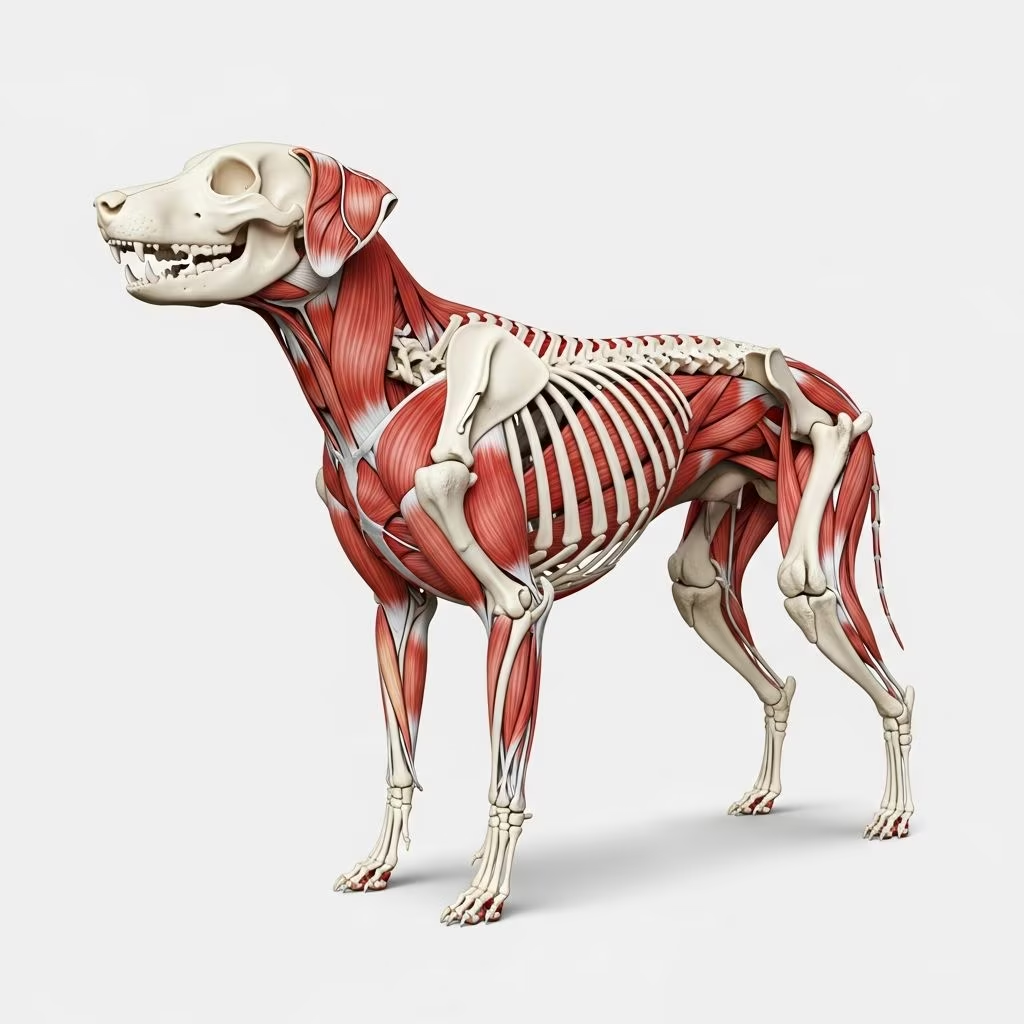
The musculoskeletal system in dogs forms the foundation for their mobility, strength, and overall physical health. Comprising bones, muscles, joints, tendons, and ligaments, this integrated network enables dogs to run, jump, and play while providing structural support and protection for vital organs. Understanding these components helps owners recognize normal function and spot early signs of disorders.
Core Functions of the Dog’s Musculoskeletal Framework
This system serves multiple critical roles beyond basic movement. It offers rigid support to maintain posture against gravity, safeguards delicate internal structures like the brain and heart, and acts as a mineral reservoir for calcium and phosphorus release during metabolic needs. Bone marrow within these structures also generates blood cells, while bony prominences provide leverage points for muscle attachment.
- Support: Maintains body shape and upright posture.
- Protection: Shields organs from trauma.
- Movement: Facilitates locomotion through muscle-bone interactions.
- Mineral Storage: Regulates bodily mineral levels.
- Hematopoiesis: Produces red and white blood cells.
Detailed Breakdown of the Skeletal Structure
Dogs possess approximately 319 to 320 bones, varying slightly with tail length, far exceeding the human count of 206 due to their quadrupedal design optimized for agility. The skeleton divides into two primary segments: the axial skeleton, central and supportive, and the appendicular skeleton, responsible for limbs and locomotion.
Axial Skeleton: The Central Core
The axial skeleton includes the skull, vertebral column, ribs, and sternum, forming the body’s midline axis. It protects the central nervous system and thoracic organs.
- Skull: Composed of fused cranial bones with mobile jaws for eating and vocalization. Features like the sagittal ridge and fontanels (soft spots in puppies) allow growth. Brachycephalic breeds, such as bulldogs, have shortened skulls affecting breathing.
- Vertebral Column: Consists of flexible vertebrae separated by intervertebral discs—gelatinous cushions resembling jelly donuts that absorb shock. Divided into cervical (neck, 7 vertebrae), thoracic (13, rib attachments protecting heart/lungs), lumbar (7, supporting abdomen), sacral (3 fused for pelvic connection), and coccygeal (tail).
- Ribs and Sternum: Form the thoracic cage, with 13 pairs of ribs curving around to the breastbone, encasing vital organs.
Appendicular Skeleton: Limbs for Action
This portion encompasses the pectoral and pelvic girdles plus fore and hind limbs, bearing the dog’s weight—60-70% on forelimbs. Dogs lack a clavicle, enabling wider strides for speed.
| Limb Section | Key Bones | Function |
|---|---|---|
| Forelimb | Scapula (shoulder blade), humerus, radius/ulna, carpals (wrist), metacarpals, phalanges | Bears 60-70% body weight; enables reaching and digging |
| Hindlimb | Os coxae (pelvis), femur, patella, tibia/fibula, tarsals (hock), metatarsals, phalanges | Propels jumping and running; larger muscles for power |
The scapula, a flat triangular bone, glides during shoulder movement. The femur, spanning hip to knee, hosts major muscle groups for rear propulsion.
Muscles: Powering Every Motion
Dogs have around 700 muscles, enabling posture, gait, and dynamic activities. Skeletal muscles, voluntary and striated, attach to bones via tendons and contract via nerve signals from the brain. Other types include smooth visceral muscles in organs and involuntary cardiac muscle in the heart.
- Skeletal Muscles: Arranged around joints for bending, extending, and stabilizing. Fast-twitch fibers dominate in sprinting breeds like lurchers; slow-twitch in endurance types like malamutes.
- Hindlimb Muscles: Larger and stronger despite carrying less weight, powering acceleration.
- Muscle Fatigue and Spasms: Overuse causes twitches from disrupted contractions.
Joints: Hinges of Mobility
Bones articulate at joints, cushioned by cartilage to minimize friction. Joint types dictate motion range: ball-and-socket (hips/shoulders for rotation), hinge (elbows/stifles for flexion), and immovable sutures (skull).
- Synovial Joints: Most mobile, with synovial fluid lubrication.
- Common Issues: Dysplasia in elbows/hips of large breeds causes lameness from malformed joints.
Tendons and Ligaments: Connectors and Stabilizers
Tendons, inelastic collagen bands, link muscles to bones for force transmission. Ligaments bind bones at joints, preventing excess motion. Sheaths allow smooth gliding; injuries like cruciate ligament tears lead to instability and arthritis.
Breed Variations and Growth Stages
Skeletal maturity varies: toy breeds finish in 6 months, giants in 18-24. Tail length affects bone count. Weight distribution influences joint stress, with forelimbs handling most load.
Recognizing Musculoskeletal Problems
Issues arise from trauma, genetics, nutrition, or age. Watch for limping, stiffness, or reluctance to jump. Elbow dysplasia shows early in puppies; disc disease affects spines.
- Lameness in young large breeds: Often dysplasia.
- Spinal pain: Intervertebral disc herniation.
- Hip instability: Cruciate rupture or dysplasia.
FAQs on Canine Musculoskeletal Health
How many bones does a dog have?
Around 319-320, depending on tail vertebrae.
Why do dogs bear more weight on front legs?
Forelimbs support 60-70% for stability during trotting and standing.
What causes muscle spasms in dogs?
Overexertion or injury interrupting nerve-muscle signals.
Do all dogs have the same muscle types?
No, breeds vary in fast- vs. slow-twitch fibers for speed or endurance.
How to prevent joint issues?
Maintain ideal weight, provide joint supplements, and avoid overexercise in puppies.
Care Tips for Optimal Musculoskeletal Health
Support this system with balanced nutrition rich in calcium/phosphorus, regular low-impact exercise, and prompt vet checks. Weight management reduces joint strain; supplements like glucosamine aid cartilage.
Puppies need controlled growth to prevent skeletal stress. Seniors benefit from ramps and soft bedding to ease joint load.
References
- Dogs Skeletal System, Dog Musculoskeletal Anatomy & Physiology — Safari Veterinary Care Topics. Accessed 2026. https://www.safarivet.com/care-topics/dogs-and-cats/anatomy/
- Components of the Musculoskeletal System in Dogs — MSD Veterinary Manual. Accessed 2026. https://www.msdvetmanual.com/dog-owners/bone-joint-and-muscle-disorders-of-dogs/components-of-the-musculoskeletal-system-in-dogs
- A Brief Guide To Dog Anatomy — My Pet Nutritionist. Accessed 2026. https://mypetnutritionist.com/post/a-brief-guide-on-dog-anatomy/
- Musculoskeletal – Canine — Willamette Veterinary Hospital. Accessed 2026. https://wilvet.com/interactive-animal/canine/musculoskeletal/
- Overview of the Musculoskeletal System in Animals — Merck Veterinary Manual. Accessed 2026. https://www.merckvetmanual.com/musculoskeletal-system/musculoskeletal-system-introduction/overview-of-the-musculoskeletal-system-in-animals
- Dog Skeletal Anatomy — Sheridan College Vet Tech. Accessed 2026. https://vettech.sheridancollege.ca
- The Musculoskeletal System — Wiley Online Library (DOI chapter). 2017. https://onlinelibrary.wiley.com/doi/pdf/10.1002/9781119317005.ch5



