

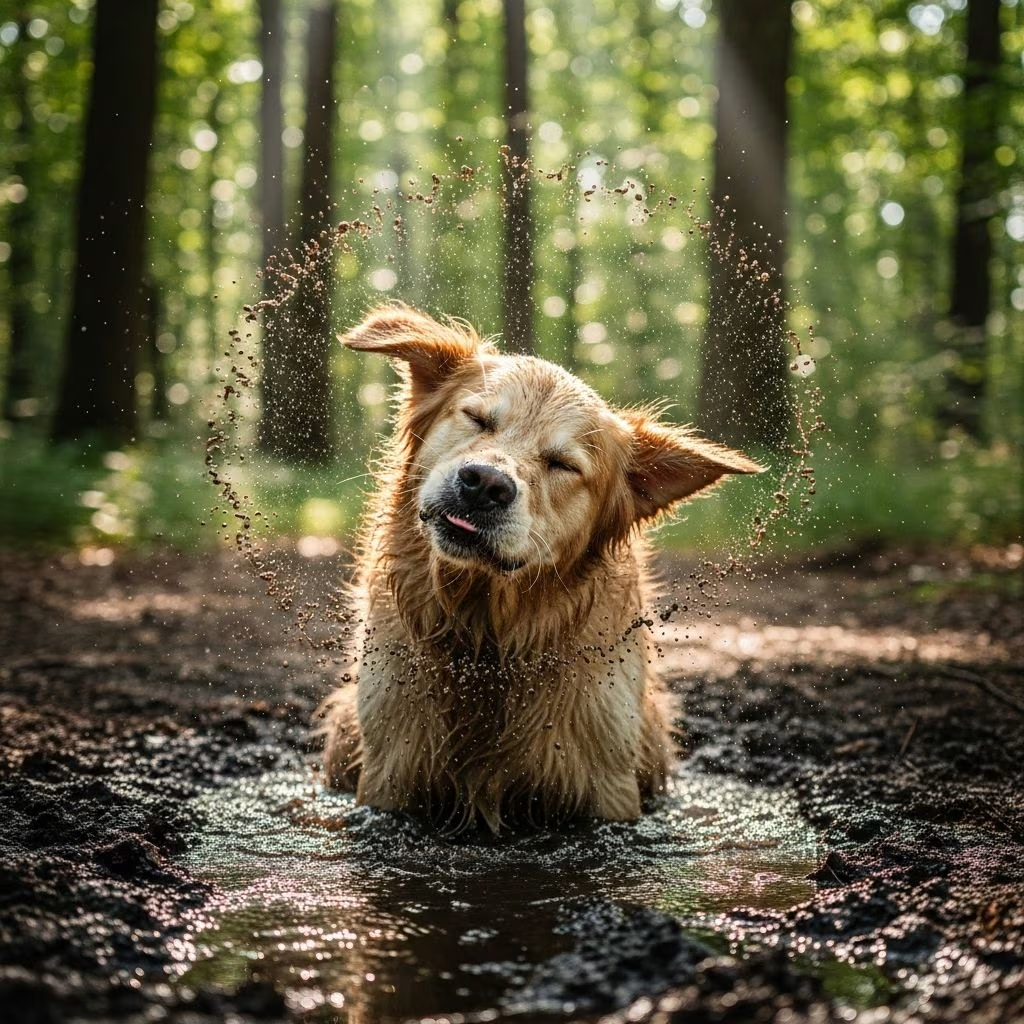
Few sights frustrate dog owners more than watching their pristine pets transform into mud-caked versions of themselves within seconds. Yet this seemingly destructive behavior is far more complex than simple mischief. Dogs possess deeply ingrained biological and psychological drives that compel them toward muddy environments, making mud play not just a random quirk but a meaningful expression of their canine nature.
The relationship between dogs and mud represents a fascinating intersection of evolutionary biology, environmental adaptation, and basic sensory enjoyment. Understanding the motivations behind this behavior helps owners appreciate their pets’ actions rather than viewing them as problematic, while also providing practical insights into managing and potentially accommodating these natural instincts.
Thermoregulation and Temperature Management
One of the most fundamental reasons dogs seek out mud relates to their physiology. Unlike humans, dogs lack an efficient sweating system distributed across their entire bodies. Their cooling mechanisms are far more limited, relying primarily on panting and heat dissipation through the paw pads and nose. When temperatures rise, particularly during warm months, dogs experience genuine thermal stress and actively seek methods to cool their core body temperature.
Mud serves as a natural and highly effective cooling agent. The combination of moisture and earth creates an insulating layer that absorbs body heat and facilitates rapid temperature reduction. When a dog immerses itself in cool, wet mud, the contact between skin and wet soil allows for efficient heat transfer away from the body. This provides immediate relief from heat stress and represents an instinctive solution that dogs have naturally discovered.
Environmental conditions significantly influence this behavior. Dogs living in hot climates or experiencing heat waves demonstrate increased mud-seeking behavior compared to those in cooler regions. Similarly, the time of day matters—dogs often gravitate toward mud during peak heat hours when ambient temperatures are highest. This behavior becomes less common during winter months when cooling is unnecessary, though winter rain and snow may still attract mud-loving dogs who have developed this behavior as a habit.
Ancestral Scent Masking and Hunting Strategy
Dogs carry within their genetic code thousands of years of evolutionary history as pack hunters and wild carnivores. One survival strategy passed down from their wolf ancestors involved strategic use of environmental materials to mask or alter their natural scent. In the wild, concealing one’s scent served multiple critical functions: it helped predators avoid detection while stalking prey, and it protected animals from becoming targets for larger predators themselves.
This ancient instinct persists in modern domestic dogs, even those who have never faced genuine predatory threats. When dogs roll in mud, they are unconsciously activating neural pathways shaped by millennia of survival pressures. The thick, earthy coating of mud effectively neutralizes or obscures a dog’s natural scent signature, transforming their recognizable canine odor into something that blends with the environment. From the dog’s perspective, this camouflage serves the same purpose it would have in the wild—creating invisibility.
Interestingly, this behavior appears even in dogs living in urban environments with no actual hunting necessity or predatory threats. The impulse operates independently of current circumstances, suggesting it is hardwired rather than situationally responsive. Happy, well-fed, domesticated dogs with no survival pressures still experience the urge to roll in mud, indicating the strength of genetic programming over learned behavior.
Reclaiming Natural Scent Identity
Paradoxically, while dogs sometimes use mud to mask their scent, they also use it to restore their natural odor. This seemingly contradictory behavior actually reflects the importance of scent to canine identity and communication. Dogs rely extraordinarily heavily on olfactory information—they use scent to recognize other dogs, establish social hierarchies, mark territory, and convey emotional states to pack members. Their sense of smell is so integral to their sense of self that disruptions to their natural odor can cause genuine distress.
When owners bathe their dogs using fragranced shampoos, conditioners, and grooming products, they strip away the dog’s unique natural scent and replace it with artificial fragrances. While humans may perceive this as improvement, dogs often experience it as a violation of their identity. The unfamiliar chemical smells are disorienting and make them feel like strangers to themselves and potentially to other dogs. Many dog owners observe their recently bathed pets making a beeline for the nearest mud puddle—this behavior represents an urgent attempt to restore their authentic scent profile.
This drive to reclaim natural scent is so powerful that some dogs will actively seek out mud immediately after bathing, before they even have time to dry. The compulsion overrides the discomfort of wet fur and the annoyance of bath time itself. This phenomenon suggests that maintaining scent identity is deeply important to canine psychology and well-being.
Sensory Enrichment and Playful Exploration
Beyond survival-related functions, mud simply provides dogs with enjoyable sensory stimulation. Dogs are inherently curious creatures who live largely in the present moment, experiencing their environment through immediate sensations. Mud engages multiple sensory systems simultaneously: tactile sensations from the texture against their skin and between their paw pads, olfactory input from the rich earthy smells, visual stimulation from the dynamic environment, and proprioceptive feedback from movement and rolling.
The act of splashing, digging, and rolling in mud constitutes play for many dogs, particularly those without sufficient physical or mental stimulation in their daily lives. Mud play provides physical exercise, allows for natural digging behaviors that tap into ancestral instincts, and creates novel experiences that break up routine. Dogs appear to derive genuine enjoyment from this activity, suggesting it contributes positively to their psychological well-being and quality of life.
For dogs living in confined spaces with limited enrichment opportunities, mud puddles represent valuable environmental complexity. The ability to manipulate mud, create changes in their immediate environment, and engage in unrestricted natural behavior contributes to overall contentment and mental health.
Health Considerations Related to Mud Consumption
While rolling in mud is generally harmless, consuming mud presents different concerns. Some dogs regularly eat mud as part of their play behavior, which can indicate underlying health issues requiring veterinary attention. Nutritional deficiencies, particularly mineral imbalances involving calcium, magnesium, sodium, or potassium, may prompt dogs to consume soil or mud seeking these lacking nutrients.
Additionally, consuming mud exposes dogs to parasites and harmful bacteria present in soil, including hookworms, roundworms, and giardia. Dogs with upset stomachs or gastrointestinal inflammation sometimes eat dirt or mud in misguided attempts at self-treatment, similar to their grass-eating behavior. If mud consumption becomes frequent or compulsive, veterinary consultation is warranted to rule out pica or underlying medical conditions.
| Mud Behavior | Primary Cause | Health Concern | Recommended Action |
|---|---|---|---|
| Occasional rolling | Temperature control or play | Minimal | Allow behavior; provide outdoor mud access during hot weather |
| Post-bath rushing to mud | Scent restoration | Minimal | Use unscented dog shampoo to reduce urgency |
| Regular mud consumption | Nutritional deficiency or illness | Parasite infection, GI damage | Consult veterinarian; evaluate diet quality |
| Compulsive digging in mud | Stress, boredom, or anxiety | Joint stress, skin irritation | Increase enrichment; consider designated digging area |
Managing Mud Play Without Suppression
Rather than attempting to prevent mud play entirely—an approach that frustrates both dog and owner—wise management acknowledges the behavior’s naturalness while establishing boundaries. Creating a designated muddy area where dogs have permission to roll reduces the likelihood of mud damage throughout the yard and enables owners to anticipate cleanup rather than react to it.
During hot weather, providing access to mud or water features allows dogs to thermoregulate safely. Shallow kiddie pools filled with water serve as a cleaner alternative to natural mud for temperature management. For post-bath mud rushes, switching to unscented or mildly scented dog shampoos minimizes the scent disruption that prompts frantic mud-seeking behavior.
Recognizing that mud play contributes to mental stimulation and physical exercise helps owners contextualize the behavior within a larger picture of canine well-being. Rather than viewing mud as purely destructive, owners can appreciate its role in satisfying natural instincts and providing enrichment.
Cleanup Strategies for Mud-Loving Dogs
Acceptance of mud play doesn’t require acceptance of permanent household mudification. Establishing strategic management practices minimizes cleanup burden while accommodating natural behavior. Placing towels or rugs near entry points allows for quick mud removal before dogs enter living spaces. Teaching dogs to pause at doors for cleanup reinforces boundary awareness while practical considerations.
Understanding which conditions promote mud play helps owners anticipate and manage behaviors. Dogs are far more likely to seek mud during specific weather conditions and times of day, allowing owners to adjust outdoor schedules or provide alternatives during peak mud-seeking times.
Frequently Asked Questions About Canine Mud Behavior
- Q: Why does my dog only roll in mud after baths?
- A: Dogs often rush to mud immediately after bathing to restore their natural scent, which has been stripped away by shampoo. Using unscented dog shampoo can minimize this response.
- Q: Is rolling in mud dangerous for dogs?
- A: Rolling in mud is generally safe. However, eating mud regularly may indicate nutritional deficiencies or health problems requiring veterinary evaluation.
- Q: How can I prevent my dog from rolling in mud?
- A: While you can limit outdoor access during muddy conditions, preventing the behavior entirely works against your dog’s natural instincts. Creating designated mud areas offers a compromise.
- Q: Can mud cause skin problems in dogs?
- A: Occasional mud exposure rarely causes issues. However, excessive mud accumulation without proper cleaning can create moisture-trapped environments that promote fungal or bacterial growth.
- Q: Do all dogs love mud equally?
- A: Individual dogs vary in their mud enthusiasm based on breed history, temperament, and past experiences. Some dogs show minimal interest while others are passionate mud enthusiasts.
Conclusion: Appreciating Natural Canine Behavior
Mud play represents far more than a frustrating mess created by mischievous pets. It embodies the biological imperatives and evolutionary history that continue shaping canine behavior despite thousands of years of domestication. Temperature regulation, ancestral scent strategies, sensory enrichment, and simple playfulness all contribute to dogs’ seemingly irresistible attraction to mud.
By understanding these underlying drives, dog owners can shift their perspective from viewing mud play as problematic behavior requiring elimination toward recognizing it as a natural expression of canine nature. This shift in understanding opens possibilities for managing the behavior respectfully while maintaining household standards and supporting canine well-being. The messy mud-covered dog in your yard is not misbehaving—it is simply being authentically, instinctively canine.
References
- Why Do Dogs Love Mud? (And How to Handle Clean Up Like a Pro) — OVRS. 2024. https://www.ovrs.com/blog/why-do-dogs-love-mud-and-how-to-handle-clean-up-like-a-pro/
- Why does my dog love rolling in mud? — Distinctive Pets. 2024. https://distinctivepets.co.uk/blogs/news/why-does-my-dog-love-rolling-in-mud
- Why do dogs eat soil? — The Kennel Club. 2024. https://www.royalkennelclub.com/health-and-dog-care/health-dog-care/health/health-and-care/a-z-of-health-and-care-issues/why-do-dogs-eat-soil/
- Why Is My Dog Eating Dirt? — Hill’s Pet Nutrition. 2024. https://www.hillspet.co.id/dog-care/behavior-appearance/why-do-dogs-eat-dirt
- Why Do Dogs Eat Dirt? — PetMD. 2024. https://www.petmd.com/dog/behavior/why-do-dogs-eat-dirt



