

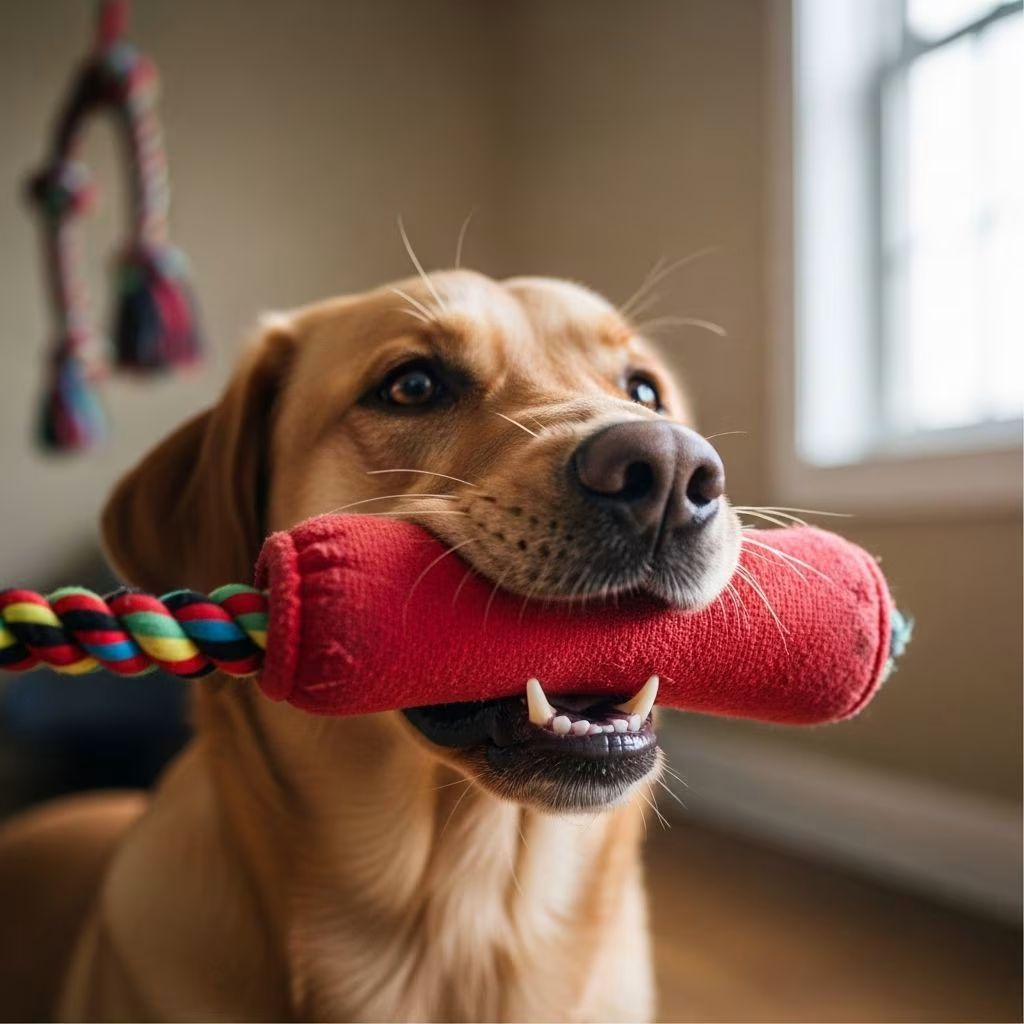
Understanding Why Mouth Control Matters for Your Dog
A dog’s ability to regulate the force of their bite is one of the most critical skills they can develop, regardless of whether they are a small toy breed or a large working dog. Bite inhibition represents a dog’s learned ability to control how hard they bite during any interaction, whether playful or otherwise. This skill becomes particularly important when considering potential emergency situations where a dog might be in pain, frightened, or otherwise distressed. Even well-intentioned dogs who have not learned to moderate their bite force may cause significant injury simply because they lack awareness of human skin sensitivity.
The foundation for this critical behavior is typically established during a puppy’s early developmental period, between three and five months of age. During this window, puppies naturally learn from their littermates and mother how to adjust their bite pressure through immediate feedback. When one puppy bites too hard during play, the bitten puppy yelps loudly, effectively ending the game and teaching the offending puppy to be more careful. While this critical period provides the most receptive learning window, dogs can develop better bite inhibition at any age with proper training and consistency.
The Natural Learning Process in Littermates
In their natural pack environment, puppies engage in frequent play-fighting that serves an essential educational purpose beyond entertainment. When puppies mouth each other during play sessions, they quickly discover the boundaries of acceptable force through direct feedback from their littermates. A puppy who applies too much pressure receives an immediate, loud warning—typically a sharp yelp from the bitten puppy. This creates an immediate association between excessive force and social rejection, effectively teaching puppies to modulate their bite pressure.
The mother dog also reinforces these lessons, occasionally correcting puppies who bite too hard during nursing or handling. This multi-layered feedback system creates a comprehensive learning environment where puppies gradually understand that controlling their mouth pressure is essential for maintaining social interactions and play opportunities. Understanding this natural process helps dog owners recognize that teaching bite inhibition is simply recreating this natural learning system in a human-dog context.
Establishing a Foundation of Trust Before Training
Before implementing bite inhibition exercises, it is essential to establish a foundation of trust and positive association with handling. Dogs who are fearful of hand movements or who have negative associations with being touched will struggle to learn bite control effectively. Pre-training exercises focus on making the dog comfortable with gentle handling, collar grabs, and touch-related activities.
These foundational exercises might include:
- Practicing calm collar grabs where you gently take hold of the collar and immediately reward the dog with treats
- Engaging in gentle handling games where you touch various parts of the dog’s body and offer rewards
- Building positive associations with hand movements by pairing any hand approach with food rewards
- Creating predictable patterns where the dog learns that hands approaching mean good things are about to happen
This pre-work conditioning is particularly important for dogs who may have had limited positive human contact or who have developed anxiety around handling. By establishing these positive associations first, you create a framework where the dog is already predisposed to cooperate with bite inhibition training.
The Treat-Based Gentleness Exercise
One of the most effective and straightforward methods for teaching bite inhibition involves the simple act of offering treats. This exercise capitalizes on the dog’s natural desire for food while creating clear consequences for dental contact.
The process works as follows: offer your dog a treat by holding it in the base of your hand rather than between your fingers. This positioning makes it easier for the puppy to practice gentle taking since they have a larger surface area to aim for. When your dog attempts to take the treat, observe whether you feel any teeth contact. If teeth touch your hand at all, simply close your hand and withdraw the treat, removing the reward opportunity.
Wait a few seconds, then present the treat again, repeating the process until your dog takes it without any dental contact. The moment their mouth is soft and teeth do not make contact, immediately release the treat and praise enthusiastically. This creates a clear cause-and-effect relationship: gentle mouthing results in reward, while any teeth contact results in reward removal.
This exercise should be practiced consistently over multiple short sessions. The consistency is what breeds awareness into the dog’s behavior patterns. Rather than marathon training sessions, multiple brief practice opportunities throughout the day tend to produce better results. Each session should last only a few minutes before concluding on a positive note, allowing the dog to succeed and receive rewards.
Progressive Bite Pressure Reduction
For puppies who have already developed the habit of biting during play or handling, a graduated approach helps them understand that progressively softer bites are required. This method involves establishing a bite intensity scale and systematically reducing acceptable pressure levels over time.
The process begins by identifying the puppy’s current bite force level on a scale. Once established, you allow the puppy to bite at that level without consequence, but introduce time-outs for any bites that exceed that level. Each week, the acceptable threshold is lowered slightly. For example:
| Week | Acceptable Bite Level | Consequences for Harder Bites |
|---|---|---|
| Week 1 | Level 3-4 bites | Any level 5 bites result in time-out |
| Week 2 | Level 2-3 bites | Any level 4+ bites result in time-out |
| Week 3 | Level 1-2 bites | Any level 3+ bites result in time-out |
| Week 4+ | Soft mouthing only | All bites receive time-out until only gentle mouthing occurs |
This graduated approach works better than attempting to eliminate all biting immediately, as it gives the puppy time to adjust their habits incrementally. The key is consistency—once you establish the weekly standard, all caregivers must enforce it uniformly.
Using Time-Out Periods Effectively
Time-out serves as a consequence that communicates to the dog that specific behaviors terminate social interaction. When implemented correctly, time-out is not harsh or punitive but rather a natural consequence of inappropriate behavior.
When your puppy delivers a bite that exceeds the current acceptable threshold, the response should be:
- Immediately stop all play and interaction
- Calmly place the puppy in a designated time-out area for approximately one minute
- Remain calm and emotionally neutral—avoid yelling or showing frustration
- After one minute, allow the puppy out if they are calm
- Resume interaction, but remain vigilant for further violations
Some puppies become more excited when you make high-pitched “ouch” sounds, actually increasing the likelihood of harder bites. For these puppies, the silent treatment works better than verbal corrections. The puppy learns that biting makes the fun activity (play with you) stop completely, which is naturally discouraging for a social animal.
The Invisible Freeze Technique
Another effective approach involves becoming completely unresponsive to inappropriate mouthing. When your puppy nips or bites, immediately fold your arms across your body, turn away at approximately a 45-degree angle, and completely freeze. Do not make eye contact, do not speak, do not move.
From the puppy’s perspective, you have become an inanimate object—completely uninteresting. You maintain this frozen state until the puppy settles completely, with all four feet on the ground and no attempts to continue engaging you. The moment the puppy shows signs of giving up the interaction, you calmly and quietly praise them and offer a treat. If your puppy knows the “sit” command, requesting a sit while frozen and then providing attention while they sit creates an even clearer behavioral path forward.
This technique works because it removes the reward of interaction without creating any negative experience. The puppy learns that gentle behavior or complete disengagement leads to positive attention, while mouthing leads to boring indifference.
Redirecting Mouthing to Appropriate Objects
Rather than only discouraging inappropriate mouthing, actively encouraging mouthing on appropriate objects provides an outlet for this natural behavior. Puppies have a biological drive to mouth and chew—attempting to eliminate this behavior entirely is counterproductive. Instead, channeling this drive toward appropriate toys creates a more balanced training approach.
Whenever you pet your puppy, have a designated chew toy available. As one hand delivers petting, the other hand offers the chew toy, giving the puppy something acceptable to mouth on while receiving human contact. Over time, the puppy learns that petting time equals toy time, and they develop the habit of reaching for their toy when interaction begins.
This technique proves especially valuable when children interact with puppies. An adult can coordinate petting with one hand while offering a toy with the other, establishing safe interaction patterns early. By alternating which hand provides petting and which hand holds the toy, you ensure the puppy does not develop a pattern of expecting to mouth the specific hand that delivers petting.
Managing Excitement Levels During Interaction
Puppy mouthing intensity often correlates directly with excitement and arousal levels. The longer a puppy is petted and stimulated, the more likely they become excited and resort to nipping. Managing interaction duration helps prevent these escalations.
Initially, keep petting sessions brief, perhaps just 30 seconds to one minute at a time. This allows the puppy to receive positive attention without reaching the excitement threshold where mouthing becomes likely. As the puppy demonstrates better control at these shorter durations, gradually extend the interaction time. Some puppies may require multiple short sessions throughout the day rather than fewer extended sessions.
If you notice your puppy beginning to get excited during a petting session, proactively end the interaction on a positive note before mouthing begins. This prevents practice of the undesired behavior and maintains positive associations with handling and touch.
The Role of Exercise in Bite Control
Excess energy frequently manifests as increased mouthing and play biting. Puppies who have not had adequate exercise often display more intense and persistent nipping behaviors. Conversely, puppies who have had appropriate physical and mental stimulation throughout the day tend to be calmer during interaction times.
Ensure your puppy receives age-appropriate exercise through play sessions, training time, and exploration opportunities. Young puppies have shorter attention spans and smaller exercise capacities than older puppies, so multiple short play sessions work better than single extended sessions. Additionally, mental stimulation through puzzle toys, training sessions, and novel environments often tires puppies more effectively than physical exercise alone.
Consistency Across All Caregivers
One of the most critical factors determining success with bite inhibition training is absolute consistency across everyone who interacts with the puppy. If some family members enforce bite inhibition rules while others allow the puppy to mouth freely, the puppy receives conflicting messages and learns more slowly.
All caregivers should:
- Understand the specific training method being used
- Apply the same standards for acceptable and unacceptable bite pressure
- Implement consequences consistently, without variation based on mood or circumstance
- Communicate about the puppy’s progress and any changes in training approach
- Avoid making excuses for biting, recognizing that each instance is a training opportunity
When multiple people are involved in raising a puppy, scheduling a brief training session where everyone practices the technique together ensures uniform implementation.
When to Seek Professional Help
While many puppies respond well to owner-implemented bite inhibition training, some situations warrant professional guidance. If your puppy shows signs of aggression beyond typical play biting, demonstrates fear-based biting, or fails to respond to consistent training efforts, consulting a qualified animal behaviorist becomes important.
Additionally, puppies who have limited social experience or who have had negative early experiences may benefit from structured training classes that provide controlled socialization alongside bite inhibition work. Professional trainers can identify underlying causes of excessive biting and develop customized approaches for individual dogs.
Frequently Asked Questions
At what age should I start teaching bite inhibition?
The ideal window is between three and five months of age, but dogs can learn at any age with consistent training. Starting as early as possible yields the fastest results with the least reinforced bad habits.
How long does it take to see results?
Most puppies show noticeable improvement within two to four weeks of consistent training. Complete reliability may take several months depending on the puppy’s age and prior experience.
My puppy gets more excited when I make “ouch” sounds. What should I do?
This is common in some puppies. Switch to the silent treatment method—become completely unresponsive and remove yourself from interaction.
Should I allow my puppy to mouth my hands at all?
Yes, during the learning process, gentle mouthing should be allowed to establish the distinction between acceptable and unacceptable bite pressure. Once the puppy reliably shows soft mouthing, you can transition to discouraging all mouthing.
What if my puppy is already several months old and was never taught bite inhibition?
It becomes more difficult but remains possible. The dog has rehearsed the careless behavior extensively, but consistent training can still improve bite inhibition. Professional help may accelerate progress.
References
- The Calming Technique to STOP Puppy Biting FAST — McCann Dog Training. Accessed via YouTube. https://www.youtube.com/watch?v=eb9qNHCSbMI
- Teaching Bite Inhibition and Dealing with Rough Puppy Play — Oregon Humane Society. https://www.oregonhumane.org/portland-training/teaching-bite-inhibition-and-dealing-with-rough-puppy-play/
- How to Stop Puppy Biting and Train Bite Inhibition — American Kennel Club. https://www.akc.org/expert-advice/training/stop-puppy-biting/
- Mouthing, Nipping and Biting in Puppies — ASPCA. https://www.aspca.org/pet-care/dog-care/common-dog-behavior-issues/mouthing-nipping-and-biting-puppies
- Creating Good Bite Inhibition — McCann Professional Dog Trainers. https://www.mccanndogs.com/blogs/articles/creating-good-bite-inhibition



