Understanding Canine Mimicry: Why Dogs Copy Their Owners
Explore the fascinating science behind why dogs imitate human actions and behaviors.
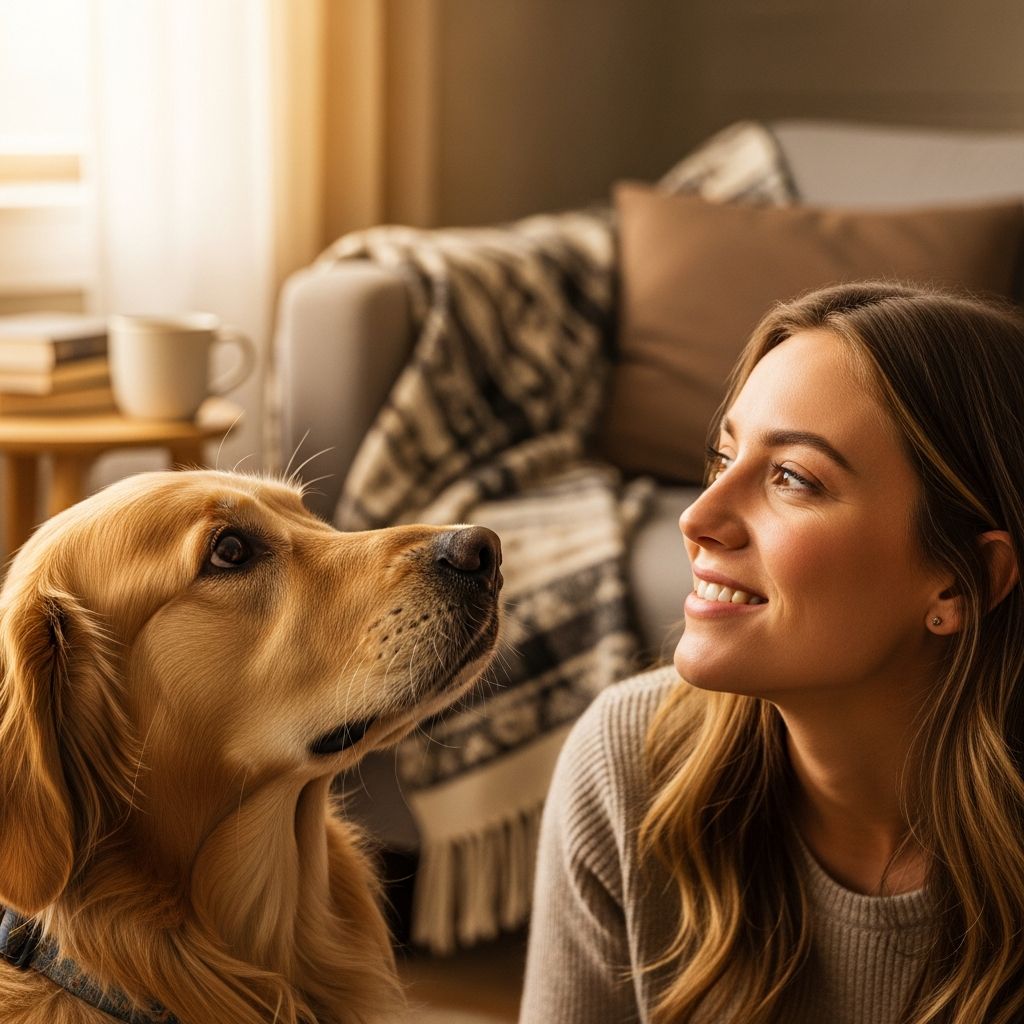
Dogs have long been celebrated as humanity’s most devoted companions, and one of the most charming aspects of dog ownership is witnessing your pet mirror your actions and mannerisms. Whether it’s yawning when you yawn, stretching when you stretch, or learning new behaviors by watching you perform them, dogs demonstrate a remarkable capacity for imitation. This behavior goes far beyond simple coincidence or instinctive responses—it reflects a sophisticated cognitive ability and reveals deep insights into how dogs perceive, learn from, and emotionally connect with the humans they share their lives with.
The Cognitive Foundation of Canine Imitation
Recent scientific research has established that dogs possess genuine imitative abilities comparable to those observed in human children. Dogs are not merely reacting to environmental stimuli or following learned associations; they are actively observing, processing, and reproducing behaviors they witness in their environment. This capacity for observational learning demonstrates that canine cognition is far more sophisticated than once believed. When a dog observes an action, they can mentally encode that sequence of movements and subsequently reproduce it, even when performing novel behaviors they have never been explicitly trained to execute.
The neurological mechanisms underlying this ability suggest that dogs have developed neural pathways that enable them to bridge the gap between observation and action. This translates to practical advantages in how dogs learn and adapt within their domestic environments. Unlike learning through trial-and-error or traditional reinforcement conditioning alone, observational learning allows dogs to acquire behavioral patterns more efficiently by simply watching how others accomplish specific tasks.
Social Motivation: The Emotional Driver Behind Mimicry
While cognitive capability provides the mechanism for imitation, the real catalyst for why dogs choose to imitate their owners lies in social motivation and the desire to strengthen relational bonds. Research has revealed that dogs preferentially imitate their caregivers rather than strangers, suggesting that the quality of the human-dog relationship directly influences imitative behavior. This selective imitation is not random—it reflects an intentional choice driven by emotional attachment and the desire for social affiliation.
The phenomenon of “overimitation” offers particularly revealing insights into the social foundations of canine copying behavior. Overimitation refers to the copying of actions that are unnecessary, irrelevant, or inefficient for achieving a goal. Interestingly, dogs have been observed performing overimitation behaviors with their owners, such as touching functionless objects or executing unnecessary movements, particularly after they have already achieved the primary objective. This behavior mirrors similar patterns observed in human children and suggests that dogs copy not solely to accomplish tasks, but to demonstrate affiliation and maintain social connection with their attachment figures.
The Quality of the Caregiver Bond
The strength and quality of the dog-caregiver relationship fundamentally shapes imitative behavior patterns. Dogs who display accurate copying of their owner’s actions—even irrelevant or inefficient ones—also demonstrate increased affiliative behaviors such as sustained eye contact and synchronized movements. This synchronization in body language creates what researchers identify as a “safe-haven effect,” wherein dogs actively seek proximity to their caregivers as sources of security and comfort. The presence of these behavioral patterns indicates that imitation serves as both a communicative tool and an expression of trust and emotional security.
Environmental stressors can temporarily enhance the motivation to imitate. Similar to research findings in human children exposed to social exclusion, dogs experiencing perceived threats or anxiety may intensify their imitative behaviors toward their caregivers as a means of strengthening the bond and seeking reassurance. This adaptive response demonstrates that imitation functions as a mechanism for maintaining psychological security within the human-dog relationship.
Learning Mechanisms: From Simple Actions to Complex Behaviors
Dogs demonstrate the ability to acquire increasingly sophisticated behavioral sequences through observation and imitation. This progression begins with simple, single-action behaviors and can advance to multi-step sequences requiring coordination and planning. Research utilizing the “Do As I Do” training methodology has demonstrated that dogs can learn novel behaviors on command simply by observing a human demonstrator perform those actions. In this training approach, a dog is first taught to execute familiar behaviors when given a cue, then presented with novel actions and instructed to reproduce them.
A landmark case illustrating this capacity involved a service dog named Philip who successfully learned to reproduce several actions performed by his trainer, including novel behaviors he had never previously encountered. When presented with new actions followed by an “imitate” command, Philip performed these novel sequences with substantial accuracy, demonstrating that dogs can acquire the conceptual understanding that they are expected to copy observed behaviors.
The effectiveness of imitative learning increases when dogs observe other dogs performing desired behaviors, as well. In group training settings, less experienced dogs often rapidly acquire behavioral sequences simply by watching trained dogs execute those same actions. This peer-to-peer learning accelerates the training process and demonstrates that imitative capacity functions across both human-dog and dog-dog relationships.
Neurobiological Basis and Recognition of Intent
The neurological substrate enabling canine imitation involves specialized neural mechanisms that allow dogs to recognize intentionality in observed actions. Dogs demonstrate sensitivity to whether actions are goal-directed or incidental, suggesting they possess a rudimentary theory of mind regarding human behavior. This capacity enables them to distinguish between actions that serve a functional purpose and those that are superfluous, yet they may choose to replicate both types, particularly when interacting with their caregivers.
The activation of mirror-like neural systems in dogs’ brains—similar to mirror neuron systems identified in primates—provides a plausible neurobiological mechanism for how observational learning translates into behavioral reproduction. When a dog observes a specific action, corresponding neural patterns are activated, facilitating the mental simulation of that action and enabling subsequent motor execution.
Practical Applications in Training Methodology
Understanding the mechanisms and motivations behind canine imitation has revolutionized dog training approaches. The “Do As I Do” training method, developed through systematic research, harnesses dogs’ imitative capacities to teach novel behaviors more efficiently than traditional conditioning methods alone. This approach capitalizes on dogs’ natural inclination to observe and reproduce human actions, transforming training from a process of external reinforcement into collaborative learning between human and dog.
Trainers utilizing imitation-based methods report enhanced outcomes in behavioral acquisition, particularly for complex, multi-step behaviors. By demonstrating desired actions rather than relying solely on luring, shaping, or classical conditioning, trainers tap into the dog’s intrinsic cognitive capabilities and social motivation to learn from the human they trust.
Several principles maximize effectiveness when implementing imitation-based training:
- Establish a strong, secure relationship with the dog prior to formal imitation training, as social bonds directly correlate with imitative capacity
- Perform target behaviors clearly and consistently, allowing the dog adequate opportunity to observe the complete action sequence
- Provide precise timing for cues that signal the dog should attempt imitation, maintaining clarity about expectations
- Reward successful imitative attempts immediately, reinforcing both the behavioral execution and the social connection established through shared action
- Progress gradually from simple, single-action sequences to more complex multi-step behaviors
Emotional Synchronization and Behavioral Mirroring
Beyond deliberate behavioral copying, dogs engage in spontaneous mirroring of human emotional states and mannerisms. Dogs are highly attuned to human body language, facial expressions, and vocal qualities, and they frequently mirror these elements to facilitate understanding and emotional resonance. Common examples include yawning when their owner yawns, stretching when their owner stretches, or adopting similar postures and movement patterns.
This spontaneous mirroring serves multiple functions within the human-dog relationship. It facilitates emotional attunement, allowing dogs to demonstrate empathy and shared emotional experience with their caregivers. It also enhances communication, as synchronized body language conveys intention, emotional state, and relational harmony. When a dog mirrors their owner’s movements and postures, they are fundamentally communicating: “I understand you, I’m connected to you, and we are aligned.”
Individual Differences in Imitative Capacity
Not all dogs display identical levels of imitative ability or motivation. Research indicates that dogs with higher excitability or activity levels may be more inclined toward imitation and overimitation. Personality characteristics, prior training experience, the security of the attachment relationship, and the dog’s overall cognitive profile all influence the extent to which a particular dog will engage in imitative behaviors. Younger dogs may display greater imitative tendencies compared to older dogs, although imitative capacity can be developed throughout a dog’s lifespan through appropriate training and relationship building.
Understanding these individual differences allows owners and trainers to tailor their approaches to maximize each dog’s learning potential and emotional security. Some dogs naturally gravitate toward observational learning and actively seek opportunities to mirror their caregivers, while others may require more deliberate encouragement and relationship building before imitative behaviors emerge.
Strengthening the Human-Dog Bond Through Shared Behavior
The practice of mutual imitation—where both human and dog mirror each other’s behaviors and emotional states—serves as a powerful mechanism for relationship deepening. When owners consciously engage in synchronized behavior with their dogs, whether through movement coordination, vocal matching, or behavioral mirroring, they actively communicate acceptance, attunement, and emotional availability. Dogs recognize and respond to this synchronization, experiencing it as a reinforcement of the secure attachment they have developed with their caregiver.
Owners who notice and appreciate their dog’s imitative behaviors—rather than dismissing them as coincidental—create a feedback loop that strengthens the relational bond. Acknowledging when your dog copies your actions, responding positively to this mirroring, and reciprocally engaging in synchronized behavior communicates to your dog that they are truly seen and valued as an individual worthy of interactive engagement.
Frequently Asked Questions
Can all dogs learn through imitation?
Most dogs possess imitative capacity, though the degree to which they naturally engage in this behavior varies based on personality, prior experience, and relationship quality. Dogs can be trained to engage in imitative learning through structured training methods.
Is spontaneous imitation the same as trained imitation?
No. Spontaneous imitation refers to natural mirroring behaviors like yawning, while trained imitation involves deliberate behavioral reproduction taught through methods like “Do As I Do.” Both reflect genuine imitative capacity but operate through different mechanisms.
How does imitation differ from other forms of dog learning?
Imitative learning involves observing and reproducing behaviors, whereas conditioning-based learning relies on associations between actions and consequences. Imitation engages higher-order cognitive processes and is often faster for acquiring complex behaviors.
Does my dog’s imitation mean they understand my emotions?
While dogs’ mirroring of facial expressions and behaviors suggests emotional attunement, the extent to which they consciously understand human emotional states remains an open scientific question. However, their mirroring behaviors do facilitate emotional connection and communication.
Conclusion: The Depth of Canine Intelligence and Connection
Canine imitation represents far more than simple behavioral copying—it reflects a sophisticated cognitive capacity intertwined with deep social motivation and emotional attachment. Dogs observe, process, and intentionally reproduce behaviors from their caregivers as an expression of affiliation, a mechanism for learning, and a pathway to strengthened relational bonds. By understanding the science underlying why dogs imitate their owners, we gain profound appreciation for the complexity of canine cognition and the genuine nature of the human-dog bond. Whether engaged in formal imitation training or simply mirroring daily behaviors, dogs demonstrate that they are not merely passive inhabitants of human homes, but active participants in a deeply interconnected relationship characterized by mutual observation, learning, and emotional synchronization.
References
- Socially priming dogs in an overimitation task — Frontiers in Psychology, University of Veterinary Medicine Vienna. 2023. https://www.frontiersin.org/journals/psychology/articles/10.3389/fpsyg.2023.1063132/full
- Train Your Dog Using Imitation — Whole Dog Journal. https://www.whole-dog-journal.com/training/cognitive-skills/train-your-dog-using-imitation/
- Mirroring and matching in dogs — Hanne Grice. https://www.hannegrice.com/walk-the-dog/mirroring-and-matching-in-dogs/
- Dogs and Imitation: How They Learn Through Observing Others — A Peaceful Pack. https://www.apeacefulpack.com/post/dogs-and-imitation-how-they-learn-through-observing-others
- Imitation and Emulation by Dogs Using a Bidirectional Control — National Center for Biotechnology Information. https://pmc.ncbi.nlm.nih.gov/articles/PMC2662430/
Similar Articles






Read full bio of medha deb