

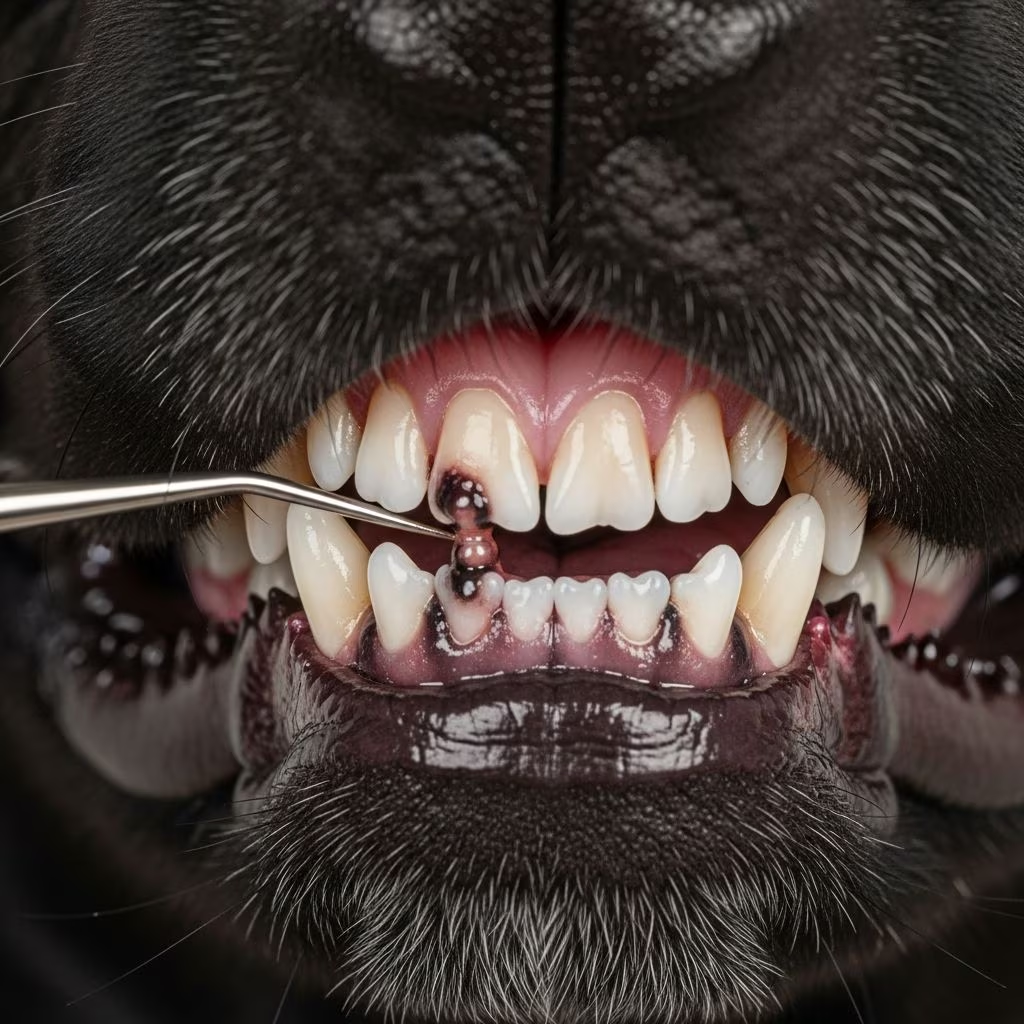
Canine melanoma is a serious form of cancer originating from melanocytes, the pigment-producing cells in a dog’s skin, mouth, eyes, and toes. This disease can range from benign growths to highly aggressive tumors that spread rapidly, making early detection critical for effective management.
Understanding the Biology of Canine Melanoma
Melanocytes produce melanin, responsible for coloration in skin, hair, and eyes. When these cells grow uncontrollably, they form melanomas, which appear as darkened or pinkish masses. Unlike human melanomas often linked to UV exposure, canine cases arise from genetic and cellular factors, with low BRAF mutation rates distinguishing them from UV-induced types.
Tumors may ulcerate, bleed, or cause pain as they enlarge. Abnormalities in tumor suppressors like p16, PTEN, p53, Rb, and p21 are noted in malignant cases, though direct causation remains under study.
Primary Locations and Their Implications
Melanoma strikes various sites, each with unique challenges:
- Oral cavity: Most common, comprising up to 35.8% of canine oral tumors. Highly metastatic to lymph nodes and lungs.
- Digital (toe/nailbed): Represents 15-20% of cases, often causing limping, swelling, or nail changes. Metastatic potential mirrors oral forms.
- Skin: Can be benign or malignant; cutaneous forms vary in aggression.
- Ocular: Affects eyes, potentially leading to vision loss or bulging.
These locations influence treatment accessibility and prognosis.
Recognizing Early Warning Signs
Spotting melanoma early improves outcomes. Symptoms vary by site:
| Location | Common Symptoms |
|---|---|
| Oral | Bad breath, drooling, thick saliva, visible masses, eating reluctance, weight loss |
| Digital | Loose/irregular toenails, limping, paw licking, swelling, discharge |
| Skin | Raised pigmented or pink bumps that bleed or ulcerate |
| Ocular | Eye bulging, vision loss |
Any unusual lump, especially pigmented or rapidly growing, warrants immediate veterinary exam. Oral melanomas progress quickly, often becoming emergencies.
Diagnostic Approaches for Accurate Assessment
Veterinarians use multiple tools:
- Physical exam and biopsy: Essential for confirming melanoma via histopathology.
- Imaging: X-rays, CT, or ultrasound detect metastasis to lungs or lymph nodes.
- Staging: Classifies from I (localized) to IV (distant spread), guiding therapy.
Fine-needle aspirates provide initial clues, but excision biopsy offers definitive diagnosis.
Core Treatment Strategies
Treatment prioritizes local control and metastasis prevention. Surgery remains foundational.
Surgical Interventions
Complete tumor removal is ideal. Oral cases may require maxillectomy or mandibulectomy; digital often involves toe amputation. Clean margins reduce recurrence.
Radiation Therapy Options
When surgery is incomplete or infeasible, radiation targets residuals. Stereotactic radiation surgery (SRS) delivers high doses precisely in 1-3 sessions, sparing healthy tissue better than conventional fractionated radiation therapy (CFRT), which needs 15-21 sessions.
Chemotherapy Protocols
Melanoma resists chemo, so it’s not first-line but used for metastasis or recurrence. Carboplatin, given every 3 weeks, is well-tolerated, causing mild GI upset or low white cells. Toceranib, lomustine, or prednisone may adjunct.
Immunotherapy Breakthrough: The Melanoma Vaccine
The Oncept vaccine (Merial) revolutionizes care by targeting tyrosinase protein in melanoma cells, rallying the immune system.
- Dosing: 4 transdermal doses every 2 weeks via needle-free device, then boosters every 6 months.
- Outcomes: Studies show median survival >437 days vs. 324 days historically; some stage IV dogs achieve lung tumor remission.
- Side effects: Minimal—mild injection-site reactions, rare fever or lethargy.
Best post-surgery/radiation, it extends disease-free intervals.
Emerging and Supportive Therapies
- Cryotherapy/Photodynamic/Laser: For small, accessible tumors.
- Palliative care: Pain meds, antibiotics for comfort if untreated.
Multimodal approaches—surgery + vaccine + radiation—yield superior results.
Factors Shaping Prognosis
Survival hinges on stage, site, and therapy:
- Early, localized: Favorable with aggressive treatment.
- Metastatic oral/digital: Guarded; median 3-12 months, vaccine extends.
Overall health, breed (e.g., Schnauzers, Scottish Terriers at risk), and male gender influence odds.
Prevention and Routine Monitoring
No sure prevention, but:
- Regular vet checkups for older dogs.
- Examine mouth, paws, skin monthly.
- Biopsy suspicious growths promptly.
Unlike humans, sunscreen isn’t key; focus on vigilance.
Frequently Asked Questions (FAQs)
Is canine melanoma always fatal?
No, early intervention, especially with vaccine, can lead to long-term remission.
How effective is the Oncept vaccine?
It significantly prolongs survival in clinical trials, with minimal side effects.
Can melanoma be benign in dogs?
Yes, especially skin forms, but always test malignancy.
What breeds are prone?
Schnauzers, Scottish Terriers, older males.
Should I treat advanced cases?
Weigh quality of life; consult oncologists for options.
References
- What Is Canine Melanoma? — Metropolitan Veterinary Associates. 2023. https://metro-vet.com/what-is-canine-melanoma/
- Melanoma in Dogs: Common Symptoms, Causes, and Treatment — PetMD. 2023. https://www.petmd.com/dog/conditions/cancer/melanoma-dogs-common-symptoms-causes-and-treatment
- Medical Oncology: Canine Oral Melanoma — NC State Veterinary Hospital. 2023. https://hospital.cvm.ncsu.edu/services/small-animals/cancer-oncology/oncology/canine-oral-melanoma/
- Melanoma of the dog and cat: consensus and guidelines — PMC (Peer-reviewed). 2024. https://pmc.ncbi.nlm.nih.gov/articles/PMC11026649/
- Melanoma — Animal Surgical Center of Michigan. 2023. https://www.animalsurgicalcenter.com/melanoma
- Melanoma in Dogs — PetCure Oncology. 2023. https://petcureoncology.com/melanoma-in-dogs/



