

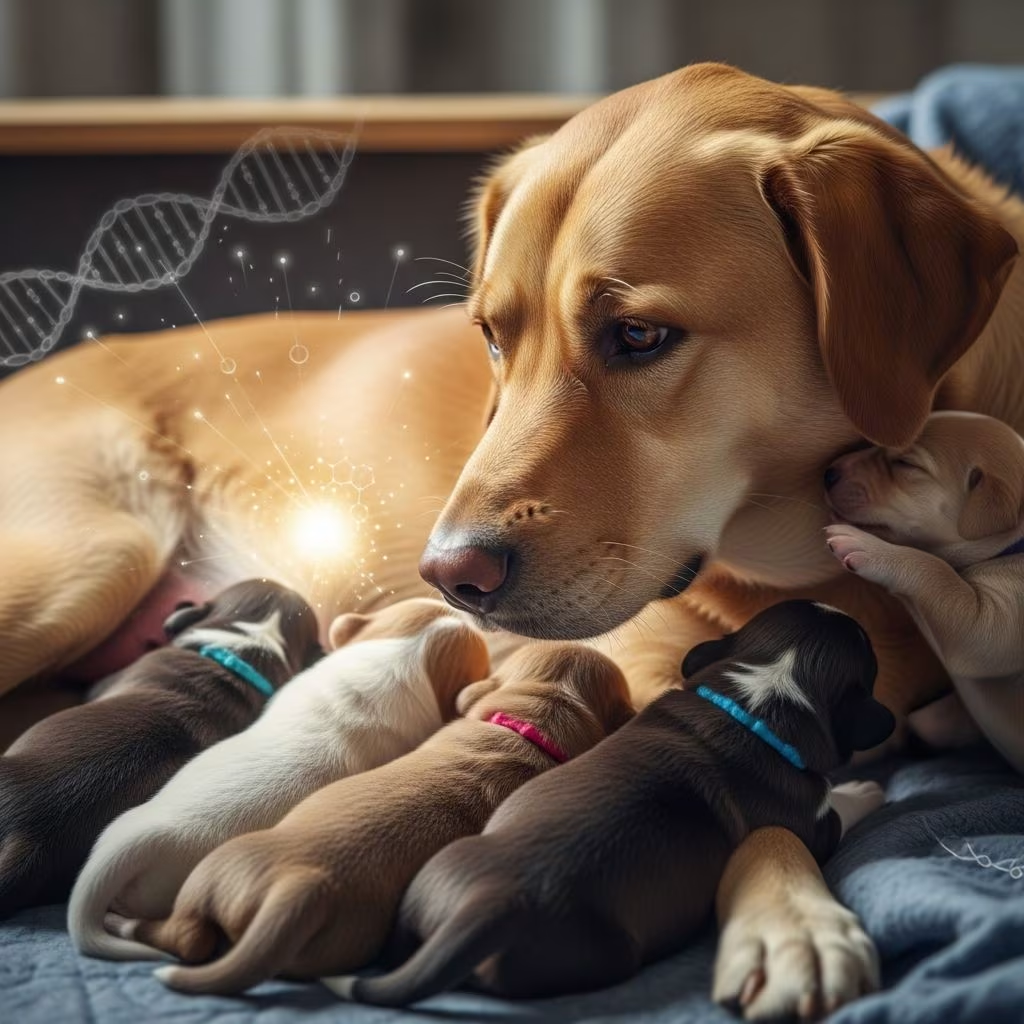
The relationship between a mother dog and her puppies represents one of nature’s most profound expressions of care and protection. From the moment puppies are born, a mother dog undergoes dramatic biological and behavioral transformations that equip her to nurture her litter through their most vulnerable developmental stages. Understanding how dog mothers express love involves examining both the biochemical processes that drive their behavior and the intricate communication systems they establish with their offspring.
Biological Foundations of Maternal Instinct in Dogs
Maternal behavior in dogs is fundamentally grounded in hormonal processes that begin during pregnancy and intensify immediately after birth. When a female dog conceives and carries her litter, her body undergoes significant endocrine changes that prepare her physically and psychologically for motherhood. These hormonal transformations create the neurobiological foundation upon which maternal behavior is built.
The onset of maternal behavior occurs when the mother’s drive to approach and care for her puppies becomes stronger than all competing behavioral motivations. Certain sensory features, including visual cues such as puppy fur appearance, auditory signals like diminished ultrasonic vocalizations, olfactory scents, and tactile sensations from puppies all contribute to triggering and maintaining maternal responses. Additionally, the immediate postpartum environment plays a crucial role in shaping how intensely a mother dog expresses her caregiving behaviors.
The Critical First Days: Immediate Postpartum Care
The hours immediately following birth represent a transformative period for both mother and offspring. During parturition, as each puppy emerges, the mother breaks the fetal membranes and licks the newborn’s head and mouth, actively facilitating respiration and helping the puppy transition to independent breathing. This instinctive behavior is essential for puppy survival, as newborns arrive with their airway partially obstructed by birth fluids.
After birth, the mother’s responsibilities expand dramatically. She dries the puppies, maintains their body warmth, provides nutrition through nursing, and keeps them clean through consistent licking. During the initial three-week period, the mother dog typically provides undivided attention and care to her litter, rarely leaving her puppies for more than brief moments except to address her own basic needs like eating or elimination.
The intensity of this early maternal devotion serves several critical functions:
- Thermoregulation: Newborn puppies cannot maintain body temperature independently, requiring constant maternal warmth
- Hygiene maintenance: Mothers remove waste products and keep the nesting area sanitary through continuous licking
- Lactation management: The physical stimulation from puppies nursing helps regulate the mother’s milk production
- Sensory bonding: Close physical proximity allows mothers to learn their puppies’ individual characteristics
Vocal Communication: The Language of Puppy Needs
One of the most sophisticated aspects of mother-puppy interaction involves vocal communication. Shortly after birth, puppies begin producing whines—vocalizations that serve as their primary mechanism for communicating distress or unmet needs. These whines are typically emitted when puppies experience discomfort, hunger, cold, or separation from their mother and littermates.
Research has revealed that mother dogs possess remarkable capabilities for interpreting puppy vocalizations. Canine mothers can recognize the whines and whimpers of puppies from their own litter, and these vocalizations trigger strong caregiving responses. The specificity of this recognition is striking—mothers can distinguish their own offspring’s calls from those of unfamiliar puppies, allowing them to direct their caregiving efforts appropriately.
The acoustic properties of puppy whines contain embedded information that helps mothers assess puppy status. Mothers provide significantly more maternal care in response to relatively high-pitched variants of whines, which simulate small puppies requiring extra attention, compared to lower-pitched variants suggesting larger, more independent puppies. This sophisticated discrimination system demonstrates that maternal love in dogs is mediated through precise attention to offspring needs signaled through vocalization patterns.
Recognition and Individual Bonding With Each Puppy
While commonly thought of as a collective maternal response directed toward an entire litter, dog mothers actually form individualized bonds with each puppy. Through playback experiments, researchers have shown that mothers respond differently to their own puppies’ vocalizations compared to calls from unfamiliar puppies, indicating they perceive acoustic cues related to kinship and individual identity.
The mother dog’s ability to recognize individual puppies extends beyond vocalization analysis. She learns the unique physical characteristics, movement patterns, and behavioral tendencies of each offspring. This individualized recognition system ensures that she can respond appropriately to each puppy’s specific needs, allocating resources and attention based on what each offspring requires for optimal development.
Protective Behaviors and Territory Defense
A defining characteristic of canine maternal love is the protective vigilance mothers maintain over their litters. Mother dogs are highly protective of their litter, often barking or growling to warn off any perceived threats to their puppies’ safety. This protective aggression, while potentially concerning to humans, represents a critical survival mechanism that has evolved to ensure litter security.
The degree of protective behavior can vary based on several factors:
- Environmental threats: Mothers increase vigilance in response to perceived dangers
- Litter vulnerability: Mothers show stronger protective responses when puppies are youngest and most dependent
- Individual temperament: Some mothers naturally exhibit stronger protective instincts than others
- Previous mothering experience: First-time mothers may show more intense protectiveness than experienced mothers
The Transition to Independence: Gradual Weaning and Teaching
As puppies mature, the nature of maternal love gradually transforms from intensive caregiving toward preparation for independence. Around the third or fourth week after birth, the transition to solid food begins and puppies’ drive to nurse decreases, coinciding with a natural decline in the mother’s lactation.
This behavior, considered a “prolongation of the lactation activity,” appears more frequently after three weeks postnatally when puppies show increased interest in solid food, and can continue up to five months postnatally. During this extended transition period, the mother gradually reduces nursing frequency while introducing her puppies to alternative food sources.
Beyond physical weaning, mother dogs engage in active teaching behaviors that reflect a deeper dimension of maternal care. When puppies reach approximately eight to ten weeks old and are ready for complete weaning, mother dogs exhibit growling, snarling, muzzle grasping, and pacifying behaviors including licking their own lips and pawing to teach puppies appropriate social conduct within a group structure. These educational interactions represent maternal love expressed through socialization and behavioral guidance rather than physical nurturing alone.
Neurochemistry of Maternal Bonding
The subjective experience of maternal love in dogs correlates with measurable changes in brain chemistry. Studies demonstrate that dopamine levels increase in the nucleus accumbens—a brain region associated with reward and pleasure—when mothers engage in maternal behavior. This neurochemical feedback system creates a reinforcing cycle where maternal caregiving activities generate rewarding sensations for the mother, strengthening her commitment to her litter.
The nucleus accumbens involvement suggests that motherhood in dogs provides genuine pleasure and satisfaction, supporting the interpretation that mothers experience positive emotions when caring for their offspring. This neurobiological foundation helps explain why separation from puppies causes distress in mother dogs and why successful maternal behavior appears self-reinforcing.
Environmental Influences on Maternal Expression
While maternal instinct provides the underlying drive, the physical and social environment significantly influences how individual mothers express their caregiving behaviors. Specific environments such as home cages, open field spaces, or settings with potential intruders all provide external signals that influence the expression of maternal behavior.
Environmental factors affecting maternal behavior include:
- Nesting space: Mothers prefer confined, secure spaces for whelping and early puppy rearing
- Temperature control: Appropriate environmental warmth reduces the mother’s thermoregulatory burden
- Stress levels: Excessive human disturbance or household disruption can interfere with normal maternal responses
- Resource availability: Access to food, water, and sanitation facilities affects maternal capability
- Social support: Presence of trusted humans or other dogs can either facilitate or inhibit certain maternal behaviors
Pre-Birth Preparation: Nesting Behaviors
Like rats, nest building in dogs appears approximately one week before whelping, while other components of maternal behavior emerge immediately after birth. This preparatory phase demonstrates that maternal love begins before puppies arrive, with mothers instinctively preparing safe spaces for their impending litters.
Nesting behaviors, driven by hormonal anticipation, include scratching, arranging bedding materials, and creating secluded spaces within their environment. These preparations reflect the mother dog’s innate understanding of upcoming demands and her readiness to provide optimal conditions for newborn survival.
Long-Term Impacts of Maternal Separation
The strength of maternal bonds becomes evident through observing the consequences of separation. Dog mothers can experience emotional distress when their puppies are taken away or if their litter dies before or shortly after birth. Some mothers show clear signs of grief, searching for missing puppies and exhibiting behavioral changes that persist for weeks after separation.
Early and premature separation from mothers can affect puppies’ development in measurable ways:
- Behavioral issues: Puppies separated too early may develop anxiety or social difficulties
- Learning deficits: Puppies miss critical socialization lessons mothers provide
- Immune compromises: Early weaning reduces protective antibodies in milk
- Developmental delays: Puppies may not reach milestones as quickly without maternal guidance
Early Life Learning From Mother and Littermates
As early as three weeks of age, puppies begin learning from their mother and siblings important skills like eliminating away from their sleeping areas, which facilitates house training. These lessons extend beyond basic hygiene to include social hierarchy recognition, play behavior regulation, and communication through body language.
Mothers facilitate this learning through both direct instruction and permitting puppies to observe and practice within safe parameters. The presence of littermates enhances this educational process, as puppies learn through peer interaction while mothers monitor and occasionally correct excessive roughness.
Frequently Asked Questions
How long do dogs naturally maintain maternal care?
Mother dogs typically provide intensive care for the first three weeks, begin gradual transitions around week four, and continue teaching behaviors through approximately ten weeks of age. However, the exact timeline varies based on individual temperament and environmental factors.
Do all female dogs show equally strong maternal instincts?
While maternal instincts are biologically rooted in all female dogs, the intensity and specific expressions vary considerably. Previous mothering experience, breed characteristics, and individual personality all influence how strongly maternal behaviors manifest.
Can male dogs show maternal behaviors?
Male dogs typically do not show the same level of maternal care as mothers, though some demonstrate paternal interest. When present, male contributions tend to involve play and teaching rather than nursing or intensive physical care.
What happens if a mother dog rejects her puppies?
While uncommon, rejection can occur and typically requires human intervention. In domestic dog breeding, when biological mothers neglect or reject offspring, human caregivers can encourage adoption by another lactating mother.
How can humans support maternal dogs during nursing?
Providing mothers with quiet space, adequate nutrition and fresh water, minimal disturbance, appropriate temperature control, and regular veterinary check-ups all support successful maternal care. Monitoring puppies for growth and health ensures the mother is meeting nutritional needs.
Conclusion
The love mother dogs demonstrate for their puppies emerges from a complex interplay of hormonal processes, neurochemical rewards, refined sensory communication, and learned behaviors. This maternal devotion begins before birth through preparatory nesting and intensifies through intensive physical care, vocal recognition, and protective vigilance. As puppies mature, mothers transition their expression of love from direct caregiving toward active teaching and gradual preparation for independence.
Understanding canine maternal love reveals that this bond is not a simple instinctive response but rather a sophisticated, individually-tailored relationship where mothers recognize each puppy’s unique needs and respond accordingly. The biological foundations of maternal behavior ensure puppies receive essential care during their most vulnerable period, while the educational components mothers provide establish behavioral foundations for healthy adult social functioning. This multifaceted expression of maternal love remains one of nature’s most compelling demonstrations of care and commitment within the animal kingdom.
References
- Puppy whines mediate maternal behavior in domestic dogs — Proceedings of the National Academy of Sciences (PNAS). 2024. https://www.pnas.org/doi/10.1073/pnas.2316818121
- Roadmap for maternal behavior research in domestic dogs — Frontiers in Veterinary Science. 2024. https://www.frontiersin.org/journals/veterinary-science/articles/10.3389/fvets.2024.1394201/full
- Do Dogs Have Maternal Instincts? Understanding a Canine Mother’s Bond — American Kennel Club (AKC). https://www.akc.org/expert-advice/puppy-information/canine-mother-separation-from-puppies/
- Canine Maternal Behavior — Ethology Institute. https://ethology.eu/canine-maternal-behavior/
- How long should puppies stay with their mother? — Cornell University College of Veterinary Medicine, Riney Canine Health Center. https://www.vet.cornell.edu/departments-centers-and-institutes/riney-canine-health-center/canine-health-topics/how-long-should-puppies-stay-their-mother
- How a Puppy Whines Affects Their Mother’s Behavior — Psychology Today. 2024. https://www.psychologytoday.com/us/blog/canine-corner/202405/how-puppy-whines-affect-their-mothers-behavior



