

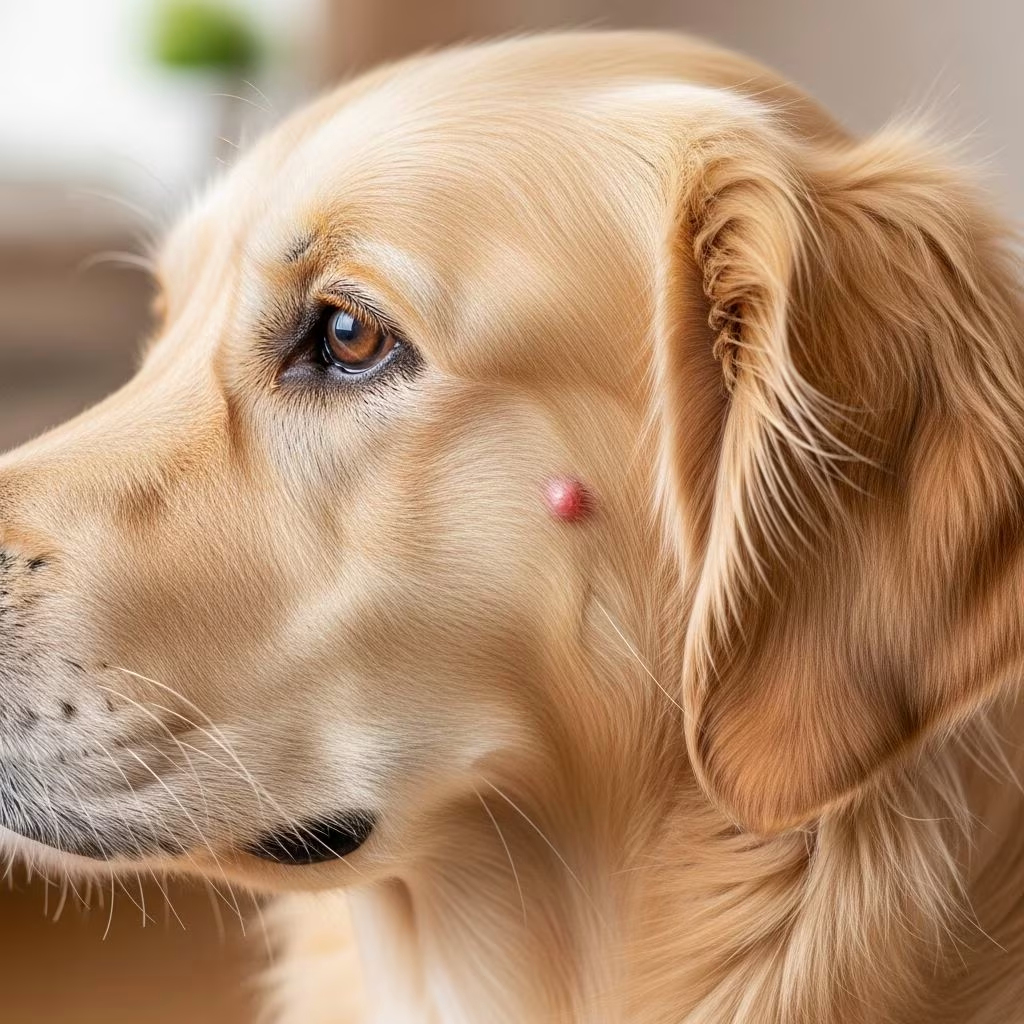
Mast cell tumors represent one of the most prevalent skin cancers affecting dogs, demanding prompt recognition and intervention to optimize outcomes. These neoplasms arise from mast cells, which play key roles in allergic responses and inflammation, and can exhibit unpredictable behavior ranging from benign to highly aggressive.
Understanding the Nature of Mast Cell Tumors in Canines
Mast cells are immune components abundant in a dog’s skin, releasing granules containing histamine, heparin, and other mediators upon activation. When these cells undergo malignant transformation, they form tumors that may degranulate spontaneously, causing variable swelling, redness, or ulceration at the site. This degranulation can also trigger systemic effects like gastrointestinal distress or anaphylaxis, complicating the clinical picture.
Certain breeds, including Boxers, Bulldogs, Boston Terriers, and Labrador Retrievers, show higher susceptibility, suggesting a genetic predisposition. Tumors can appear anywhere on the body but favor the trunk, limbs, and head. Their appearance mimics benign lumps, often described as raised, hairless, or inflamed masses that fluctuate in size.
Recognizing Early Warning Signs
Early detection hinges on observing subtle changes in the skin. Common indicators include:
- A firm, raised nodule that may itch or ulcerate.
- Sudden changes in lesion size due to degranulation.
- Associated symptoms like lethargy, vomiting, diarrhea, or facial swelling from histamine release.
- Multiple lesions in some cases, signaling potential dissemination.
Severe manifestations, such as collapse or bloody stools, indicate advanced disease with internal involvement, particularly in lymph nodes, spleen, or liver. Owners should routinely check their dogs’ skin during grooming or play, seeking veterinary evaluation for any persistent abnormalities.
Diagnostic Approaches for Accurate Assessment
Diagnosis begins with fine-needle aspiration (FNA), where cells are extracted and examined microscopically to confirm mast cell origin. While FNA identifies most tumors, it may miss low-grade cases, necessitating biopsy for definitive grading.
Grading systems, such as the Patnaik or Kiupel schemes, classify tumors into low (grade I/II), intermediate, or high (grade III) based on cellular features like mitotic index and necrosis. Advanced panels, including c-KIT mutations, provide prognostic insights, guiding therapy intensity.
Staging involves imaging (radiographs, ultrasound), lymph node evaluation via sentinel node mapping, and bloodwork to detect metastasis. Regional lymph nodes are critical checkpoints; their involvement drastically alters prognosis.
Primary Treatment: Surgical Intervention
Surgery remains the cornerstone for localized mast cell tumors, aiming for wide excision with 2-3 cm margins and deep fascial clearance. Complete removal (‘clean margins’) offers cure rates exceeding 90% for low-grade tumors.
For incompletely excised tumors, adjunctive therapies prevent recurrence. Recovery typically spans two weeks, involving e-collars, pain relief, and antihistamines like diphenhydramine to counter degranulation effects.
| Tumor Grade | Surgical Success Rate | Recommended Margins |
|---|---|---|
| Low (I/II) | 90-95% | 2 cm lateral, 1 fascial plane deep |
| High (III) | 50-70% | 3+ cm or multimodal approach |
This table summarizes expected outcomes based on established veterinary protocols.
Radiation Therapy as an Adjunctive Tool
Mast cell tumors exhibit high radiosensitivity, making radiation ideal for incomplete resections or inoperable sites like distal limbs or muzzle. Fractionated protocols (15-18 sessions, 46-54 Gy total) achieve local control in 75-96% of cases over 3-5 years.
Stereotactic radiation offers fewer sessions with comparable efficacy, minimizing anesthesia risks for older dogs. It’s particularly valuable post-surgery when margins are narrow.
Systemic Therapies for Aggressive Cases
For high-grade, metastatic, or non-resectable tumors, systemic options target microscopic disease. Chemotherapy protocols like vinblastine/prednisone (weekly then biweekly) yield response rates of 20-40%, with protocols adjusted for tumor burden.
Tyrosine kinase inhibitors (TKIs) such as toceranib (Palladia) and masitinib target c-KIT mutations prevalent in 30% of cases, offering oral administration and 50-70% biologic responses in bulky disease. These are well-tolerated, with side effects like diarrhea manageable via dose adjustments.
Emerging water-soluble paclitaxel formulations show promise, achieving 30% responses versus 11% for lomustine in advanced tumors.
Innovative Local Injection Therapies
Tigilanol tiglate (Stelfonta), FDA-approved in 2020, revolutionizes outpatient management. This intratumoral injection disrupts tumor membranes, induces necrosis, and stimulates immunity, destroying 87% of non-metastatic tumors with 1-2 doses.
Suitable for tumors <5 cm diameter, excluding certain sites like near eyes or genitals, it leaves a temporary wound healing to healthy tissue within 14 days. Dogs resume normal activity swiftly, enhancing quality of life.
Electrochemotherapy combines electric pulses with chemotherapy for deeper penetration, effective for multifocal disease.
Supportive Care to Mitigate Complications
Degranulation risks necessitate H1-blockers (diphenhydramine) and H2-blockers (famotidine, omeprazole) to prevent ulcers and anaphylaxis. Prednisone provides rapid symptom relief and occasional remissions, though short-lived (1-2 months).
Monitoring includes regular bloodwork for anemia or enzyme elevations signaling visceral spread. Nutritional support and anti-nausea meds bolster resilience during treatment.
Prognostic Factors Influencing Survival
Key determinants include:
- Grade and Mitotic Index: Low-grade tumors confer excellent prognosis; high-grade predicts shorter survival.
- Location: Mucocutaneous sites (muzzle, prepuce) behave aggressively.
- Lymph Node Status: Metastasis halves median survival time.
- c-KIT Mutations: Responsive to TKIs, improving outcomes.
Overall, low-grade localized MCTs enjoy >90% long-term survival; high-grade systemic disease averages 1-2 years with multimodal care.
Living with a Dog Diagnosed with MCT
Post-treatment vigilance involves monthly skin checks and prompt reporting of new lumps. Breeds prone to multiple tumors may require lifelong monitoring. Holistic adjuncts like omega-3 supplements show anecdotal anti-inflammatory benefits, though evidence is limited.
Emotional support for owners is vital; joining forums or counseling aids coping. Many dogs thrive years post-diagnosis with diligent management.
Frequently Asked Questions
Can mast cell tumors be prevented?
No definitive prevention exists, but early detection via regular exams improves prognosis. Genetic screening in predisposed breeds is emerging.
Is chemotherapy painful for dogs?
Most protocols cause mild GI upset; anti-nausea meds ensure comfort. TKIs are oral with fewer side effects.
What if surgery isn’t possible?
Options include radiation, Stelfonta injections, or TKIs, often combining for control.
How quickly do mast cell tumors grow?
Variable; low-grade slowly, high-grade rapidly with metastasis risk.
Are all mast cell tumors cancerous?
Yes, by definition malignant, but many behave benignly if excised early.
References
- Simplifying the Approach to Canine Mast Cell Tumors — Today’s Veterinary Practice. 2023. https://todaysveterinarypractice.com/oncology/simplifying-the-approach-to-canine-mast-cell-tumors/
- Canine mast cell tumors: diagnosis, treatment, and prognosis — PMC (NCBI). 2020-07-01. https://pmc.ncbi.nlm.nih.gov/articles/PMC7337164/
- About STELFONTA — Stelfonta Official Site. 2023. https://stelfonta.com/about-stelfonta/
- Mast Cell Tumors in Dogs — NC State Veterinary Hospital. 2024. https://hospital.cvm.ncsu.edu/services/small-animals/cancer-oncology/oncology/mast-cell-tumors/
- FAQs: Mast Cell Tumours in Dogs — The Pet Oncologist. 2023. https://www.thepetoncologist.com/faqs-mast-cell-tumours-in-dogs
- Mast Cell Tumor (Mastocytoma) in Dogs — PetMD. 2024. https://www.petmd.com/dog/conditions/cancer/mast-cell-tumor-in-dogs
- Mast Cell Tumors in Dogs — VCA Animal Hospitals. 2023. https://vcahospitals.com/know-your-pet/mast-cell-tumors-in-dogs



