

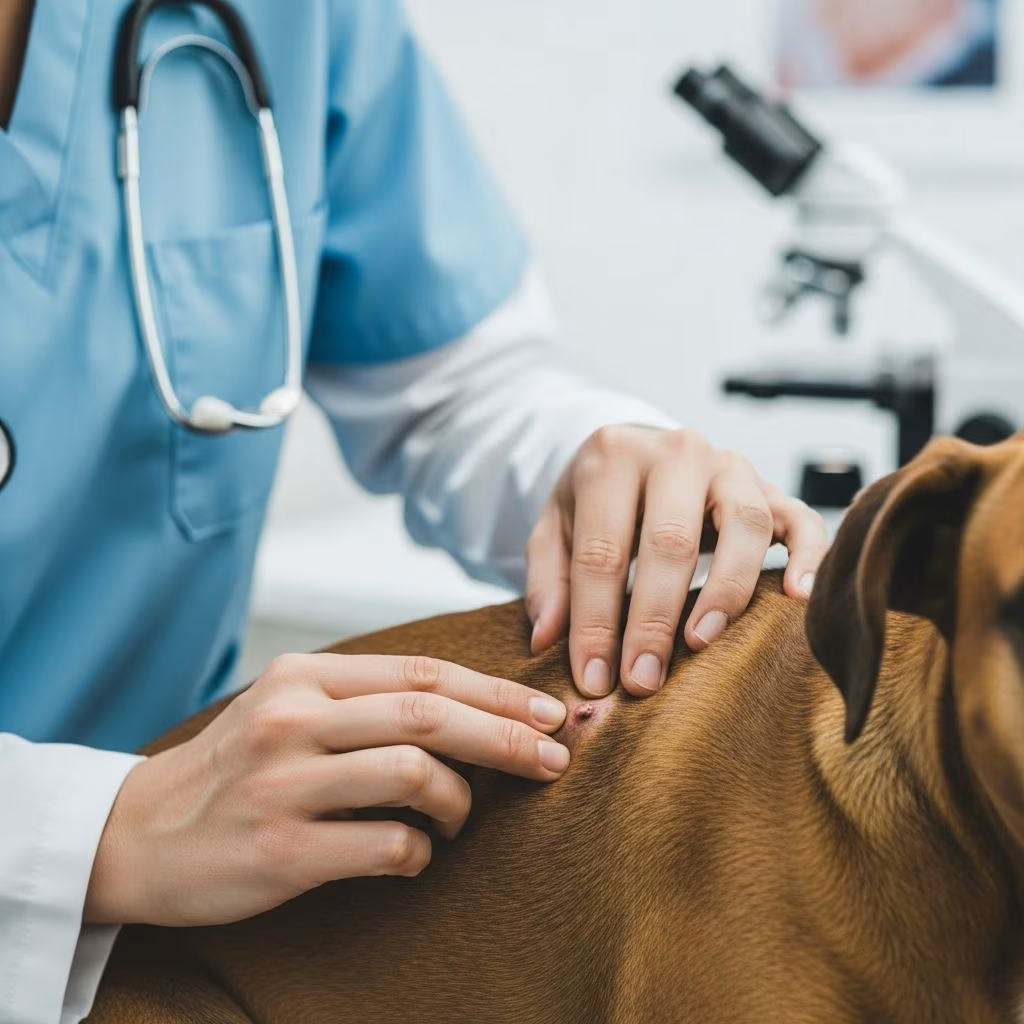
Mast cell tumors represent the most prevalent form of malignant skin cancer in dogs, affecting various breeds and ages with unpredictable behavior. These tumors arise from mast cells, which play key roles in immune responses but can become cancerous, releasing substances like histamine that cause diverse symptoms.
Understanding Mast Cell Tumors in Dogs
Mast cells are normal components of a dog’s immune system, residing in skin, gastrointestinal tract, and other tissues. When they proliferate uncontrollably, they form mast cell tumors (MCTs), which can range from benign-like growths to highly aggressive cancers. Unlike in cats where most MCTs are benign, canine versions demand vigilant monitoring due to their potential for metastasis.
The biological behavior varies widely; some tumors remain localized while others spread to lymph nodes, liver, spleen, or beyond. Factors like breed predisposition—such as Boxers, Pugs, and Boston Terriers—increase risk, though the exact causes remain unknown. Genetic factors likely contribute, making certain dogs more susceptible regardless of age, with occurrences noted even in puppies.
Recognizing Early Warning Signs
Early identification is crucial since MCTs often masquerade as innocuous skin bumps. Owners may notice a solitary lump or multiple nodules, varying in color from white, pink, to red, and texture from firm to soft. These masses can ulcerate, itch, or change size rapidly due to degranulation, where the tumor releases histamine and other mediators.
- Skin changes: Raised bumps, swelling, redness, or hives around the site.
- Size fluctuations: Tumors may enlarge or shrink daily, especially if rubbed or irritated.
- Local discomfort: Excessive licking, scratching, or biting at the area signals irritation.
Systemic effects emerge if degranulation occurs broadly, leading to gastrointestinal upset like vomiting, diarrhea, or dark feces from bleeding. Other signs include loss of appetite, lethargy, wheezing, widespread bruising, or even collapse in severe cases. Enlarged lymph nodes nearby may indicate spread, while advanced disease affects organs like the liver or spleen, causing further symptoms.
Not all lumps are cancerous—many mimic infections or cysts—but any new or changing mass warrants veterinary attention. Routine skin checks during grooming or petting can catch issues early.
Diagnostic Approaches for Accurate Assessment
Veterinarians start with a physical exam, noting mass location, size, and characteristics. Fine-needle aspiration (FNA) is the cornerstone, using a needle to extract cells for microscopic review. Mast cells appear distinctly with granules, confirming diagnosis swiftly.
For staging, additional tests evaluate spread:
- Bloodwork (CBC, chemistry) to detect abnormalities.
- Imaging like X-rays, ultrasound, or CT scans for organ involvement.
- Lymph node aspiration, even if not enlarged, as normal-sized nodes can harbor metastasis.
- Biopsy for histopathology, assessing grade and mitotic index (cell division rate).
Ultrasound-guided FNA of liver and spleen is recommended for high-risk cases, as imaging alone misses infiltration—studies show low sensitivity (0-43%) but cytology predicts poor prognosis accurately.
| Test | Purpose | Key Insight |
|---|---|---|
| FNA | Initial diagnosis | Identifies mast cells quickly |
| Biopsy | Grading/aggressiveness | Determines mitotic index |
| Ultrasound + Cytology | Staging organs | Detects hidden spread |
| LN Aspiration | Metastasis check | Normal nodes can be positive |
Grading and Staging: Predicting Behavior
MCTs are graded I to III based on microscopic features: Grade I (low-risk, well-differentiated), Grade II (intermediate), and Grade III (high-risk, poorly differentiated). Low mitotic index correlates with better outcomes. Location matters—mucocutaneous sites (muzzle, genitals) or limbs pose higher risks than trunk tumors.
Staging uses TNM: T (tumor size), N (nodes), M (metastasis). Most dogs present with cutaneous MCTs at stage I or II, but systemic spread shortens survival dramatically. High-grade tumors demand aggressive intervention.
Treatment Strategies: From Surgery to Advanced Therapies
Treatment hinges on grade, stage, and location. Surgery is first-line for localized tumors, aiming for clean margins (2-3 cm). Wide excision prevents recurrence, especially for low-grade cases.
For incomplete margins or high-grade, adjunct therapies include:
- Radiation: Effective post-surgery for residual cells, achieving local control in 80-90% of cases.
- Chemotherapy: Vinblastine, lomustine for metastatic disease; median survival extends to 1-2 years.
- Targeted drugs: Tyrosine kinase inhibitors like toceranib (Palladia) for c-KIT mutations, common in 20-30% of MCTs.
- Stelfonta injection: For non-surgical candidates, triggers tumor necrosis.
Holistic monitoring involves antihistamines (e.g., Benadryl) to counter histamine effects and gastroprotectants for GI symptoms.
Prognosis Factors and Long-Term Outlook
Prognosis varies: Grade I tumors post-surgery offer >90% one-year survival; Grade III drops to months without treatment. No organ infiltration yields 276-291 days survival vs. 100 days with it. Clean margins and low mitotic index are positive predictors.
Breed, age, and KIT status influence outcomes—mutated KIT responds to targeted therapy. Regular follow-ups with staging tests track recurrence.
Prevention and Home Care Tips
No proven prevention exists, but breed awareness and monthly skin exams help. Maintain healthy weight, diet, and avoid irritants. Prompt vet visits for lumps ensure timely intervention.
Frequently Asked Questions (FAQs)
Are mast cell tumors painful in dogs?
Some cause irritation or pain via ulceration/histamine, shown by licking or swelling; others are asymptomatic.
What breeds are at higher risk?
Boxers, Pugs, Boston Terriers, Bulldogs, and Retrievers face elevated risks.
Can MCTs be cured?
Low-grade, localized tumors often are via surgery; advanced cases focus on control.
How fast do they grow?
Variable—some slow, others rapid or fluctuating.
Is chemotherapy safe for dogs?
Yes, with fewer side effects than humans; monitored protocols minimize risks.
References
- Mast Cell Tumor – PWD Foundation — PWD Foundation. 2023. https://www.pwdfoundation.org/health/cancer/mast-cell-tumor/
- Mast Cell Tumors in Dogs — PetCure Oncology. 2024. https://petcureoncology.com/mast-cell-tumors-in-dogs/
- Mast Cell Tumors (Mastocytomas) in Dogs — Small Door Veterinary. 2023. https://www.smalldoorvet.com/learning-center/medical/mast-cell-tumors-mastocytomas
- Canine mast cell tumors: diagnosis, treatment, and prognosis — PMC (NCBI). 2020-07-01. https://pmc.ncbi.nlm.nih.gov/articles/PMC7337164/
- Mast Cell Tumor (Mastocytoma) in Dogs — PetMD. 2024. https://www.petmd.com/dog/conditions/cancer/mast-cell-tumor-in-dogs
- Mast Cell Tumors in Dogs — VCA Animal Hospitals. 2023. https://vcahospitals.com/know-your-pet/mast-cell-tumors-in-dogs



