

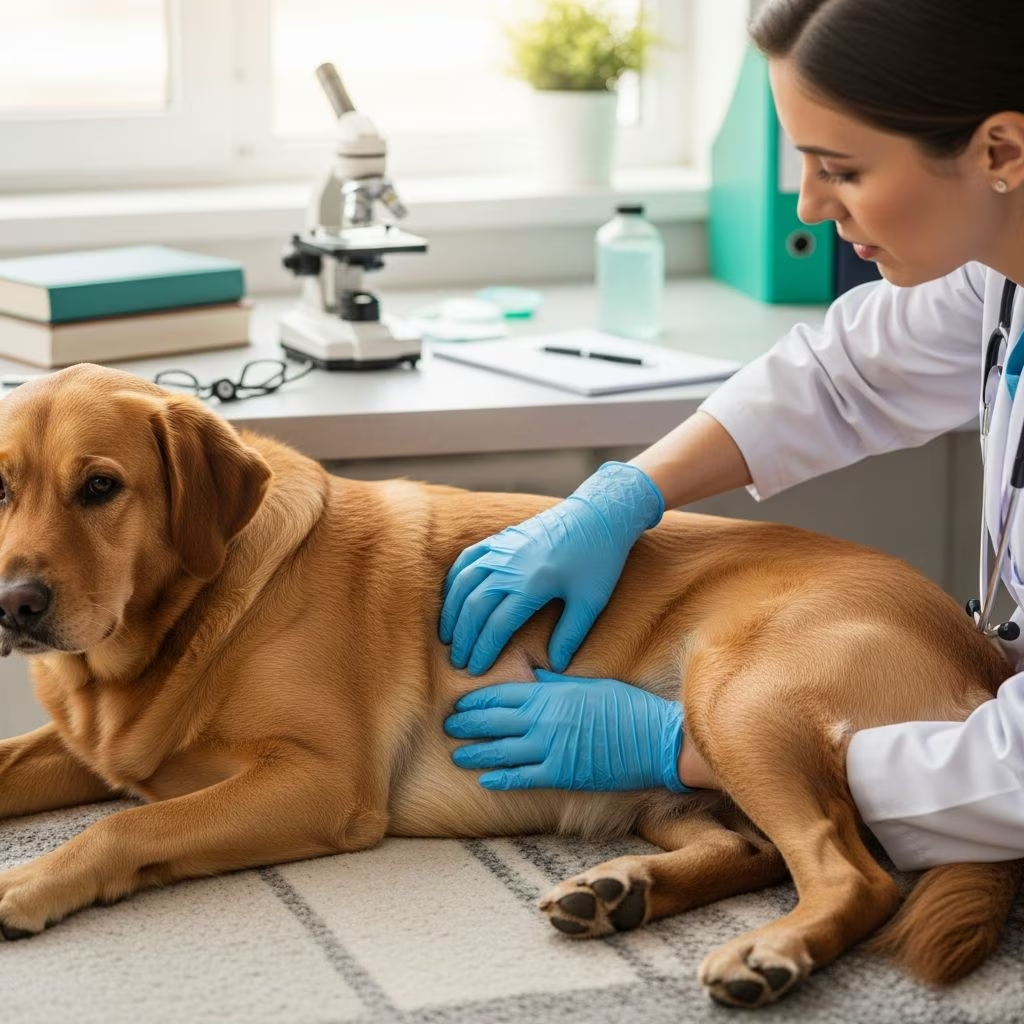
Mammary tumors represent a significant health concern for female dogs, often linked to hormonal influences and requiring prompt veterinary attention for optimal management. These growths arise in the mammary glands and can vary from harmless lumps to aggressive cancers affecting overall well-being.
Understanding the Prevalence and Risk Factors
Female dogs face a high incidence of mammary tumors, which account for a substantial portion of all canine cancers, particularly in unspayed individuals. Hormonal exposure, especially to estrogen and progesterone during heat cycles, plays a critical role in tumor development. Intact females over six years old are at greatest risk, with certain breeds showing higher susceptibility due to genetic predispositions.12
Progestins from medications or natural cycles can elevate risks, as seen in studies where treated dogs developed tumors at higher rates. Early spaying dramatically reduces this danger; for instance, removing ovaries before the first heat cycle nearly eliminates the threat, while later spaying offers partial protection.12
- Hormonal influences: Estrogen and progesterone drive cell proliferation in mammary tissue.
- Age factor: Incidence peaks after middle age.
- Breeding history: Unspayed or frequently bred dogs face elevated odds.
- Drug-related risks: Certain hormone therapies increase tumor formation.
Recognizing Early Warning Signs
Many dogs appear healthy initially, with tumors discovered during routine petting or grooming. Common indicators include firm, nodular masses along the belly or chest, often near nipples. These may grow quickly, ulcerate, or cause skin changes in malignant cases.34
Advanced stages bring systemic issues like lethargy, appetite loss, and weight reduction, signaling metastasis to lungs, liver, or lymph nodes. Inflammatory types cause rapid swelling, redness, and limb edema, mimicking infections but persisting longer.12
| Symptom | Benign Presentation | Malignant Presentation |
|---|---|---|
| Mass Characteristics | Firm, movable, painless | Fast-growing, fixed, ulcerated |
| Skin Changes | Minimal | Redness, inflammation |
| Systemic Effects | None | Fatigue, weight loss |
| Multiple Sites | Possible | Common, bilateral |
Diagnostic Approaches for Accurate Assessment
Veterinarians start with physical exams, palpating all mammary pairs—typically five on each side, with caudal glands most affected. Fine-needle aspirates provide initial cell analysis, while imaging like X-rays, ultrasounds, or CT scans checks for spread.25
Biopsies confirm benign versus malignant nature, assessing hormone receptors and markers like c-erbB-2 for aggression potential. Lymph node sampling is crucial, as regional spread occurs early.1
- Clinical history review.
- Palpation and aspirate.
- Imaging for staging.
- Histopathology post-surgery.
Primary Treatment: Surgical Interventions
Surgery remains the cornerstone, aiming for complete removal to prevent recurrence. Options range from lumpectomy for small benign masses to chain mastectomies for multiples, including surrounding tissue margins.23
For intact dogs, ovariohysterectomy (OHE) during surgery halts hormonal stimulation, reducing new tumor risks and metastasis. Radical procedures suit extensive disease but balance with recovery needs.26
Post-op care involves wound monitoring, pain management, and activity restriction. Healing typically spans 10-14 days, with histopathology guiding further steps.
Adjuvant Therapies for High-Risk Cases
Benign tumors often need no more than surgery, but malignant ones may require chemotherapy like doxorubicin or carboplatin, administered intravenously every 2-3 weeks.35 Side effects are mild—occasional nausea without hair loss.
Radiation targets incomplete margins or inflammatory carcinomas, combined with piroxicam for better outcomes. NSAIDs aid carcinoma control, while hormonal therapies like tamoxifen show variable efficacy in receptor-positive tumors.16
| Therapy Type | Indications | Typical Protocol | Cost Estimate |
|---|---|---|---|
| Chemotherapy | Metastatic/high-risk | 4-6 IV sessions | $500-700/treatment5 |
| Radiation | Inflammatory/local residue | 3-4 weeks daily | $8,000-10,0005 |
| NSAIDs | Carcinomas | Ongoing oral | Low |
Prognosis and Long-Term Monitoring
Outcomes hinge on tumor type: benign cases cure rates exceed 90% post-surgery, while malignant ones vary—simple carcinomas offer 1-2 year survivals, but inflammatory types average months.12 Early detection and OHE improve odds significantly.
Regular check-ups, every 3-6 months initially, include imaging and bloodwork to catch recurrences. Owners should watch for new lumps or behavioral shifts.
Prevention Strategies for Pet Owners
Spaying before puberty is the most effective deterrent, slashing risks by over 99%. Routine exams during wellness visits aid early spotting. Avoid unnecessary hormone treatments and maintain ideal weight to minimize factors.26
- Spay early: Ideal before first estrus.
- Annual vet checks: Palpate glands.
- Healthy lifestyle: Balanced diet, exercise.
- Breed awareness: Monitor high-risk types.
FAQs on Canine Mammary Tumors
What breeds are most prone? While any dog can develop them, smaller breeds like Poodles and Spaniels show higher rates.1
Can males get mammary tumors? Rare, but possible, often aggressive when occurring.1
Is chemotherapy painful for dogs? Generally well-tolerated with minimal side effects compared to humans.3
How do I check my dog at home? Gently feel along the abdomen from chest to hind legs for unusual lumps.
What if surgery isn’t an option? Palliative care with meds and radiation can manage symptoms.6
Advances in Veterinary Oncology
Research explores targeted therapies, like those against telomerase or growth factors, promising better control. Biomarker studies refine predictions, personalizing care.1
Owners partnering with oncologists access trials, enhancing options beyond standards.
References
- Mammary Tumors – Canine — Veterinary Society of Surgical Oncology (VSSO). Accessed 2026. https://vsso.org/mammary-tumors-canine
- Mammary Tumors in Dogs — Merck Veterinary Manual. Updated recently. https://www.merckvetmanual.com/reproductive-system/mammary-tumors-in-dogs/mammary-tumors-in-dogs
- Mammary Tumors in Dogs — BluePearl Pet Hospital. Accessed 2026. https://bluepearlvet.com/medical-articles-for-pet-owners/mammary-tumors-in-dogs/
- Benign Mammary Tumors in Dogs — VCA Animal Hospitals. Accessed 2026. https://vcahospitals.com/know-your-pet/mammary-tumors-in-dogs-benign
- Medical Oncology: Canine Mammary Tumors — NC State Veterinary Hospital. Accessed 2026. https://hospital.cvm.ncsu.edu/services/small-animals/cancer-oncology/oncology/canine-mammary-tumors/
- Mammary Cancer — Cornell University College of Veterinary Medicine. Accessed 2026. https://www.vet.cornell.edu/departments-centers-and-institutes/riney-canine-health-center/canine-health-information/mammary-cancer



