

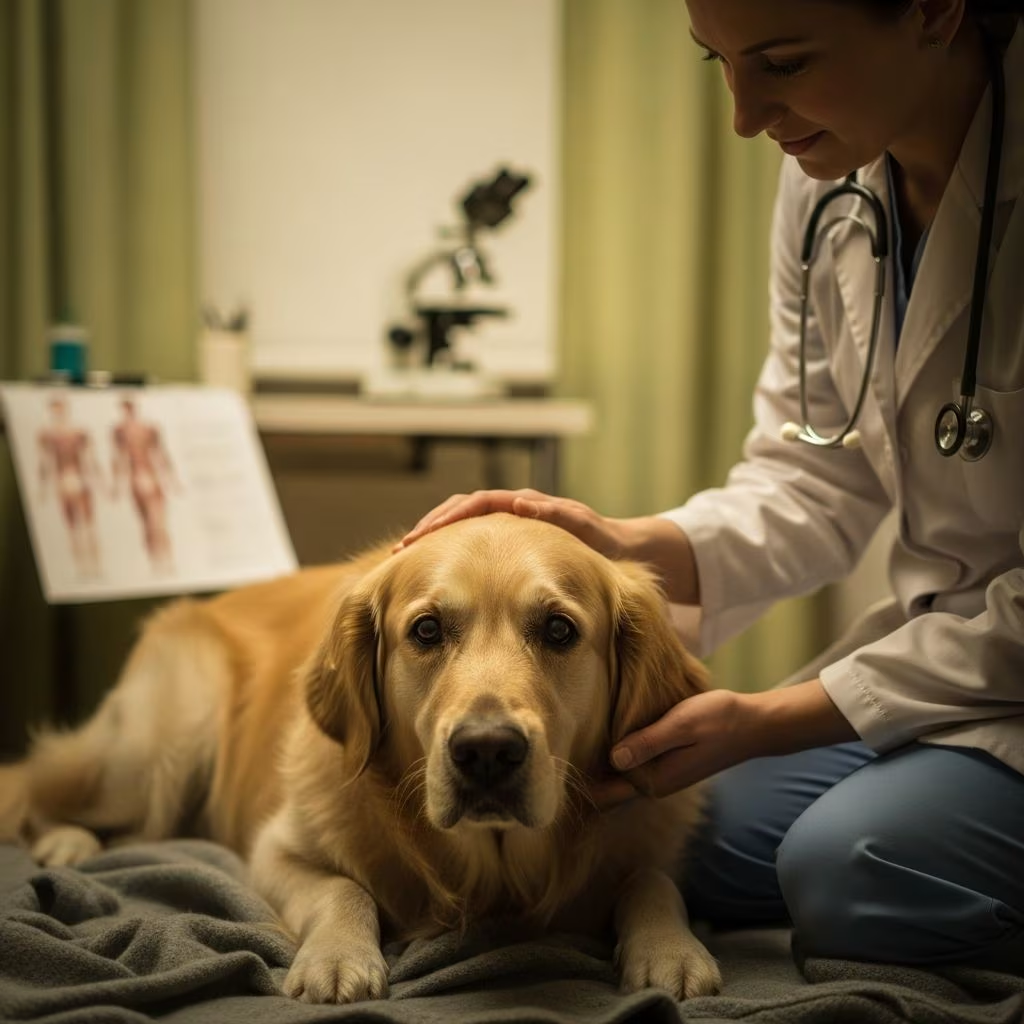
Canine leukemia encompasses a group of blood cancers affecting dogs, with prognosis varying significantly based on whether it is acute or chronic. Acute forms progress rapidly and carry a guarded outlook, while chronic types often allow for extended survival with appropriate management.
Understanding the Types of Canine Leukemia
Leukemia in dogs primarily involves the abnormal proliferation of white blood cells, originating in the bone marrow or lymphoid tissues. The two main categories are acute leukemia, characterized by immature blast cells, and chronic leukemia, dominated by mature lymphocytes.
Acute leukemias, including acute lymphoblastic leukemia (ALL) and acute myeloid leukemia (AML), feature large numbers of immature cells that crowd out normal blood production, leading to cytopenias like anemia and thrombocytopenia. In contrast, chronic lymphocytic leukemia (CLL) involves a slow accumulation of small, mature lymphocytes, often discovered incidentally during routine checkups.
Recognizing Symptoms in Affected Dogs
Symptoms depend on the leukemia type and stage. Dogs with acute leukemia typically present with nonspecific signs such as lethargy, fever, loss of appetite, vomiting, diarrhea, and gastrointestinal distress. Physical findings may include splenomegaly (enlarged spleen), hepatomegaly (enlarged liver), lymphadenopathy, pale mucous membranes, petechiae, or bleeding tendencies due to myelophthisis.
- Lethargy and weakness from anemia
- Fever (pyrexia) and recurrent infections
- Loss of appetite and weight loss
- Enlarged abdomen from organomegaly
- Bruising, epistaxis, or other bleeding issues
- Increased thirst and urination
Chronic leukemia often lacks overt symptoms initially, with mild lymphocytosis noted on bloodwork. As it advances, dogs may show reduced energy, poor appetite, weight loss, or mild organ enlargement. Rarely, CLL can transform into aggressive Richter’s syndrome, mimicking high-grade lymphoma with severe lymphadenopathy, coughing, or neurological issues.
Diagnostic Approaches for Accurate Assessment
Diagnosis begins with a complete blood count (CBC) revealing abnormal white cell counts, often with blasts in acute cases or persistent lymphocytosis in CLL (typically >30,000-60,000/µL). Peripheral blood smears help identify cell morphology, distinguishing neoplastic from reactive processes.
Bone marrow aspiration and biopsy confirm marrow involvement, essential for acute leukemia. Flow cytometry, immunophenotyping, and PCR for antigen receptor rearrangement (PARR) differentiate CLL from polyclonal lymphocytosis, particularly in breeds like Golden Retrievers. Imaging like ultrasound or radiographs detects organomegaly or mediastinal masses, which occur in nearly half of AML cases.
| Test | Purpose | Key Findings in Leukemia |
|---|---|---|
| CBC with smear | Initial screening | Blasts >20% (acute); lymphocytosis (chronic) |
| Bone marrow analysis | Confirm origin | >30% blasts in marrow (acute) |
| Flow cytometry/PARR | Clonality assessment | Monoclonal population confirms neoplasia |
| Imaging (USG/X-ray) | Organ evaluation | Splenomegaly, masses |
Treatment Strategies Tailored to Leukemia Type
Treatment decisions hinge on leukemia subtype, clinical status, and owner goals. Acute leukemia demands immediate, intensive intervention due to its aggressive nature.
Managing Acute Leukemia
Dogs with acute leukemia are often hospitalized for supportive care, including transfusions for anemia or thrombocytopenia, IV fluids to prevent tumor lysis syndrome, and monitoring. Multiagent chemotherapy protocols like modified CHOP (cyclophosphamide, doxorubicin/hydroxydaunorubicin, vincristine/Oncovin, prednisone) are standard, sometimes incorporating L-asparaginase. Initial response may occur, but remissions are short-lived.
Vincristine and dexamethasone provide rapid cytoreduction in hyperleukocytic cases. Despite efforts, many dogs succumb within days to weeks without sustained remission.
Approaches for Chronic Lymphocytic Leukemia
CLL management is conservative unless criteria like clinical signs, rising lymphocyte counts (>60,000/µL), cytopenias, or significant organomegaly emerge. Monitoring with monthly CBCs and exams suffices for asymptomatic cases.
When treatment starts, oral chlorambucil (Leukeran) combined with prednisone is first-line, administered at home. This regimen controls lymphocytosis effectively with minimal side effects, supporting long-term remission (often years). Dosing involves chlorambucil at 0.1-0.2 mg/kg every other day or pulse dosing, tapered as needed.
- Monthly monitoring during induction
- Adjust based on response and tolerance
- Lifelong therapy common for control
Prognosis and Survival Expectations
Prognosis differs starkly by type. Acute leukemia carries a poor outlook, with median survival of days to weeks even with chemotherapy. Rapid progression and complications like sepsis or hemorrhage limit success.
CLL offers a more favorable prognosis. Untreated asymptomatic dogs may live normally for years. With chlorambucil/prednisone, survival exceeds 1-2 years, sometimes longer, with good quality of life. Factors worsening prognosis include transformation to Richter’s syndrome, severe cytopenias, or hyperglobulinemia (noted in breeds like English Bulldogs).
| Leukemia Type | Median Survival | Influencing Factors |
|---|---|---|
| Acute (ALL/AML) | Weeks | Early chemo response, cytopenias severity |
| Chronic (CLL) | 1-2+ years | Lymphocyte doubling time, organ involvement |
Factors Influencing Overall Outcomes
Several elements modulate prognosis. Breed predispositions exist, with CLL more common in older dogs (>6 years), Goldens, and Bulldogs. Early detection via routine bloodwork improves CLL management. Owner compliance with monitoring and therapy is crucial.
Comorbidities like infections or concurrent diseases complicate care. In acute cases, mediastinal masses do not preclude leukemia over lymphoma but signal advanced disease.
Supportive Care and Quality of Life
Beyond specifics, supportive measures enhance well-being. Nutritional support combats cachexia, antibiotics prevent infections, and pain management addresses discomfort from organomegaly or anemia.
Pet owners should discuss palliative options if intensive therapy fails, prioritizing comfort in end stages.
Frequently Asked Questions (FAQs)
Is canine leukemia painful for dogs?
Leukemia itself is not typically painful, but secondary effects like anemia, gastrointestinal upset, or organ distension can cause discomfort.
Can chronic leukemia be cured?
No, CLL is managed as a chronic condition, not cured, but treatment controls it effectively for extended periods.
How is leukemia different from lymphoma in dogs?
Leukemia involves bone marrow and blood primarily, while lymphoma affects lymph nodes and organs; overlap exists, especially in advanced cases.
When should treatment start for CLL?
Initiate when clinical signs appear, lymphocyte counts exceed 60,000/µL, or cytopenias/organomegaly develop.
What breeds are prone to leukemia?
Any breed, but CLL noted more in Golden Retrievers and English Bulldogs.
Owner Guidance and Next Steps
If leukemia is suspected, seek prompt veterinary oncology consultation. Routine senior bloodwork aids early CLL detection. Educate on watch-and-wait for indolent cases to avoid overtreatment. With tailored care, many dogs enjoy meaningful time post-diagnosis.
References
- How to Approach Canine Leukemias in General Practice — Today’s Veterinary Practice. 2023. https://todaysveterinarypractice.com/oncology/how-to-approach-canine-leukemias-in-general-practice/
- What Is Canine Leukemia? How It Differs From Canine Lymphoma — ImpriMed. 2023. https://www.imprimedicine.com/blog/leukemia
- Chronic Lymphocytic Leukemia in Dogs — VCA Animal Hospitals. 2024. https://vcahospitals.com/know-your-pet/chronic-lymphocytic-leukemia-in-dogs
- Canine Low-grade Lymphoma / Chronic Lymphocytic Leukemia — NC State University College of Veterinary Medicine. 2024. https://hospital.cvm.ncsu.edu/services/small-animals/cancer-oncology/oncology/low-grade-lymphoma-vs-leukemia/
- Leukemia in Dogs — PetMD. 2024. https://www.petmd.com/dog/conditions/cancer/leukemia-dogs



