

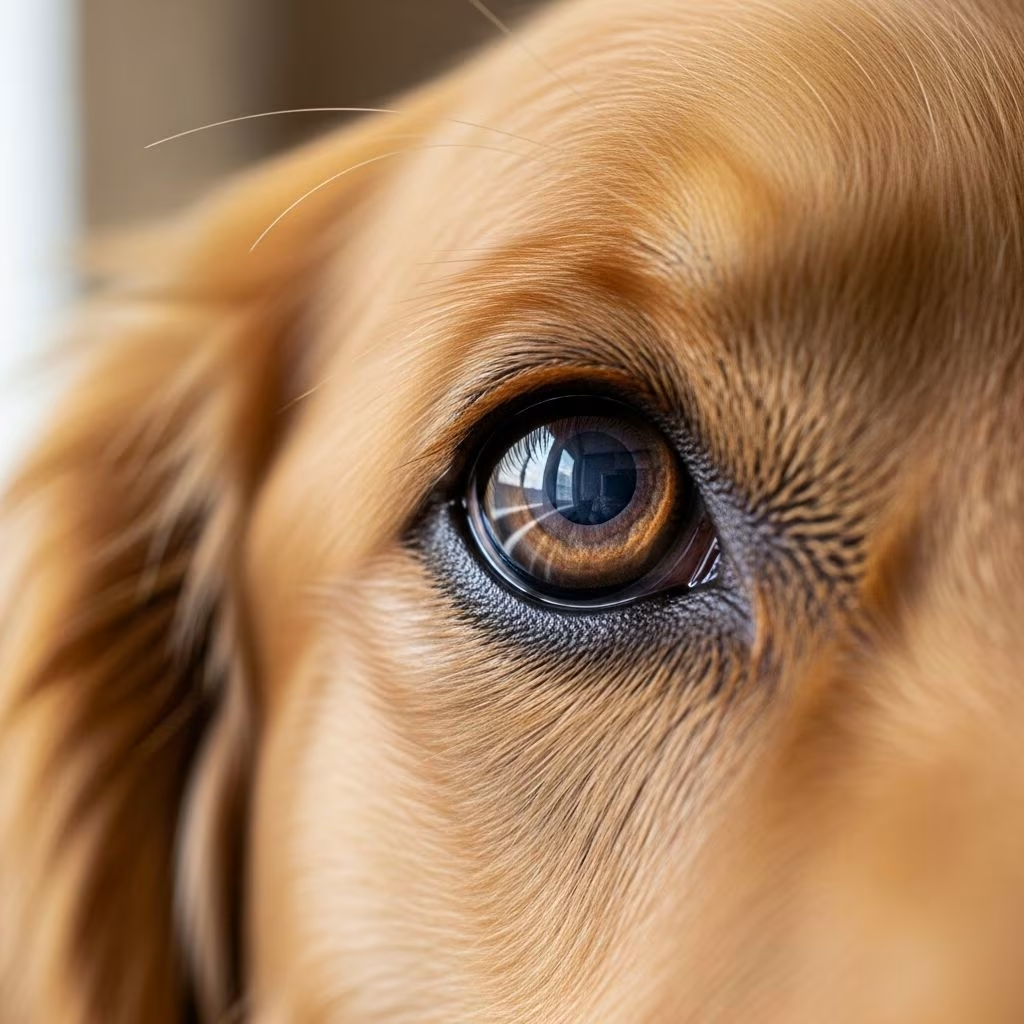
The lens is a transparent structure in the eye that focuses light onto the retina, enabling clear vision. In dogs, this delicate organ can develop various pathological conditions that compromise sight and cause significant discomfort. Lens disorders represent a significant category of ocular emergencies in veterinary practice, requiring prompt recognition and intervention by qualified professionals. Understanding these conditions helps pet owners identify problems early and seek appropriate medical care before irreversible vision loss occurs.
Primary Lens Displacement: Causes and Mechanisms
Lens displacement, known as luxation or subluxation, occurs when the tiny ligaments that anchor the lens to surrounding eye structures weaken or break. These supporting ligaments, called zonules, maintain the lens in its proper position within the eye. When these structures fail, the lens can shift from its normal location, either forward into the anterior chamber or backward into the vitreous cavity. This displacement can happen suddenly and causes immediate problems with eye function and comfort.
Primary lens luxation represents an inherited condition affecting specific dog breeds with genetic predisposition. Breeds including terriers, Australian shepherds, and other small to medium-sized dogs show higher incidence rates. The genetic basis involves structural weakness in the zonular apparatus that develops over time, eventually leading to complete ligament failure and lens displacement.
Recognizing Early Warning Signs
Early detection of lens problems dramatically improves outcomes and preserves vision. Owners should monitor their dogs for subtle changes in eye appearance and behavior that may indicate developing lens pathology:
- Redness affecting the white portion of the eye (conjunctival and episcleral injection)
- Visible cloudiness or haziness in the eye
- Changes in pupil size or shape, particularly asymmetrical pupils
- Excessive tearing or increased blinking frequency
- Squinting or keeping the eye partially or completely closed
- Frequent pawing or rubbing at the affected eye
- Apparent enlargement of the eye itself
- Sudden vision impairment or behavioral changes suggesting visual loss
- Watery discharge from the eye
Anterior lens luxation, where the lens displaces forward into the front chamber of the eye, produces more pronounced clinical signs than posterior displacement. Owners often describe a sudden onset of symptoms, noting that their dog appeared normal hours before symptoms became apparent. This acute presentation distinguishes lens luxation from gradual conditions like cataracts that develop slowly over weeks or months.
The Cascade of Secondary Complications
The most dangerous consequence of anterior lens luxation involves the development of secondary glaucoma. As the displaced lens moves forward, it physically blocks the drainage pathways for fluid circulating within the eye. Intraocular pressure rises rapidly to dangerously high levels, creating significant pain and progressive damage to the retina and optic nerve. Without emergency intervention, this pressure elevation causes irreversible blindness within hours to days.
Lens-induced uveitis represents another serious complication, where proteins released from a damaged lens trigger inflammatory responses. The uvea—the pigmented tissue layer comprising the iris, ciliary body, and choroid—becomes inflamed, causing additional pain and potentially contributing to vision loss. This inflammation can persist even after lens removal if not managed aggressively.
Pupillary occlusion may develop when lens displacement causes the iris to become blocked, preventing normal pupil response. Secondary phthisis bulbi, a end-stage shrunken eye condition, can result from chronic inflammation and elevated pressure that irreversibly damages eye structures.
Diagnostic Evaluation and Ophthalmologic Assessment
Veterinary ophthalmologists employ several diagnostic techniques to confirm lens luxation and evaluate the extent of damage:
- Slit-lamp biomicroscopy: Allows high-magnification examination of anterior eye structures and lens position
- Tonometry: Measures intraocular pressure to detect glaucoma development
- Gonioscopy: Evaluates the drainage angle and identifies obstruction to fluid flow
- Ultrasound: Particularly valuable when the lens is opaque or when posterior luxation is suspected
- Fundic examination: Assesses retinal and optic nerve health to determine vision potential
- B-scan ultrasonography: Used when the view into the eye is blocked by opacity or lens displacement
Early recognition requires experience and specialized equipment, as initial stages may show only subtle lens wobbling that untrained observers cannot detect. The first noticeable signs to owners are typically the pain-related behaviors and eye redness rather than lens movement itself.
Medical Management Approaches
Immediate medical therapy aims to control pain, reduce inflammation, and normalize intraocular pressure while arrangements are made for surgical intervention. Medical management alone does not resolve lens luxation but prevents progressive damage and improves comfort during the critical period before surgery.
Glaucoma Medication Protocols
Prostaglandin analogs such as latanoprost increase aqueous humor outflow through the uveoscleral pathway, effectively lowering intraocular pressure. Pilocarpine causes pupil constriction, which can help in posterior luxation cases by drawing the lens backward and away from the anterior chamber. Systemic and topical carbonic anhydrase inhibitors reduce aqueous humor production and provide additional pressure reduction.
Anti-inflammatory Therapy
Topical and systemic corticosteroids control lens-induced inflammation, reducing uveal involvement and associated pain. Dexamethasone sodium phosphate administered systemically or via subconjunctival injection provides stronger anti-inflammatory effects in acute cases. Topical nonsteroidal anti-inflammatory drugs complement steroid therapy and help manage pain signaling.
Supportive Medications
Mydriatic agents like tropicamide dilate the pupil, improving comfort in some cases and helping assess retinal function. Antibiotic-steroid combination drops prevent secondary infection and reduce ocular surface inflammation during the acute phase.
Surgical Treatment and Management Decisions
Surgery represents the only definitive treatment for anterior lens luxation. The specific surgical approach depends on lens position, eye pressure status, and overall eye health assessment.
Intracapsular Lens Extraction
The standard surgical procedure involves complete removal of the lens through a dorsal corneal incision. A large opening allows the entire lens, including its capsule, to be carefully extracted. This approach prevents leaving behind lens material that could cause ongoing inflammation. Board-certified veterinary ophthalmologists typically perform this procedure under general anesthesia with careful aseptic technique and microsurgical instrumentation.
Phacoemulsification Technique
In selected early cases, phacoemulsification using high-frequency ultrasound energy offers a less invasive alternative. This technique breaks the lens into smaller fragments that are then aspirated through a smaller incision, potentially resulting in faster healing and improved vision outcomes in appropriate candidates. However, it requires specialized equipment and expertise not available at all veterinary facilities.
Posterior Luxation Management
When the lens displaces backward into the vitreous cavity, the treatment approach differs significantly. Many posterior luxations cause minimal discomfort and do not require surgery. Medical management using pupil-constricting medications maintains the lens position and prevents anterior movement. Treatment of underlying uveitis if present is equally important, as inflammation often precipitates posterior luxation.
Surgical repair of posterior luxation is technically demanding with higher complication rates, making it reserved for cases where the lens causes significant problems or vitreous inflammation develops.
Recovery and Long-Term Outcomes
Dogs recovering from lens removal surgery require consistent topical medication administration for extended periods. Antibiotic-steroid combinations prevent infection and manage post-operative inflammation. Anti-glaucoma medications may be necessary long-term if pressure elevation persists despite lens removal, particularly in eyes with significant prior damage.
Most dogs adapt well to aphakia (absence of the lens) within weeks. Without the lens, the eye loses some focusing ability but retains functional vision for most daily activities. Slight magnification distortion results from the missing lens, but this does not significantly impair most dogs’ quality of life. Approximately 70-80% of eyes achieve improved vision or maintenance of existing vision when surgical intervention occurs promptly.
Cataracts and Lens Opacity
Distinct from luxation, cataracts represent another major lens disorder affecting dogs. Lens opacity develops as lens proteins denature and accumulate, progressively blocking light transmission to the retina. Cataracts can develop rapidly in young dogs, particularly those with underlying metabolic diseases or genetic predispositions.
Juvenile cataracts often progress quickly and may be associated with significant inflammation before opacity becomes complete. Early evaluation of retinal function through electroretinography before cataract surgery helps determine surgical success potential. Dogs with healthy retinas typically regain vision after cataract removal, while those with prior retinal disease may have limited improvement.
Uncommon Lens Pathology: Capsule Rupture
Traumatic injuries can rupture the lens capsule, allowing lens material to leak into the eye and trigger severe inflammation. These injuries often occur with penetrating ocular trauma or blunt force impact. Anterior lens capsule rupture frequently accompanies anterior lens luxation from traumatic injury.
Treatment involves prompt surgical removal of the damaged lens and repair of any associated scleral defects. The prognosis depends on the extent of retinal damage from the initial trauma and the timeliness of surgical intervention. Close attention to preventing post-operative infection is critical given the traumatic origin.
Critical Differences Between Lens Conditions
| Condition | Primary Cause | Onset | Pain Level | Primary Treatment |
|---|---|---|---|---|
| Anterior Lens Luxation | Zonular ligament failure | Sudden (hours) | Severe | Urgent surgical removal |
| Posterior Lens Luxation | Zonular ligament failure | Sudden | Mild to none | Medical management |
| Cataract | Protein denaturation | Gradual (weeks-months) | None (unless inflamed) | Surgical removal when vision impaired |
| Lens-Induced Uveitis | Protein release from lens damage | Variable | Moderate to severe | Anti-inflammatory therapy ± lens removal |
When to Seek Emergency Care
Lens luxation should be treated as an ophthalmologic emergency. Any dog presenting with sudden eye pain, redness, cloudiness, or vision loss requires immediate veterinary evaluation. While not all eye redness indicates luxation, the potential for rapid vision loss and irreversible damage necessitates prompt assessment by a veterinarian.
Referral to a board-certified veterinary ophthalmologist is strongly recommended, as these specialists have the advanced equipment, surgical training, and experience to optimize outcomes. General practice veterinarians may stabilize the patient medically and provide urgent care but typically refer surgical cases to specialists.
Frequently Asked Questions About Canine Lens Disorders
Can lens luxation be prevented in predisposed breeds?
Genetic screening and selective breeding away from carrier animals can reduce incidence in breeding programs. Individual prevention is limited once zonular weakness develops, though early detection and treatment prevent blindness.
Will my dog go blind if diagnosed with lens luxation?
Early surgical intervention typically preserves or improves vision in most cases. Only untreated or late-stage cases with irreversible retinal damage result in permanent blindness.
How long is recovery after lens removal surgery?
Initial healing takes 4-6 weeks, with complete tissue remodeling extending to 8-12 weeks. Topical medication use typically continues long-term, sometimes indefinitely.
Can a dog see normally without a lens?
Dogs maintain functional vision without a lens, though with slight magnification distortion. Most adapt quickly and return to normal activities within weeks.
What is the cost of lens removal surgery?
Surgical costs vary widely by location and facility, typically ranging from $1,500 to $4,000 per eye depending on complexity and specialist fees.
References
- Lens-Related Ocular Emergencies in Dogs: Treatment Outcomes — PMC/National Center for Biotechnology Information. 2023. https://www.ncbi.nlm.nih.gov/pmc/articles/PMC10353131/
- Primary Lens Luxation in Dogs — Cornell University College of Veterinary Medicine, Riney Canine Health Center. 2024. https://www.vet.cornell.edu/departments-centers-and-institutes/riney-canine-health-center/canine-health-topics/primary-lens-luxation
- Lens Luxation in Dogs — VCA Animal Hospitals. 2024. https://vcahospitals.com/know-your-pet/lens-luxation-in-dogs
- Lens Luxation: Diagnosis and Emergency Management — Davies Veterinary Specialists. 2023. https://www.vetspecialists.co.uk/fact-sheets-post/lens-luxation-in-cats-and-dogs/
- Disorders of the Lens in Dogs — Merck Veterinary Manual. 2024. https://www.merckvetmanual.com/dog-owners/eye-disorders-of-dogs/disorders-of-the-lens-in-dogs
- Lens Luxation: Surgical and Medical Management — Animal Vision Care & Surgical Center. 2024. https://animalvisioncare.com/eye-conditions/canine/lens-luxation/



