

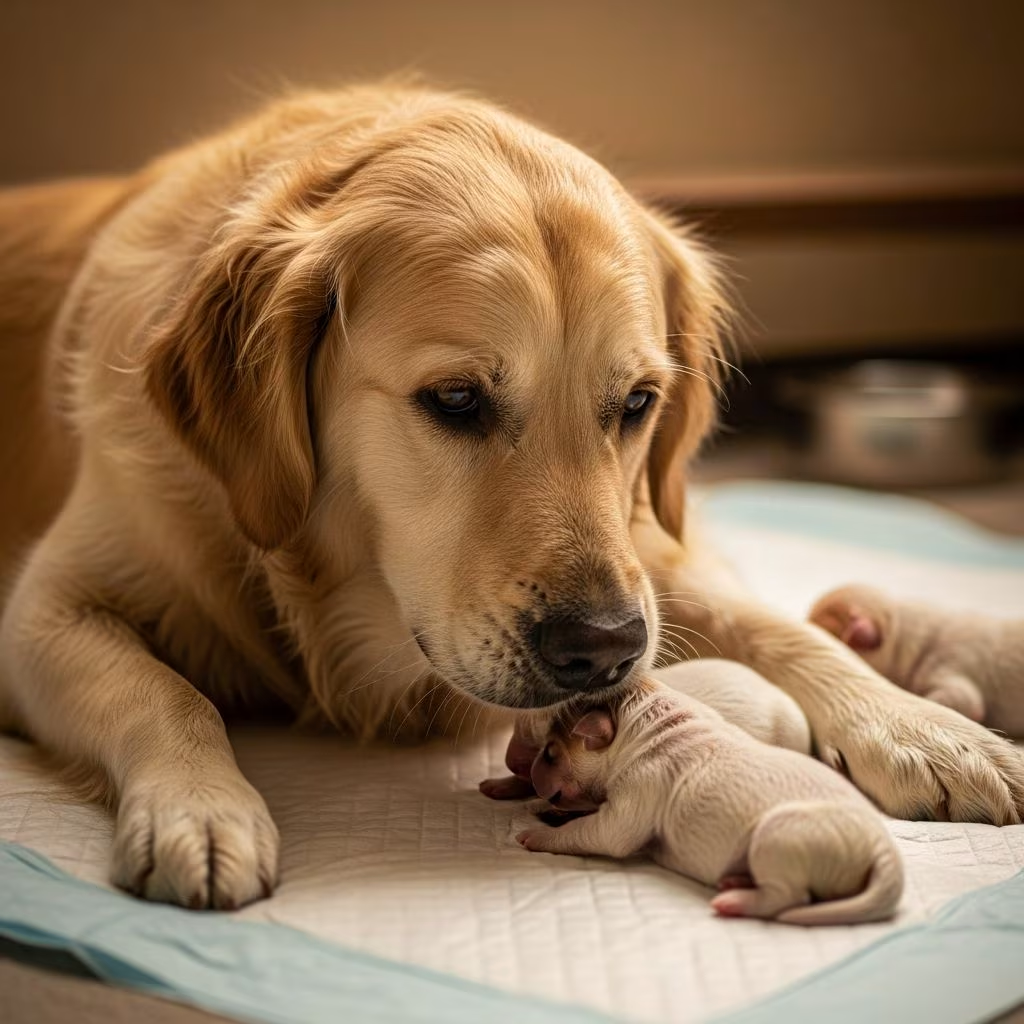
When your female dog reaches the end of her pregnancy, understanding what to expect during labor and delivery becomes essential for her health and the wellbeing of her puppies. The birthing process, known as whelping, follows a predictable pattern with three distinct stages, each with specific characteristics and timelines. Preparing yourself with knowledge about these stages can help you provide appropriate support and recognize when veterinary intervention is necessary.
Recognizing the Onset of Labor
Before active labor begins, your dog will enter a preparatory phase where her body readies itself for delivery. During this period, you may notice significant behavioral changes that signal the approaching arrival of puppies. Understanding these early indicators allows you to provide comfort and ensure your dog is in a safe, designated whelping area.
One of the most reliable indicators of imminent labor is a drop in your dog’s body temperature. Within 24 hours before active labor begins, most dogs experience a temperature decrease below 100 degrees Fahrenheit. By monitoring your dog’s temperature daily during the final week of pregnancy, you can more accurately predict when labor will commence. Additionally, your dog may refuse food or show only mild interest in eating approximately 24 hours before whelping.
Behavioral changes accompany these physical signals. Your dog may become increasingly restless, pacing frequently or appearing anxious. She may seek out quiet spaces and begin nesting behaviors, such as digging, circling, or arranging blankets in her whelping box. Some dogs become clingy and seek constant companionship from their owners, while others prefer solitude. These variations in behavior are all normal responses to hormonal changes occurring within her body.
Stage One: The Preparation Phase
The first stage of labor focuses on internal preparation rather than visible contractions. During this phase, the mother dog’s cervix dilates and her uterus begins contracting, though these contractions typically remain invisible from the outside. The duration of stage one varies considerably among individual dogs.
Generally, stage one lasts between 6 to 12 hours, though first-time mothers or anxious dogs may experience extended durations lasting up to 36 hours. The prolonged timeline in some cases does not necessarily indicate a problem; it simply reflects natural variation among individual animals. During this extended preparatory period, it is crucial to remain calm and supportive, as your dog may sense your anxiety and become more stressed herself.
Observable signs during stage one include:
- Persistent restlessness and inability to settle comfortably
- Rapid or shallow breathing and occasional panting
- Loss of appetite or refusal to eat offered food
- Mild vaginal discharge that appears red or brown in color
- Shivering or trembling due to hormonal shifts
- Frequent trips to her whelping box with circling and positioning behaviors
- Possible vomiting or retching, though this should be monitored
Toward the end of stage one, your dog should gradually settle into her whelping box, indicating that her body has made significant progress in preparation. If your dog shows signs of distress, excessive vomiting, or does not progress to stage two labor within 24 hours, contacting your veterinarian is advisable.
Stage Two: The Active Delivery Phase
Stage two represents the actual delivery of puppies and is characterized by strong, visible contractions and active straining. This stage marks a transition from internal preparation to external physical effort as your dog’s body works to expel each puppy.
The duration of stage two varies significantly based on several factors. The first puppy often takes the longest to arrive, potentially requiring 2 to 4 hours if initial contractions are mild, or as quickly as 20 to 30 minutes if contractions are strong and efficient. Subsequent puppies typically arrive more rapidly, with intervals between births ranging from just 5 minutes to as long as 1.5 hours. Some sources indicate that rest periods between puppies can extend up to 4 hours in certain cases. As long as your dog remains comfortable and is not continuously straining, these gaps between deliveries are completely normal.
During stage two, your dog may vocalize by panting, whimpering, or yelping. She will position herself in various ways as she works to deliver each puppy, often lying on her side. Vaginal discharge during this stage may range in color from clear to red to greenish, and all of these variations fall within normal parameters. The discharge serves to lubricate the birth canal and aid in the passage of puppies.
Delivery timelines also depend on your dog’s breed characteristics. Breeds with longer, narrower muzzles such as Shelties, Collies, and Dobermans typically complete delivery of all puppies within 2 to 3 hours. Conversely, brachycephalic breeds with flat faces and round heads, including Bulldogs, Boston Terriers, and Pekingese, frequently experience longer and more challenging deliveries. These breeds may deliver one or two puppies quickly before resting significantly, then resuming labor for subsequent puppies.
When to Seek Veterinary Help During Stage Two:
- Intense straining continues for more than 30 minutes without the appearance of a puppy or watery vaginal discharge
- A puppy appears partially delivered but does not fully emerge after 15-20 minutes of straining
- Your dog seems to be in extreme pain or distress
- Vaginal discharge becomes dark or black, suggesting possible placental complications
- Your dog refuses to strain or seems to have given up pushing
Stage Three: Placental Expulsion
After each puppy is delivered, your dog enters stage three, a brief phase focused on delivering the placenta or afterbirth. This phase typically occurs 5 to 15 minutes following each puppy’s arrival. Your dog will usually rest briefly before stage three occurs, during which she continues to have mild contractions.
The placenta serves as the nutrient source for each developing puppy during pregnancy, and its complete expulsion is important for your dog’s health. It is essential to keep track of the number of placentas delivered, as this number should match the number of puppies born. If you count more puppies than placentas or vice versa, contact your veterinarian, as a retained placenta can lead to serious complications.
Following placental delivery, your dog may consume the afterbirth, which is a natural behavior. Some dogs show little interest in eating the placenta, while others may consume all of them. This behavior, though it may seem unusual to owners, is instinctive and generally poses no health concerns.
After stage three concludes, your dog will return to stage two if additional puppies remain to be delivered. This cyclical pattern of stage two followed by stage three continues until all puppies have been born.
Preparing the Whelping Environment
Creating an appropriate whelping space before labor begins ensures that both mother and puppies have a safe, comfortable, and hygienic environment. The whelping box should be prepared several weeks before the due date, allowing your pregnant dog time to become familiar and comfortable with the space.
Line the bottom of the box with multiple layers of newspaper, which provides excellent absorbency for the significant amount of fluid released during whelping. Once soiled newspaper becomes wet or soiled, you can easily remove top layers without disturbing the mother and newborns. Over the newspaper, add washable cloth bedding or acrylic liners that can be laundered between use. While acrylic bedding is convenient for washing, plain newspaper remains superior for absorption, and puppies are less likely to become hidden or trapped beneath it.
The box itself should be large enough for your dog to lie comfortably on her side with sufficient space for puppies to nurse without being compressed against the walls. Install a pig rail—a horizontal bar positioned about 8 inches above the floor around the interior perimeter—to prevent accidental crushing of puppies if the mother lies down suddenly or rolls over.
Keep the whelping area quiet, dimly lit, and free from excessive foot traffic. Maintain a temperature of approximately 85-90 degrees Fahrenheit, as newborn puppies cannot regulate their own body temperature effectively. Have clean towels, blankets, and a heating pad or heat lamp available but ensure it is positioned safely away from the box to prevent overheating or burns.
Supporting Your Dog During Labor
Your presence and calm demeanor during labor can significantly impact your dog’s stress levels and comfort. Remain nearby, especially with first-time mothers or anxious dogs, but avoid hovering excessively or making sudden movements that might startle her.
Offer your dog access to fresh water at intervals, as she may become dehydrated during labor. However, do not force food upon her, as most laboring dogs show no appetite until after all puppies have been delivered.
Observe her closely for signs of progress and complications. Take note of the timing between puppies, the appearance of each newborn, and any behavioral changes that might indicate distress. If you notice anything unusual or if stage two extends beyond reasonable timeframes without visible progress, do not hesitate to contact your veterinarian.
Assisting Newborn Puppies
In most cases, mother dogs instinctively care for their newborns without human intervention. However, circumstances occasionally arise where you must assist.
If a puppy is born enclosed in the amniotic sac, the mother usually breaks it within a minute or two. If she does not, gently tear the membrane away from the puppy’s face and nostrils to allow breathing. Using a clean cloth or small towel, wipe away fluid from around the mouth and nose.
If the umbilical cord remains attached and the mother does not sever it herself, you can assist. Tie a clean knot approximately one inch from the puppy’s body, then cut the cord on the far side of the knot using sterilized scissors. Apply gentle pressure to the stump for a few seconds to stop any bleeding, or tie the stump with clean thread as an alternative.
For puppies that appear sluggish or are not breathing effectively, stimulate them by gently rubbing their body with a soft cloth. If fluid appears to be obstructing the airway, use a small bulb syringe to carefully extract fluid from the mouth and nostrils. Hold the puppy in the palm of your hand, wrapped in a towel, with the head slightly lower than the hindquarters. This position uses gravity to help fluid drain from the lungs and respiratory passages. Rub the puppy vigorously over its back and chest, repeating this process several times as you remove more fluid with the bulb syringe.
Monitor the puppy’s tongue color, which should transition from grayish-blue to pink as breathing becomes effective. Continue stimulation efforts for 10 to 15 minutes before concluding that intervention is unsuccessful. Once a puppy begins breathing normally and its tongue has turned pink, place it in a warm box with a heating pad or warm water bottle covered by a towel if the mother is busy delivering subsequent puppies. Return the puppy to its mother once she has finished laboring.
Common Complications and Warning Signs
While most dog births proceed without significant problems, certain warning signs indicate the need for immediate veterinary attention. Recognizing these signs can prevent serious health consequences for both mother and puppies.
Contact your veterinarian immediately if:
- Intense straining persists for over 30 minutes without producing a puppy or watery discharge
- Your dog experiences a complete cessation of contractions after delivering one or two puppies, with no indication that labor will resume
- Vaginal discharge becomes excessively dark, blackish, or has an offensive odor
- Your dog shows signs of systemic illness such as high fever, extreme letharness, or seizures
- A puppy is partially delivered but cannot be expelled despite your gentle assistance
- Your dog exhibits signs of severe pain such as whimpering, aggression, or extreme restlessness
- The number of placentas does not match the number of puppies delivered
Post-Labor Care and Monitoring
After all puppies have been delivered, your dog will need rest, nourishment, and veterinary assessment. Provide fresh water immediately and offer small amounts of easily digestible food such as chicken broth or puppy formula to regain her strength. Many new mothers show little interest in eating initially; this is normal, but gradual food introduction should occur within hours.
Schedule a veterinary check-up within 24 hours after delivery to ensure your dog has recovered well and that all placentas have been expelled. Your veterinarian will examine both mother and puppies to confirm that everyone is healthy. During this visit, discuss appropriate nutrition for nursing mothers, as they require significantly increased calories to produce sufficient milk for their litter.
Monitor your dog’s behavior and physical condition during the first weeks postpartum. Excessive bleeding, fever, loss of appetite, or reluctance to care for puppies warrants immediate veterinary attention, as these signs may indicate postpartum complications such as uterine infection or retained placental tissue.
References
- Whelping – A Guide to Your Dog Giving Birth — PDSA (People’s Dispensary for Sick Animals). https://www.pdsa.org.uk/pet-help-and-advice/pet-health-hub/other-veterinary-advice/whelping-a-guide-to-your-dog-giving-birth
- Breeding for Pet Owners – Whelping in Dogs — VCA Animal Hospitals. https://vcahospitals.com/know-your-pet/breeding-for-pet-owners-whelping-in-dogs
- Dog Whelping & Birth Guide — Clarksville Veterinary Clinic (OAHVET). https://www.oahvet.com/site/blog/2023/10/21/dog-whelping-birth-guide
- Labor and Delivery in Dogs: What to Expect When Your Dog’s Expecting — The Cove Veterinary Partners. https://thecovevets.com/blog/labor-delivery-in-dogs-what-to-expect-when-your-dogs-expecting/
- Everything You Need to Know About Birthing Puppies — Noah Vets. https://www.noahvets.com/everything-you-need-to-know-about-birthing-puppies/



