

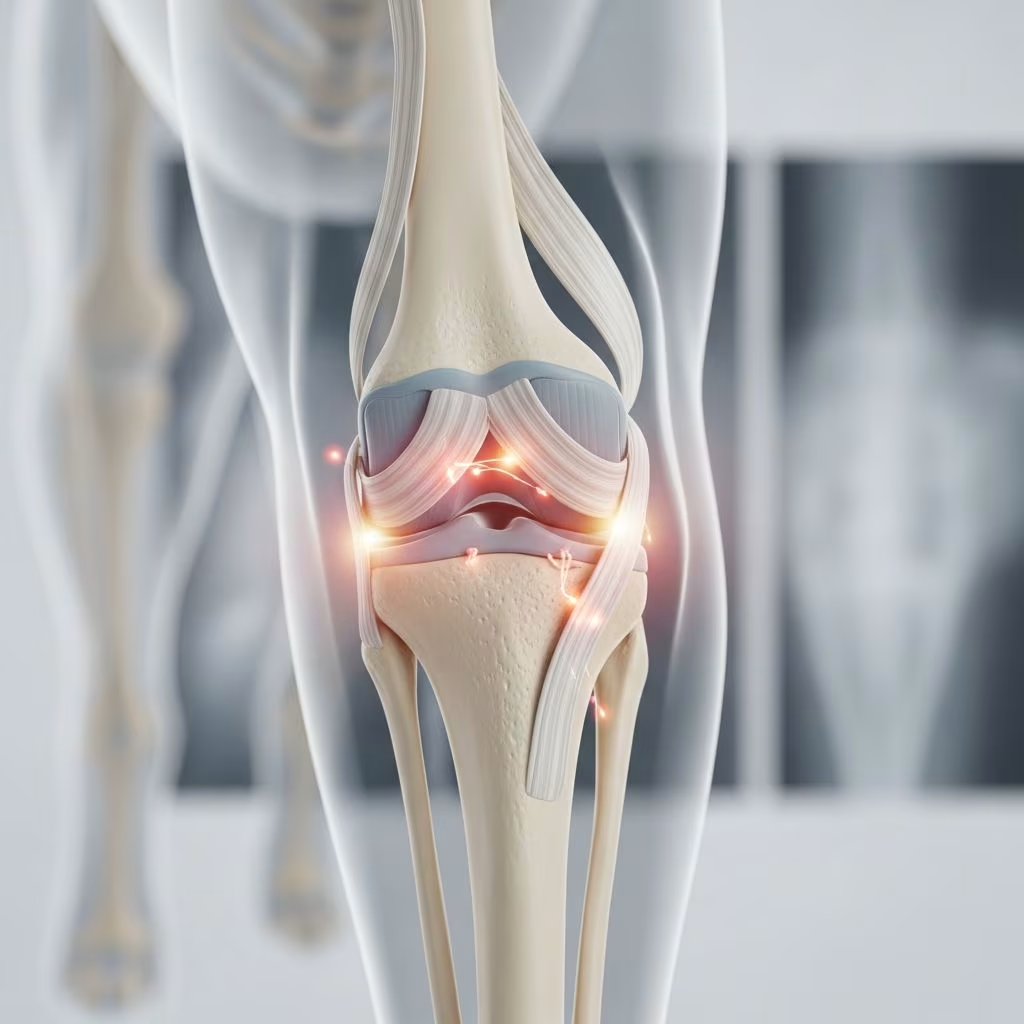
The knee joint, or stifle in veterinary terms, is vital for a dog’s mobility, enabling running, jumping, and daily activities. Injuries to this area, particularly cranial cruciate ligament (CCL) damage, affect countless dogs yearly, leading to pain and reduced quality of life. This guide details causes, identification, management approaches, and long-term care inspired by veterinary expertise.
Understanding the Stifle Joint Mechanics
Dogs’ rear knees differ from human ones; the CCL acts as a primary stabilizer, preventing forward tibia sliding relative to the femur during movement. Unlike humans, canine CCL issues often stem from gradual degeneration rather than isolated trauma, termed cranial cruciate ligament disease (CCLD). This progressive weakening heightens tear risk, especially in larger breeds.
Key components include the femur, tibia, patella, menisci, and ligaments. Instability from CCL compromise triggers abnormal joint motion, accelerating arthritis and meniscal damage. Breeds like Labrador Retrievers, Rottweilers, and overweight dogs face elevated risks due to conformation, activity levels, or excess body mass.
Primary Causes of Knee Compromise
Knee problems arise from acute events or chronic factors:
- Sudden Incidents: Twists during play, slips on slick surfaces, or poor landings from heights can rupture the CCL outright.
- Degenerative Processes: Age-related ligament thinning, often over months or years, predisposes knees to failure without obvious triggers.
- Contributing Elements: Obesity amplifies joint stress; conformational issues like shallow hip sockets or straight stifles exacerbate vulnerability.
Notably, over 50% of affected dogs develop contralateral knee issues, underscoring bilateral predisposition.
Recognizing Early Warning Indicators
Owners often spot subtle shifts before severe lameness emerges. Common signals include:
- Intermittent or persistent limping on a hind leg.
- Hesitancy rising from rest, jumping, or navigating stairs.
- Abnormal sitting posture, with the leg extended sideways.
- Joint swelling, warmth, or thickened tissue around the knee.
- Audible clicks or pops during motion, hinting at meniscal involvement.
- Gradual muscle wasting in the thigh and reduced activity enthusiasm.
These signs warrant prompt veterinary evaluation, as delayed intervention worsens joint degeneration.
Diagnostic Approaches for Accurate Assessment
Veterinarians employ physical exams, imaging, and tests:
| Method | Purpose | Details |
|---|---|---|
| Physical Manipulation | Detect Instability | Drawer test: Manually shifts tibia forward to check CCL integrity; positive indicates tear. |
| Radiographs (X-rays) | Visualize Bones/Joint | Reveals swelling, arthritis, or cancer exclusion; sedation often needed. |
| Advanced Imaging | Soft Tissue Detail | CT/MRI for meniscal tears or partial ruptures in complex cases. |
Early diagnosis preserves function and curtails arthritis progression.
Conservative Management Strategies
Not all cases require surgery; small, sedentary, or geriatric dogs may thrive with non-invasive care:
- Strict Rest: Crate confinement for 4-8 weeks minimizes joint stress.
- Weight Optimization: Diet reduces load on healing tissues.
- Anti-Inflammatories: NSAIDs alleviate pain and swelling.
- Supportive Devices: Custom knee braces stabilize during scar tissue formation.
- Supplements: Glucosamine, chondroitin, omega-3s support cartilage health.
Success hinges on compliance; many medium/large dogs need surgery for stability.
Surgical Stabilization Techniques
For active or larger dogs, surgery restores function best. Options include:
Extracapsular Repair
Places synthetic suture mimicking CCL path; scar tissue eventually stabilizes. Ideal for smaller dogs; risks suture failure and arthritis.
Tibial Plateau Leveling Osteotomy (TPLO)
Gold standard for many: Cuts and rotates tibial plateau to neutralize instability forces. Bone plate secures it; excels in large breeds, yielding 90-95% return to function.
Tibial Tuberosity Advancement (TTA)
Advances tibial tuberosity to balance forces; effective alternative with comparable outcomes.
Post-op, expect 12-week recovery with rehab; complications like infection are rare with skilled surgeons.
Rehabilitation Roadmap for Optimal Recovery
Post-treatment rehab accelerates healing:
- Weeks 1-2: Strict rest, pain control, short leash walks.
- Weeks 3-6: Passive range-of-motion exercises, controlled swims.
- Weeks 7-12: Muscle-building walks, balance tools like wobble boards.
- Beyond 12 Weeks: Gradual activity ramp-up, ongoing joint supplements.
Professional therapists tailor plans, monitoring progress via check-ups.
Preventive Measures for Joint Longevity
Proactive steps mitigate risks:
- Maintain ideal weight via balanced diet and portion control.
- Build muscle with low-impact exercises like swimming or slow hikes.
- Use joint-protective supplements from middle age.
- Avoid high-impact activities on slippery floors; employ ramps for cars/beds.
- Regular vet exams catch early degeneration.
Breed-specific screening aids at-risk lines.
Potential Complications and Monitoring
Watch for:
- Infection signs: Fever, discharge, lethargy.
- Implant issues: Shifting hardware causing pain.
- Meniscus tears: Sudden lameness spikes.
- Contralateral injury: Heightened after first-side fix.
Arthritis inevitably develops but is manageable with meds, laser therapy, acupuncture.
Frequently Asked Questions
How soon after injury should surgery occur?
Ideally within weeks to limit damage; delays foster irreversible arthritis.
Will my dog fully recover normal activity?
Most do post-TPLO, resuming play within 4-6 months with rehab.
Is surgery always necessary?
No, for small/inactive dogs, conservative care suffices; consult based on size/lifestyle.
What boosts healing odds?
Weight control, adherence to rest/rehab, supplements.
Can both knees be affected simultaneously?
Yes, bilateral subtle signs may mimic normalcy; exam confirms.
Long-Term Joint Maintenance
Beyond acute care, lifelong strategies include prescription diets, physical therapy sessions, and alternative modalities like cold laser for inflammation. Owners report sustained mobility years post-treatment with diligence.
References
- Dog Knee Injuries: Causes, Signs, and TPLO Surgery Explained — DoveLewis. Accessed 2026. https://www.dovelewis.org/blog/dog-knee-injuries-causes-signs-and-tplo-surgery-explained
- Canine Cruciate Ligament Injury — Colorado State University Veterinary Teaching Hospital. Accessed 2026. https://vetmedbiosci.colostate.edu/vth/services/orthopedic-medicine/canine-cruciate-ligament-injury/
- Common Knee Problems in Dogs — OrthoDog. Accessed 2026. https://orthodog.com/blogs/sit-stay-heal/common-knee-problems-in-dogs
- ACL Injuries in Dogs: Symptoms & Treatment — Laguna Canyon Vet. 2022-09-23. https://www.lagunacanyonvet.com/site/blog/2022/09/23/pet-surgery
- Cruciate Ligament Rupture in Dogs — Caring Hands Vet. Accessed 2026. https://caringhandsvet.com/cruciate-ligament-rupture-in-dogs/
- Knee Injuries — Tampa Bay K9 Rehabilitation Center. Accessed 2026. https://www.tbk9rehab.com/services/knee-injuries



