

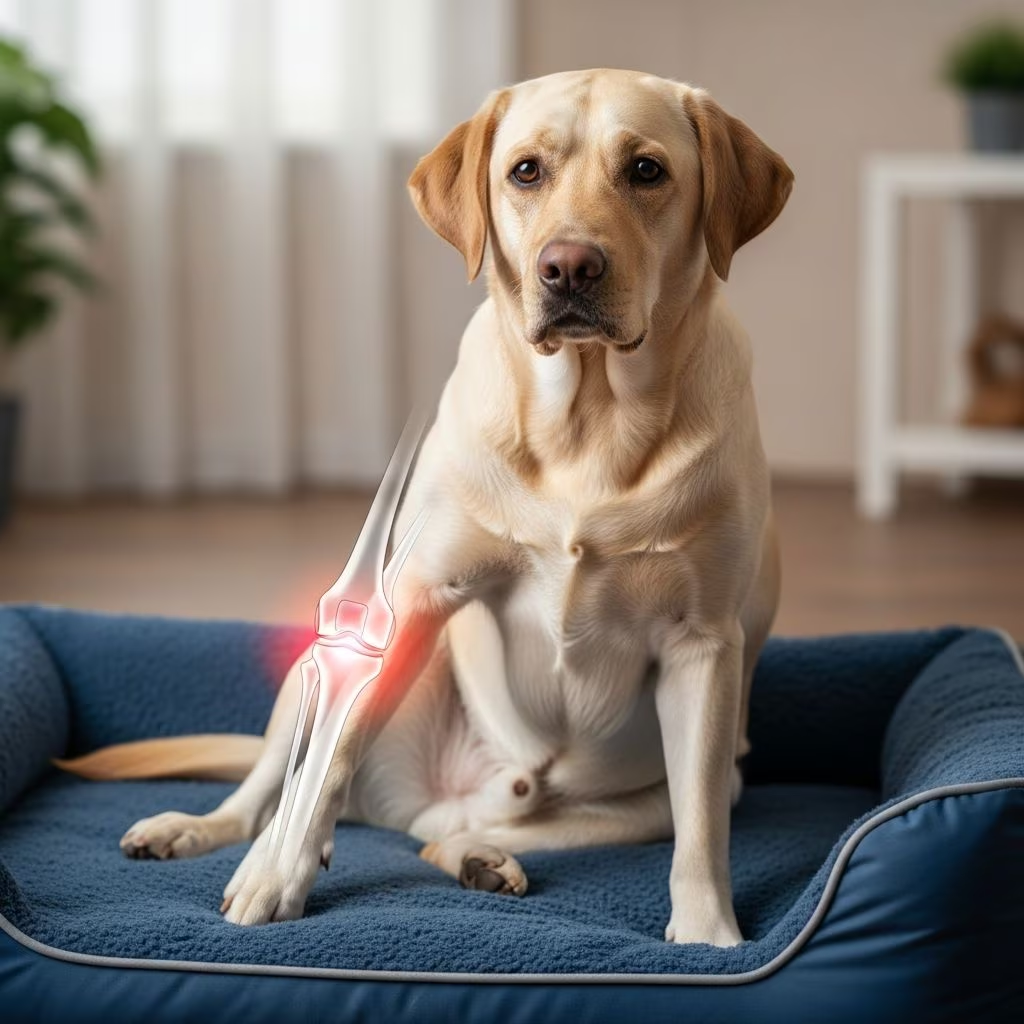
The knee joint, known as the stifle in veterinary terms, plays a pivotal role in a dog’s mobility. Injuries to this area, particularly those involving the cranial cruciate ligament (CCL), rank among the most frequent orthopedic issues seen in veterinary practices. These problems can drastically alter a dog’s quality of life, leading to pain, instability, and long-term arthritis if not managed properly. Understanding the nuances of these injuries empowers pet owners to act swiftly and effectively.
Understanding the Anatomy of a Dog’s Knee
A dog’s knee consists of the femur, tibia, and patella, stabilized by ligaments including the CCL, which prevents forward slipping of the tibia during movement. Unlike human ACL injuries that often stem from acute trauma, canine CCL issues frequently arise from chronic degeneration, making them a disease process rather than a simple rupture. This degeneration weakens the ligament over time, predisposing it to partial or complete tears.
Breeds such as Labrador Retrievers, Rottweilers, and larger dogs face higher risks due to their size, activity levels, and conformational factors. Overweight dogs experience amplified stress on the joint, accelerating wear and tear.
Primary Causes Behind Knee Instability in Dogs
Knee problems in dogs develop through two primary pathways:
- Degenerative Changes: The most common culprit, where the CCL slowly breaks down due to inflammation, poor blood supply, or conformational issues like steep tibial plateaus. This often affects middle-aged or senior dogs without a single traumatic event.
- Traumatic Events: Sudden twists, falls, or high-impact activities can cause acute tears, particularly in athletic or young dogs.
Additional factors include obesity, which increases joint load, and bilateral tendencies where up to 50% of dogs with one affected knee later develop issues in the other.
Recognizing Early Warning Signs of Knee Damage
Early detection hinges on observing subtle behavioral shifts. Common indicators include:
- Limping or reluctance to bear weight on a hind leg, often worsening after rest or activity.
- Difficulty rising, jumping, or navigating stairs.
- Swelling, warmth, or thickening around the knee joint.
- Abnormal sitting posture, with the leg extended sideways instead of tucked under.
- Auditory cues like clicking or popping during movement, potentially signaling meniscal damage.
- Progressive muscle wasting in the thigh due to disuse.
These symptoms may start mildly, especially if both knees are involved, masking severity. Prompt veterinary evaluation is crucial to prevent irreversible joint damage.
Diagnostic Approaches for Accurate Assessment
Veterinarians employ a multi-step process to confirm knee injuries:
- Physical Examination: Includes the ‘drawer test,’ where the tibia is manipulated to check for cranial displacement, and assessment of joint stability.
- Imaging: X-rays reveal joint effusion, bone changes, or arthritis. Advanced options like CT or MRI assess soft tissues precisely.
- Sedated Evaluation: For comprehensive laxity checks under anesthesia, minimizing pain-induced resistance.
Staging the injury—partial vs. complete tear—guides treatment, as partial ruptures may respond conservatively initially.
Conservative Management Strategies
Not all cases require surgery. Small, inactive, or geriatric dogs may thrive with non-invasive approaches:
| Strategy | Benefits | Duration |
|---|---|---|
| Strict Rest | Reduces inflammation; allows scar tissue formation | 8-12 weeks |
| Weight Control | Lessens joint stress | Ongoing |
| Pain Relief | NSAIDs or analgesics for comfort | As prescribed |
| Supplements | Glucosamine, chondroitin, omega-3s support joint health | Lifelong |
| Physical Therapy | Builds muscle, improves mobility | Post-acute phase |
These methods suit dogs under 20-30 lbs or those with comorbidities, though arthritis progression remains a concern.
Surgical Interventions: Stabilizing the Joint
For most medium-to-large or active dogs, surgery offers the best outcomes by addressing instability directly. Popular techniques include:
- TPLO (Tibial Plateau Leveling Osteotomy): Cuts and rotates the tibial plateau to neutralize shear forces, ideal for steep slopes. High success rates, minimal implant issues.
- TTA (Tibial Tuberosity Advancement): Advances the tibial tuberosity to balance forces, effective for smaller large breeds.
- Extracapsular Repair: Uses sutures to mimic ligament function; simpler, cost-effective for smaller dogs, but higher arthritis risk long-term.
Surgery timing is critical—early intervention minimizes meniscal tears and cartilage damage. Complications like infection or implant failure are rare (under 10%) with skilled surgeons.
Post-Operative Recovery Roadmap
Recovery spans 12-16 weeks, emphasizing controlled progression:
- Weeks 1-2: Crate rest, short leash walks, ice therapy for swelling.
- Weeks 3-8: Gradual activity increase, passive range-of-motion exercises.
- Weeks 9+: Hydrotherapy, controlled exercises to rebuild muscle.
Monitor for complications: excessive swelling, discharge, or refusal to ambulate warrants immediate vet contact. Most dogs regain 90-95% function within 6 months.
Preventive Measures for Lifelong Joint Health
Proactive steps reduce injury odds:
- Maintain ideal body weight via balanced diet and portion control.
- Incorporate low-impact exercises like swimming or walking.
- Use joint supplements preemptively in at-risk breeds.
- Avoid high-impact activities on hard surfaces for puppies.
- Regular veterinary check-ups for early detection.
These habits not only prevent CCL disease but also mitigate osteoarthritis.
Long-Term Outlook and Arthritis Control
Even with optimal treatment, arthritis develops due to initial instability. Manage with:
- Weight management and controlled exercise.
- Ongoing supplements and anti-inflammatories.
- Orthopedic beds and ramps for joint relief.
Annual radiographs track progression, adjusting care as needed.
Frequently Asked Questions
1. How do I know if my dog has a CCL injury?
Look for limping, trouble rising, swelling, or odd sitting. Vet confirmation via exam and imaging is essential.
2. Is surgery always necessary?
No, small or sedentary dogs may do well conservatively, but active or large breeds typically need surgery for best results.
3. What is TPLO surgery and who is it for?
TPLO levels the tibial plateau for stability without ligament repair. It’s gold standard for large breeds.
4. Can my dog fully recover and return to activities?
Yes, with proper surgery and rehab, most dogs resume normal or near-normal function.
5. How can I prevent knee problems in my dog?
Control weight, use joint supplements, opt for low-impact exercise, and schedule regular vet exams.
6. What if both knees are affected?
Stabilize the worst first; preventives like weight control protect the other. Up to 50% risk for contralateral injury.
References
- Dog Knee Injuries: Causes, Signs, and TPLO Surgery Explained — DoveLewis. 2023-approx. https://www.dovelewis.org/blog/dog-knee-injuries-causes-signs-and-tplo-surgery-explained
- Canine Cruciate Ligament Injury — Colorado State University Veterinary Teaching Hospital. 2024-approx. https://vetmedbiosci.colostate.edu/vth/services/orthopedic-medicine/canine-cruciate-ligament-injury/
- 7 Ways to Prevent and Treat Canine Knee Injuries — PetMD. 2023-approx. https://www.petmd.com/dog/slideshows/7-ways-prevent-and-treat-canine-knee-injuries
- Dog Knee Injuries Explained: Signs, Care, and Recovery Guide — Caring Hands Vet. 2024-approx. https://caringhandsvet.com/cruciate-ligament-rupture-in-dogs/
- Knee Injuries — Tampa Bay K9 Rehabilitation Center. 2023-approx. https://www.tbk9rehab.com/services/knee-injuries
- Dog Knee Injury Treatment — BluePearl Vet. 2024-approx. https://bluepearlvet.com/hospital/town-n-country-fl/specialties-services/surgery/knee-injuries-dogs-signs-diagnosis-treatment-options/
- Your Dog’s Knees: What You Need to Know — Animal Works Vets. 2023-approx. https://animalworksvets.com/your-dogs-knees-what-you-need-to-know/



