

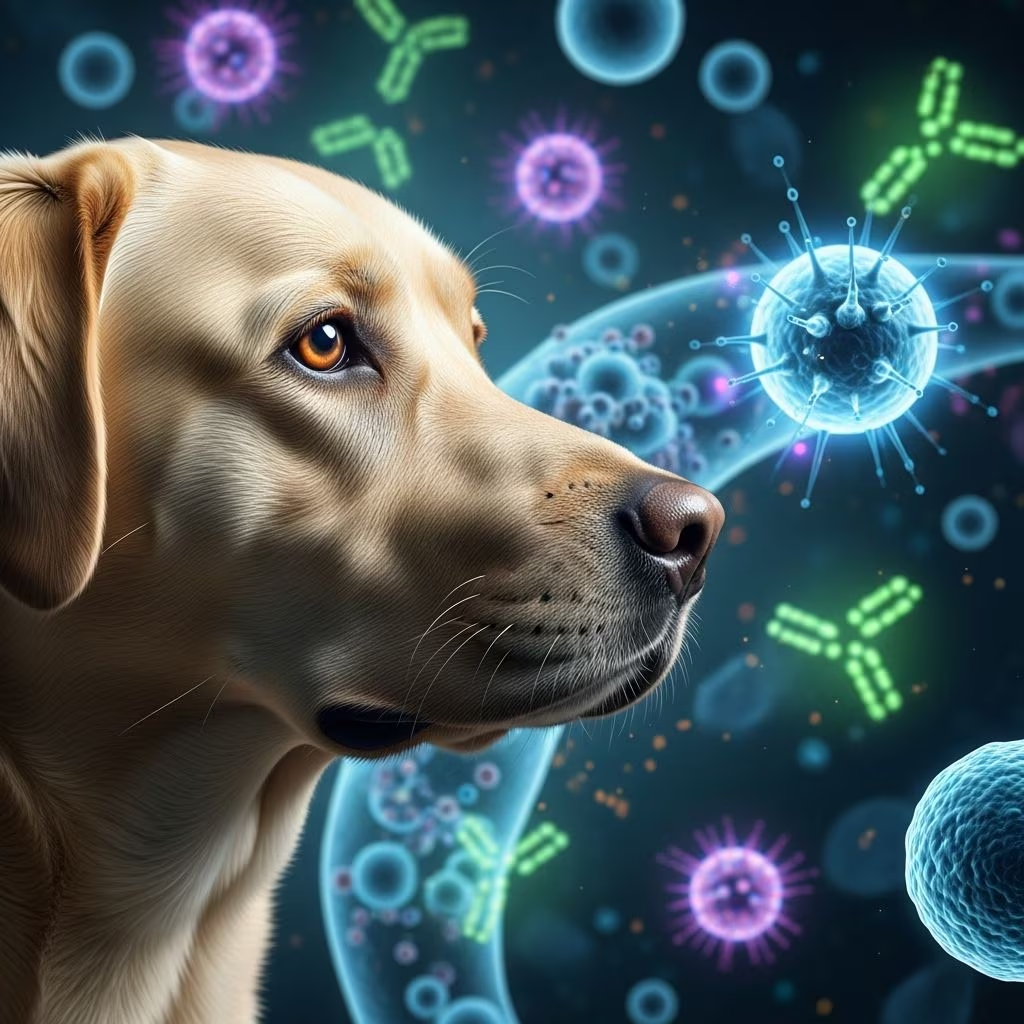
The canine immune system serves as a dog’s primary defense mechanism, constantly monitoring for and neutralizing harmful invaders like pathogens and toxins. It operates through coordinated efforts of cells, tissues, and organs to maintain health and vitality.
Overview of Immunity in Dogs
Dogs possess a sophisticated immune network distributed across their bodies, integrating with the lymphatic and circulatory systems. This setup enables rapid detection and response to threats, ensuring survival in diverse environments. Key elements include specialized cells circulating in blood and lymph, alongside fixed structures that filter and process antigens.
Primary Organs and Tissues Involved
Several vital organs anchor the immune framework in dogs:
- Bone Marrow: Acts as the birthplace for all blood cells, including immune precursors like lymphocytes and granulocytes. It continuously replenishes the body’s defenses.
- Thymus: Essential for T-cell maturation, this gland peaks in activity during puppyhood and gradually involutes with age.
- Spleen: Filters blood, traps antigens, and stores immune cells, playing a crucial role in systemic responses.
- Lymph Nodes: Scattered in areas like the neck, armpits, and groin, they filter lymph and initiate local immune reactions.
- Mucosal Sites: Including gut-associated lymphoid tissue and tonsils, these protect entry points for pathogens.
These structures interconnect via lymphatic vessels, transporting immune components efficiently throughout the body.
Innate Immunity: The First Line of Defense
Innate immunity provides immediate, non-specific protection against invaders. It includes physical barriers like skin and mucous membranes, which prevent entry of microbes.
- Phagocytic cells, such as macrophages and neutrophils, engulf and destroy pathogens.
- Natural killer cells target infected or abnormal cells without prior sensitization.
- Complement proteins enhance destruction by marking invaders for elimination and promoting inflammation.
This rapid response buys time for more targeted defenses, often causing temporary symptoms like fever to amplify effectiveness.
Adaptive Immunity: Precision and Memory
Adaptive immunity develops specificity through lymphocytes, offering long-term protection via memory.
T Lymphocytes: Cellular Warriors
T cells originate in bone marrow but mature in the thymus. They include:
- Helper T cells (Th1/Th2), which coordinate responses by secreting cytokines.
- Cytotoxic T cells, which directly kill infected cells.
- Regulatory T cells, maintaining balance to prevent overreactions.
Th1 cells drive cellular immunity against intracellular threats, while Th2 supports antibody production.
B Lymphocytes: Antibody Producers
B cells mature in bone marrow and, upon antigen encounter, differentiate into plasma cells secreting immunoglobulins (IgM, IgG, IgA, IgE, IgD). These antibodies neutralize toxins, opsonize bacteria, and activate complement.
Memory B cells ensure faster, stronger responses to repeat exposures, underpinning vaccination efficacy.
Bridging Innate and Adaptive Responses
Antigen-presenting cells (APCs) like dendritic cells link the two arms. They process antigens, display them via MHC molecules, and activate naive lymphocytes. This synergy amplifies defenses precisely.
| Immune Arm | Key Features | Response Time | Examples |
|---|---|---|---|
| Innate | Non-specific, immediate | Minutes to hours | Neutrophils, barriers |
| Adaptive | Specific, memory-based | Days | T/B cells, antibodies |
Lymphocyte Development from Birth
Puppies inherit passive immunity via colostrum, which wanes by 6-8 weeks. Their own system matures rapidly:
- Fetal liver and bone marrow initiate B-cell production.
- Thymus shapes T-cell repertoire through selection processes, eliminating self-reactive clones.
- By weaning, primary responses emerge, strengthening with environmental exposures.
Age-Related Changes in Canine Immunity
Immune function evolves across life stages. Puppies build diversity, adults peak efficiency, while seniors face immunosenescence:
- Thymus shrinkage post-1 year reduces naive T-cell output.
- Older dogs show chronic low-grade inflammation and weaker responses to novel antigens.
- Spleen and marrow adapt but may accumulate inefficiencies.
Supporting senior dogs involves balanced nutrition and veterinary monitoring to bolster waning defenses.
Recognizing Immune Activation Signs
When engaged, the system produces observable effects:
- Local swelling and warmth from inflammation.
- Lethargy and fever as systemic signals.
- Lymph node enlargement indicating active filtering.
Persistent or exaggerated signs may signal dysfunction, warranting professional evaluation.
Enhancing Canine Immune Health
Proactive care optimizes immunity:
- Vaccinations target key pathogens, training adaptive memory.
- Nutrient-rich diets with antioxidants support cell function.
- Parasite control and hygiene reduce immune burden.
- Regular exercise promotes lymphatic flow.
Genetic factors influence baseline strength, but lifestyle profoundly impacts resilience.
Common Immune Challenges in Dogs
Disruptions can lead to allergies, autoimmunity, or immunosuppression:
- Hypersensitivities: Overzealous Th2 responses cause itching and anaphylaxis.
- Autoimmunity: Failed tolerance allows self-attack, as in immune-mediated hemolytic anemia.
- Immunodeficiency: Congenital or acquired weaknesses heighten infection risk.
Early detection via bloodwork and titers guides management.
FAQ
How does a puppy’s immune system differ from an adult’s?
Puppies rely on maternal antibodies initially, developing their own as the thymus and marrow ramp up production around 8-12 weeks.
Why do older dogs get more infections?
Thymic involution and reduced naive lymphocyte diversity impair responses to new threats, compounded by comorbidities.
Can diet influence a dog’s immunity?
Yes, omega-3s, vitamins A/C/E, and probiotics nourish immune cells and gut barriers.
What role do vaccines play?
They mimic infections safely, priming B and T memory cells for rapid pathogen neutralization.
When should I worry about immune issues?
Recurrent infections, unexplained fevers, or skin problems signal potential imbalances; consult a vet promptly.
References
- Structure and Function of the Immune System in Dogs — PetPlace.com. 2023. https://www.petplace.com/article/dogs/pet-health/structure-and-function-of-the-immune-system-in-dogs
- Dogs’ Immune Systems: Protecting Them From Within — Dogswell. 2024. https://dogswell.com/dogs-immune-systems-protecting-them-from-within/
- Your Dog’s Immune System — Morris Animal Foundation. 2023. https://www.morrisanimalfoundation.org/article/science-101-dog-immune-system
- Development of Dog Immune System: From in Uterus to Elderly — PMC (NCBI). 2019-12-01. https://pmc.ncbi.nlm.nih.gov/articles/PMC6958461/
- The Canine and Feline Immune System — Manorswood Veterinary Clinic. 2024. https://manorswoodvet.co.za/the-canine-and-feline-immune-system/
- Innate Immunity in Animals — Merck Veterinary Manual. 2025. https://www.merckvetmanual.com/immune-system/the-biology-of-the-immune-system/innate-immunity-in-animals
- The Canine Autoimmune System — Whole Dog Journal. 2023. https://www.whole-dog-journal.com/health/the-canine-autoimmune-system/



