

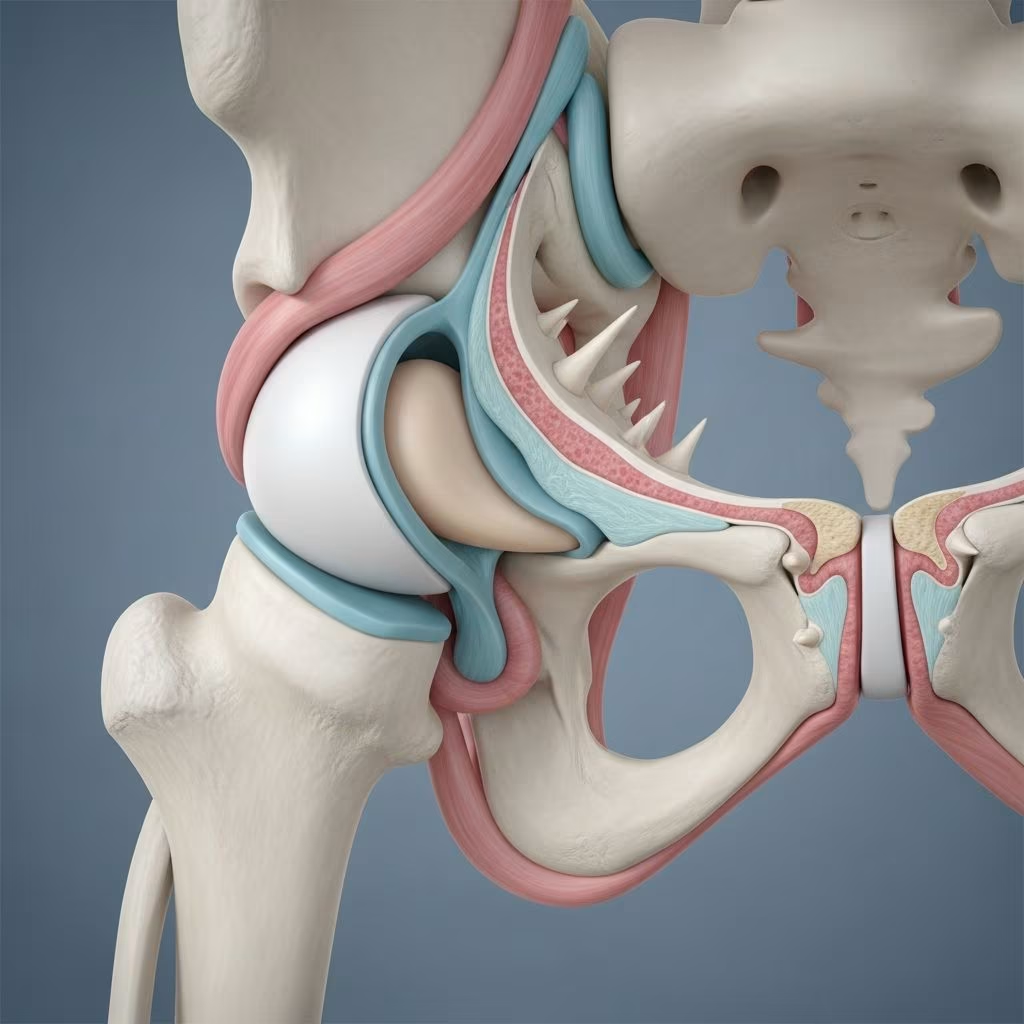
Hip dysplasia is a prevalent orthopedic disorder in dogs where the hip joint fails to develop properly, leading to instability, pain, and progressive arthritis. This condition primarily affects large and giant breeds but can occur in any dog, emphasizing the need for early detection and tailored management.
Defining the Condition
The hip joint consists of a ball (femoral head) and socket (acetabulum) that must fit snugly for smooth movement. In hip dysplasia, genetic factors cause a shallow socket and loose ligaments, allowing excessive motion. This laxity grinds the joint surfaces, eroding cartilage and spurring bone changes over time, resulting in osteoarthritis (OA).
Puppies are born with normal hips, but abnormal growth manifests between 4-12 months. Environmental influences like overfeeding accelerate the issue in genetically predisposed dogs.
Breeds at Highest Risk
Certain breeds show higher incidence due to genetics. Large breeds like German Shepherds, Labrador Retrievers, Rottweilers, and Bulldogs are commonly affected. Giant breeds such as Great Danes and Saint Bernards face elevated risks, alongside medium-sized ones like Golden Retrievers.
- Labrador Retriever: Up to 15-20% prevalence in some lines.
- German Shepherd: Notable for hindlimb weakness.
- Rottweiler: Often bilateral involvement.
- Bulldog breeds: Conformation exacerbates laxity.
Responsible breeding using Orthopedic Foundation for Animals (OFA) or PennHIP screening reduces inheritance.
Recognizing Early Warning Signs
Symptoms vary by age and severity. Young dogs (5-12 months) may show subtle lameness after exercise, difficulty rising, or a ‘bunny hop’ gait where hind legs move together.
Mature dogs exhibit chronic signs: reluctance to jump, stiffness after rest, muscle atrophy in hindquarters, pain on palpation, and reduced activity. Severe cases involve constant limping or inability to stand.
| Age Group | Common Symptoms |
|---|---|
| Puppies (4-12 months) | Intermittent lameness, bunny hopping, exercise intolerance |
| Adults (1-8 years) | Stiffness, pain when rising, muscle wasting, crepitus |
| Seniors (>8 years) | Severe OA, chronic pain, mobility loss |
Differentiate from patellar luxation (skipping gait), degenerative myelopathy (no pain, coordination loss), or other arthritis via vet exam.
Diagnostic Approaches
Veterinarians start with history and physical exam, testing hip extension and Ortolani maneuver for laxity. Radiographs under sedation confirm shallow acetabulum, joint space widening, or arthritic changes.
PennHIP provides distraction index for breeding predictions; OFA scores hips as excellent, good, fair, borderline, mild, moderate, or severe. Advanced imaging like CT aids surgical planning.
Conservative Management Strategies
For mild-moderate cases, non-surgical options control pain and maintain function. Multimodal therapy combines lifestyle changes, meds, and supplements.
Weight Optimization
Excess weight stresses hips; even 10% reduction eases load. Feed controlled-calorie diets, monitor body condition score (BCS 4-5/9).
Exercise Protocols
Avoid high-impact activities like jumping or stairs. Promote swimming, underwater treadmill, or soft-surface walks to build muscle without strain. Limit puppy growth with measured exercise.
Pharmacological Support
Nonsteroidal anti-inflammatories (NSAIDs) like carprofen or grapiprant reduce pain and inflammation. Joint fluid modifiers (e.g., Adequan) lubricate and protect cartilage.
Nutraceuticals and Diets
Glucosamine, chondroitin, omega-3 fish oils, and green-lipped mussel extracts support joint health. Therapeutic diets with EPA/DHA curb OA progression.
Physical Rehabilitation Techniques
Physical therapy (PT) enhances mobility, strengthens muscles, and minimizes atrophy. Programs include:
- Massage and passive range-of-motion (PROM) exercises.
- Therapeutic ultrasound for pain relief.
- Balance tools like wobble boards.
- Acupuncture to boost circulation and endorphins.
Underwater treadmill therapy allows controlled weight-bearing, improving gait.
Regenerative and Advanced Therapies
Emerging options target healing:
- Stem Cell Therapy: Autologous adipose-derived stem cells injected into joints reduce lameness for 6+ months, outperforming PRP in studies.
- Platelet-Rich Plasma (PRP): Concentrated platelets promote repair.
- Extracorporeal Shockwave Therapy (ESWT): Sound waves stimulate blood vessels and reduce inflammation.
These suit dogs intolerant to NSAIDs or seeking drug-free relief.
Surgical Interventions
Severe cases unresponsive to conservatives require surgery, chosen by age, size, and finances.
| Procedure | Best For | Outcomes |
|---|---|---|
| Juvenile Pubic Symphysiodesis (JPS) | Puppies <18 weeks | Tightens joint, prevents OA progression |
| Triple Pelvic Osteotomy (TPO) | Young dogs <10 months, no OA | Rotates acetabulum for better coverage |
| Femoral Head Ostectomy (FHO) | Small-medium dogs, any age | Removes head; false joint forms, pain-free |
| Total Hip Replacement (THR) | Large dogs, severe OA | Replaces joint; near-normal function |
THR restores 90-95% function; FHO excels in smaller breeds.
Preventive Measures for At-Risk Dogs
Screen breeding dogs via PennHIP/OFA; avoid breeding dysplastic animals. Puppies: Feed large-breed growth formulas to slow development, prevent obesity. Provide balanced exercise, no forced running on hard surfaces.
Long-Term Prognosis and Care
With management, most dogs enjoy good quality of life. Early intervention halts progression; seniors may need ramps, orthopedic beds, and ongoing PT. Monitor for complications like muscle loss.
Frequently Asked Questions
Can hip dysplasia be cured?
No, but symptoms are manageable, allowing normal activity.
Is surgery always necessary?
No, many respond to conservatives; surgery for severe pain.
How much does treatment cost?
Conservative: $50-200/month; surgeries: $1,500-7,000.
Can small breeds get it?
Yes, though less common than in larges.
Does diet help prevent it?
Yes, controlled nutrition reduces expression in predisposed pups.
References
- Treatments for Hip Dysplasia in Dogs — Animal Care Center of Castle Pines. 2023. https://www.animalcarectr.com/blog/treatments-for-hip-dysplasia-in-dogs
- Diagnosis, prevention, and management of canine hip dysplasia — PMC (NCBI). 2018-07-20. https://pmc.ncbi.nlm.nih.gov/articles/PMC6070021/
- Hip Dysplasia in Dogs: Signs, Symptoms, Treatment — American Kennel Club (AKC). 2023. https://www.akc.org/expert-advice/health/hip-dysplasia-in-dogs/
- Hip Dysplasia in Dogs | Causes, Prevention and Treatment — Bliss Animal Hospital. 2023. https://blissanimalhospital.com/blog/hip-dysplasia-in-dogs/
- What is Hip Dysplasia in Dogs? – Yankee Hill Veterinary Hospital — Yankee Hill Vet. 2023. https://yankeehillvet.com/canines-common-medical-problems/what-is-hip-dysplasia-in-dogs-6-common-causes-and-risk-factors/
- Canine Hip Dysplasia Treatment and Surgery — Bridger Veterinary Specialists. 2023. https://www.bridgervetspecialists.com/services/hip-dysplasia-treatment-surgery.html
- Canine hip dysplasia (CHD) — Cornell University College of Veterinary Medicine. 2024. https://www.vet.cornell.edu/departments-centers-and-institutes/riney-canine-health-center/canine-health-topics/canine-hip-dysplasia-chd



