

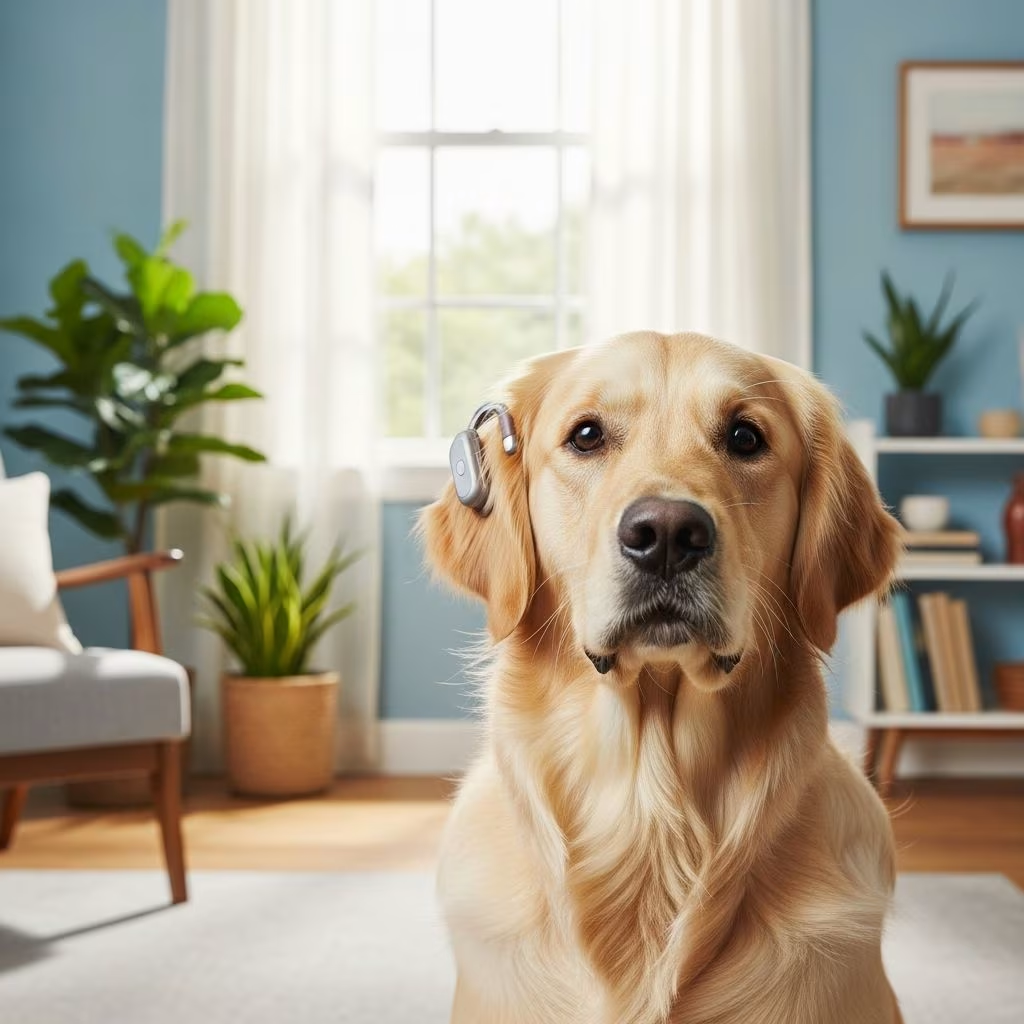
Hearing loss in dogs is a common challenge that affects their ability to respond to commands, interact with their environment, and maintain safety. While canine hearing loss has traditionally been considered an untreatable condition, advances in auditory technology have opened new possibilities for improving the lives of dogs experiencing auditory decline. Understanding the options available, from contemporary hearing aids to experimental therapies, can help pet owners make informed decisions about their dog’s hearing health.
Understanding Canine Hearing Capabilities and Differences
To grasp how hearing assistance works for dogs, it’s essential to understand how canine auditory systems differ from human hearing. Dogs possess a significantly more sophisticated auditory range than humans, capable of detecting sounds at frequencies up to approximately 65,000 hertz, compared to humans who typically perceive sounds between 60 and 2,000 hertz. This enhanced sensitivity to high-frequency sounds explains why dogs react to ultrasonic dog whistles that humans cannot hear.
The canine ear structure provides additional advantages beyond frequency sensitivity. Dogs possess 17 distinct ear muscles that enable them to move their ears independently in different directions, allowing them to pinpoint sound sources with remarkable precision. This anatomical feature gives dogs the ability to localize sounds and identify commands even when their owners are out of sight. Additionally, dogs can selectively filter auditory information through special nerve pathways connected to their cranial nerves, essentially allowing them to switch their attention to sounds on and off like a light switch.
Despite these advanced capabilities, dogs do not necessarily have superior hearing in terms of volume sensitivity compared to humans. Rather, their auditory advantage lies in their capacity to perceive frequencies at both extremely low and extremely high ends of the spectrum. This distinction becomes important when considering hearing aids, as the technology must account for the full range of frequencies dogs naturally experience.
The Evolution of Canine Hearing Assistance Technology
The history of hearing aids for dogs is relatively recent compared to human auditory devices. In the late 1980s, veterinary pioneer Dr. Patricia Luttgen created the first canine hearing aid prototype by adapting a human hearing device and attaching it to a dog’s collar. This innovation laid the groundwork for subsequent developments in the field.
Today, modern canine hearing aids have evolved significantly from those early prototypes. FETCHLAB, an animal hearing and bioacoustics laboratory located at the University of Cincinnati, stands as a leading institution in canine auditory research and innovation. Led by executive director Dr. Peter M. “Skip” Scheifele and his research team, FETCHLAB specializes in canine amplification and is currently the only facility worldwide that officially fits specialized dog hearing aids. These devices are adapted from human hearing aids but customized for canine anatomy and auditory needs, with costs typically starting at $3,000 or higher.
Beyond traditional hearing aids, researchers are actively exploring bone conduction technologies and wearable auditory devices designed specifically to fit comfortably on a dog’s head structure. Early prototypes have demonstrated encouraging results in helping dogs respond to commands and maintain engagement with their families, suggesting promising future developments in this field.
Determining Candidacy: Which Dogs Benefit Most
Not every dog with hearing loss qualifies as a candidate for hearing aid technology. Understanding the criteria for eligibility is crucial for pet owners considering this intervention. The primary determining factor involves the degree and type of hearing loss a dog experiences.
Severity Classifications and Suitability
Dogs with mild to moderate hearing loss represent ideal candidates for hearing aid fitting. These animals retain sufficient residual hearing that amplification technology can meaningfully enhance their auditory perception. However, dogs with profound or complete hearing loss cannot benefit from conventional hearing aids, as amplification cannot generate sound levels high enough to reach a non-functional auditory system.
Statistics from FETCHLAB research indicate that approximately 60% of pet owners who inquire about hearing aids for their dogs learn that their pets’ hearing loss has progressed beyond the point where amplification would prove effective. This statistic underscores an important challenge: canine hearing loss typically develops gradually, and by the time owners recognize the severity of the problem, intervention options may have become limited.
For dogs with congenital or complete deafness—where no residual hearing exists—hearing aids cannot function because there is no remaining auditory capacity to amplify. This distinction between residual hearing and total deafness is fundamental to understanding hearing aid effectiveness.
Testing and Evaluation Procedures
Determining whether a specific dog qualifies for hearing aids requires professional audiological assessment. The evaluation process typically involves:
- BAER Testing: A brainstem auditory evoked potential (BAER) test measures how the dog’s nervous system responds to sound stimuli, providing objective data about hearing function.
- OAE Assessment: An otoacoustic emission (OAE) test may be performed to evaluate cochlear function specifically.
- Results Analysis: FETCHLAB specialists review test results to establish whether the dog possesses sufficient residual hearing for amplification to be effective.
Once a dog is deemed a suitable candidate, custom ear molds are created at FETCHLAB centers to ensure proper fit and acoustic performance.
Adaptation and Training Considerations
Successfully implementing hearing aids for dogs involves more than simply placing the device on the animal. Dogs must undergo an adjustment period during which they acclimate to wearing the technology and learn to interpret electronically-amplified sounds.
Behavioral Adjustment and Retraining
When dogs first begin wearing hearing aids, they experience sounds through an electronic device rather than natural auditory channels. This transition can cause initial confusion or disorientation. The amplified sounds may differ noticeably from the dog’s previous auditory experience, requiring cognitive adjustment. Additionally, the electronic quality of voice commands differs from the natural human voice, which dogs must learn to recognize and respond to appropriately.
Many dogs require retraining on verbal commands after beginning hearing aid use. Pet owners should expect to practice commands consistently, helping their dogs associate the electronically-amplified cues with desired behaviors. Some dogs adapt relatively quickly to this new auditory landscape, while others may require extended periods of patient training. In certain cases, some breeds may not fully acclimate to wearing hearing aids despite dedicated training efforts.
Realistic Expectations Regarding Hearing Restoration
Pet owners should understand that hearing aids do not restore a dog’s hearing to its original pre-loss condition. Rather, these devices amplify remaining auditory capacity, potentially allowing dogs to detect sounds they previously could not perceive at their current hearing loss levels. Dogs will experience some background noise filtering challenges as they learn to distinguish meaningful sounds from environmental noise.
This realistic framing helps owners maintain appropriate expectations and appreciate the genuine improvements hearing aids can provide without anticipating complete restoration of normal hearing function.
Current Limitations and Challenges
While hearing aids represent a meaningful advancement for many dogs with hearing loss, significant limitations persist. Cost represents a major barrier to accessibility, with FETCHLAB devices starting at $3,000 or exceeding this amount. For many pet owners, this investment may prove prohibitively expensive.
Additionally, current canine hearing aids remain in ongoing testing phases, complicating mass production and accessibility. The devices’ complexity and the specialized expertise required for fitting contribute to their limited availability and high expense. Only one facility worldwide currently offers official dog hearing aid fitting services, creating geographical challenges for interested pet owners.
Research into alternative technologies, including cochlear implants similar to those used in humans, has demonstrated potential benefits for deaf dogs. However, current implant designs remain impractical for canine application due to technical, surgical, and post-operative training complexities. Significant additional research in device development, surgical techniques, and rehabilitation protocols is necessary before cochlear implants become a feasible option for dog owners.
Emerging Innovations and Future Directions
The landscape of canine auditory assistance is evolving as researchers and veterinary specialists continue developing new technologies. Bone conduction hearing devices represent one promising frontier, potentially offering alternative approaches to traditional ear-worn amplification. These technologies work through different acoustic principles and may prove more comfortable or practical for certain dogs.
Ongoing research into the relationship between hearing loss, cognitive decline, and quality of life in aging dogs is generating important insights. Studies examining how hearing assistance might mitigate cognitive dysfunction and depression in senior dogs are laying groundwork for future interventions. Researchers remain hopeful that well-tolerated and affordable hearing aids will eventually become available to broader populations of dog owners.
The intersection of hearing technology advancement and veterinary science continues to expand possibilities for dogs with auditory challenges. As technology becomes more sophisticated and production methods improve, costs may decrease, and accessibility could expand substantially.
Alternative Approaches and Complementary Strategies
For dogs whose hearing loss may be too severe for hearing aids or whose owners face accessibility or financial barriers, alternative strategies can help maintain quality of life and safety:
- Visual Communication: Dogs with hearing loss can learn hand signals and visual cues to supplement or replace verbal commands
- Vibration Detection: Utilizing vibrations and tactile cues enables communication with deaf or severely hearing-impaired dogs
- Environmental Modifications: Adjusting home environments to enhance safety for hearing-impaired dogs reduces accident risks
- Regular Veterinary Monitoring: Consistent hearing assessments help identify progressive hearing loss early, potentially widening intervention windows
The Importance of Early Detection
One of the most critical factors in successfully managing canine hearing loss involves early detection. Because hearing loss often develops gradually, pet owners may not recognize the problem until it has progressed substantially. Regular veterinary check-ups that include hearing assessments can identify declining auditory function before it reaches irreversible stages.
Veterinarians can recommend appropriate monitoring schedules based on a dog’s age, breed predisposition to hearing loss, and individual health profile. Early intervention, when dogs still possess meaningful residual hearing, maximizes the potential benefits of amplification technology.
Frequently Asked Questions
Can all dogs wear human hearing aids?
While dogs’ ear structures share some similarities with human ears, standard human hearing aids are not optimally designed for canine anatomy. Specialized dog hearing aids adapted from human technology offer better fit and performance. However, only FETCHLAB currently provides official canine hearing aid fitting services.
How much do dog hearing aids cost?
Specialized canine hearing aids cost upwards of $3,000, making them an expensive investment for many pet owners. Cost variations depend on device complexity, customization requirements, and fitting services needed.
What is the success rate for dogs adjusting to hearing aids?
Success rates vary substantially based on individual dog temperament, training consistency, and hearing loss severity. While specific aggregate data remains limited, FETCHLAB receives weekly inquiries from interested pet owners, suggesting meaningful demand and presumably positive outcomes for at least a portion of fitted dogs.
Are there non-surgical alternatives to hearing aids for deaf dogs?
Yes. Dogs with hearing loss can communicate effectively through visual cues, hand signals, and vibration-based alerts. While these alternatives don’t restore hearing, they maintain functional communication and safety.
Conclusion: Improving Canine Quality of Life
Hearing loss significantly impacts dogs’ quality of life, affecting their ability to respond to commands, navigate safely, and engage with their human families. Modern hearing aid technology represents a meaningful advancement in managing this challenge, offering viable solutions for dogs with mild to moderate hearing loss and sufficient residual hearing capacity.
While current options remain limited by cost, availability, and the specialized expertise required for fitting, ongoing research and technological innovation promise expanded possibilities in coming years. Pet owners concerned about their dog’s hearing should prioritize regular veterinary assessments, early detection of hearing changes, and consultation with specialists about available options. Through a combination of technological solutions, adaptive training strategies, and environmental modifications, dogs with hearing loss can maintain engagement, safety, and quality of life throughout their later years.
References
- When Dogs Wear Hearing Aids — Sonova International. https://www.sonova.com/en/story/innovation/when-dogs-wear-hearing-aids
- Dog Hearing Aids: Innovations in Assisting with Canine Deafness — American Kennel Club. https://www.akc.org/expert-advice/health/dog-hearing-aids/
- Ears Up! The Future for Dog Hearing Health — Better Hearing Institute. https://www.betterhearing.org/newsroom/blogs/ears-up-the-future-for-dog-hearing-health/
- Dog Hearing Aids: How They Work and When to Consider Them — Paw Origins. https://paworigins.com/blogs/vet-blogs/dog-hearing-aids-how-they-work-and-when-to-consider-them
- Does the Future Hold Better Hearing Options for Aging Dogs? — Audiology.org. https://www.audiology.org/does-the-future-hold-better-hearing-options-for-aging-dogs/
- Deafness in Dogs & Cats – What About Hearing Aids? — Louisiana State University School of Veterinary Medicine. https://www.lsu.edu/vetmed/deafness/aid.php
- Why Dogs and Cats Hear Better Than Humans — Hearing Sense Australia. https://hearingsense.com.au/dogs-cats-hear-better-humans/



