

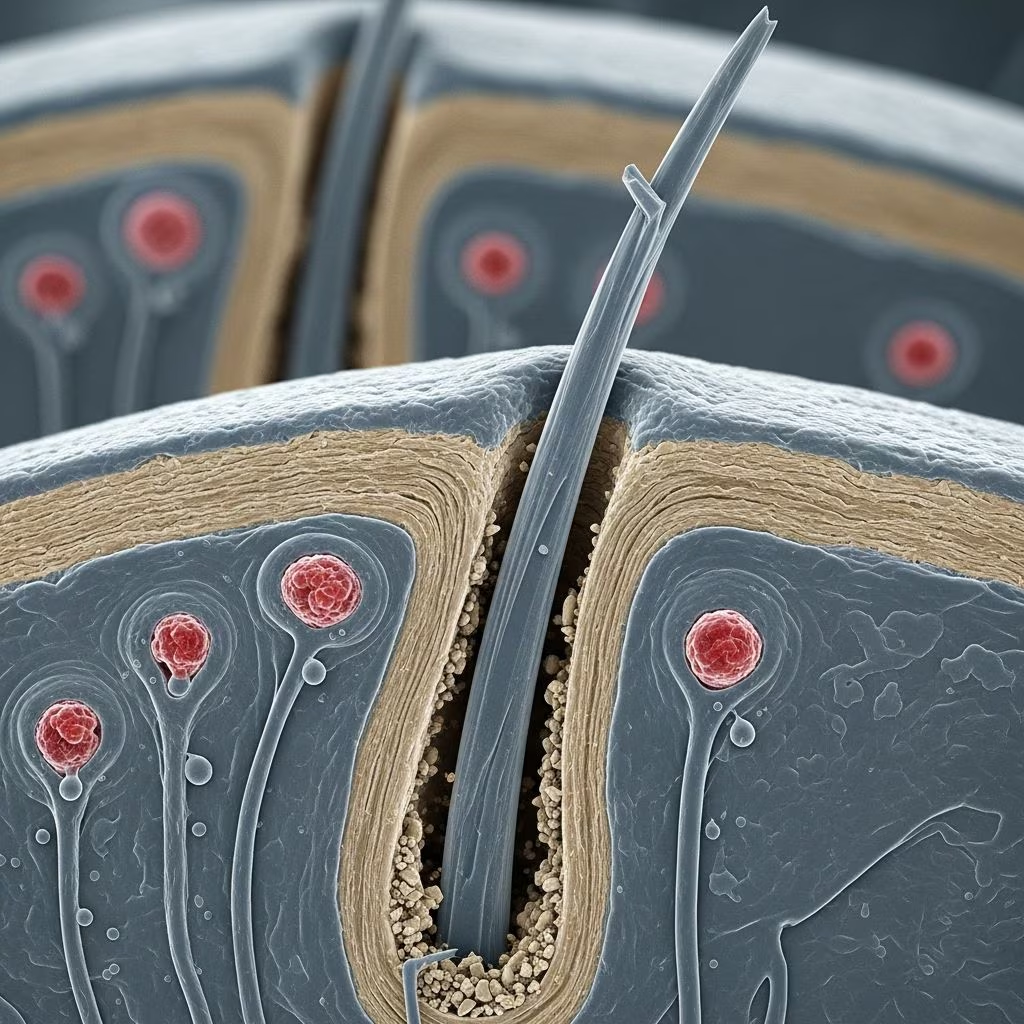
Hair loss in dogs can stem from various causes, ranging from temporary shedding to permanent genetic conditions. Among the most significant inherited conditions affecting canine coat health is a group of disorders involving abnormal hair follicle development and function. These conditions, collectively known as follicular dysplasia, represent a spectrum of genetic mutations that impair the normal growth and structure of hair, leading to progressive alopecia and related dermatological complications.
What Are Hair Follicle Disorders?
Follicular dysplasia encompasses a range of genetic diseases that cause structural or functional abnormalities in canine hair follicles. Rather than representing a single disease entity, these conditions manifest differently depending on the underlying genetic mutation, the breed affected, and environmental factors that may trigger symptom onset. The core characteristic shared across all forms is the body’s inability to produce and maintain healthy hair shafts, resulting in hair that becomes fragile, breaks easily, or fails to regrow properly.
The fundamental problem lies in how the hair follicle develops during the growth phase. When abnormalities occur in follicle structure or the transfer of pigment molecules along the hair shaft, the resulting hair lacks the strength and resilience of normal fur. This weakness predisposes affected hairs to breakage from even minor trauma, grooming, or friction from collars and clothing.
The Spectrum of Follicular Dysplasia Types
Pigment-Related Hair Loss
One of the most well-characterized forms of follicular dysplasia specifically targets dark-haired areas of a dog’s coat. This pigment-associated variant emerges due to genetic defects affecting the formation of the hair shaft and the transfer of melanin pigment to hair cells. Puppies typically begin showing signs between 1 and 4 weeks of age, with progressive hair loss confined to dark-colored areas. By 8 to 9 months of age, affected dogs experience complete alopecia in all black or dark-colored regions of their coat.
This type has been definitively identified as an autosomal recessive trait, meaning both parents must carry the gene for offspring to develop the condition. Several breeds have documented susceptibility, including Bearded Collies, Gordon Setters, Pointers, and Salukis.
Structural Hair Weakness
Structural variants represent another major category where the physical composition of individual hairs becomes compromised. These dysplasias cause hairs to become brittle and prone to breakage, often first appearing in areas subject to repeated friction or grooming trauma. The back near the tail is a common initial site, with potential progression to the entire trunk over time.
When regrowth occurs, the newly developed hairs tend to be even weaker than the original ones, creating a cycle of ongoing hair loss. Breeds including Irish Water Spaniels, Portuguese Water Dogs, and Curly Coated Retrievers show documented predisposition to this form. The condition typically manifests between 2 and 4 years of age.
Seasonal and Light-Dependent Alopecia
A distinctive form of follicular dysplasia demonstrates clear seasonal patterns, with symptom onset typically occurring in late autumn or early spring. This variant, influenced by changes in daylight exposure, causes bilateral hair loss primarily affecting the flanks accompanied by hyperpigmentation of the underlying skin. Unlike other types, this condition often shows spontaneous recovery, with hair regrowth occurring over approximately 6 months, though the regrown coat may differ in texture or pigmentation.
Interestingly, melatonin supplementation may accelerate hair regrowth, suggesting that light exposure and circadian rhythm regulation play important roles in this condition’s pathophysiology. Affected breeds include Airedale Terriers, Bulldogs, Rhodesian Ridgebacks, Staffordshire Bull Terriers, Wirehaired Pointing Griffons, Boxers, and Affenpinschers.
Color Dilution-Associated Alopecia
Dogs with dilute coat colors—such as blue, fawn, or red—may develop hair loss linked to abnormal pigment organization within hair shafts. This type involves macromelanosomes, which are enlarged pigment granules that compromise hair strength. The condition typically emerges gradually between 1 and 3 years of age and can progress to complete alopecia in all dilute-colored regions.
Breed-Specific and Localized Forms
Certain breeds experience unique presentations of follicular dysplasia. Rottweilers and other red-point dogs may develop follicular lipidosis, where lipid deposits infiltrate hair follicle cells, typically before 9 months of age. Doberman Pinschers show progressive flank and back alopecia beginning at 1 to 2 years old, while Siberian Huskies and Malamutes may experience hair loss over the trunk with crimping of undercoat hair and reddish discoloration from 3 to 4 months onward.
Miniature and toy breeds often develop atrophic variants affecting ventral (underside) areas including the neck, chest, abdomen, and inner thighs, with males commonly experiencing ear flap alopecia.
Recognizing Clinical Manifestations
The presentation of follicular dysplasia varies considerably depending on the specific type, breed, and individual dog. However, several consistent features help identify these conditions:
- Progressive alopecia: Hair loss that begins in specific areas and may spread over months or years
- Fragile, broken hairs: Shortened hairs in affected areas resulting from structural weakness
- Skin scaling and flaking: Secondary keratinization abnormalities often accompanying hair loss
- Hyperpigmentation: Darkening of skin in affected areas, particularly with seasonal forms
- Secondary infections: Bacterial or yeast colonization of compromised skin, sometimes producing odor
- Pruritus: Itching and discomfort, usually secondary to skin infections rather than the primary condition
- Follicular casts: Keratosebaceous debris visible on hair shafts during microscopic examination
The specific distribution of hair loss provides important diagnostic clues. Pigment-related forms affect exclusively dark areas, structural types typically begin on the back, and seasonal forms show characteristic bilateral flank involvement.
Diagnostic Procedures and Confirmation
While clinical presentation and breed history often suggest follicular dysplasia, definitive diagnosis requires professional evaluation. Veterinary dermatologists employ several diagnostic tools to confirm the condition and rule out other causes of alopecia:
Trichography involves plucking several hairs and examining them microscopically. In follicular dysplasia cases, this reveals abnormal hair shaft structures, follicular casts, and defects in pigment distribution characteristic of specific dysplasia types.
Skin cytology uses tape strips or swabs to collect surface cells and evaluate for secondary infections or inflammation. This helps assess whether pyoderma or yeast overgrowth is present.
Percutaneous skin punch biopsy remains the gold standard for confirmation. A small circular sample of full-thickness skin is examined histologically to identify dysplastic changes in follicle architecture, hair bulb development, and pigment transfer mechanisms. Importantly, biopsies may reveal minimal inflammation, helping differentiate follicular dysplasia from inflammatory skin conditions.
Affected Breeds and Genetic Patterns
While follicular dysplasia can theoretically affect any dog breed, certain breeds show documented genetic predisposition due to selective breeding and concentrated gene pools:
| Dysplasia Type | Commonly Affected Breeds | Typical Onset Age |
|---|---|---|
| Pigment-Related | Bearded Collie, Gordon Setter, Pointer, Saluki | 1-4 weeks |
| Structural | Irish Water Spaniel, Portuguese Water Dog, Curly Coated Retriever | 2-4 years |
| Seasonal | Boxer, Airedale Terrier, Bulldog, Rhodesian Ridgeback | 2-4 years |
| Atrophic | Dachshund, Miniature Pinscher, Chihuahua | Variable |
| Follicular Lipidosis | Rottweiler and red-point dogs | Before 9 months |
Understanding the genetic inheritance pattern is crucial for responsible breeding. Many forms follow autosomal recessive inheritance, meaning carrier dogs may show no symptoms while still transmitting the condition to offspring when bred with other carriers.
Management and Treatment Approaches
Unfortunately, follicular dysplasia is not curable due to its genetic nature. However, several management strategies can improve affected dogs’ quality of life and minimize progression:
Minimizing mechanical trauma represents the most important intervention. This includes avoiding excessive grooming, removing collars that create friction, and preventing rough play or contact sports. Affected areas should be handled gently to prevent additional hair breakage.
Managing secondary infections becomes essential, as compromised skin frequently develops bacterial or yeast colonization. Regular medicated bathing with antimicrobial or antifungal shampoos helps control these infections and associated odor and itching.
Melatonin supplementation shows promise specifically for seasonal forms, potentially promoting earlier hair regrowth and reducing symptom severity. Dosing should be determined by a veterinarian based on the individual dog’s weight and condition.
Nutritional support with omega-3 and omega-6 fatty acids may improve overall skin health and reduce inflammation, though it cannot reverse the underlying genetic abnormality.
Environmental modification for light-sensitive forms might include adjusting exposure to artificial lighting during autumn and spring to maintain more consistent circadian rhythms.
Implications for Breeding and Prevention
Because follicular dysplasia is inherited, responsible breeding practices remain the most effective prevention strategy. Breeders should conduct genetic testing and health screening of potential breeding animals, avoiding pairing two carriers and excluding affected individuals from breeding programs.
Prospective dog owners should inquire about parental health histories and request documentation of genetic screening. While some breeds show higher incidence due to historical breeding patterns, transparency and commitment to health testing can gradually reduce the prevalence of follicular dysplasia in future generations.
Frequently Asked Questions
Is follicular dysplasia contagious?
No. Follicular dysplasia is a genetic condition, not an infectious disease. It cannot spread between dogs through contact or any other means.
Can follicular dysplasia be cured?
Currently, there is no cure for follicular dysplasia since it is an inherited genetic condition. Management focuses on controlling symptoms and preventing complications.
Will my dog be in pain from follicular dysplasia?
The condition itself is not painful, though secondary skin infections may cause itching and discomfort. Managing these infections helps minimize any associated discomfort.
How much does diagnosis cost?
Diagnostic costs vary by veterinary clinic and location, but skin biopsies and histopathology typically range from $500 to $1,500. Initial consultation and other diagnostic tests add to this cost.
Should I breed my dog if it has follicular dysplasia?
No. Breeding affected dogs perpetuates the genetic mutation in the population and increases the likelihood of affected offspring.
Conclusion: Living with a Diagnosis
A diagnosis of follicular dysplasia requires lifelong management but does not necessarily diminish a dog’s quality of life. With attentive care addressing secondary complications, appropriate grooming practices, and regular veterinary monitoring, many affected dogs live comfortably for their full lifespan. Understanding the specific type affecting your dog enables more targeted management strategies and realistic expectations for progression.
References
- Canine Follicular Dysplasia — Wikipedia. Accessed January 2026. https://en.wikipedia.org/wiki/Canine_follicular_dysplasia
- Follicular Dysplasia in Dogs: Causes, Types & Care Guide — Pets4Homes. Accessed January 2026. https://www.pets4homes.co.uk/pet-advice/what-is-follicular-dysplasia-in-dogs.html
- Follicular Dysplasia in Dogs – Symptoms, Causes, Diagnosis — Wag! Accessed January 2026. https://wagwalking.com/condition/follicular-dysplasia
- Follicular Dysplasia in a Goldendoodle Dog — DermaVet. Accessed January 2026. https://pro.dermavet.com/follicular-dysplasia-in-a-goldendoodle-dog/



