

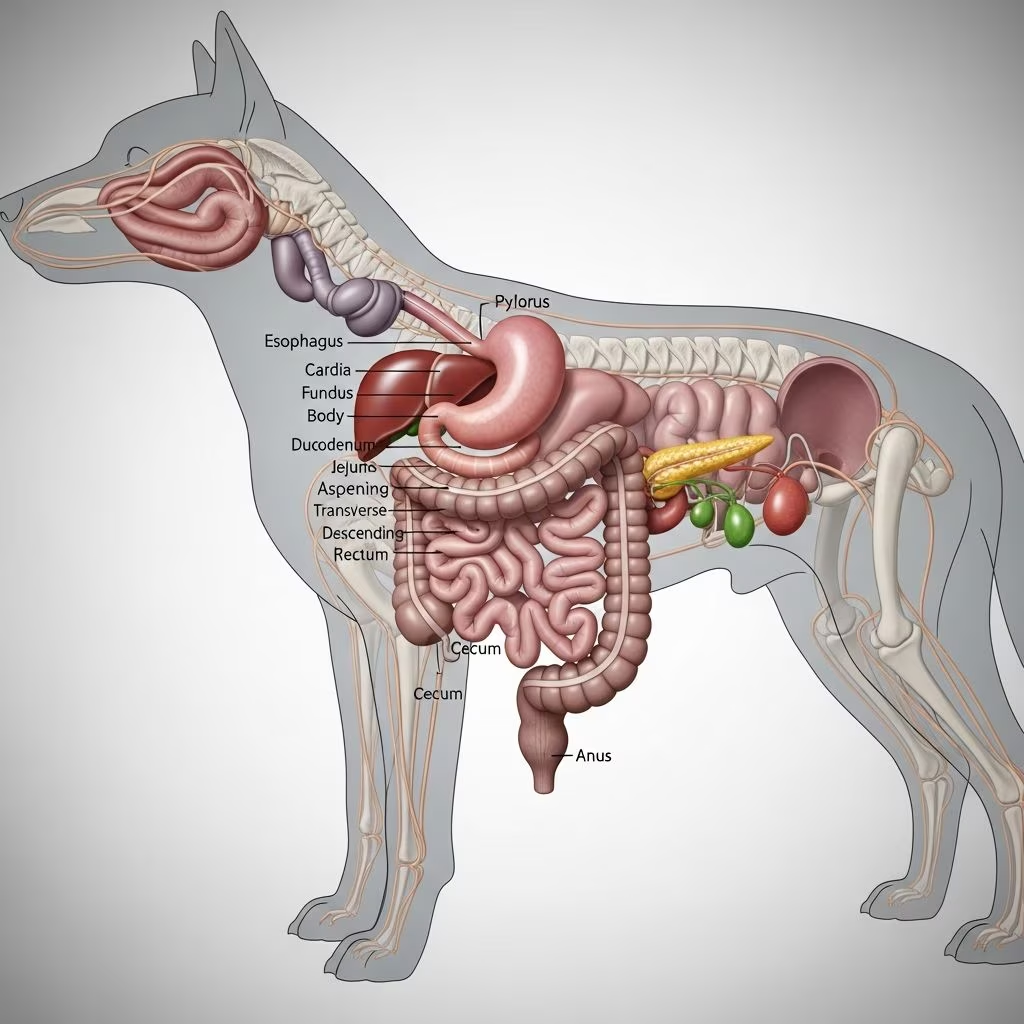
The digestive system in dogs is a remarkable network designed for efficient food breakdown, nutrient uptake, and waste elimination. Central to this process are the esophagus, stomach, and intestines, which work in harmony to sustain a dog’s energy and health. Understanding their structure and roles empowers pet owners to support optimal digestion through proper diet and care.
The Journey Begins: Role of the Esophagus
The esophagus serves as the vital conduit linking the mouth to the stomach, ensuring food travels smoothly downward without interruption. This muscular tube, roughly 15 to 18 inches long in medium-sized dogs, spans the neck, chest, and abdomen, passing through the diaphragm. Its walls feature smooth muscles that contract in coordinated waves known as peristalsis, propelling swallowed food—termed a bolus—toward the stomach.
At the esophagus’s lower end lies the lower esophageal sphincter, a robust muscle ring that relaxes to admit food and swiftly closes to block stomach acid reflux. This mechanism prevents irritation of the esophageal lining, a common issue in dogs with rapid eating habits or certain breeds prone to regurgitation. Unlike humans, dogs lack a dedicated upper esophageal sphincter, relying instead on pharyngeal muscles for initial sealing.
- Key features: Collapsible diameter of about one inch, divided into cervical, thoracic, and abdominal segments.
- Peristaltic action: Automatic, worm-like contractions move contents steadily.
- Sphincter protection: Guards against backflow, maintaining one-way traffic.
Disruptions here, such as megaesophagus—a condition causing dilation and poor motility—can lead to aspiration pneumonia, highlighting the esophagus’s critical role in safe food transit.
Stomach Dynamics: Storage, Mixing, and Breakdown
Upon reaching the stomach, food enters a expandable reservoir tailored for dogs’ feasting style. This organ unfolds by relaxing its muscular walls to accommodate large meals, then churns them into a semi-liquid paste called chyme through rhythmic contractions. The stomach’s left side, the fundus, provides bulk storage, while the narrower body leads to the pylorus, controlling outflow to the intestines.
Gastric glands secrete hydrochloric acid and enzymes like pepsin, initiating protein digestion by unraveling complex chains into peptides. Mucus layers shield the stomach lining from self-digestion, a balance essential for integrity. In dogs, gastric emptying varies: liquids pass quickly, solids linger for thorough processing, typically 4-8 hours post-meal.
| Stomach Region | Primary Function | Key Secretions |
|---|---|---|
| Fundus | Storage | Mucus for protection |
| Body | Mixing and digestion | Acid, pepsin |
| Pylorus | Gatekeeper to intestines | Regulates chyme release |
This setup suits carnivorous ancestry, efficiently handling raw meat and bones, though modern kibble demands careful portioning to avoid bloat in deep-chested breeds.
Small Intestine: Nutrient Harvesting Hub
The small intestine, spanning duodenum, jejunum, and ileum, is the epicenter of enzymatic digestion and absorption. Chyme enters the duodenum, where pancreatic ducts deliver bicarbonate to neutralize acidity and enzymes for carbs, fats, and proteins. Liver-supplied bile emulsifies fats, enabling micelle formation for uptake.
The jejunum, the longest segment, boasts villi and microvilli—finger-like projections amplifying surface area up to 100-fold. These structures house brush border enzymes, breaking down disaccharides and peptides while absorbing amino acids, sugars, and fatty acids into blood and lymph. The ileum finalizes vitamin B12 and bile salt reabsorption.
- Duodenum: Bile and pancreatic juice integration.
- Jejunum: Bulk nutrient absorption via microvilli.
- Ileum: Specialized uptake of residuals.
Approximately 90% of caloric absorption occurs here, fueling metabolism and immune function. Impairments, like exocrine pancreatic insufficiency, drastically reduce this efficiency.
Large Intestine: Water Recovery and Microbial Symphony
Indigestible remnants reach the large intestine—cecum, colon, rectum—for final processing. Lacking villi, it focuses on water and electrolyte reabsorption, compacting contents into feces. Gut microbiota ferment fibers, yielding short-chain fatty acids for colonocyte energy and vitamins K, B.
Peristalsis slows via segmental contractions, allowing 12-48 hours for maximal extraction. The rectum stores feces until defecation, signaled by distension. Bacterial diversity influences stool quality and pathogen resistance, underscoring probiotic value.
Accessory Players: Liver, Pancreas, and Gallbladder
Beyond the tract, the liver produces bile for fat digestion, detoxifies, and metabolizes nutrients. The gallbladder concentrates bile; the pancreas supplies exocrine enzymes and endocrine hormones like insulin. These organs ensure comprehensive breakdown, with ducts converging at the duodenum.
Dysfunction, such as pancreatitis, disrupts this synergy, causing diarrhea and malnutrition.
Common Disorders and Prevention Strategies
Gastrointestinal issues plague many dogs: gastritis from scavenged trash, inflammatory bowel disease impairing absorption, or obstructions from foreign bodies. Symptoms include vomiting, diarrhea, and weight loss.
- Esophageal: Regurgitation, megaesophagus—elevate bowls, feed upright.
- Gastric: Bloat (GDV)—slow feeders, small meals.
- Intestinal: Parasites, IBD—regular deworming, hypoallergenic diets.
Veterinary diagnostics like endoscopy reveal issues; probiotics and fiber support microbiome health.
Nutritional Insights for Digestive Wellness
Diet profoundly impacts gut function. High-protein formulas mimic ancestral needs, while prebiotics nurture beneficial bacteria. Avoid abrupt changes to prevent dysbiosis. Hydration aids motility; exercise stimulates peristalsis.
| Nutrient | Primary Absorption Site | Dog-Specific Note |
|---|---|---|
| Proteins | Jejunum | Broken to amino acids for muscle repair |
| Fats | Duodenum/Jejunum | Bile-dependent; breed variations in efficiency |
| Carbs | Jejunum | Limited amylase; suited to low-carb diets |
FAQs on Dog Digestive Anatomy
Why do dogs vomit undigested food?
This often signals esophageal or gastric retention, not true vomiting from deeper digestion.
How long does food take to pass through a dog?
Typically 12-30 hours total, varying by meal size and type.
Can diet fix chronic diarrhea?
Yes, fiber and probiotics often resolve microbiome imbalances.
What breeds are prone to bloat?
Great Danes, Boxers—genetic stomach positioning increases risk.
Is raw feeding safe for digestion?
It aligns with anatomy but requires hygiene to avoid pathogens.
Monitoring Your Dog’s Gut Health
Observe stool consistency, appetite, and energy. Annual vet checks catch subclinical issues. Tailored nutrition prevents most problems, ensuring your companion thrives.
References
- The Canine Digestion Process — Whole Dog Journal. 2023. https://www.whole-dog-journal.com/health/digestion/the-canine-digestion-process/
- Structure and Function of the Gastrointestinal Tract in Dogs — PetPlace. 2024. https://www.petplace.com/article/dogs/pet-health/structure-and-function-of-the-gastrointestinal-tract-in-dogs
- The Canine Digestive System — Manorswood Veterinary Clinic. 2023. https://manorswoodvet.co.za/the-canine-digestive-system/
- Characteristics of the Digestive Tract of Dogs and Cats — PubMed (Peer-reviewed). 2024-04-15. https://pubmed.ncbi.nlm.nih.gov/38625523/
- Introduction to Digestive Disorders of Dogs — Merck Veterinary Manual (.edu equivalent vet authority). 2025. https://www.merckvetmanual.com/dog-owners/digestive-disorders-of-dogs/introduction-to-digestive-disorders-of-dogs



