

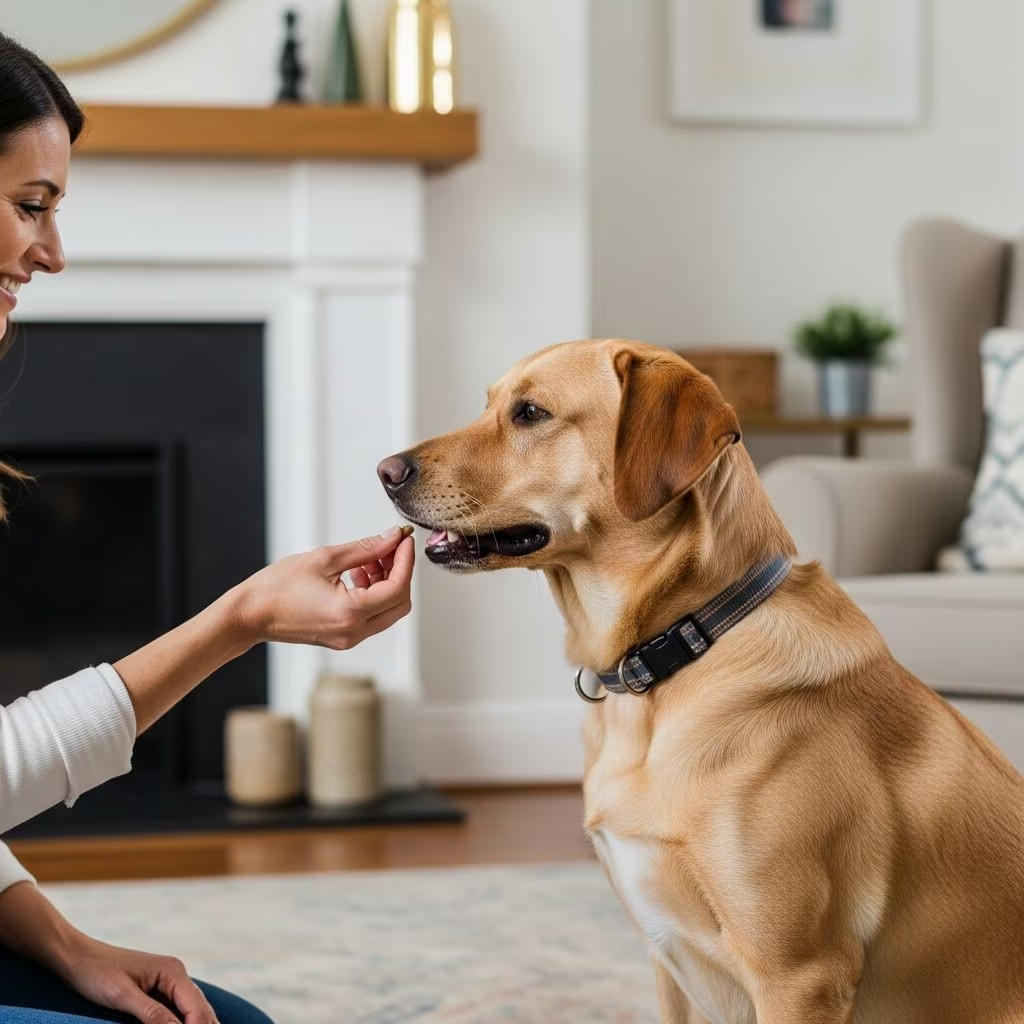
Your dog can be the star of any social gathering if equipped with the right skills and management strategies. Proper preparation transforms chaotic visits into enjoyable experiences for everyone involved, whether hosting friends or staying overnight elsewhere.
Preparing Dogs for Incoming Visitors
Anticipating arrivals sets the foundation for calm encounters. Start by creating distance between your dog and the entryway to prevent overexcited rushes that could knock over newcomers.
- Use barriers like baby gates to block access to the front door area.
- Place your dog in a separate room or crate during initial greetings.
- Tether them nearby if supervision allows, rewarding calm observation.
These steps allow you to welcome guests without interference, reducing jumping and barking from the outset. Once settled, controlled introductions build positive associations.
Mastering Polite Greeting Protocols
Teach your dog to offer a composed welcome instead of enthusiastic leaps. A “sit for greeting” routine encourages guests to participate, fostering mutual respect.
Stock a treat dispenser by the door with high-value, durable goodies. Instruct visitors to present treats only when your dog sits calmly, holding it at chest level to prompt the behavior. This method quickly reinforces desired conduct across various people.
| Common Greeting Issue | Solution Strategy | Expected Outcome |
|---|---|---|
| Jumping on arrivals | Leash and treat for sit | Calm, four-on-the-floor welcomes |
| Excessive barking | “Quiet” cue with rewards | Reduced noise, quicker settling |
| Ignoring personal space | Tethered observation first | Controlled sniffing on release |
Practice these in low-stakes scenarios to build reliability before high-traffic events.
Essential Training Foundations for Social Success
Enroll in a positive reinforcement-based obedience course as a baseline. Core commands like “sit,” “stay,” “down,” and “place” form the backbone of good behavior in unfamiliar settings.
Expand to advanced skills: “leave it” prevents food theft, “go to bed” provides an on-command retreat, and reliable recall ensures safety amid distractions. Friendly demeanor toward strangers, children, and other pets is non-negotiable.
- Expose puppies early to diverse people and environments.
- Use force-free methods to avoid fear-based responses.
- Practice in real-world simulations matching visit scenarios.
Dogs graduating such programs navigate social dynamics with confidence, minimizing mishaps.
Navigating Homes with Children Present
Young humans introduce unpredictable elements. Constant vigilance is required, even with child-loving dogs, as kids may unintentionally provoke reactions.
Monitor body language closely: lip licking, yawning, or stiffening signal discomfort. Intervene promptly with redirection to toys or safe spaces. Never leave interactions unattended.
Prepare children with rules: gentle petting, no pulling ears or tails, and respecting “no more pets” signals. This dual education promotes safe, joyful play.
Strategic Management During Gatherings
Not every dog thrives in crowds. Identify stress signals early—pacing, whining, avoidance—and implement management without guilt.
Designate a quiet retreat: a crated corner with familiar bedding and chews, far from foot traffic. Avoid confinement in high-traffic zones where poking or crowding escalates anxiety.
Rotate freedom periods: short supervised mingles followed by downtime. This preserves energy and prevents overwhelm, letting you host carefree.
Taking Your Dog as a Houseguest
Bringing your pet requires host consultation first. Confirm allergies, space rules, yard security, and sleeping arrangements upfront.
Assess hazards: toxic plants, unsecured gates, chocolate stashes. Bring essentials—crate, bed, toys, food—to maintain routines.
Respect boundaries: no furniture unless invited, no begging at meals, immediate cleanup of accidents. Your attentiveness elevates you as ideal visitors.
Establishing Clear House Rules
Consistency prevents confusion. Outline expectations: off-limits zones, no counter surfing, polite greetings only.
Communicate with guests: direct table scraps to dog-safe treats if allowed. Supervise to enforce “no touching without permission.”
For multi-pet homes, separate initial meetings to gauge compatibility, intervening in resource guarding.
Recognizing When to Leave Dogs Home
Some personalities suit solitude over socializing. If anxiety or reactivity persists despite training, opt for boarding or sitters.
Forced exposure risks bites, injuries, or “dangerous dog” status. Prioritize welfare: a relaxed pup at home beats a stressed one at events.
Advanced Socialization Techniques
Build resilience through graduated exposure. Start with single calm visitors, progressing to groups.
Incorporate desensitization: doorbell drills with rewards, stranger approaches at distance. Games like “guess which hand has the treat” sharpen focus amid distractions.
Track progress in a journal, adjusting based on responses for tailored improvement.
Common Pitfalls and Fixes
- Pitfall: Overfeeding treats leading to begging. Fix: Low-calorie options, timed dispensing.
- Pitfall: Furniture entitlement. Fix: Off-command, host permission only.
- Pitfall: Nighttime restlessness. Fix: Exercise beforehand, consistent bedtime routine.
Health and Safety Protocols
Vaccinations current? Flea prevention up? These basics protect all parties. Carry waste bags, enzymatic cleaners for mishaps.
Watch for dietary indiscretions causing upset stomachs. Hydration stations prevent dehydration in active play.
FAQs
What if my dog barks at every doorbell?
Desensitize with recordings at low volume, rewarding silence. Pair with mat training for proactive settling.
Is crating okay during parties?
Yes, if it’s a positive association space, not punishment. Cover partially for den-like calm, provide enrichment.
How to handle guest allergies?
Keep dog separated, wipe paws post-outdoors. Air out rooms, use allergen-reducing wipes on fur.
My dog is perfect at home but regresses away—why?
Environmental novelty triggers. Practice off-site obedience to bridge the gap.
Best age to start visitor prep?
Socialization window 3-14 weeks critical, but adults improve with patience and consistency.
Long-Term Benefits of Manners Training
Polished dogs enjoy more outings, strengthening bonds. Hosts invite repeats, expanding social circles. Invest time now for lifelong ease.
References
- American Kennel Club Canine Good Citizen Program — American Kennel Club. 2023-01-15. https://www.akc.org/dog-owner-resources/canine-good-citizen/
- ASPCA Position Statement on Pet Behavior and Training — ASPCA. 2024-05-20. https://www.aspca.org/about-us/aspca-policy-and-position-statements/position-statement-pet-behavior-and-training
- AVMA Guidelines for Responsible Pet Ownership — American Veterinary Medical Association. 2025-02-10. https://www.avma.org/resources-tools/avma-policies/responsible-pet-ownership
- Certification Council for Professional Dog Trainers Standards — CCPDT. 2024-11-01. https://www.ccpdt.org/
- USDA Animal Welfare Act Regulations for Companion Animals — United States Department of Agriculture. 2023-07-12. https://www.aphis.usda.gov/animal_welfare/downloads/blue-book-ac-awa.pdf



