

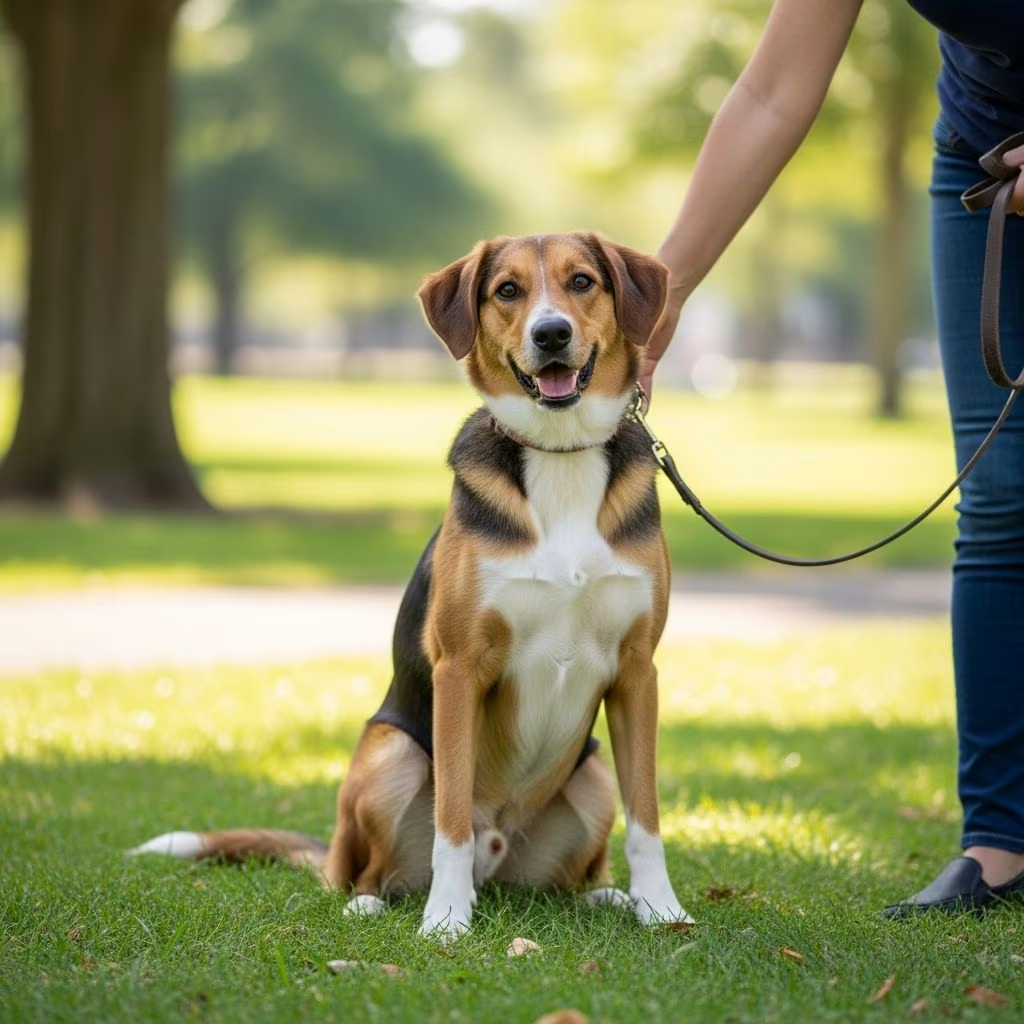
The Canine Good Citizen (CGC) test, developed by the American Kennel Club (AKC), evaluates dogs on 10 key skills to demonstrate good manners and responsible ownership. Passing this test certifies your dog as a polite, well-behaved companion suitable for public settings.
Understanding the Program’s Purpose and Reach
This certification promotes harmonious human-canine relationships by ensuring dogs exhibit calm, controlled behavior around people and environments. It’s accessible to all dogs—purebred or mixed breed—with no age restrictions, making it ideal for puppies, adults, or seniors. The program fosters confidence in handlers and dogs alike, paving the way for advanced activities like therapy work or dog sports.
Property managers often require CGC certification for renters with pets, and some insurers favor it for policy considerations. While it doesn’t grant automatic access to dog-prohibited areas, it builds a foundation for reliable public outings.
Core Skills Breakdown: What Evaluators Assess
The test comprises 10 distinct items, each targeting specific behaviors. Dogs must pass every one without aggression, excessive anxiety, or disobedience. Handlers use standard collars and leashes; training aids like head halters are banned.
- Test 1: Greeting a Friendly Stranger – The dog remains composed as an evaluator approaches the handler, shakes hands, and chats naturally. No resentment, shyness, or position-breaking allowed.
- Test 2: Accepting Gentle Petting – With the dog sitting, the evaluator strokes its head and body. The dog may stand but must not show fear or irritation; handlers can encourage verbally.
- Test 3: Tolerating Grooming and Inspection – Evaluator checks cleanliness, brushes/combs the coat, examines ears, and lifts front feet. Dogs appear healthy, clean, and alert; no rigid positioning required.
- Test 4: Walking on a Loose Leash – Handler walks the dog on a slack lead through a short pattern (right, left, about-turn). No pulling, lunging, or forging ahead.
- Test 5: Navigating Pedestrian Traffic – Dog and handler pass at least three people closely. Mild interest is fine, but no jumping, straining, shyness, or overexcitement.
Continuing with the remaining skills:
- Test 6: Responding to Sit and Down with Stay – Dog performs sit and down on cue, then holds a 3-minute sit-stay and 3-minute down-stay as handler steps 6 feet away. Back turned for part of it; dog must remain in place.
- Test 7: Reliable Recall – From 10 feet on leash, handler calls dog, who comes promptly without hesitation. Forgiven minor stops if it completes the recall.
- Test 8: Polite Interaction with Another Dog – Handlers approach with dogs from 20 feet, stop for greetings and handshakes. Dogs show no more than mild excitement; no barking, whining, or aggression.
- Test 9: Calm Amid Distractions – Dog ignores two distractions each from sight (e.g., umbrella opening) and sound (e.g., jogger). Some reaction permitted if it settles quickly.
- Test 10: Supervised Separation – Handler leaves sight for 3 minutes; dog waits patiently on leash without distress signals like pacing or vocalizing.
Preparation Roadmap: Building Skills Step-by-Step
Success demands consistent positive reinforcement training—no punishment or force. Start with basics like sit, down, stay, and recall in low-distraction home settings, then progress to real-world scenarios. Enroll in CGC prep classes for structured guidance, or self-train and locate an AKC-approved evaluator.
| Skill | Training Progression | Common Pitfalls |
|---|---|---|
| Grooming Tolerance | Daily handling from puppyhood; reward calm acceptance | Sensitivity to touch; gradual desensitization needed |
| Loose Leash Walking | Practice turns and stops; use treats for slack lead | Pulling from excitement; short, frequent sessions |
| Stays | Build duration/time; add distance and turns slowly | Breaking early; proof with distractions |
| Distractions | Introduce mild noises/objects; shape ignore response | Overreaction; counter-condition positively |
Prior to testing, exercise your dog and allow a potty break to minimize accidents, which fail the test. Puppies under 12 months may opt for the STAR Puppy program as a stepping stone.
Real-World Advantages of CGC Certification
Beyond bragging rights, CGC opens doors: many therapy organizations mandate it as a prerequisite. It demonstrates to landlords and insurers your commitment to a non-nuisance pet. Owners sign a Responsible Ownership Pledge, reinforcing ethical care. The certificate bolsters bonds, reduces behavioral issues, and equips dogs for urban life.
Finding Evaluators and Taking the Test
AKC lists certified evaluators nationwide; many clubs and trainers host testing post-classes. Fees vary, typically $20–50. Arrive leashed, healthy, and prepared—no familiar strangers for Test 1. Evaluators prioritize safety, halting if aggression appears. Failed non-aggressive dogs can retest immediately or later.
Advanced Paths After Passing
CGC launches further certifications like Community Canine or Urban Dog. Therapy volunteering often follows, with groups like Pet Partners building on these skills. It also qualifies for AKC titles via the Title Application Portal.
Frequently Asked Questions
Is CGC only for purebred dogs?
No, all breeds and mixes qualify.
How long does training take?
Varies by dog; weeks to months with consistent practice.
What if my dog fails one skill?
Must pass all 10; retake allowed sans aggression.
Can puppies participate?
Yes, or try STAR Puppy for under-12-months.
Does CGC guarantee public access?
No, but aids in approvals.
Success Stories and Testimonials
Handlers report transformed dogs: reactive pups become therapy stars, shy ones gain poise. One owner noted, “CGC turned our shelter rescue into a confident park regular.” Consistent training yields lifelong benefits.
Invest time now for a courteous canine citizen—your community will appreciate it.
References
- Canine Good Citizen (CGC) Test Items — American Kennel Club. 2023. https://www.akc.org/products-services/training-programs/canine-good-citizen/canine-good-citizen-test-items/
- How to Train Your Dog for the Canine Good Citizen Test — PetMD. 2024-01-15. https://www.petmd.com/dog/training/how-to-train-dog-canine-good-citizen-test
- What is the Canine Good Citizen Test or CGC? — Zoom Room. 2023. https://zoomroom.com/canine-good-citizen-test/
- Canine Good Citizen (CGC) — American Kennel Club. 2025-10-01. https://www.akc.org/products-services/training-programs/canine-good-citizen/
- Canine Good Citizen Prerequisite — Texas State University AAC Academy. 2017-04-30. https://aac-academy.clas.txst.edu/certification/cgc.html



