

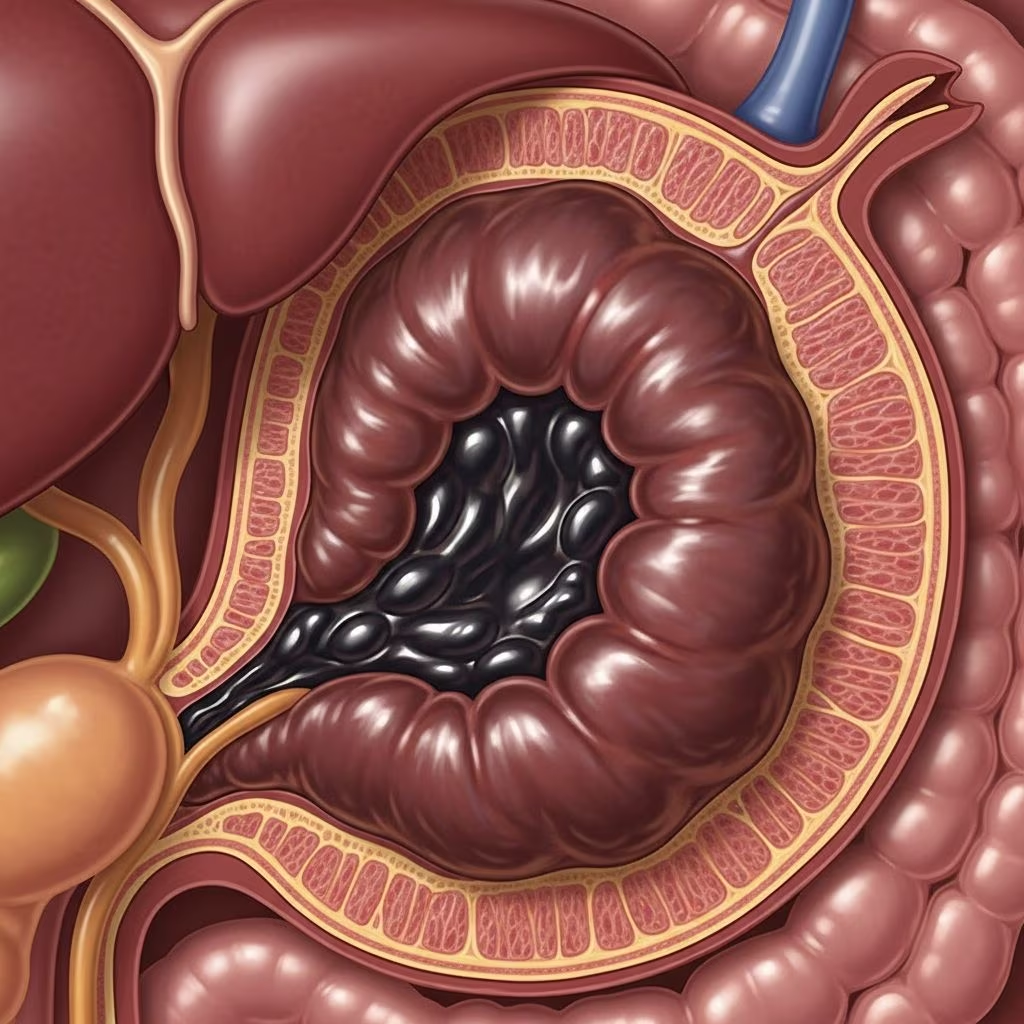
Gallbladder mucocele in dogs involves the buildup of thick, jelly-like mucus within the gallbladder, potentially leading to obstruction, inflammation, and rupture if untreated. This condition primarily impacts middle-aged and senior dogs, with certain breeds showing higher susceptibility, and early intervention through surgery often yields the best prognosis.
The Nature of Gallbladder Mucocele in Canines
The gallbladder serves as a storage organ for bile, which aids in fat digestion. In mucocele cases, excessive mucin production creates a viscous mass that distends the organ, impairing bile flow into the intestines. This stagnation fosters bacterial growth, wall ischemia, and risks like necrotizing cholecystitis or bile leakage into the abdomen.
Progression varies: some dogs remain asymptomatic for months, while others deteriorate rapidly over days due to duct blockage or rupture. Veterinary literature notes average clinical onset around five days before severe signs appear, emphasizing the need for routine screening in at-risk populations.
Breeds and Demographics at Elevated Risk
Certain breeds face disproportionate risks due to genetic predispositions. Shetland Sheepdogs top the list, followed by Cocker Spaniels and Miniature Schnauzers. These small to medium breeds, often middle-aged or older, exhibit cystic mucosal hyperplasia, where gallbladder lining cells overproduce mucus.
- Shetland Sheepdogs: Highest incidence, linked to lipid metabolism defects.
- Cocker Spaniels: Frequent reports of concurrent liver changes.
- Miniature Schnauzers: Associated with dyslipidemia.
- Other breeds: Border Collies, Pomeranians, and mixed breeds occasionally affected.
No strong gender bias exists, though some studies note slight female predominance possibly tied to hormonal influences.
Common Clinical Manifestations
Symptoms range from subtle to life-threatening. Early indicators mimic gastrointestinal upset, complicating initial diagnosis without imaging.
| Symptom Category | Frequency | Description |
|---|---|---|
| Gastrointestinal | High | Vomiting, inappetence, diarrhea |
| Pain/Discomfort | High | Abdominal guarding, lethargy |
| Systemic | Moderate | Fever, tachycardia, tachypnea |
| Hepatic | Variable | Jaundice, polyuria/polydipsia |
| Critical | Low (rupture) | Collapse, septic shock |
Jaundice signals bile duct obstruction, while rupture induces acute peritonitis with severe pain and shock. Asymptomatic cases are detected incidentally during ultrasounds for unrelated issues.
Underlying Causes and Contributing Factors
Mucocele formation stems from multifactorial issues, including reduced gallbladder motility, which causes bile stasis and concentrated salts irritating the mucosa. This triggers hyperplasia of mucus glands, amplifying secretion.
Key contributors include:
- Endocrine disorders like hyperadrenocorticism (Cushing’s) or hypothyroidism, altering lipid handling.
- High-fat diets or glucocorticoid therapy, accelerating mucus accumulation in predisposed dogs.
- Genetic mutations, such as ATP8B1 deficiency reducing phosphatidylcholine, leading to toxic bile salt buildup.
- Concurrent conditions: vacuolar hepatopathy, pancreatitis, or protein-losing nephropathy.
Progestin influence and dysmotility further exacerbate stasis, creating a vicious cycle.
Diagnostic Approaches for Accurate Identification
Diagnosis hinges on imaging, as bloodwork alone is nonspecific. Elevated liver enzymes (ALP, GGT, ALT, AST), hyperbilirubinemia, and leukocytosis suggest biliary issues, but confirmation requires ultrasound.
Ultrasonographic Hallmarks: A classic “starburst” or striated pattern of immobile, stellate mucin echoes fills a distended gallbladder. Wall thickening indicates ischemia; free fluid hints at rupture. This pattern is pathognomonic, enabling early detection before symptoms escalate.
Additional tests:
- Blood panel: Monitors liver function, cholesterol, and inflammation.
- Radiographs: May show caudal abdominal mass or gas outlines.
- Pre-op stabilization: Fluid therapy, antibiotics, antiemetics for jaundiced cases.
Histopathology post-surgery reveals cystic hyperplasia, viscous debris, and necrosis, confirming diagnosis.
Treatment Strategies: Surgical and Medical Options
Cholecystectomy (gallbladder removal) is the gold standard for mature mucoceles, offering 80-90% survival in non-ruptured cases. Laparoscopic approaches minimize recovery time. Ruptured cases require abdominal lavage and broad-spectrum antibiotics, with survival dropping to 50%.
Medical management suits incidental, small mucoceles:
- Ursodiol: Promotes bile flow, reduces stasis.
- S-adenosylmethionine (SAMe): Hepatoprotectant.
- Dietary modification: Low-fat to ease biliary load.
- Monitoring: Serial ultrasounds every 3-6 months.
Surgery risks include bile duct injury or hypotension in jaundiced dogs, necessitating specialist care.
Prognosis and Long-Term Management
Outcomes excel with prompt intervention: non-ruptured dogs often thrive post-op without recurrence, as bile ducts compensate. Ruptured cases carry higher morbidity from peritonitis or sepsis.
Post-surgical monitoring includes liver panels and imaging at 2 weeks, 3 months, then biannually. Breeders should screen at-risk lines via ultrasound, especially those with Cushing’s or dyslipidemia.
Preventive Measures for At-Risk Dogs
Proactive steps mitigate risks:
- Annual wellness exams with liver bloodwork for seniors.
- Ultrasound screening from age 7 in predisposed breeds.
- Avoid high-fat treats/diets; manage endocrine diseases promptly.
- Genetic testing for emerging markers like ATP8B1 where available.
Frequently Asked Questions (FAQs)
What breeds are most prone to gallbladder mucocele?
Shetland Sheepdogs, Cocker Spaniels, and Miniature Schnauzers have the highest rates due to genetic factors.
Is surgery always necessary?
No, small asymptomatic mucoceles may be monitored medically, but surgery is recommended for progression or symptoms.
Can diet prevent this condition?
Low-fat diets help reduce risk in predisposed dogs by minimizing biliary stress.
What happens if a mucocele ruptures?
It causes bile peritonitis, leading to shock; emergency surgery improves survival odds.
How is recovery after cholecystectomy?
Most dogs recover fully within 2-4 weeks, with normal lifespans absent complications.
References
- Gallbladder Mucocele in Dogs — PetMD. 2023. https://www.petmd.com/dog/conditions/digestive/c_dg_gallbladder_mucocele
- The complete guide to gallbladder mucoceles in dogs — Veterinary Internal Medicine Nursing. 2022. https://www.veterinaryinternalmedicinenursing.com/medical-nursing-podcast/gallbladder-mucoceles-in-dogs
- Canine Gallbladder Mucocele — Merck Veterinary Manual. 2024. https://www.merckvetmanual.com/digestive-system/hepatic-diseases-of-small-animals/canine-gallbladder-mucocele
- Gall Bladder Mucocele — Nashville Veterinary Specialists. 2023. https://www.nashvillevetspecialists.com/articles/gall-bladder-mucocele
- What is a Gallbladder Mucocele? — VetSpecialists.com. 2024-09-18. https://www.vetspecialists.com/vet-blog-landing/animal-health-articles/2024/09/18/What-is-a-Mucocele



