

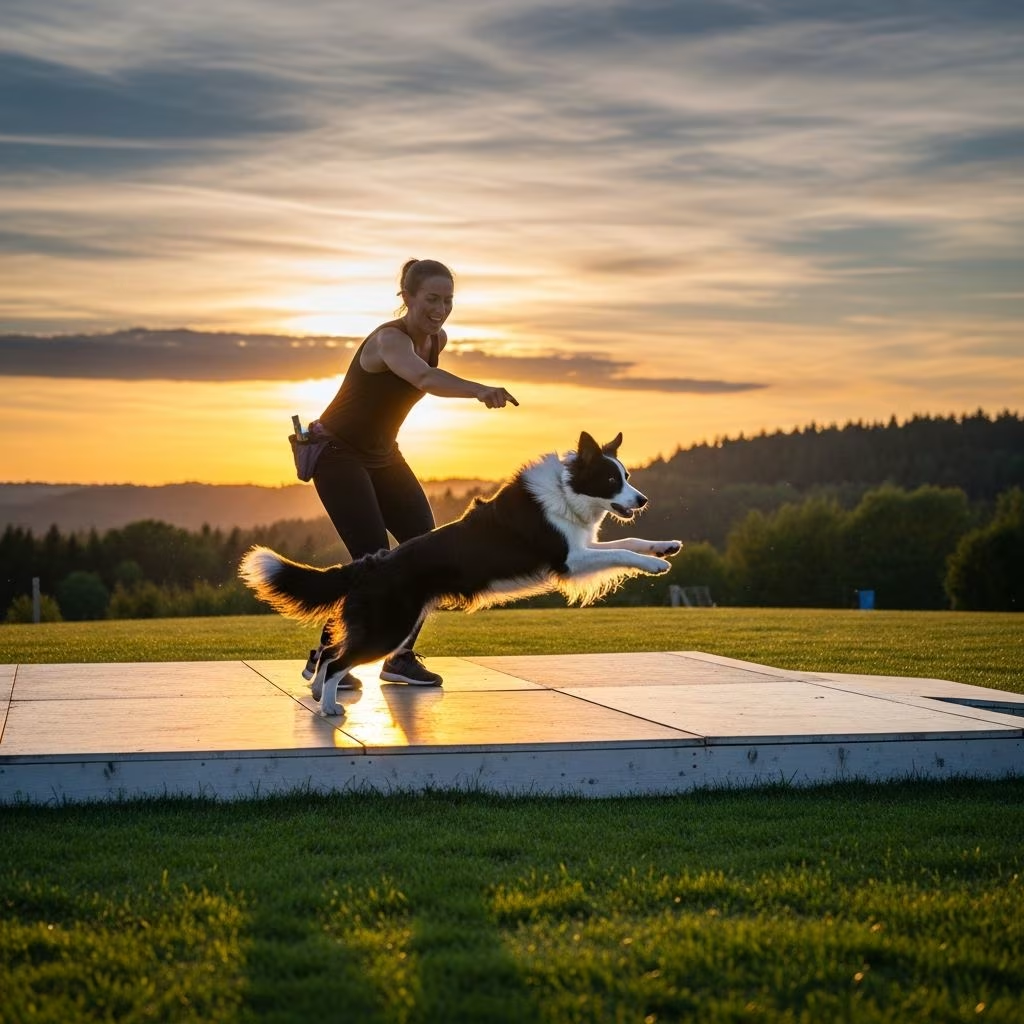
Canine freestyle, often called dog dancing or musical freestyle, is a captivating sport where dogs and their handlers perform choreographed routines set to music. This blend of obedience training, tricks, and dance movements highlights the unique partnership between dog and human, emphasizing creativity, precision, and joy. Unlike traditional obedience, freestyle allows for artistic expression, with routines that can tell a story, showcase personality, and demonstrate the dog’s intelligence and agility.
At its core, canine freestyle requires dogs to maintain focus on their handler for extended periods—up to three minutes in advanced competitions—while executing a variety of behaviors hands-free for significant portions of the performance. This sport is accessible to dogs of all breeds, sizes, and ages, as long as they are healthy and enjoy learning new skills. Positive reinforcement training is the foundation, fostering a willing, enthusiastic partner rather than a coerced performer.
What Is Canine Freestyle?
Canine freestyle is defined as a choreographed performance combining training, teamwork, music, and movement to create an artistic display that celebrates the dog’s unique qualities. It merges traditional obedience skills like heeling and recalls with non-traditional “dance” elements such as spins, weaves, bows, and leg wraps. The handler acts as both director and dance partner, cueing behaviors verbally, visually, or through body language while moving in sync with the music.
Freestyle routines typically last 90 seconds to three minutes, depending on the competition level, and must keep the audience engaged through fluid transitions and creative interpretation of the music. Dogs wear minimal attire—a decorative collar or leg cuffs—to ensure safety, while handlers often don costumes that match the theme. The sport’s appeal lies in its collaborative nature: dogs often contribute ideas for behaviors, making training a true team effort.
- Key Components: Obedience (heeling, stays), tricks (spins, rolls), and dance-like movements (weaves, jumps).
- Training Philosophy: Positive reinforcement, clicker training, luring, and targeting.
- Focus: Handler-dog bond, with constant attention and responsiveness.
Types of Canine Freestyle
There are two primary divisions in canine freestyle: Freestyle Heeling (Heelwork to Music) and Musical Freestyle, each offering distinct challenges and styles.
Freestyle Heeling (Heelwork to Music)
Freestyle heeling emphasizes precision heelwork, where the dog maintains various heel positions for about two-thirds of the routine. The dog stays close, almost invisibly tethered to the handler, executing position changes, pivots, and side passes without distance work or tricks like jumps. This division suits teams excelling in obedience and precision, with dogs working on both left and right sides, front, and behind the handler.
- Allowed: Heel variations, backing, lateral moves.
- Not Allowed: Sending dog away, jumping, or distance behaviors.
Musical Freestyle
Musical freestyle is more free-form, incorporating heelwork with tricks, obedience, and dramatic movements like leg weaving, spins, rolls, and bows. Routines can include distance work, jumps over the handler, and synchronized dancing, with the dog as the star of the performance. Creativity shines here, as teams interpret music themes through costumes and choreography.
Both types are judged on content, accuracy, musical interpretation, teamwork, and engagement, with deductions for barking or errors.
Canine Freestyle Competitions and Routines
Organizations like the Musical Dog Sport Association (MDSA), Rally Freestyle Elements (RFE), and others host competitions with progressive levels requiring longer, more complex routines. Advanced teams perform hands-free for most of the routine, maintaining focus amid dynamic movements.
Routines begin with simple behaviors linked to music, gradually building into seamless sequences. Heelwork forms the backbone, often comprising 50-66% of the performance, integrated with novel tricks for visual appeal. Judging criteria include:
| Category | Description |
|---|---|
| Content | Diversity and creativity of moves. |
| Accuracy | Precision in execution. |
| Music Interpretation | Sync with rhythm and theme. |
| Teamwork | Focus, engagement, and bond. |
Competition promotes positive methods, with no force allowed, ensuring happy, motivated dogs.
Benefits of Canine Freestyle
Freestyle strengthens the handler-dog bond through constant communication and shared joy. Physically, it builds flexibility, core strength, proprioception, and symmetrical muscle development by working both sides and all directions, reducing injury risk. Mentally, it provides enrichment via tricks and problem-solving, keeping dogs sharp and engaged.
- Physical Gains: Enhanced agility, balance, and rear-end awareness.
- Mental Stimulation: Novel behaviors prevent boredom.
- Relationship Building: Collaborative training deepens trust.
- Cross-Training: Complements obedience, rally, or agility.
Any dog knowing basic obedience—like sits, downs, recalls—can start, making it inclusive.
How to Get Started in Canine Freestyle
Begin with foundation skills: teach heeling on both sides, position changes, and engagement. Use positive reinforcement—clickers, treats, toys—to shape behaviors like spins (“around”), bows, and weaves.
- Select Music: Choose pieces matching your team’s energy.
- Break Down Routine: Link 2-3 moves, then expand.
- Practice Hands-Free: Build duration of focus.
- Add Tricks: Incorporate rolls, hi-fives, leg wraps.
- Choreograph: Sync to music, add transitions.
Programs like Rally-FrEe provide structured progression for precision. Start small, celebrate progress, and film sessions to refine flow.
Training Tips for Success
Focus on clear cues: verbal for distance, visual/body for close work. Vary routines to prevent predictability, and train in distracting environments for competition readiness. Encourage dog input—let them offer behaviors to build ownership.
- Proof behaviors for speed and reliability.
- Maintain high drive with variable rewards.
- Prioritize fun to sustain long-term engagement.
Frequently Asked Questions (FAQs)
What dogs are best for canine freestyle?
Any breed or mix; success depends on trainability and focus, not size or athleticism.
Do I need to be a dancer?
No—basic movement to music suffices; professional steps aren’t required.
How long to prepare a routine?
Weeks to months; start with basics and build gradually.
Is freestyle safe for older dogs?
Yes, with modifications; it improves flexibility without high impact.
Where to compete?
Check MDSA, RFE, or local clubs for events.
References
- What is Freestyle? — United States Kerry Blue Terrier Club. Accessed 2026. https://uskbtc.com/What-is-Freestyle
- Are You in Love with Canine Freestyle Dancing? — Spectra Therapy. Accessed 2026. https://spectratherapy.com/testimonial/are-you-in-love-with-canine-freestyle-dancing/
- Freestyle — Newfoundland Club of America. Accessed 2026. https://www.ncadogs.org/freestyle.html
- Canine Musical Freestyle – So Much More Than “Dancing with your Dog” — Fenzi Dog Sports Academy. Accessed 2026. https://www.fenzidogsportsacademy.com/blog/canine-musical-freestyle-so-much-more-than-dancing-with-your-dog
- Canine Musical Freestyle: What is this little known sport? — Delta Tails. Accessed 2026. https://www.deltatails.com/blog/what-is-canine-musical-freestyle
- Canine Freestyle: Teaching Your Dog to Dance — Kinship. Accessed 2026. https://www.kinship.com/dog-behavior/canine-freestyle
- MDSA Canine Freestyle Training Guide — Musical Dog Sport Association. 2015-03. https://musical-dogsport.squarespace.com/s/MDSA-Canine-Freestyle-Training-Guide-2015-03.pdf



