

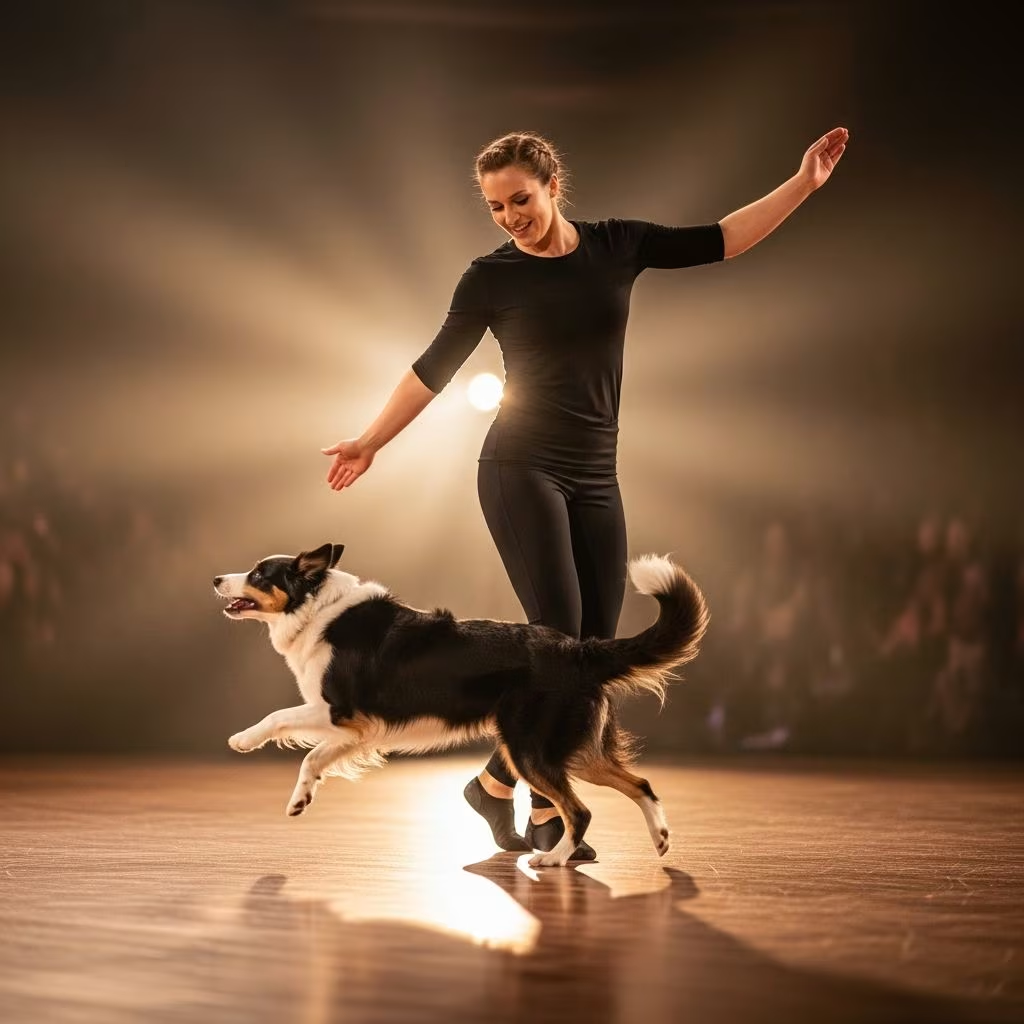
Canine freestyle, often called dog dancing or musical freestyle, is a creative dog sport where a handler and dog perform a choreographed routine set to music. It blends obedience, tricks, and artistic movement into a performance that celebrates the unique bond between you and your dog.
In this guide, you will learn what canine freestyle is, why it benefits both dogs and humans, the basic skills and moves involved, how to train safely, and how to get started whether your goal is competition or simply having fun at home.
What Is Canine Freestyle?
Canine freestyle is a sport in which training, teamwork, music, and movement come together to create an artistic routine that highlights the dog as the star. It is sometimes described as “obedience with attitude” or “dancing with your dog.”
Unlike traditional obedience where precision alone is the focus, freestyle encourages creativity. Routines can include:
- Heeling in different positions to music
- Tricks such as spins, bows, leg weaves, and jumps
- Transitions and movement that tell a story or match the mood of the music
- Costumes and themes that enhance the performance (for the human; dogs typically wear only a safe, simple collar)
There are two common branches of the sport:
- Heelwork to Music (Freestyle Heeling): Focuses on precise heel positions and movement in rhythm with music, often with the dog staying close to the handler.
- Musical Freestyle: Less formal and more theatrical, using a wide range of tricks, distance work, and creative behaviors.
Why Try Canine Freestyle with Your Dog?
Canine freestyle is more than entertainment. It offers meaningful benefits for your dog’s mind, body, and your shared relationship.
Mental Stimulation and Learning
Designing and practicing routines requires your dog to learn new skills, remember sequences, and respond quickly to cues. This type of mental work can:
- Reduce boredom and associated problem behaviors
- Increase focus and responsiveness to the handler
- Build confidence, especially in shy or uncertain dogs
Physical Fitness and Body Awareness
Freestyle training improves body awareness, flexibility, and coordination through controlled movement, backing up, pivots, and side passes. Because dogs work on both sides of the handler and move in many directions, they develop more balanced muscle use and better proprioception (awareness of where their body is in space).
When trained thoughtfully and safely, this type of varied movement can support overall fitness and may contribute to fewer sports-related injuries.
Strengthening the Human–Dog Bond
Freestyle is built on a positive working relationship and close communication between dog and handler. Teams must stay connected through verbal and body cues, often without any physical contact. Over time, this can:
- Deepen trust and cooperation
- Improve your timing and clarity as a trainer
- Turn training sessions into genuinely enjoyable shared play
Major organizations and experienced trainers emphasize that the dog’s enjoyment and willingness are central to the sport, and that routines should celebrate the dog rather than overshadow it.
Who Can Do Canine Freestyle?
One of the strengths of canine freestyle is its inclusivity. Almost any dog–handler team can participate, regardless of age, breed, or prior experience, as long as the dog is healthy enough for the chosen movements.
| Dog Type | Why Freestyle Works |
|---|---|
| Puppies and young dogs | Short, upbeat sessions channel energy into learning and teamwork. |
| Adult sport dogs | Provides cross-training for balance, coordination, and focus. |
| Senior dogs | Gentle moves at slower speeds can keep older dogs mentally and physically engaged without high impact. |
| Shy or sensitive dogs | Positive reinforcement and predictable routines can build confidence. |
| High-energy dogs | Complex tricks and sequences offer an outlet for mental and physical energy. |
Handlers of all ages and abilities can participate as well. Routines can be tailored to the handler’s mobility and comfort level; the focus is on teamwork and creativity, not professional dance skill.
Core Skills and Moves in Canine Freestyle
Although there are no universally required moves, most freestyle routines build from a foundation of obedience skills and creative tricks.
Foundation Obedience Skills
- Heeling in multiple positions (left, right, front, behind the handler)
- Reliable attention to the handler’s body language and voice
- Position changes such as sit, stand, and down on cue
- Recall and send-away behaviors
Freestyle-Specific Moves
Common freestyle moves include:
- Spins and twirls (clockwise and counterclockwise)
- Weaving between the handler’s legs while walking or standing
- Backing up beside, in front of, or away from the handler
- Side steps or lateral movement (side passes)
- Bows, head dips, or play bows
- Jumps over arms or low obstacles, where physically appropriate
- Circling the handler or moving around them in different directions
More advanced teams may incorporate distance work, complex sequences of pivots and position changes, and behaviors that interact directly with the handler’s own dance movements.
Training Methods and Safety
Modern canine freestyle is strongly associated with reward-based, positive reinforcement training methods. Organizations and instructors commonly emphasize using markers (such as a clicker or verbal “yes”), food rewards, toys, and praise to build reliable and enthusiastic performance.
Key Training Tools and Concepts
- Positive reinforcement: Rewarding desired behaviors to increase their likelihood.
- Clicker or verbal marker: Precisely marks the moment the dog performs the correct action.
- Luring: Using food to guide the dog through new movements before fading the lure.
- Targeting: Teaching the dog to touch or follow a target (like a hand or target stick) to shape positions and movement.
- Clear verbal and visual cues: Consistent signals help the dog distinguish different tricks and transitions.
Safety Considerations
As with any sport, safety should guide your training choices:
- Select moves that match your dog’s age, size, and physical condition.
- Build strength and flexibility gradually; avoid repetitive jumping or sharp turns for young, growing dogs or seniors.
- Warm up with gentle walking and simple tricks before practicing more demanding moves.
- Train on non-slip, shock-absorbing surfaces to protect joints and prevent falls.
- Stop or modify a behavior if your dog appears uncomfortable or fatigued.
Choosing Music and Creating a Routine
Music selection is central to canine freestyle. The right music supports your dog’s movement, highlights their personality, and helps you structure your routine.
How to Choose Music
- Pick a song you genuinely enjoy; you will hear it many times while training.
- Match the tempo to your dog’s natural gait and energy level.
- Consider the mood of the music: playful, dramatic, elegant, or comedic.
- Listen for clear phrases where you can place specific moves or transitions.
Building a Routine Step by Step
New teams often find it easier to build routines in small segments:
- Start with two or three moves linked together and practice until they feel smooth.
- Add transitions between moves, such as a turn, a bow, or a side step.
- Expand the sequence gradually, keeping the difficulty appropriate for your dog.
- Prioritize flow and clarity over complexity; clear, joyful performance is more important than cramming in many tricks.
Over time, you can refine your choreography to enhance timing, storytelling, and the overall impression of teamwork.
Competition, Titles, and Organizations
Many handlers enjoy freestyle purely as a hobby at home, but there are also formal competitions and titling opportunities in different countries.
What Judges Look For
While specific rules vary by organization, routines are often evaluated on:
- Content: Variety and difficulty of moves and how well they are integrated.
- Precision: Accuracy and responsiveness of the dog to cues.
- Flow: Smooth transitions and overall rhythm of the routine.
- Musical interpretation: How well the routine reflects the phrasing, tempo, and mood of the music.
- Teamwork and enjoyment: Visible partnership and the dog’s apparent enthusiasm.
Some groups also emphasize that the dog should remain the main focus and that any costuming or theatrics should support rather than distract from the dog’s performance.
Examples of Freestyle Organizations
- Musical Dog Sport Association (MDSA): Promotes canine musical freestyle with an emphasis on positive training and showcases the dog as the star performer.
- Rally-FrEe and Rally Freestyle Elements (RFE): Provide a structured framework combining rally-style signs with freestyle moves to build precision and flow.
- Various national kennel clubs and regional freestyle groups also host events and offer titles.
Getting Started with Canine Freestyle
You do not need special equipment or advanced dance skills to begin. A quiet space, some treats, your dog’s favorite toys, and music are enough to start exploring simple moves.
Steps for Beginners
- Review your dog’s basic obedience skills (sit, down, come, simple heel).
- Introduce one or two easy tricks, such as a spin or a bow, using rewards and clear markers.
- Play a short piece of music and practice moving with your dog at their natural pace.
- Experiment with linking a few moves to different sections of the song.
- Keep sessions short, positive, and fun, ending before your dog becomes tired or bored.
Finding Instruction and Community
To progress further, consider:
- Joining a local dog training club that offers freestyle or trick training classes.
- Learning from reputable online courses or seminars taught by experienced freestyle instructors.
- Watching official competition videos to see a range of styles and difficulty levels.
- Connecting with freestyle organizations to access rulebooks, titling information, and training resources.
Frequently Asked Questions (FAQs)
Q: Do I need to be a good dancer to do canine freestyle?
A: No. The focus of canine freestyle is on your teamwork and your dog’s performance, not your dance experience. Simple steps and clear cues are enough to create an enjoyable routine.
Q: Is canine freestyle safe for all dogs?
A: Most healthy dogs can participate, but moves should be chosen and adapted based on age, size, and physical condition. Avoid high-impact or strenuous behaviors for growing puppies, seniors, or dogs with known orthopedic issues, and consult your veterinarian if you are unsure.
Q: How long does it take to train a basic routine?
A: The time varies widely depending on your goals and your dog’s prior training. Some teams can put together a simple routine in a few weeks of regular practice; more complex, competition-level routines may take months or longer to develop and polish.
Q: Can I compete in freestyle if my dog is not a purebred?
A: Yes. Many freestyle clubs and organizations welcome mixed-breed dogs, and the sport’s emphasis on creativity and teamwork makes it accessible to a wide variety of dogs.
Q: What is the difference between heelwork to music and musical freestyle?
A: Heelwork to music focuses on precise heeling positions and movement in rhythm with the music, with the dog staying near the handler throughout the routine. Musical freestyle allows a broader range of tricks, distance work, and theatrical elements, giving more flexibility in choreography.
References
- What is Freestyle? — United States Kerry Blue Terrier Club. 2019-06-01. https://uskbtc.com/What-is-Freestyle
- Are You in Love with Canine Freestyle Dancing? — Spectra Therapy. 2020-03-10. https://spectratherapy.com/testimonial/are-you-in-love-with-canine-freestyle-dancing/
- Canine Musical Freestyle – So Much More Than “Dancing with your Dog” — Fenzi Dog Sports Academy. 2021-04-15. https://www.fenzidogsportsacademy.com/blog/canine-musical-freestyle-so-much-more-than-dancing-with-your-dog
- Canine Musical Freestyle: What is this Little Known Sport? — Delta Tails. 2022-08-05. https://www.deltatails.com/blog/what-is-canine-musical-freestyle
- Canine Freestyle Training Guide — Musical Dog Sport Association. 2015-03-01. https://musical-dogsport.squarespace.com/s/MDSA-Canine-Freestyle-Training-Guide-2015-03.pdf
- Welcome to the World of Musical Freestyle or “Dog Dancing” — American Kennel Club. 2019-11-21. https://www.akc.org/expert-advice/lifestyle/welcome-to-the-world-of-musical-freestyle-dog-dancing/
- Section 1 – Musical Dog Sport Association — Musical Dog Sport Association. 2018-09-10. https://musicaldogsport.org/section-1



