

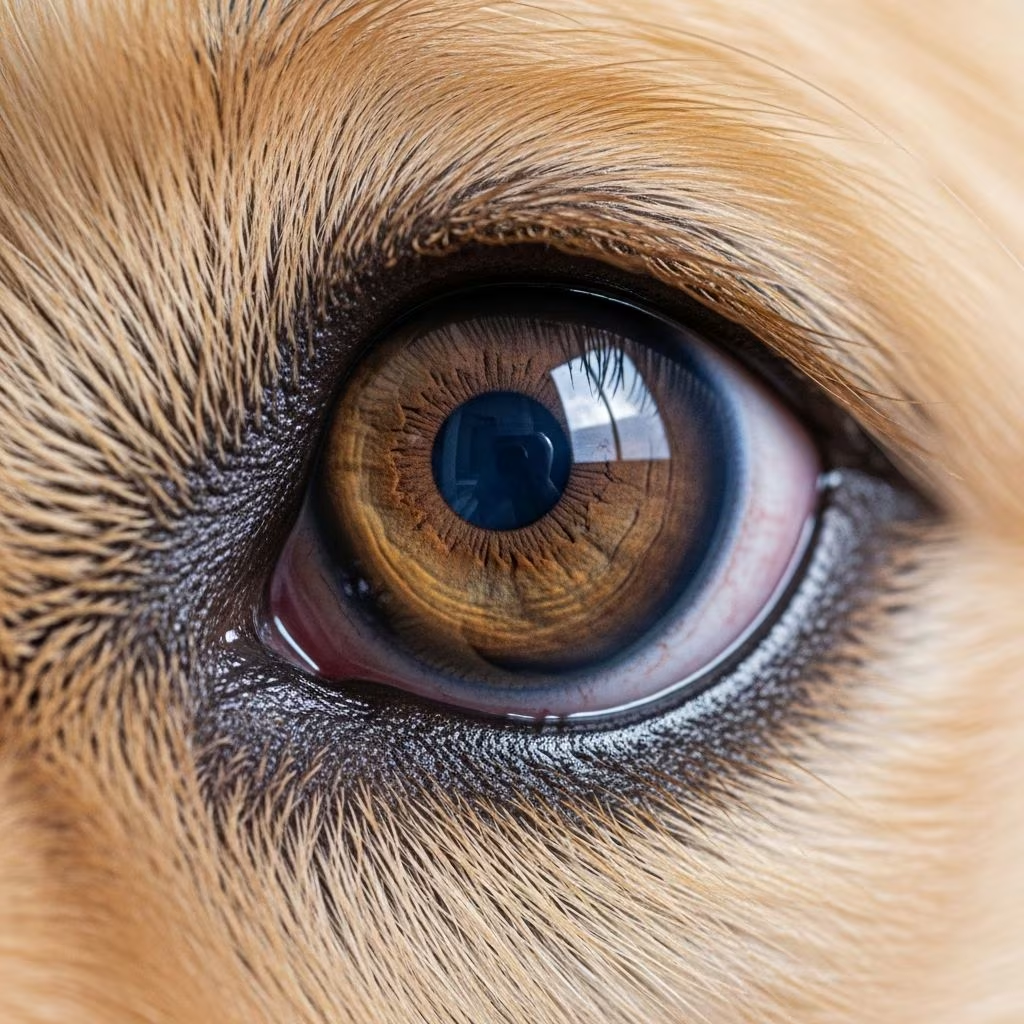
Dogs rely on their vision to navigate the world, play, and interact with their environment. However, various eye disorders can impair this vital sense, ranging from mild irritations to vision-threatening conditions. Understanding canine eye anatomy and recognizing early signs of problems is crucial for pet owners. This guide covers common disorders, their symptoms, causes, treatments, and prevention strategies, drawing from veterinary expertise to help maintain your dog’s ocular health.
Understanding Canine Eye Anatomy
A dog’s eye functions similarly to a human’s but with adaptations for their predatory lifestyle. The cornea, the clear front surface, protects the eye and refracts light. Behind it lies the aqueous humor, maintaining eye pressure. The lens focuses light onto the retina, where photoreceptors convert it into signals sent via the optic nerve to the brain. The vitreous humor fills the eye’s rear, and the sclera forms the white outer layer. Unique to dogs, the tapetum lucidum behind the retina enhances night vision by reflecting light.
Breeds vary in eye shape: brachycephalic dogs like Pugs have prominent eyes prone to injuries, while those with droopy lids like Bloodhounds risk ectropion. Healthy eyes appear clear, bright, and free from discharge, redness, or cloudiness.
Common Signs of Eye Problems in Dogs
Early detection prevents progression to blindness. Watch for:
- Redness or inflammation of the whites, conjunctiva, or eyelids.
- Excessive tearing (epiphora) or thick, mucopurulent discharge.
- Squinting (blepharospasm), pawing at eyes, or holding eyes closed.
- Cloudy, hazy, or bluish cornea, indicating edema or ulcers.
- Pupil changes: dilated (mydriasis) in glaucoma or unequal sizes.
- Visible third eyelid protrusion, often in pannus or Horner’s syndrome.
- Bumping into objects or hesitation in dim light, signaling vision loss.
If noticed, consult a veterinarian promptly for fluorescein staining, tonometry, or Schirmer tear tests.
Conjunctivitis (Pink Eye)
Conjunctivitis inflames the conjunctiva, the moist tissue lining the eyelids and covering the sclera. Common in dogs, it’s often bacterial, viral, allergic, or irritant-induced.
Symptoms: Red, swollen conjunctiva; discharge (mucoid to purulent); chemosis (swelling); follicles in chronic cases.
Causes: Infections, allergies, foreign bodies, or eyelid abnormalities.
Treatment: Topical antibiotics like Neo-Poly-Bac ointment; anti-inflammatories; address underlying issues. Steroids like dexamethasone for non-infectious cases. Prognosis is excellent with early care.
Dry Eye (Keratoconjunctivitis Sicca – KCS)
KCS results from insufficient aqueous tear production, drying the cornea and conjunctiva. Common in breeds like West Highland White Terriers.
Symptoms: Blepharospasm, tenacious mucopurulent discharge, dull cornea, neovascularization, pigmentation, ulcers.
Causes: Immune-mediated, drugs, infections, or idiopathic.
Treatment: Lacrimostimulants (cyclosporine), artificial tears, antibiotics. Surgical parotid duct transposition for refractory cases. Untreated, it leads to scarring and blindness.
Corneal Ulcers
Ulcers erode the corneal epithelium, from trauma, entropion, or dry eye. Types include superficial indolent (non-healing with loose edges) and deep stromal ulcers.
Symptoms: Pain, blepharospasm, epiphora, fluorescein-positive defects, haze. Deep ulcers show ‘halo’ staining, uveitis.
Treatment: Debridement (grid keratotomy, diamond burr), anti-collagenases (tetracycline), antibiotics, surgery (conjunctival grafts for deep). Monitor to prevent rupture.
Cataracts
Cataracts cloud the lens, blocking light to the retina, causing partial to total blindness. Not to be confused with nuclear sclerosis in seniors.
Symptoms: White/gray lens opacity, vision loss, bumping objects.
Causes: Hereditary (Terriers, Poodles), diabetes, trauma, aging.
Treatment: Surgical phacoemulsification if early; antioxidants for prevention. Untreated risks lens-induced uveitis or glaucoma.
Glaucoma
Glaucoma elevates intraocular pressure (IOP), damaging the optic nerve and retina. Acute is painful; chronic insidious.
Symptoms: Pain (blepharospasm), corneal edema, mydriasis, episcleral injection, buphthalmos (enlarged globe), vision loss.
Causes: Primary (breed predisposition: Cocker Spaniels, Basset Hounds); secondary to uveitis, lens luxation.
Treatment: Emergency: prostaglandins (latanoprost), carbonic anhydrase inhibitors (brinzolamide), mannitol IV. Long-term: surgery (laser, enucleation if blind/painful).
Progressive Retinal Atrophy (PRA)
PRA is a hereditary retinal degeneration leading to gradual blindness. Eyes appear normal externally.
Symptoms: Night blindness progressing to day blindness; dilated pupils.
Causes: Genetic, affects many breeds.
Treatment: No cure; antioxidants may slow. Genetic testing for breeding. Dogs adapt well using other senses.
Sudden Acquired Retinal Degeneration Syndrome (SARD)
SARD causes rapid bilateral blindness from retinal deterioration, unlike gradual PRA.
Symptoms: Sudden vision loss (days/weeks), normal eye appearance initially.
Causes: Unknown; possible systemic links.
Treatment: Supportive; dogs adjust quickly but owners need guidance.
Eyelid Abnormalities
Entropion
Entropion rolls eyelids inward, rubbing hairs on the cornea. Common in Shar-Peis, Bulldogs.
Symptoms: Blepharospasm, ulcers, epiphora.
Treatment: Tacking sutures temporary; surgical correction.
Ectropion
Opposite: eyelids droop outward, exposing conjunctiva. Breeds: Bloodhounds, Retrievers.
Symptoms: Chronic irritation, infections.
Treatment: Surgery if symptomatic.
Distichiasis & Ectopic Cilia
Distichiasis: extra eyelashes from lid margin; ectopic cilia: aberrant corneal hairs.
Treatment: Cryotherapy, electrolysis.
Pannus
Immune-mediated corneoscleral pigmentation, worse with UV exposure. German Shepherds prone.
Symptoms: Corneal haze, third eyelid lesions, discharge.
Treatment: Topical steroids/immunosuppressants lifelong.
Lens Luxation
Lens displaces from zonules, anterior into aqueous. Terriers affected.
Symptoms: Sudden pain, glaucoma, corneal edema.
Treatment: Surgical removal essential.
Prevention and Home Care
Prevent issues by:
- Regular vet check-ups, especially for predisposed breeds.
- Protect eyes during play/outdoors (goggles for high-risk).
- Clean gently with saline; avoid human drops.
- Balanced diet with antioxidants (vitamins C/E, lutein).
- Control systemic diseases like diabetes.
For vision-impaired dogs, maintain routines, use scents/sounds, secure home.
When to See a Vet
Seek immediate care for trauma, sudden changes, pain, or discharge. Delays risk permanent damage. Specialists (veterinary ophthalmologists) for complex cases.
Frequently Asked Questions (FAQs)
What are the first signs of eye problems in dogs?
Redness, squinting, discharge, cloudiness, or pawing at eyes indicate issues needing vet attention.
Canine eye disorders be cured?
Many like conjunctivitis or ulcers resolve with treatment; others like PRA are managed, not cured.
Are some breeds more prone to eye issues?
Yes, brachycephalics to ulcers, Spaniels to glaucoma, herding breeds to PRA.
How to clean a dog’s eyes safely?
Use vet-approved saline; wipe outward gently; never use soap or human products.
What if my dog goes blind?
Dogs adapt using smell/hearing; keep life consistent, use verbal cues.
References
- See the world through your dog’s eyes — Merck Animal Health USA. 2023. https://www.merck-animal-health-usa.com/pet-owners/behavior/understanding-your-pet/see-the-world-through-your-dogs-eyes-mypet/
- Vision Loss in Dogs: A Comprehensive Guide — Animal Eye Guys. 2024-07-24. https://www.animaleyeguys.com/site/blog/2024/07/24/vision-loss
- Common eye conditions in dogs – clinical tips (Part 1) — BSAVA. 2023. https://bsava.com/article/common-eye-conditions-in-dogs-clinical-tips-part-1/
- Disorders of the Lens in Dogs — Merck Veterinary Manual. 2024. https://www.merckvetmanual.com/dog-owners/eye-disorders-of-dogs/disorders-of-the-lens-in-dogs
- 22 Common Dog Eye Problems — PetMD. 2024. https://www.petmd.com/dog/general-health/evr_dg_eye_problems_in_dogs
- Canine Eye Care — Meadowview Veterinary Hospital. 2023. https://meadowviewvet.com/uploads/SiteAssets/610/files/forms/dogeyecare.pdf
- Common Eye Problems In Pets — Animal Vision Care. 2024. https://avcorlando.com/blog/common-eye-problems-in-pets-a-guide-for-pet-owners/



