

What Is Entropion and How Does It Affect Dogs?
Entropion represents a significant ocular condition in which the eyelid tissue folds inward toward the eye’s surface, creating chronic irritation and discomfort. This inversion prevents the eyelid from functioning properly, allowing the eyelashes and hair to rub directly against the cornea and conjunctiva. Unlike temporary eye irritations that resolve quickly, entropion is a structural problem requiring professional intervention.
The condition manifests in various forms depending on which portion of the eyelid is affected. Some dogs experience entropion in the lower eyelid, while others develop it in the upper lid or both simultaneously. Certain breeds with specific facial anatomy—particularly those with shortened muzzles and pronounced facial folds—show higher predisposition to this condition.
Entropion can be classified into distinct categories based on its origin. Hereditary entropion develops due to genetic predisposition and structural abnormalities present from birth or early development. Conversely, secondary or spastic entropion emerges as a consequence of pain from other eye injuries or infections, where muscle spasms involuntarily draw the lid inward.
Recognizing the Physical and Behavioral Signs
Early recognition of entropion symptoms enables faster intervention and reduces the risk of permanent eye damage. The signs can vary in intensity from subtle to severe, depending on how severely the eyelid is rolled inward and the duration of the condition.
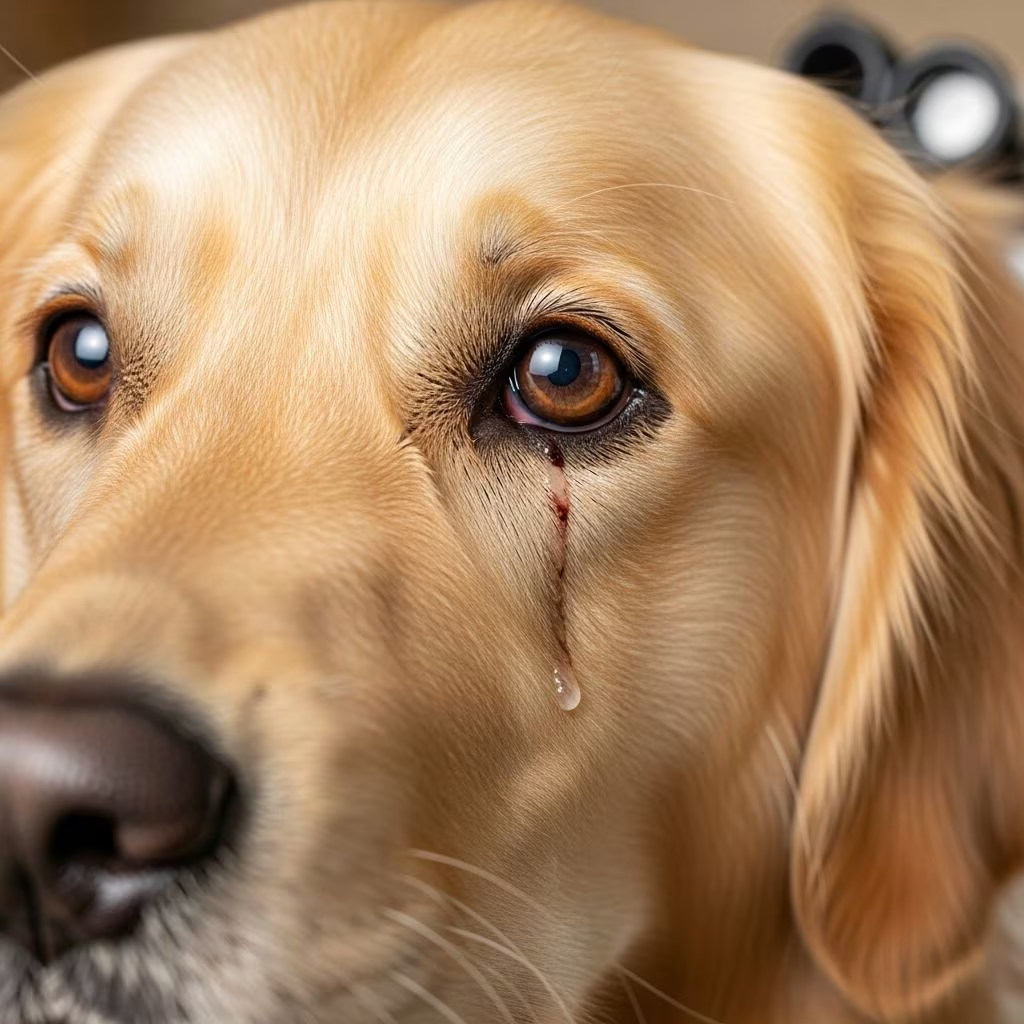
- Excessive tearing and discharge: Dogs with entropion often produce abnormal amounts of tears (a condition called epiphora), resulting in wet fur around the eye area
- Visual behavior changes: Squinting, partially closing the eye, or holding the eye completely shut indicates discomfort and light sensitivity
- Physical irritation signs: Pawing, rubbing, or scratching at the affected eye reflects the pain and irritation caused by the inward-rolling lid
- Ocular appearance changes: The eye region may appear red, swollen, or inflamed, and a hazy or cloudy appearance may develop on the cornea surface
- Discharge characteristics: Some dogs develop goopy or mucoid discharge rather than clear tears, depending on secondary infections present
- Recurrent infections: Frequent episodes of conjunctivitis or eye infections indicate the chronic irritation environment created by entropion
Interestingly, some dogs—particularly flat-faced breeds with medial entropion affecting the inner corner near the nose—may display minimal obvious discomfort despite the condition being present. This makes regular veterinary check-ups essential, as these cases might go unnoticed by owners until significant corneal damage has occurred.
Understanding the Diagnostic Process
Veterinary diagnosis of entropion typically follows a straightforward protocol, though the process varies based on disease severity and secondary complications. Your veterinarian will conduct a thorough physical examination, paying particular attention to eyelid positioning and movement.
To assess corneal involvement, veterinarians often apply fluorescein stain to the eye surface. This special dye adheres to areas where the corneal surface has been damaged or ulcerated, becoming visible under examination. The staining reveals the extent of mechanical damage from the rubbing eyelid and helps determine appropriate treatment urgency.
In young puppies, veterinarians may recommend observation rather than immediate treatment. Since puppies’ facial structures continue developing, mild entropion sometimes resolves naturally as the face grows and reaches adult proportions. Your vet might schedule follow-up examinations to monitor progression and determine when surgical intervention becomes necessary.
However, if the condition is causing documented pain, evident corneal ulceration, or ongoing eye damage, your veterinarian will typically recommend immediate treatment regardless of the dog’s age.
Progressive Damage: What Happens Without Treatment
The consequences of leaving entropion untreated escalate dramatically, progressing from manageable irritation to vision-threatening damage. Understanding these potential complications underscores the importance of prompt professional attention.
Initially, chronic lid rubbing causes corneal surface erosion and ulceration. As these ulcers deepen and persist, they become vulnerable to secondary bacterial infections. Without appropriate antimicrobial treatment, infections progress to severe corneal scarring, which permanently compromises transparency and visual acuity.
In advanced untreated cases, deep ulcers can compromise corneal integrity to the point of rupture, immediately causing blindness in the affected eye. Additionally, prolonged inflammation can trigger uveitis—interior eye inflammation—which may lead to permanent vision loss.
In the most severe scenarios, the damage becomes so extensive that surgical removal of the eye becomes necessary to prevent systemic complications and eliminate chronic pain.
Treatment Approaches: From Conservative Management to Surgery
Treatment strategies vary based on the dog’s age, the severity of the condition, and whether secondary complications have developed. A tiered approach typically begins with conservative measures before progressing to definitive surgical correction.
Temporary Measures for Young Dogs
Puppies experiencing entropion may benefit from temporary interventions while their facial structures mature. A procedure called “tacking” or temporary eyelid eversion involves using sutures to hold the eyelid in its normal outward position. This technique relieves symptoms during the critical growth period without requiring permanent structural changes.
Tacking typically holds the eyelid in the correct position until the puppy reaches 5 to 12 months of age. This window allows facial development to potentially correct the positioning naturally. If the condition persists after growth is complete, permanent surgical correction becomes the next step.
Medical Management Options
Medications cannot resolve the underlying entropion itself but can minimize corneal damage while other treatments are planned or during temporary management phases. Antibiotic ointments reduce the risk of secondary infections and support corneal healing. Additionally, pain management medications and anti-inflammatory agents improve comfort.
For entropion secondary to other eye injuries, treating the underlying condition—such as healing a corneal scratch or resolving an infection—may alleviate the spastic entropion as pain subsides.
Definitive Surgical Correction
Permanent correction of entropion requires surgical intervention performed under general anesthesia. The most common procedure, called the Hotz-Celsus operation, involves removing a calculated section of skin from the eyelid area, then suturing the remaining skin edges together.
This removal and resuturing pulls the eyelid outward, restoring its normal position and preventing the inward roll. The procedure is straightforward in most cases, though complex anatomical situations may require modified techniques.
Surgical success rates are impressive, with 90 to 95 percent of cases achieving lasting correction when performed by skilled practitioners. However, 5 to 10 percent of dogs may require a second procedure to achieve complete correction or to fine-tune positioning.
Surgical Timing and Considerations
Most veterinarians recommend waiting until dogs reach their adult size—typically between 6 and 12 months of age—before performing major entropion surgery. Premature surgery risks over-correction, creating an opposite problem called ectropion, where the eyelid rolls outward.
By allowing the dog to reach adult size, the surgeon can assess final facial proportions and perform more precise corrections. In some instances, a staged surgical approach works best: an initial primary surgery followed by a smaller corrective procedure performed several weeks or months later to optimize the result.
Your veterinary ophthalmologist or surgical specialist will evaluate your individual dog’s anatomy and recommend the optimal timing and approach for your specific situation.
Post-Surgical Care and Recovery
Following surgical correction, proper aftercare significantly influences healing and long-term success. Your veterinarian will provide specific instructions tailored to your dog’s situation, but general guidelines typically include:
- Keeping the surgical site clean and dry during the healing period
- Restricting physical activity and play to prevent wound stress
- Using prescribed eye drops or antibiotic ointments as directed
- Preventing the dog from rubbing or scratching at the surgical area
- Attending follow-up examinations to monitor healing progression
- Watching for signs of infection or complications
Most dogs experience significant relief shortly after surgical healing completes. The elimination of chronic eye irritation often results in behavioral improvements, as the dog is no longer in constant discomfort.
Prevention and Breed Considerations
Since hereditary entropion is genetically predisposed, responsible breeding practices play an important role in reducing prevalence in future generations. Breeders should screen breeding animals and avoid pairing individuals with known entropion history.
For owners of affected dogs, genetic counseling considerations exist if reproduction is contemplated. Dogs with hereditary entropion should generally not be bred to prevent passing the condition to offspring.
Frequently Asked Questions
Can puppies outgrow entropion?
Some puppies with mild entropion do improve naturally as their facial structure develops and matures. However, this cannot be guaranteed, and monitoring is essential to ensure the condition does not cause ongoing damage.
Is entropion surgery always necessary?
Not always initially—particularly in young puppies with mild cases. However, if the condition causes pain or documented eye damage, surgery becomes necessary regardless of age.
What breeds are most commonly affected?
Breeds with shortened muzzles and excess facial skin, including Pugs, Bulldogs, and similar flat-faced breeds, show higher predisposition. However, entropion can occur in any breed.
How long is recovery after entropion surgery?
Most dogs experience healing within 2 to 3 weeks, though complete tissue remodeling takes longer. Activity restrictions typically continue for several weeks post-surgery.
Can entropion return after surgery?
Recurrence is uncommon but possible, particularly if the initial correction was incomplete. Aging-related facial changes might also require adjustment later in life.
Living with Your Dog After Treatment
Dogs successfully treated for entropion can return to normal activities and quality of life. Surgery eliminates the chronic pain and irritation that characterized the condition, allowing your dog to play, train, and interact comfortably.
Continued regular eye examinations help monitor for any complications and ensure long-term ocular health. Most dogs maintain excellent vision and comfort indefinitely after successful treatment.
References
- Entropion in Dogs: Causes, Symptoms, and Treatment — PetMD. 2024. https://www.petmd.com/dog/conditions/eyes/entropion-dogs-causes-symptoms-and-treatment
- Entropion in Dogs: Causes and Treatments — Animal Clinic of Benicia. 2022. https://www.animalclinicofbenicia.com/site/blog/2022/04/30/entropion-in-dogs-causes-treatments
- Entropion in Dogs — PDSA. 2024. https://www.pdsa.org.uk/pet-help-and-advice/pet-health-hub/conditions/entropion-in-dogs
- Entropion in Dogs: Causes, Symptoms and Treatment Options — CareCredit. 2024. https://www.carecredit.com/well-u/pet-care/entropion-in-dogs/
- Entropion in Dogs — Hope Advanced Veterinary Center. 2023. https://www.hopecentervet.com/site/blog/2023/09/15/entropion-dogs
- What is Entropion in Dogs? Causes + Care Options — Bond Vet. 2024. https://bondvet.com/blog/what-is-entropion-in-dogs
- Eyelid Entropion in Dogs — VCA Animal Hospitals. 2024. https://vcahospitals.com/know-your-pet/eyelid-entropion-in-dogs



