

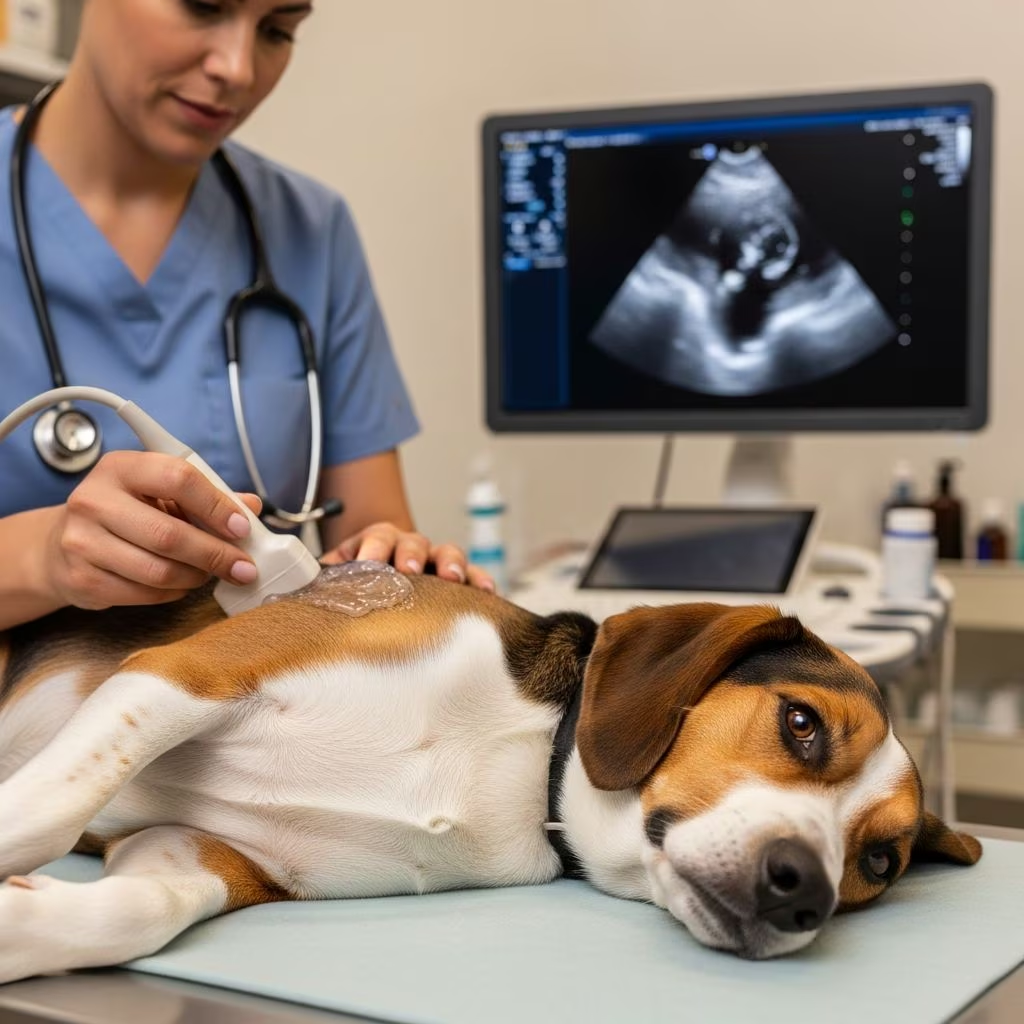
Canine echocardiograms, specialized ultrasound exams of a dog’s heart, typically range from $300 to $1,200 depending on location, provider expertise, and additional services. This non-invasive diagnostic tool provides real-time images of heart structure and function, essential for detecting conditions like murmurs, valve issues, or congestive failure.
The Value of Echocardiograms in Canine Health
Echocardiograms use high-frequency sound waves to visualize the heart’s chambers, valves, walls, and blood flow patterns without surgery or radiation. Veterinary cardiologists rely on this test to assess pumping efficiency, identify congenital defects, and monitor disease progression in dogs showing symptoms such as coughing, lethargy, fainting, or exercise intolerance.
Early detection through echocardiography can extend a dog’s life and improve quality by enabling targeted treatments like medications or dietary changes. Unlike static X-rays, it captures dynamic heart motion, revealing subtle abnormalities that might otherwise go unnoticed.
Key Factors Influencing Pricing
Several variables determine the final cost of a canine echocardiogram, making it essential for owners to understand regional and procedural differences.
- Geographic Location: Urban areas with high veterinary demand, such as major cities, often charge 20-50% more than rural clinics. For instance, coastal regions may exceed $1,000, while Midwest facilities hover around $500.
- Provider Type: General practice vets charge less ($300-$600) for basic scans, but board-certified cardiologists at specialty centers bill $800-$1,500 due to advanced equipment and expertise.
- Dog Size and Breed: Larger breeds like Great Danes require more gel, time, and probe adjustments, potentially adding $100-$200. Brachycephalic breeds may need accommodations for positioning.
- Additional Diagnostics: Bundled services like bloodwork, ECG, or X-rays can increase totals by $200-$500, providing a fuller health picture.
| Factor | Low-End Cost Impact | High-End Cost Impact |
|---|---|---|
| Urban vs. Rural | $300-$500 | $900-$1,200 |
| General Vet vs. Specialist | $350 | $1,200+ |
| Basic Scan vs. Full Panel | $400 | $1,000 |
| Small vs. Large Dog | No extra | +$150 |
Typical Cost Breakdown Across the U.S.
Average national pricing for a standalone echocardiogram falls between $650 and $950, but variations are common. In the Northeast, expect $800-$1,100; the South, $500-$850; the West Coast, $750-$1,200; and the Midwest, $450-$750. These figures exclude sedation ($100-$250 if required for anxious dogs) or follow-up consultations ($150-$300).
Specialty hospitals often offer package deals for initial cardiology visits, combining echo with history review and blood pressure checks for $1,000-$1,800 total, streamlining costs.
Preparation and Procedure Details
Most dogs undergo echocardiography without fasting or sedation, lying comfortably on a padded table for 20-45 minutes. Technicians apply gel to the chest—sometimes clipping fur for thick-coated breeds—and glide a transducer probe to capture images. Owners can often stay present for reassurance.
The process evaluates heart size, wall thickness, valve performance, and fluid around the heart. Complementary tests like Doppler for blood flow may extend the session but enhance accuracy.
Insurance and Financial Assistance Options
Pet insurance covering diagnostics can reimburse 70-90% of echocardiogram costs if heart conditions are pre-existing exclusions are avoided. Policies from providers like Trupanion or ASPCA often include wellness add-ons for preventive scans.
- Shop for plans with no upper age limits and comprehensive illness coverage.
- Consider CareCredit or veterinary payment plans for financing without interest if paid promptly.
- Non-profits like RedRover offer grants for low-income owners facing urgent cardiac diagnostics.
When to Consider an Echocardiogram for Your Dog
Recommend this test if your vet detects a murmur via stethoscope, abnormal chest X-rays, or clinical signs like rapid breathing at rest, blue gums, or collapse. Breeds prone to heart issues—Cavaliers (mitral valve disease), Boxers (cardiomyopathy), Dobermans (dilated cardiomyopathy)—benefit from annual screenings post-middle age.
Proactive screening in at-risk seniors can prevent crises like heart failure, where costs skyrocket with hospitalization ($2,000+).
Comparing Echocardiograms to Other Heart Tests
| Test Type | Average Cost | What It Shows | Invasiveness |
|---|---|---|---|
| Echocardiogram | $650-$950 | Structure, function, blood flow | Non-invasive |
| Chest X-ray | $100-$300 | Heart enlargement, lung fluid | Non-invasive |
| ECG | $50-$150 | Electrical rhythm | Non-invasive |
| Blood Pressure | $40-$80 | Hypertension | Non-invasive |
| Holter Monitor | $300-$600 | 24-hour rhythm tracking | Minimally invasive |
Echocardiograms offer the most detailed insights, justifying their higher price for definitive diagnoses.
Frequently Asked Questions (FAQs)
Is a dog echocardiogram painful?
No, it’s painless—dogs feel only the cool gel and probe pressure, similar to a gentle massage.
How long does the procedure take?
Imaging lasts 20-60 minutes, with full appointments up to 2 hours including consults.
Will my dog need sedation?
Most don’t, but calm, cooperative dogs proceed without; anxious ones may receive mild sedation.
Can I be with my dog during the exam?
Yes, presence often comforts pets and eases restraint.
Does fur need to be shaved?
Usually not, but clipping helps with dense coats like Huskies.
What if results show heart disease?
Treatment plans vary—meds for valves, surgery for defects—with ongoing monitoring.
Maximizing Value from Your Investment
To optimize costs, seek referrals to university vet schools for discounted specialist care ($400-$700) or multi-pet discounts at clinics. Request itemized bills and inquire about payment plans upfront. Long-term, preventive heart-healthy diets and exercise reduce disease risk, minimizing future scans.
Investing in an echocardiogram equips you with actionable data, potentially saving thousands in emergency care. Consult your primary vet promptly if heart concerns arise.
References
- Echocardiograms for Dogs and Cats — DoveLewis. 2023. https://www.dovelewis.org/blog/echocardiograms-dogs-and-cats
- Everything You Need To Know About a Dog Echocardiogram — Penny Paws. 2024. https://pennypaws.com/blog/everything-you-need-to-know-about-a-dog-echocardiogram/
- What to Expect: Initial Consultation & Benefits — CVC A Vets. 2023. https://www.cvcavets.com/patient-resources/what-to-expect
- Dog Echocardiograms: What to Expect — Veazie Vet. 2024. https://veazievet.com/blog/dog-echocardiograms/
- Echocardiography for Dogs & Cats — MedVet. 2023. https://www.medvet.com/echocardiography/
- Everything You Need to Know About Pet Echocardiograms — MPAH Vets. 2024. https://mpahvets.com/blog/everything-you-need-to-know-about-pet-echocardiograms/
- Pet Echocardiograms FAQs — Allen TX Vet. 2023. https://allentxvet.com/pet-echocardiograms-faqs



