

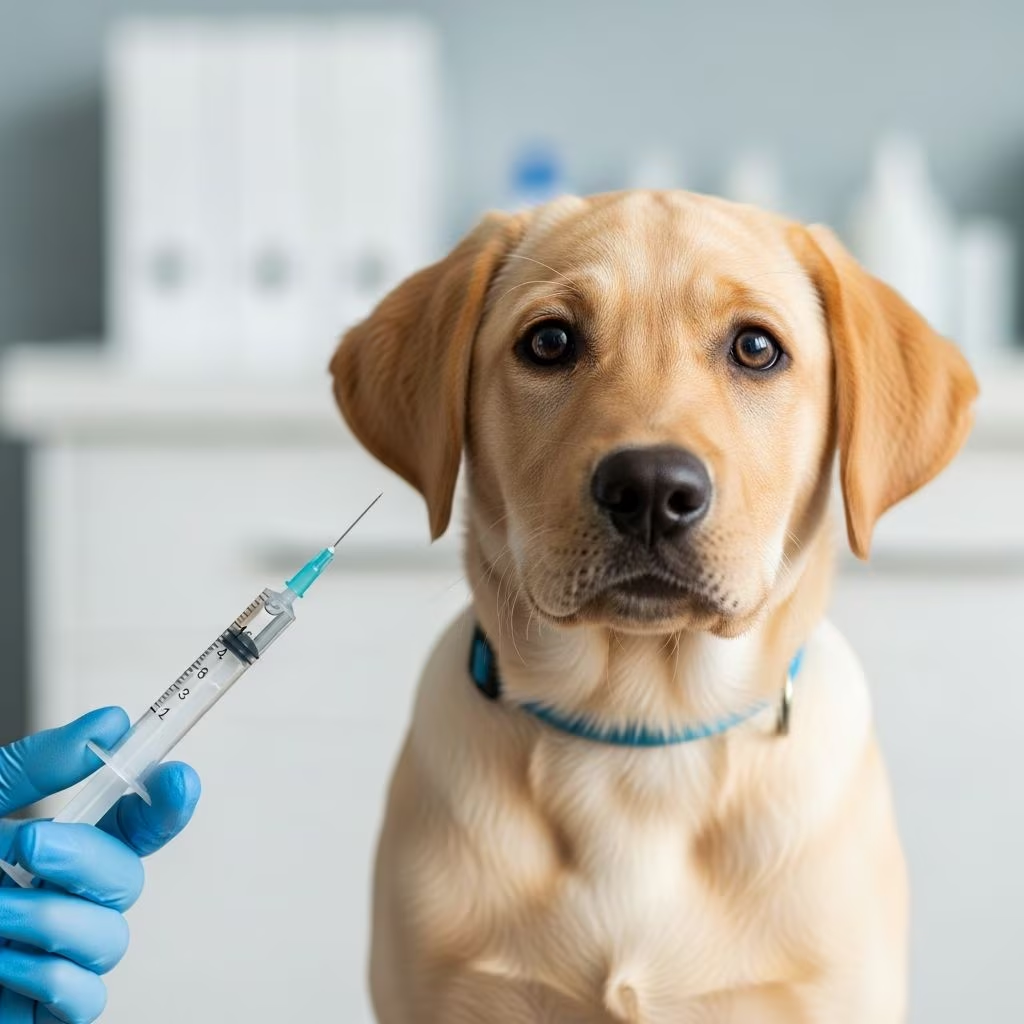
Understanding Canine Distemper Virus and Vaccination
Canine distemper virus (CDV) is one of the most serious infectious diseases affecting dogs worldwide. CDV causes a highly contagious disease that can be fatal, with infection largely preventable through vaccination. The virus affects the respiratory, digestive, skin, and neurological systems of infected animals, making it a critical health concern for pet owners and veterinarians alike. Understanding the importance of CDV vaccination is essential for maintaining your dog’s health and preventing the spread of this devastating disease within canine populations.
CDV has an RNA genome that includes six linearly organized transcription units, which give rise to eight viral proteins, including the hemagglutinin (H) and the fusion (F) protein. These proteins are critical targets for vaccine development, as they elicit immune responses that protect against infection. Modern CDV vaccines are specifically designed to stimulate the immune system to recognize and neutralize these viral components before infection occurs.
Types of CDV Vaccines Available
Veterinarians have several vaccine options when protecting dogs against canine distemper. CDV vaccines are considered core vaccines, recommended for all dogs regardless of geographical location. The primary vaccine formulations available include modified-live virus (MLV), high-titer, low-passage (less attenuated) modified-live virus, or a recombinant canarypox vector with targeted CDV genes.
Modified-Live Virus (MLV) Vaccines: These vaccines contain weakened versions of the CDV that can stimulate a robust immune response without causing disease in healthy dogs. MLV vaccines are the most commonly used formulation and have been proven effective over many years of use.
High-Titer, Low-Passage Vaccines: These modified-live vaccines are less attenuated than standard MLV vaccines, meaning they maintain higher infectivity levels while remaining safe. They can be particularly useful in puppies with maternal antibodies.
Recombinant Vaccines: These newer vaccine options use genetic engineering to insert CDV genes into a canarypox vector. Recombinant vaccines provide an alternative for dogs with specific sensitivities or owners seeking non-live vaccine options.
Emerging Vaccine Technologies: Researchers are developing innovative vaccine approaches, including DNA vaccines encapsulated in lipid nanoparticles (LNPs) and epitope-based peptide vaccines. These cutting-edge formulations show promising results in laboratory and animal studies, potentially offering enhanced safety profiles and broader protection against different CDV lineages.
Recommended Vaccination Schedules for Puppies
The timing of CDV vaccination is crucial for establishing adequate immunity in young dogs. The minimum age to begin the primary vaccination protocol in puppies is 6–8 weeks. Since maternal antibodies can interfere with vaccine effectiveness, puppies require a series of vaccinations spaced appropriately to ensure immunity develops as maternal protection wanes.
Standard Vaccination Protocol: To overcome the barrier of maternal antibodies, puppies are vaccinated with MLV vaccine starting at 6 weeks of age and at 3- to 4-week intervals until 16 weeks old. This schedule ensures protection develops as maternal immunity gradually diminishes.
Alternative Vaccination Schedule: Some veterinarians follow Dr. W. Jean Dodds’ modified protocol, which includes vaccinations at 9-10 weeks, 14-15 weeks, and 18 weeks of age, followed by a booster at one year old. This schedule may be adjusted based on individual circumstances and risk factors.
Regardless of the specific protocol used, consistency and adherence to recommended intervals are essential for optimal immune response development. Your veterinarian can recommend the most appropriate schedule based on your puppy’s health status, risk factors, and local disease prevalence.
Vaccination Protocols and Booster Recommendations
After completing the primary vaccination series, maintaining immunity requires appropriate booster vaccinations. Most efforts in distemper prevention are focused on administering two or more doses of vaccine between the sixth or seventh week of age and up to three or four months, followed by revaccination every three years throughout the life of the animal.
The specific timing of boosters may vary based on the vaccine used and individual dog factors. Some veterinarians recommend annual boosters, while others follow a three-year revaccination schedule supported by clinical evidence and epidemiological data. Your veterinarian can discuss which booster schedule is most appropriate for your dog based on lifestyle, travel plans, and local disease prevalence.
Safety Profile of CDV Vaccines
CDV vaccines have been used safely in millions of dogs worldwide, with an excellent safety record. The risk of an adverse event to the current CDV vaccine is low. When adverse reactions do occur, they are typically mild and self-limiting.
Rare but Serious Reactions: One serious adverse effect that can occur, particularly when vaccines are administered too early, is post-vaccinal encephalitis (PVE). CDV vaccines should never be given before 6 weeks of age as they can cause severe post-vaccinal encephalitis. This neurological complication is why proper timing of vaccinations is essential.
Strain-Specific Reaction Rates: The rate of adverse reactions varies depending on the vaccine strain used. When using the Rockborn and Snyder Hill strain, the rate of reaction is extremely low. When the less potent Onderstepoort strain is used, the rate of reaction is approximately 1:500,000, which translates to roughly 180 companion dogs out of 90,000,000.
Combination Vaccine Considerations: When the distemper vaccine is combined with the adenovirus-2 vaccine, the risk of immune suppression and post-vaccinal encephalitis increases, particularly in puppies. This is one reason why some veterinarians do not advocate for the combination of the two at young ages.
Most adverse reactions are mild and may include temporary lethargy, reduced appetite, or mild fever. Serious reactions are extremely rare in modern vaccine formulations. If your dog experiences any concerning symptoms following vaccination, contact your veterinarian immediately.
Immunogenicity and Immune Response
Understanding how CDV vaccines work to protect your dog is important for appreciating their value. Successful CDV vaccines induce both antibody and cell-mediated immune responses. Neutralizing antibodies (NAbs) are critical for preventing viral infection and spread. Additionally, helper CD4+ T cells and CD8+ T cytotoxic cells are required for complete virus clearance from the host.
Research demonstrates that modern vaccines produce robust immune responses. Studies of innovative vaccine formulations show that two doses can induce long-lasting CDV neutralizing antibodies for over 300 days in dogs, with prime and boost antibody responses observed in wildlife species such as foxes and raccoon dogs. This extended protection underscores the durability of vaccine-induced immunity.
The quality of immune response varies among individual dogs due to genetic factors, age, health status, and previous exposure to pathogens. This variability is why some dogs may require additional boosters or titer testing to ensure adequate protection, particularly before travel or high-risk situations.
Vaccination in Different Life Stages
Puppies: Young puppies require their first vaccinations at 6-8 weeks of age, with boosters every 3-4 weeks until 16 weeks old. This primary series establishes foundational immunity during a critical developmental window.
Adult Dogs: Once the primary series is complete and the first one-year booster is administered, adult dogs typically require revaccination every three years to maintain protective immunity.
Senior Dogs: Aging dogs continue to benefit from CDV vaccination. However, veterinarians should carefully assess the overall health status of senior dogs before vaccination to ensure they are healthy enough to respond appropriately to the vaccine.
Dogs with Unknown Vaccination History: When adopting dogs with unknown vaccination histories, veterinarians typically recommend starting a full vaccination series to ensure adequate protection, as the duration and quality of any previous immunity cannot be determined.
Special Considerations for Vaccine Selection
Your veterinarian may recommend specific CDV vaccine formulations based on various factors. Some manufacturers produce standalone CDV vaccines, while others combine CDV with additional vaccines for convenience. The combination approach can reduce the number of injections required but may increase the risk of certain adverse reactions in some cases.
For dogs with sensitivities to live vaccines or owners seeking alternatives, recombinant vaccine options provide protection without the use of attenuated live virus. These formulations are particularly useful for dogs with certain medical conditions or immunocompromised status.
Emerging vaccine technologies, including DNA vaccines and peptide-based formulations, are being developed to address limitations of current vaccines, such as variable effectiveness against different CDV lineages worldwide. These innovations may offer enhanced safety profiles and broader cross-protective immunity in the future.
Global CDV Lineages and Vaccine Effectiveness
CDV exists in multiple genetic lineages that vary geographically worldwide. Variations among CDV genome lineages could lead to vaccination failure when vaccines are based on outdated strains. Most existing vaccines are based on the ancestral strain Onderstepoort, which has not been circulating for years in many regions.
This genetic variation is why researchers are developing universal vaccine approaches that provide protection against multiple CDV lineages. Multiepitope peptide vaccines and consensus sequence-based formulations show promise in offering broader protection regardless of which CDV variant a dog encounters.
Frequently Asked Questions About CDV Vaccination
Q: Is the CDV vaccine necessary if my dog stays indoors?
A: Yes, CDV vaccination is recommended for all dogs regardless of geographical location or lifestyle. Even indoor dogs can be exposed to the virus through contact with infected animals, contaminated objects, or aerosol transmission from nearby infected dogs.
Q: How often does my adult dog need CDV boosters?
A: Adult dogs typically require CDV revaccination every three years throughout their lifetime to maintain protective immunity. Some veterinarians may recommend annual boosters based on individual risk factors and lifestyle.
Q: Can my puppy get distemper even after vaccination?
A: While properly vaccinated dogs have excellent protection against CDV, no vaccine is 100% effective. Vaccination failure can occur if maternal antibodies interfere with the immune response or if the dog is exposed to highly virulent strains.
Q: What should I do if my dog experiences adverse reactions to CDV vaccine?
A: Contact your veterinarian immediately if your dog experiences concerning symptoms following vaccination. Most reactions are mild and self-limiting, but serious complications require professional evaluation and care.
Q: Can I get a CDV vaccine titer instead of booster vaccinations?
A: Yes, some veterinarians offer titer testing to assess immunity levels before recommending boosters. However, this approach may be more expensive than routine boosters and is not universally recommended for all dogs.
Conclusion
Canine distemper virus vaccination remains one of the most important preventive health measures available to dog owners. With core vaccine status, proven safety profile, and excellent efficacy, CDV vaccines protect individual dogs and contribute to population-level disease control. Working with your veterinarian to develop an appropriate vaccination schedule tailored to your dog’s age, health status, and lifestyle ensures optimal protection throughout your dog’s lifetime. As new vaccine technologies emerge, options for CDV protection continue to evolve, offering enhanced safety and broader immunity against diverse viral lineages worldwide.
References
- Safety and Immunogenicity of a Canine Distemper DNA Vaccine Encoding F and H Proteins in Lipid Nanoparticles — National Center for Biotechnology Information (NCBI/PMC). 2024. https://pmc.ncbi.nlm.nih.gov/articles/PMC12197581/
- Universal peptide-based potential vaccine design against canine distemper virus — Nature Scientific Reports. 2024. https://www.nature.com/articles/s41598-024-67781-5
- 2022 AAHA Canine Vaccination Guidelines: Canine Distemper Virus (CDV) — American Animal Hospital Association (AAHA). 2022. https://www.aaha.org/resources/2022-aaha-canine-vaccination-guidelines/canine-distemper-virus-cdv/
- Canine Distemper in Depth and the Vaccines — Hemopet. https://hemopet.org/canine-distemper-in-depth-and-the-vaccines/
- Canine Distemper — Merck Veterinary Manual. https://www.merckvetmanual.com/infectious-diseases/canine-distemper/canine-distemper
- Canine Distemper Virus — ASPCApro Shelter Medicine. https://www.aspcapro.org/topics-shelter-medicine-common-diseases/canine-distemper-virus



