Canine Distemper, Parvo, Bordetella and Rabies Vaccine
Complete guide to protecting your dog with essential vaccines against distemper, parvo, and rabies.
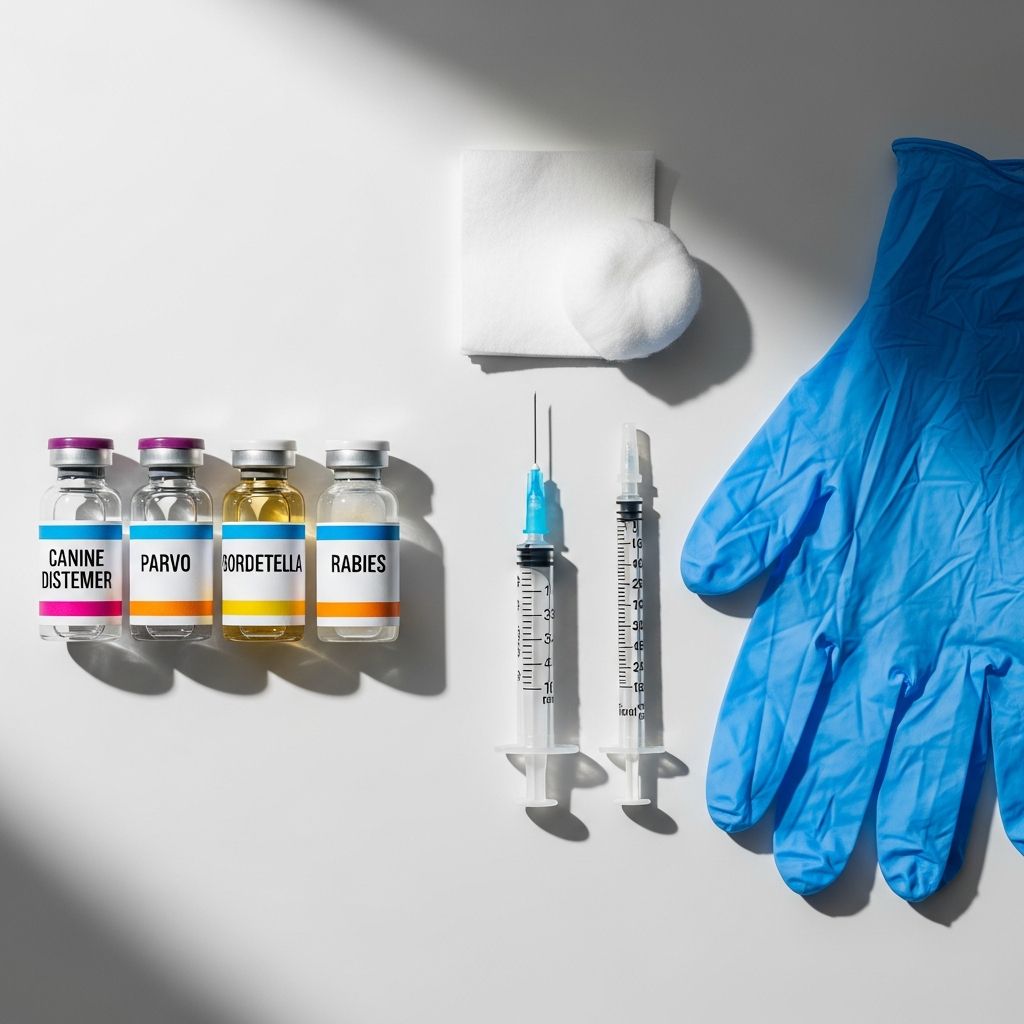
Canine Distemper, Parvo, Bordetella and Rabies Vaccine: A Complete Guide to Protecting Your Dog
Vaccinating your dog is one of the most important health decisions you can make as a pet owner. The canine distemper/parvo/bordetella and rabies vaccine represents some of the most critical protections available for your furry companion. These vaccines work to prevent several serious, often fatal diseases that can devastate your dog’s health. Understanding what these vaccines do, how they work, and when your dog needs them is essential for responsible pet ownership.
What Is a Canine Distemper/Parvo Vaccination?
The canine distemper vaccine is commonly called by that name, but it is actually much more comprehensive than its nickname suggests. Rather than protecting against only distemper, this vaccine is a combination of vaccines delivered in a single injection that protects your pet against several serious diseases. This combination approach makes vaccination more convenient for pet owners while ensuring comprehensive protection for dogs.
Canine distemper is classified as a core vaccine, which means that organized veterinary medicine has determined that all dogs should receive protection from this disease. This designation exists because canine distemper is a serious, highly contagious disease with a death rate approaching 50% in untreated dogs. The virus attacks the respiratory, digestive, and brain/nervous systems of dogs, causing severe illness and often death.
The exact combination of vaccines in your dog’s distemper combination vaccine depends on your dog’s age and individual disease-risk profile. However, the most important diseases to protect against are canine distemper, canine adenovirus-2 infection, canine parvovirus infection, and parainfluenza.
Understanding Vaccine Abbreviations: DHPP, DA2PP, and More
You may see abbreviations on your pet’s health records such as “DHPPV,” “DHPP,” “DA2PP,” or “DA2PPV.” These abbreviations represent the specific vaccines included in the combination. Understanding what each letter represents helps you know exactly what diseases your dog is protected against:
- D = Canine Distemper Virus: Infection with this virus is serious, with a death rate approaching 50% in untreated dogs. The virus attacks the respiratory, digestive, and brain/nervous systems.
- H = Hepatitis: This vaccine protects against canine adenovirus-1, which causes canine infectious hepatitis, a serious disease affecting the liver.
- A2 = Canine Adenovirus-2: This virus causes respiratory disease and is one of the infectious agents commonly associated with canine infectious tracheobronchitis, also known as kennel cough.
- P = Parvovirus: Infection with this virus is highly contagious and serious, with a death rate approaching 90% in untreated dogs. The virus attacks the digestive and immune systems of unvaccinated animals, causing debilitating diarrhea and vomiting.
- P or Pi = Parainfluenza: This is a mild respiratory viral disease in dogs.
- V = Virus: This letter simply denotes that the vaccine contains live virus components.
A notation of “DA2PPV,” “DA2PP,” “DHPP,” or “DHPPV” in your pet’s vaccination record generally means that your pet was vaccinated against canine distemper, hepatitis, parvovirus, and parainfluenza. Understanding these abbreviations helps you track your dog’s vaccination history and ensures you know what diseases your dog is protected against.
The Serious Diseases These Vaccines Prevent
Many of the diseases prevented by combination vaccines have no effective treatment other than supportive care. This makes prevention through vaccination critically important. Let’s examine the major diseases these vaccines protect against:
Canine Distemper
Canine distemper is a highly contagious viral disease that spreads through respiratory secretions, urine, feces, and saliva. The virus is particularly dangerous because it has a high fatality rate and affects multiple body systems simultaneously. Dogs that survive distemper often suffer permanent neurological damage, including seizures and coordination problems. There is no cure for canine distemper; treatment focuses only on supportive care to help the dog’s immune system fight the infection.
Parvovirus
Canine parvovirus is one of the most contagious canine diseases known. It spreads rapidly through dog populations and can survive in the environment for months. The virus primarily attacks the digestive tract and immune system, causing severe, bloody diarrhea, vomiting, and dehydration. Puppies and unvaccinated dogs face the highest mortality risk. Without aggressive supportive care, parvovirus is often fatal, particularly in young puppies.
Canine Adenovirus
Canine adenovirus has two main forms. Adenovirus-1 causes infectious canine hepatitis, which affects the liver and can cause fever, abdominal pain, and in severe cases, liver failure. Adenovirus-2 causes respiratory disease and contributes to kennel cough, a contagious respiratory infection common in dogs that spend time in group settings.
Parainfluenza
While generally milder than other diseases in this vaccine combination, parainfluenza is a respiratory virus that contributes to kennel cough and other respiratory infections in dogs. Vaccination helps prevent this disease and reduces the severity of respiratory symptoms.
Additional Distemper Combination Vaccines
Depending on your dog’s individual disease risk profile, which includes your dog’s age and lifestyle, your pet’s combination vaccine may protect against additional diseases. Some of these vaccines are considered noncore, meaning they are optional and only recommended for pets with certain exposure risks. Your veterinarian can assess your dog’s lifestyle and recommend appropriate noncore vaccines.
Bordetella Vaccination
While not considered a core vaccine, Bordetella vaccination may be recommended for dogs whose lifestyle places them at greater risk of contracting the disease. This includes dogs that are boarded frequently, regularly visit grooming parlors, attend dog shows, or spend time at dog parks. Bordetella causes a persistent, hacking cough that can last for weeks. Vaccination can be given either as an injection or as an intranasal spray and may be recommended in addition to the canine distemper combination vaccine based on your dog’s risk factors.
Rabies Vaccination: A Legal and Critical Requirement
Rabies is a 100% fatal disease in mammals once clinical signs appear. Because there is no effective treatment and the disease can also infect humans, vaccination against the rabies virus is required by law in most states. This makes rabies vaccination not just a health recommendation but a legal requirement in most jurisdictions.
Typically, the rabies vaccine is administered to pets in a separate injection at the same time as the canine distemper combination vaccine. However, the rabies vaccine can also be given alone at a separate visit or at the same time as other vaccines, such as the Lyme disease vaccine. Rabies is classified as a core vaccine for dogs because of its fatal nature and public health importance.
Research has demonstrated that rabies vaccination can be administered simultaneously with other vaccines without reducing its effectiveness. Studies show that fourteen days after administration of the rabies vaccine, with or without concomitant administration of combination vaccines, all dogs develop protective antibodies against rabies and maintain protective immunity levels.
Vaccination Schedule for Puppies and Adult Dogs
Proper vaccination timing is critical for building strong immunity in your dog. Here is a general vaccination schedule recommended by veterinarians:
Puppy Vaccination Schedule
Distemper, hepatitis, and parvovirus vaccines are generally included in one injection given at least three times, spaced approximately 3-4 weeks apart. These injections usually begin when the puppy is between 6 and 8 weeks old and finish at or after 16 weeks of age. Leptospirosis vaccination may be combined with the above vaccinations in the same injection or given separately in 2 doses spaced about 3-4 weeks apart. The rabies vaccine is often given at 12 to 16 weeks of age.
This schedule is important because puppies receive antibodies from their mother’s milk that gradually fade over the first few months of life. Multiple vaccinations spaced several weeks apart ensure that your puppy develops a strong immune response once maternal antibodies have diminished sufficiently.
Adult Dog Vaccination Schedule
Following the initial vaccine series in puppyhood, a booster is typically given one year later to reinforce protection. For adult dogs, the distemper combination vaccine should be given once every 3 years after the initial booster. Rabies vaccination might have a different schedule based on local laws but is often administered every 3 years for adult dogs, though some jurisdictions require annual rabies vaccination.
Revaccination with core vaccines, including rabies, is recommended for all dogs 1 year following completion of the initial juvenile series.
Understanding Vaccine Effectiveness and Immunity
Not all vaccines work the same way in terms of immunity development. The primary immune response following administration of the first dose of an inactivated vaccine is relatively weak and short-lived. A patient that receives only a single dose of inactivated vaccine is unlikely to develop a sustained protective immune response. This is why multiple vaccinations spaced several weeks apart are necessary during the puppy stage.
Rabies vaccination is an exception to this rule. A single dose of rabies vaccine can provide protective immunity. However, booster vaccinations are still recommended to maintain consistent protection levels and to comply with local legal requirements.
Research on vaccine compatibility demonstrates that when combination vaccines and rabies vaccine are administered together, all puppies seroconvert (develop antibodies) against canine distemper virus, canine adenovirus, canine parvovirus, canine parainfluenza virus, and rabies, achieving protective immunity levels.
Managing Vaccine Reactions
Vaccination is a medical procedure, and you should follow your veterinarian’s instructions on how to monitor your pet for signs of a reaction. Although rare, vaccine reactions can occur. Most reactions are mild and resolve on their own, but severe reactions require immediate veterinary attention.
If your pet experiences a vaccine reaction, your veterinarian can work with you to determine your pet’s risks for exposure to diseases and assess whether continuing certain vaccinations is appropriate. In some cases, the risk of a reaction is higher than the risk of disease, and vaccination may be modified or discontinued. However, this is usually not the case with rabies vaccines since rabies vaccination is required by law. There are vaccines available that were designed to reduce the risk of vaccine reactions by limiting the extra proteins in the vaccine that are usually responsible for reactions.
Mild reactions can sometimes be prevented by splitting up vaccines so that only one vaccine is given at a time and by giving an antihistamine prior to vaccination. Your veterinarian can discuss these options if your dog has had previous vaccine reactions.
Frequently Asked Questions About Dog Vaccines
Q: Why is vaccination so important for dogs?
A: Vaccination is crucial because many of the diseases these vaccines prevent are highly contagious, serious, and often fatal. Since many of these diseases have no effective treatment beyond supportive care, prevention through vaccination is the best way to protect your dog’s health and life.
Q: When should my puppy start receiving vaccinations?
A: Puppies should begin their vaccination series between 6 and 8 weeks of age. Multiple vaccinations spaced 3-4 weeks apart are necessary to ensure proper immune development. The series typically continues until 16 weeks of age or older.
Q: How often does my adult dog need booster vaccinations?
A: Adult dogs typically need booster vaccinations once every 3 years for the distemper combination vaccine. Rabies vaccine boosters may follow local law requirements, which often specify every 1-3 years. Always follow your veterinarian’s recommendations based on local regulations.
Q: Can the rabies vaccine be given at the same time as other vaccines?
A: Yes, the rabies vaccine can be given at the same time as other vaccines, including the distemper combination vaccine. Research shows that administering these vaccines simultaneously does not interfere with the immune response to either vaccine.
Q: Is my dog at risk for Bordetella if they don’t spend time in group settings?
A: Dogs that spend most of their time at home and don’t regularly visit boarding facilities, groomers, or dog parks have lower risk of contracting Bordetella. Your veterinarian can assess your individual dog’s lifestyle and recommend whether Bordetella vaccination is appropriate.
Q: What should I do if my dog experiences a reaction to vaccination?
A: Contact your veterinarian immediately if your dog shows signs of an adverse reaction following vaccination. Your veterinarian can assess the severity of the reaction and recommend appropriate treatment or modifications to future vaccinations.
Q: Is rabies vaccination required by law?
A: In most states, rabies vaccination is required by law for all dogs. Because rabies is a 100% fatal disease that can infect humans, vaccination requirements are mandated to protect both animal and human populations.
Q: What is the difference between core and noncore vaccines?
A: Core vaccines are recommended for all dogs because they protect against serious, highly contagious, or legally mandated diseases. Noncore vaccines are optional and recommended only for dogs with specific exposure risks based on their lifestyle and geographic location.
References
- Canine Distemper/Parvo Bordetella and Rabies Vaccine — Vetstreet. 2011-07-12. https://www.vetstreet.com/care/canine-distemper-parvo-bordetella-and-rabies-vaccine
- Compatibility between a rabies vaccine and two canine combined vaccines against canine distemper, adenovirosis, parvovirosis, parainfluenza — National Center for Biotechnology Information (NCBI). https://pmc.ncbi.nlm.nih.gov/articles/PMC8975599/
- What You Need to Know About Your Pet’s Vaccines — Northwest Veterinarian. https://nwveterinarian.com/need-know-pets-vaccines/
- Vaccines for Dogs — VCA Animal Hospitals. https://vcahospitals.com/know-your-pet/vaccines-for-dogs
- Dogs & Cats Overdue for Vaccination — Today’s Veterinary Practice. https://todaysveterinarypractice.com/preventive-medicine/dog-cat-vaccination-recommendations/
Similar Articles








Read full bio of medha deb