

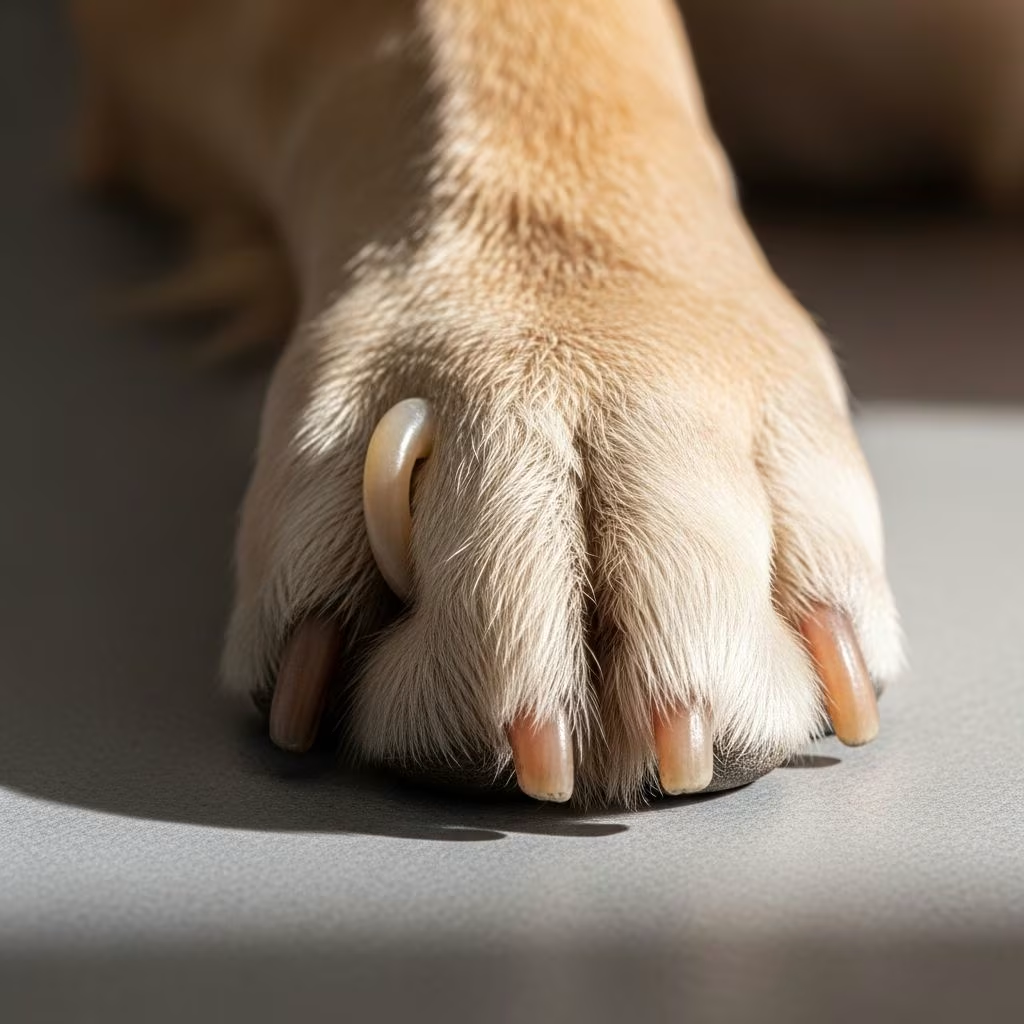
Dogs possess several unique anatomical features that distinguish them from other animals, and among the most fascinating are their dewclaws. Often overlooked or misunderstood, these small digit-like appendages play a significant role in canine movement, stability, and overall biomechanics. Whether you’re a first-time dog owner or an experienced handler, understanding dewclaws can help you make informed decisions about your pet’s health and care.
The Anatomical Basics of Dewclaws
Dewclaws are specialized digits that develop on the inner surface of a dog’s legs, located above the weight-bearing toes. The term “dewclaw” itself has an interesting origin, believed to derive from the claw’s tendency to brush against dew-covered grass as dogs walk through outdoor environments. These structures are fundamentally different from the main digits that contact the ground during normal walking and standing.
Most dogs possess one dewclaw on each front paw, positioned on the medial (inner) side of the leg. However, the rear limbs tell a different story. While not all dogs have hind dewclaws, certain breeds have fully developed rear dewclaws, and some rare individuals exhibit double dewclaws—a condition where two claws of equal size appear on the medial surface of the hind legs. This variation in rear dewclaw presence results from a genetic condition termed hind-limb-specific preaxial polydactyly, which involves specific genes responsible for digit development.
Internal Structure and Composition
The internal composition of dewclaws mirrors that of the human thumb, containing precisely two bones: a proximal phalanx and a distal phalanx. This skeletal structure differs from the main digits, which typically contain three phalanges. The presence of these bones in front dewclaws is crucial to understanding their functionality and importance in canine locomotion.
What makes front dewclaws particularly notable is their extensive muscular and tendinous attachments. Five distinct tendons connect directly to the dewclaw, linking it to muscles in the lower leg and forearm. These muscular connections are not vestigial remnants but rather functional systems that activate during movement. In contrast, hind dewclaws are frequently attached only by skin tissue, lacking the robust skeletal and muscular support found in their front limb counterparts. This anatomical difference explains why front dewclaws remain relatively firm, while hind dewclaws often feel more mobile and flexible to the touch.
The dewclaw contains a rich blood supply and nerve network, making it a living, sensitive structure rather than a hollow appendage. This vascularization is clinically significant because it means dewclaws can become infected, injured, or develop various health issues requiring veterinary attention.
Comparing Front and Rear Dewclaw Characteristics
| Feature | Front Dewclaws | Hind Dewclaws |
|---|---|---|
| Presence in Most Dogs | Universal (one per paw) | Rare; breed-dependent |
| Skeletal Structure | Two phalanges with metacarpal bone | Often only terminal phalanx |
| Attachment Method | Muscle, ligament, and bone | Skin tissue only |
| Mobility | Firm and stable | Mobile and flexible |
| Functional Role | Active during locomotion | Minimal functional purpose |
The Evolutionary Purpose Behind Dewclaws
Dewclaws represent an evolutionary adaptation that remains particularly pronounced in working and sporting dog breeds. These structures developed because they provided tangible survival and performance benefits for ancestral canines and modern dogs in specific environments and activities.
For dogs operating in rocky or mountainous terrain, dewclaws served as auxiliary gripping tools, enhancing traction and stability on uneven surfaces. In icy or slippery conditions, the additional contact point provided by the dewclaw improved overall grip and reduced the likelihood of slipping. Working breeds that historically herded livestock or hunted across challenging landscapes derived considerable advantage from these extra digits.
Beyond environmental adaptation, dewclaws facilitate several practical functions in daily canine activities. Dogs use their front dewclaws when holding objects between their paws, such as bones or toys, providing additional grip and stability for this behavior. The dewclaw acts similarly to a human’s thumb, offering opposable-like functionality even though it is not truly opposable.
Dewclaws and Canine Movement
One of the most significant functions of front dewclaws emerges during active movement, particularly at faster gaits. Research conducted using stop-action photography by veterinarian M. Christine Zink of Johns Hopkins University revealed that the front foot, including the dewclaw, contacts the ground while running. This contact is not incidental but rather serves a crucial biomechanical purpose.
When a dog is performing a canter or gallop, the lead leg makes ground contact, and at that precise moment, the dewclaw engages with the surface. This engagement provides immediate stabilization to the carpal (wrist) joint, preventing excessive lateral movement. Furthermore, when a dog needs to change direction while running, the dewclaw digs into the ground, anchoring the lower limb and preventing rotational torque on the leg structure.
The stabilization function becomes even more critical when dogs run at high speeds or on slippery surfaces. During these conditions, the dewclaw provides supplementary traction and support to the lower carpus joint, reducing stress on the primary weight-bearing digits and their associated structures. This distributed load-bearing capability helps prevent injuries and reduces long-term wear on the joints.
The Biomechanical Consequences of Dewclaw Removal
Understanding the functional importance of dewclaws becomes particularly relevant when considering removal. According to anatomical references, the five tendons attached to the dewclaw would undergo atrophy if the dewclaw were surgically removed. This atrophy represents more than a simple muscular change; it reflects the loss of active functional structures in the foreleg and carpus region.
Without functional dewclaws, the biomechanical load during movement redistributes across the remaining digits and joints. The leg loses its built-in mechanism for preventing torque during directional changes and high-speed movement. Over a dog’s lifetime, this constant twisting and torque stress can accumulate, potentially leading to carpal arthritis or injuries in adjacent joints such as the elbow, shoulder, and toes. For active dogs engaged in agility training, running, or working activities, this increased joint stress becomes particularly problematic.
Breed-Specific Variations in Dewclaw Presence
Not all dogs exhibit the same dewclaw configuration. While front dewclaws are universally present across dog breeds, rear dewclaws show significant variation. Certain breeds have been selectively bred to retain fully developed hind dewclaws, which are more structurally complete with bony articulation to metatarsal bones.
The St. Bernard and Beauceron breeds are notable examples where double dewclaws on the hind limbs appear with some regularity. In these breeds, the double dewclaw represents a desirable breed characteristic, with complete duplication of phalanges and metatarsal bones in some cases. This selective breeding demonstrates that humans have historically recognized the value of dewclaws enough to maintain these traits in specific breeds despite their rarity in the general canine population.
Other breeds might occasionally express rear dewclaws as genetic anomalies, but these are not typically maintained through selective breeding. The presence of hind dewclaws varies considerably even within breeds that commonly express them, indicating complex genetic inheritance patterns.
Dewclaw Care and Health Considerations
Because dewclaws contain blood vessels and nerves, they require appropriate care and attention. The nail portion of the dewclaw grows continuously and does not wear down through ground contact like the main claws. This means regular trimming becomes necessary to prevent the dewclaw from growing too long, curling, and potentially piercing the surrounding skin.
Additionally, because hind dewclaws are often attached by skin alone, they are more prone to catching on objects and tearing. Injuries to dewclaws can result in bleeding, infection, or permanent damage if not properly treated. Pet owners should inspect their dog’s dewclaws regularly, watching for signs of infection, overgrowth, or injury.
The decision to remove dewclaws should not be taken lightly, particularly for front dewclaws in active dogs. While dewclaw removal was historically common for cosmetic or traditional reasons, modern veterinary understanding increasingly recognizes the functional value of these structures, especially in working and sporting dogs where their biomechanical contributions directly impact performance and long-term joint health.
Frequently Asked Questions About Dewclaws
- Do all dogs have dewclaws?
- All dogs have front dewclaws on their inner front legs. However, rear dewclaws are only present in some dogs and are breed-dependent. Certain breeds like St. Bernards and Beaucerons are more likely to have hind dewclaws.
- Why are they called dewclaws?
- The name derives from the claw’s tendency to brush against dew-covered grass as dogs walk, particularly in early morning or wet conditions.
- Are dewclaws vestigial or functional?
- Front dewclaws are functional structures with multiple tendons and active biomechanical roles. Hind dewclaws are more vestigial, though some breeds have retained fully developed rear dewclaws through selective breeding.
- Should dewclaws be removed?
- This decision depends on individual circumstances. For active and working dogs, veterinary professionals increasingly recommend retaining functional front dewclaws. Hind dewclaws may need removal if they are problematic or pose safety risks.
- How often should dewclaws be trimmed?
- Dewclaw nails should be trimmed as needed to prevent overgrowth. Since they don’t contact the ground, they grow faster than main claws. Trimming frequency depends on individual growth rates, typically ranging from several weeks to a few months.
Conclusion
Dewclaws represent a fascinating intersection of evolutionary adaptation and modern canine anatomy. These structures, often dismissed as vestigial remnants, actually serve important biomechanical functions that directly impact how dogs move, stabilize their limbs, and prevent injury. By understanding dewclaws—their structure, function, and breed-specific variations—pet owners can make more informed decisions about their dog’s care and health. Whether your dog is an active adventurer or a household companion, appreciating the role of dewclaws contributes to a more comprehensive understanding of your pet’s anatomy and wellbeing.
References
- The Dewclaw — PetMassage™ Training and Research Institute. Accessed 2026. https://petmassage.com/the-dewclaw/
- Dewclaw Function 101 — worksSOwell. Accessed 2026. https://www.workssowell.com/a/blog/dewclaw-function-101
- What are dog dewclaws? Exploring canine anatomy — 24PetWatch. Accessed 2026. https://www.24petwatch.com/ca/blog/what-are-dog-declaws
- Dewclaw — Wikipedia. Accessed 2026. https://en.wikipedia.org/wiki/Dewclaw
- Hind Limb First Digit (Dewclaw) in Dog — Academic publication on canine anatomy. 2021. https://agmv.ro/wp-content/uploads/2021/03/33_38_Covasa_6.pdf
- Dew Claw Explanation — Wynwood Golden Retrievers. 2018. https://wynwoodgoldenretrievers.com/wp-content/uploads/2018/03/dewclawexplanation.pdf



