

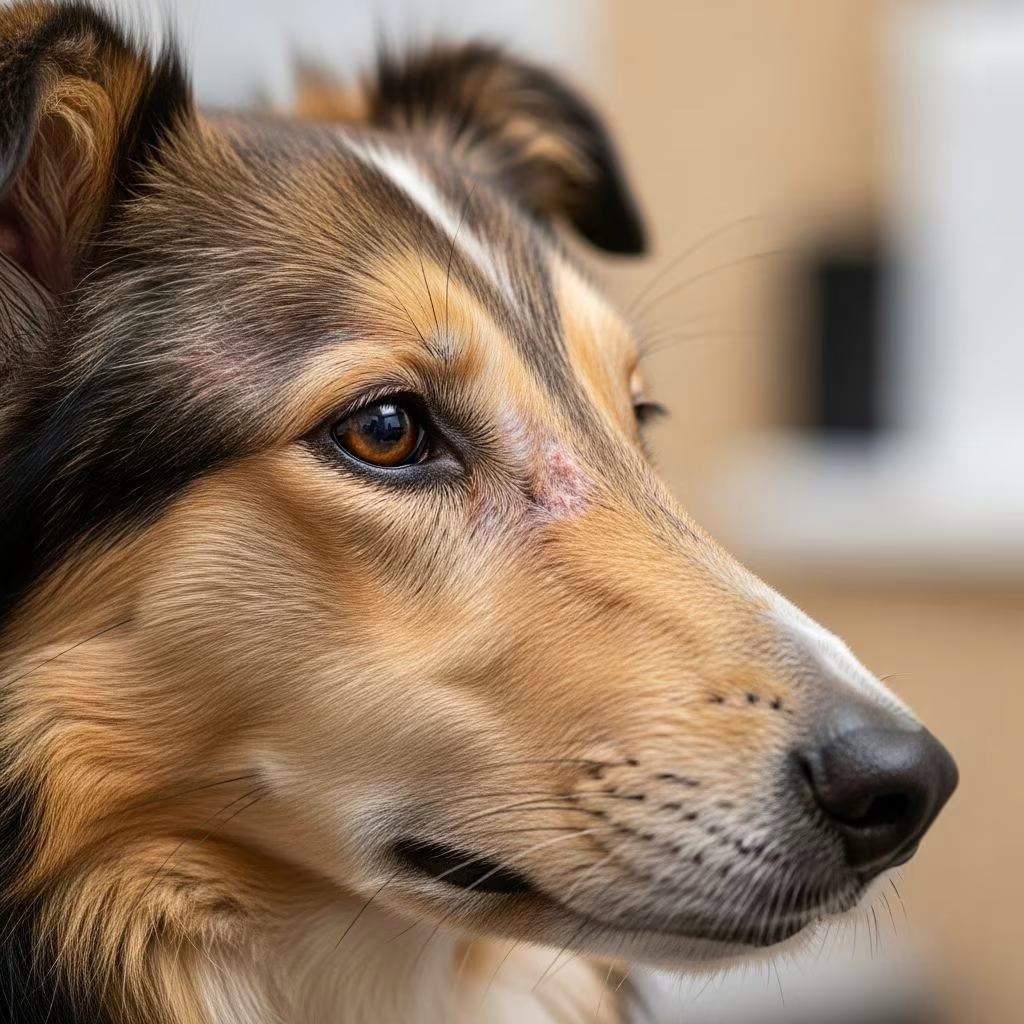
Understanding Canine Dermatomyositis
Canine dermatomyositis (DM) is a rare inflammatory condition that affects the skin, muscles, and blood vessels in dogs. This hereditary or immune-mediated disease can range from mild skin lesions to severe muscle atrophy and dysfunction. Understanding this condition is essential for dog owners and veterinary professionals to provide appropriate care and management strategies for affected animals.
What is Dermatomyositis?
Dermatomyositis is primarily an inflammatory vasculopathy characterized by immune-mediated attacks against the endothelium of small blood vessels, particularly endomysial capillaries in muscles and dermal vessels in skin. This endothelial inflammation, known as endotheliitis, leads to narrowing of the vascular lumen, microthrombosis, and ultimately hypoperfusion of downstream tissues. The resulting ischemia is responsible for the characteristic clinical manifestations including atrophy and necrosis of hair follicles and epidermis, causing alopecia and ulceration, as well as degeneration of muscle fibers.
Symptoms and Clinical Presentation
The clinical manifestations of dermatomyositis can vary significantly in severity and presentation. Affected dogs may experience a wide range of symptoms, from subtle skin lesions to severe muscle atrophy and dysfunction.
Skin Manifestations
Skin lesions are typically the most visible sign of dermatomyositis. The condition most commonly affects the face, ears, legs at boney prominences, and the tip of the tail. Key skin symptoms include:
– Hair loss (alopecia)
– Redness of the skin (erythema)
– Scaling and crusting
– Vesicles (small red bumps or blisters on the skin)
– Erosions and ulcers in more severely affected dogs
– Scarring in advanced cases
– Hyperpigmentation or hypopigmentation changes
Lesions around the eyes, lips, face, and inner surface of the ears can vary in intensity, and in some cases, the entire face may be involved. The skin lesions may increase and decrease over time, and initial lesions may leave permanent scars.
Muscular Manifestations
In more severe cases, dogs may develop bilaterally symmetrical atrophy of muscles in the head, neck, trunk, and limbs. Atrophy and inflammation of mastication and swallowing muscles can lead to significant functional difficulties including prehension (difficulty grasping food), dysphagia (difficulty swallowing), and chewing problems. Affected dogs may also develop an abnormal, stiff, and stilted gait commonly referred to as “goose step.” More severely affected dogs may experience generalized decreases in muscle mass and may have difficulty eating, drinking, and swallowing.
Causes and Risk Factors
Dermatomyositis can be traced to hereditary, immune-mediated, or infectious sources. Certain dog breeds are predisposed to this condition, particularly Collies, Shetland Sheepdogs, and other herding breeds. Environmental and endogenous triggers may precipitate the disease in genetically susceptible animals.
Environmental Triggers
Environmental factors can play a significant role in disease manifestation and exacerbation. Known triggers include:
– Ultraviolet (UV) exposure and prolonged sun exposure
– Mechanical trauma to the skin
– Vaccination in susceptible individuals
– Estrus cycles in intact females
For puppies of at-risk breeds with unknown or high-risk genetic status, it is important to inform owners and implement close monitoring to detect the appearance of cutaneous lesions in the weeks and months following vaccinations, allowing for early intervention.
Diagnosis and Testing
Accurate diagnosis of dermatomyositis requires a comprehensive diagnostic approach integrating multiple diagnostic modalities. Modern diagnostic strategies now incorporate genetic testing alongside histopathology and electromyography, enabling early risk stratification and more precise prognosis.
Diagnostic Methods
| Diagnostic Modality | Expected Results and Key Findings |
|---|---|
| Skin Biopsy (Histopathology) | Pauci-cellular interface dermatitis, follicular atrophy, basal vacuolization, Civatte bodies, dermal fibrosis/mucinosis, and “smudged collagen” |
| Muscle Biopsy (Histopathology) | Interstitial and perivascular myositis (lympho-plasmacytic), muscle fiber degeneration, regeneration, and atrophy |
| Electromyography (EMG) | Evidence of myositis and muscle dysfunction |
| Genetic Testing | Identification of genetic predisposition and risk stratification |
Genetic testing has become an essential component of modern diagnostic protocols, particularly for puppies of at-risk breeds, enabling veterinarians to identify affected or carrier animals early and implement appropriate management strategies.
Disease Course and Prognosis
Dermatomyositis presents in three distinct clinical patterns, each with different management implications and prognostic outcomes:
Monocyclic Presentation
The disease manifests as a single episode, often in slightly affected animals, which enters complete remission (sometimes spontaneously) and does not recur. The prognosis for monocyclic cases is excellent, requiring only supportive care during the acute phase.
Polycyclic Presentation
The disease evolves in flares with remission periods interspersed between relapses. These flares are often initiated by triggering factors such as UV exposure, trauma, or estrus. Management aims to control flares and prolong remission periods. This presentation requires ongoing monitoring and preventive strategies.
Chronic-Continuous Presentation
The disease remains persistently active without complete remission periods. These cases require lifelong treatment and are associated with the most guarded prognosis. Long-term chronic inflammation may potentially increase the risk of kidney disease in affected dogs, requiring regular clinical and biological monitoring.
Treatment Options
Although there is no cure for dermatomyositis, the condition can be effectively managed through appropriate medical and supportive care. Treatment approaches vary depending on disease severity, presentation pattern, and individual patient response.
Mild to Moderate Cases
Mild to moderate cases may be managed with anti-inflammatory and immunomodulatory medications. First-line treatment options typically include:
– Pentoxifylline (Trental): Currently the preferred treatment for many veterinarians, this medication enhances blood flow through small vessels and has beneficial immunomodulatory effects on the immune system. It may take approximately one month before treatment effectiveness can be assessed. Three times daily dosing achieves optimum levels, although twice-daily dosage usually has better owner compliance.
– Oral fatty acids and omega-3 supplements: Often recommended for their natural anti-inflammatory properties and ability to decrease scarring
– Vitamin E supplements: Provides antioxidant protection and supports skin health
– Niacinamide and tetracycline or doxycycline combinations: Provide additional anti-inflammatory benefits
– Hypoallergenic shampoos: Help manage secondary skin infections and reduce irritation
Moderate to Severe Cases
More severe cases require immunosuppressive treatment with varying combinations of medications. Treatment protocols may include:
– Steroids (prednisolone): While steroids can reduce inflammation, they must be used cautiously as they can potentially worsen muscle atrophy and increase secondary infections such as bacterial infections and demodex. High doses are typically used initially, with gradual reduction as the disease is controlled.
– Azathioprine: An immunosuppressive agent used in combination with steroids
– Cyclosporine: A steroid-sparing agent increasingly used to minimize cumulative side effects
– Cytarabine, mycophenolate, and cyclophosphamide: Additional immunosuppressive options for resistant cases
Advanced Therapeutic Approaches
The therapeutic paradigm has shifted toward targeted therapies that specifically block identified pathogenic pathways rather than broad-spectrum immunosuppressors. Janus Kinase (JAK) inhibitors represent the new frontier of treatment, offering hope for more effective and safer disease control by targeting the interferon signaling pathway.
Supportive Care and Management
Regardless of the specific treatment protocol, comprehensive supportive care is essential for optimal outcomes:
– Avoid mechanical trauma and prolonged sun exposure to prevent lesion exacerbation
– Treat secondary bacterial or yeast skin infections with appropriate antimicrobials
– Provide vitamin-enriched special foods to improve skin health
– Monitor for complications regularly, particularly in chronic cases
– Restrict exposure to ultraviolet rays as they can worsen skin lesions
– Neuter intact animals to prevent estrus-related flares
Hospitalization and Severe Cases
Most dogs can be treated as outpatients; however, dogs with severe inflammation of the muscles and an enlarged esophagus may require hospitalization for supportive care. If the condition is so severe that treatment will be ineffectual, euthanasia may be indicated and recommended by your veterinarian.
Long-Term Management Strategy
Management of chronic forms (polycyclic or continuous) is challenging, and the goal is to keep the disease under control with the minimum effective dose of medications to limit cumulative side effects. The use of steroid-sparing agents such as cyclosporine and increasingly targeted therapies such as JAK inhibitors is at the heart of this strategy. Regular clinical and biological monitoring is essential to adjust treatment and monitor for complications.
Prognosis and Outcome Considerations
The prognosis for dermatomyositis depends largely on the disease presentation pattern and individual response to treatment. Dogs with monocyclic disease have the most favorable outcomes, while those with chronic-continuous disease require lifelong management. Some puppies show mild disease that is brief and self-limiting, whereas others require temporary or lifelong treatment.
In rare cases where disease is so severe that despite aggressive treatment no improvement is observed, owners and veterinarians may make the difficult decision to pursue humane euthanasia.
Frequently Asked Questions
Q: Is canine dermatomyositis hereditary?
A: Yes, dermatomyositis can usually be traced to a hereditary source, though it can also be immune-mediated or associated with infectious agents. Certain breeds, particularly Collies and Shetland Sheepdogs, are predisposed to this condition. Genetic testing is now available for at-risk breeds to identify affected or carrier animals early.
Q: Can dermatomyositis be cured?
A: There is no cure for dermatomyositis; however, the condition can be effectively managed with appropriate medications and supportive care. Some dogs experience spontaneous improvement, while others require lifelong management depending on disease severity and presentation pattern.
Q: What environmental factors trigger dermatomyositis?
A: Environmental triggers include prolonged sun exposure (ultraviolet rays), mechanical trauma to the skin, vaccinations in susceptible individuals, and estrus cycles in intact females. Avoiding these triggers is important for preventing disease exacerbation.
Q: What is pentoxifylline and why is it the preferred treatment?
A: Pentoxifylline (Trental) is a medication that enhances blood flow through small vessels and has beneficial immunomodulatory effects. It is currently the preferred treatment for many cases of dermatomyositis because it addresses the underlying vascular pathology while having relatively few adverse effects. It typically takes about one month to assess treatment effectiveness.
Q: Should steroids be used to treat dermatomyositis?
A: Steroid use in dermatomyositis is controversial among veterinarians and dermatologists. While steroids can reduce inflammation, they must be used cautiously as they can potentially worsen muscle atrophy and increase secondary infections. Steroid-sparing agents and newer targeted therapies are increasingly preferred for long-term management.
Q: Can affected dogs be bred?
A: No, infected animals should not be bred out due to the hereditary nature of the condition. It is strongly recommended that intact animals with dermatomyositis be neutered to prevent the transmission of genetic predisposition and to reduce estrus-related disease flares.
References
- Myositis Fact Sheet — Davies Veterinary Specialists. Updated 2024. https://www.vetspecialists.co.uk/fact-sheets-post/myositis-fact-sheet/
- Familial Canine Dermatomyositis: A Breeder’s Perspective — Collie Health Foundation. Updated 2024. https://www.colliehealth.org/familial-canine-dermatomyositis/
- Canine Dermatomyositis: Genetics, Diagnosis and Treatment — Dermatology Specialists. Updated 2024. https://pro.dermavet.com/canine-dermatomyositis-genetics-diagnosis-and-treatment/
- Inflammation of the Skin, Muscle, and Blood Vessels in Dogs — PetMD. Updated 2024. https://www.petmd.com/dog/conditions/skin/c_dg_dermatomyositis
- Dermatomyositis Treatment Guidelines — Animal Allergy & Dermatology of Colorado. Updated 2024. https://animalallergycolorado.com/animal-disease-index/dermatomyositis
- Dermatomyositis (DMS) Overview — Animal Genetics. Updated 2024. https://animalgenetics.com/dog-tests/canine-disorder-tests/165-dms/



