

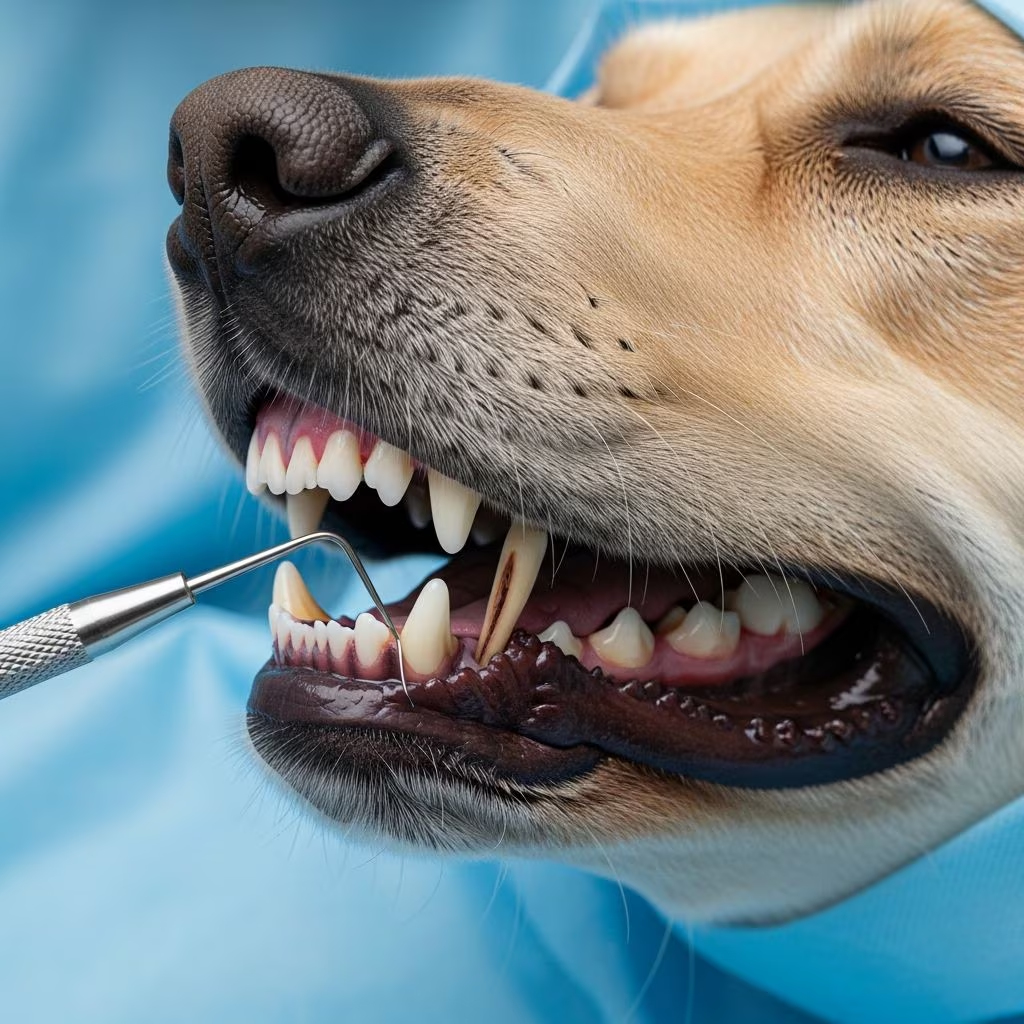
Dental health plays a crucial role in your dog’s overall well-being, yet many pet owners remain uncertain about tooth extractions when their veterinarian recommends this procedure. Understanding what a dental extraction entails, why it becomes necessary, and how to support your dog through recovery can help ease concerns and ensure the best possible outcome for your pet’s oral health.
Understanding Canine Dental Extractions
A tooth extraction in dogs is a surgical procedure performed by a veterinarian to remove one or more teeth that can no longer be saved or are causing problems within the oral cavity. Unlike human dental extractions, which are often performed in a dental office with local anesthesia, canine extractions always require general anesthesia to ensure the animal remains still and comfortable throughout the procedure.
The teeth in a dog’s mouth are held firmly in place by periodontal ligaments—specialized connective tissues that anchor each tooth to the jawbone. Additionally, multiple roots may support individual teeth, with some teeth having up to three separate roots that must be completely removed to ensure successful extraction.
Primary Reasons for Tooth Extraction
Veterinarians recommend tooth extraction when dental disease has progressed beyond the point where restorative treatments can save the tooth. The most common reasons extraction becomes necessary include:
- Periodontal disease—The leading cause of tooth loss in dogs, this progressive condition destroys the supporting structures around the tooth
- Fractured or broken teeth—Severely damaged teeth that cannot be restored with root canal therapy often require removal
- Advanced decay—Teeth with extensive decay that extends beyond the crown may pose infection risks
- Tooth resorption—The gradual breakdown of tooth structure can necessitate extraction
- Severe oral inflammation—Conditions like stomatitis may require extraction as part of comprehensive treatment
- Financial constraints—When treatment options like root canal therapy exceed a pet owner’s budget, extraction provides a viable alternative
Before recommending extraction, your veterinarian will consider whether other restorative options exist. However, when disease is too advanced or complications are present, removal of the affected tooth becomes the best option to prevent pain, infection, and further oral damage.
Pre-Operative Preparation and Assessment
Proper preparation is essential for ensuring your dog’s safety during any surgical procedure. When your veterinarian schedules a tooth extraction, expect the following preparatory steps:
Health Evaluation
Your veterinary team will conduct a thorough health assessment before surgery. This includes blood work and urinalysis to identify any underlying health conditions that might affect anesthesia tolerance or healing. Senior dogs or those with pre-existing health issues may require additional testing to ensure they are stable enough for anesthesia.
Dental Imaging
Dental radiography is essential in all tooth extraction cases. X-rays allow your veterinarian to visualize the complete tooth structure, including all roots and any hidden problems below the gumline that might affect the extraction approach. Pre-operative radiographs guide surgical planning, while post-operative imaging confirms complete tooth removal.
Anesthesia Protocols
To maximize your dog’s safety during extraction, your veterinary team will follow stringent anesthesia protocols. The process typically begins with a pre-operative injection to relax your dog, followed by placement of an intravenous catheter for medication administration. During surgery, your dog receives anesthesia through the catheter, oxygen via an endotracheal tube in the throat, and continuous monitoring through electrocardiogram (EKG) equipment. A warming blanket maintains your dog’s body temperature throughout the procedure.
Extraction Techniques: Simple vs. Surgical
Two primary extraction techniques exist, and your veterinarian will choose the appropriate method based on the tooth’s condition and root structure:
Simple Extraction Technique
For teeth with minimal periodontal disease and straightforward root structures, simple (closed) extraction may be performed without incising the gums. This technique involves several sequential steps:
- Disinfection of the oral cavity with antimicrobial rinse
- Breaking down the epithelial attachment connecting the gum to the tooth
- Severing the periodontal ligament holding the tooth in place
- Using specialized elevators to establish purchase between bone and tooth
- Applying slow, sustained pressure for 10 to 15 seconds to fatigue the ligament structures
This technique works best for single-rooted teeth with minimal disease. Your veterinarian uses specialized instruments called luxators or elevators to gradually loosen the tooth until it can be removed intact.
Surgical Extraction Technique
Surgical (open) extraction becomes necessary for complex cases, including teeth with multiple roots like carnassial teeth. This technique requires creation of a periodontal flap—an incision into the gum tissue—and removal of alveolar bone to access and expose the tooth root.
For maxillary canine teeth, a specialized flap elevation procedure exposes the surgical site. Your veterinarian makes a vertical releasing incision and carefully elevates the mucoperiosteal flap—the layer of tissue covering the bone—to access the tooth root. A high-speed, water-cooled hand piece removes overlying bone, and the extent of bone removal depends on how firmly the tooth is anchored. Young dogs with wide periodontal ligament spaces may require removal of 40-60% of bone, while older dogs with ankylosed teeth (fused to bone) may require removal approaching 100%.
Once adequate bone is removed, the veterinarian uses a winged luxator placed into grooves created along the mesial and distal aspects of the root. The luxator is torqued left-to-right or clockwise with firm pressure sustained for 15 seconds to separate the tooth from its remaining attachments. Teeth with multiple roots are often sectioned into individual root segments before removal to simplify extraction.
The Extraction Procedure Timeline
Understanding the typical sequence of events during extraction can help you feel more confident about what your dog will experience:
| Procedure Stage | What Happens | Duration |
|---|---|---|
| Pre-operative preparation | Anesthesia injection, IV catheter placement, monitoring equipment attachment, endotracheal intubation | 10-15 minutes |
| Surgical site preparation | Oral disinfection, flap elevation if needed, bone removal if necessary | 15-30 minutes |
| Tooth removal | Luxation, sectioning if needed, extraction of tooth segments | 10-20 minutes per tooth |
| Site closure | Suturing of gum flaps with absorbable suture material, post-operative radiographs | 10-15 minutes |
| Recovery | Anesthesia reversal, awakening, monitoring in recovery | 30-60 minutes |
The total time under anesthesia varies depending on the number of teeth extracted and their complexity. Your veterinarian will provide specific timing estimates based on your dog’s particular situation.
Post-Operative Healing and Care
Proper aftercare significantly influences how quickly your dog recovers and how well the extraction site heals. Following your veterinarian’s post-operative instructions carefully is essential.
Immediate Recovery Period
After extraction, a blood clot naturally forms within the socket where the tooth was removed. This clot is protective and should not be disturbed. Some veterinary clinics may apply bone grafting materials as adjuncts to support healing, though a natural blood clot typically provides sufficient healing support.
Most dogs will experience some swelling and discomfort in the first few days following extraction. Pain management is an important part of post-operative care, and your veterinarian will prescribe appropriate medications to keep your dog comfortable during healing.
Activity Restrictions
Restricting your dog’s activity helps prevent complications that could interfere with healing. Your veterinarian will advise limiting running, jumping, and rough play for a specific period. This restriction allows the gum tissue to reattach and the socket to fill in properly without disruption.
Feeding and Nutrition
During the initial healing phase, soft or moistened food is recommended to avoid traumatizing the extraction site. Many veterinarians suggest feeding a diet softened with water or broth for the first week or two post-extraction. Gradually transition back to normal food once your veterinarian confirms adequate healing.
Oral Hygiene
While the extraction site heals, avoid vigorous tooth brushing near the area. Your veterinarian will advise when it is safe to resume normal oral hygiene practices. Gentle rinsing with warm salt water may be recommended to support healing and reduce inflammation.
Preventive Dental Care: Avoiding Future Extractions
While extractions are sometimes unavoidable, many cases can be prevented through consistent preventive care:
- Regular professional cleanings—Annual or bi-annual dental cleanings under anesthesia remove tartar and plaque buildup
- Home tooth brushing—Daily brushing with dog-specific toothpaste significantly reduces plaque accumulation
- Appropriate chewing items—Offering dental chews and appropriate toys encourages natural cleaning mechanisms
- Nutritional support—Quality diets support overall oral health and immune function
- Early veterinary intervention—Treating early-stage dental disease prevents progression to extraction
Recovery Expectations and Timeline
Complete healing after tooth extraction typically progresses through distinct phases. The gum tissue sutures (usually absorbable 4-0 material placed 2-4 mm apart) remain in place for 10-14 days as initial healing occurs. By two weeks post-extraction, most dogs show significant improvement in comfort and return to more normal activity levels.
Full bone healing at the extraction site takes several weeks to months. During this time, bone gradually fills the socket left by the removed tooth. Your veterinarian will schedule follow-up examinations to monitor healing progress and ensure no complications develop.
Complications and When to Contact Your Veterinarian
While complications are uncommon with proper surgical technique and post-operative care, contact your veterinarian immediately if you notice:
- Excessive bleeding that doesn’t slow after 24 hours
- Severe swelling that worsens after the initial few days
- Difficulty eating or complete loss of appetite beyond the first few days
- Signs of infection, including discharge from the site or fever
- Suture opening or gaps in the healing gum tissue
- Your dog’s discomfort increasing rather than improving
Frequently Asked Questions
How long does a tooth extraction take?
The duration depends on the tooth’s complexity and location. Simple extractions may take 10-20 minutes, while surgical extractions of multi-rooted teeth can require 30-45 minutes or longer. Total anesthesia time is typically longer as it includes preparation and recovery phases.
Can my dog eat normally after extraction?
Initially, no. Soft or moistened food is recommended for the first week or two. Gradually transition to normal food as your veterinarian advises, typically within 2-3 weeks in most cases.
Will my dog be in pain after extraction?
Some discomfort is normal, but it should gradually improve over several days. Your veterinarian prescribes pain medication to manage this effectively. If pain worsens or persists beyond expected timeframes, contact your veterinarian.
Is anesthesia safe for older dogs?
Modern anesthesia protocols are very safe, including for senior dogs. Pre-operative blood work identifies any concerns, and anesthesia is adjusted based on your dog’s individual health status. Most older dogs tolerate anesthesia well when properly monitored.
Can I prevent tooth extractions?
Yes, in many cases. Regular professional cleanings, daily tooth brushing, and early treatment of dental disease significantly reduce extraction needs. However, some dogs are genetically predisposed to dental disease and may eventually require extraction despite preventive efforts.
Conclusion: Prioritizing Your Dog’s Oral Health
Tooth extraction, while a surgical procedure, is a routine and safe part of veterinary dentistry when performed by experienced professionals using proper anesthesia protocols and surgical techniques. Understanding what extraction entails and how to support your dog through recovery empowers you to make informed decisions about your pet’s dental health. By combining professional extractions when necessary with consistent preventive care, you can help ensure your dog maintains optimal oral health throughout life and avoids the complications that necessitate tooth removal.
References
- Skills Laboratory: How to Extract a Maxillary Canine in Dogs — DVM360. 2024. https://www.dvm360.com/view/skills-laboratory-how-extract-maxillary-canine-dogs
- Dog Tooth Extractions: What to Expect — PetMD. 2024. https://www.petmd.com/dog/procedure/dog-tooth-extraction
- Exodontia or Tooth Extraction — Animal Dental Center. 2024. https://www.animaldentalcenter.com/pet-dental-services/oral-surgery-and-extractions/
- Simple Extractions: Techniques and Indications (Proceedings) — Veterinary Dentistry Network. 2024. https://veterinarydentistry.net/simple-extractions-techniques-and-indications-proceedings/
- Dog Tooth Extraction: What to Expect — Clover Veterinary Hospital. 2023. https://www.clovervethospital.com/site/blog/2023/09/15/dog-tooth-extraction
- Understanding Dog Dental Extractions — New England Veterinary Center & Cancer Care. 2023. https://www.nevccc.com/site/blog/2023/03/30/dog-tooth-extraction



