

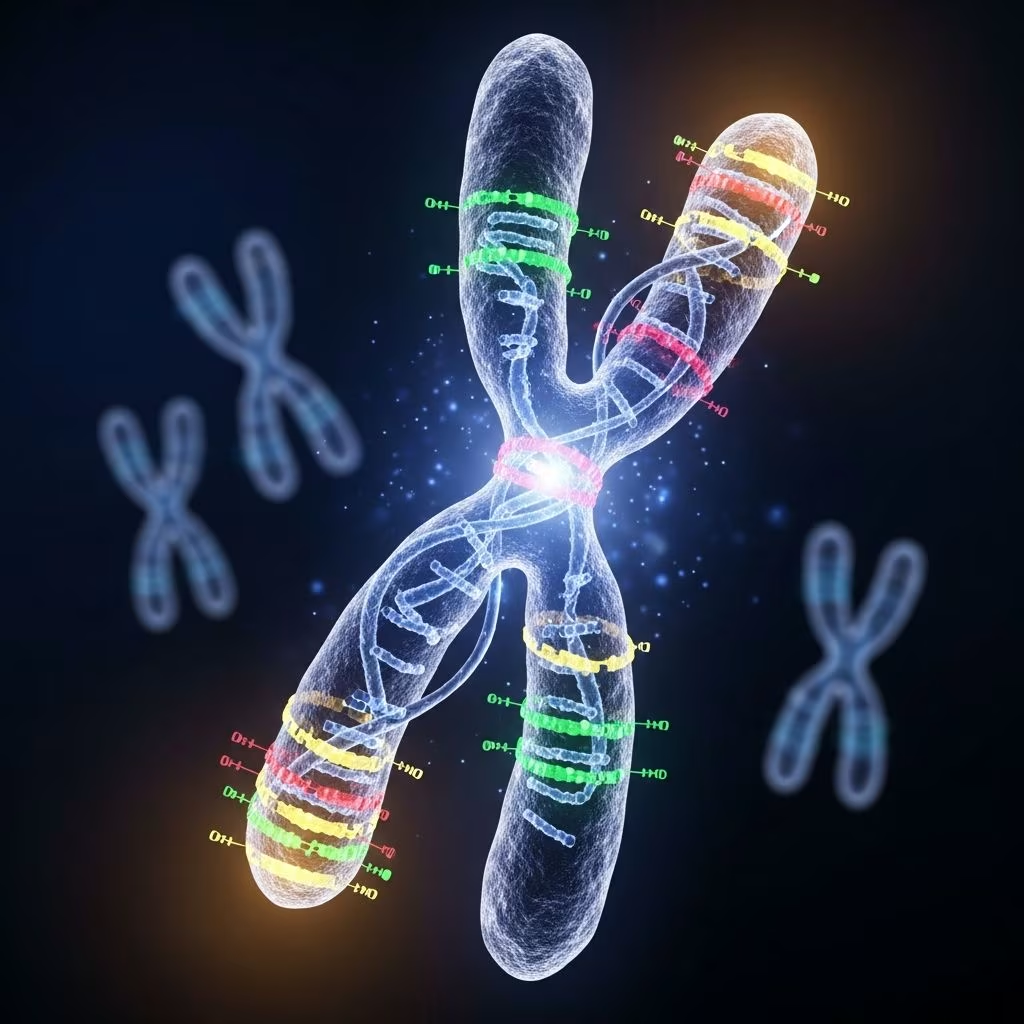
Understanding the genetic foundation of dogs requires knowledge of how chromosomes function within their bodies. Chromosomes serve as the fundamental blueprint for all biological processes that make a dog unique, from physical appearance to behavioral tendencies. This exploration into canine genetics reveals how dogs inherit traits from their parents and why certain breeds share similar characteristics despite centuries of selective breeding.
The Basics of Canine Chromosomal Composition
Every healthy dog possesses 78 chromosomes, organized into 39 pairs, within nearly every cell of its body. These chromosome pairs consist of 38 pairs of autosomes—non-sex chromosomes that carry genetic instructions for most physical and behavioral traits—plus one pair of sex chromosomes that determine whether a dog is male or female. This chromosomal configuration represents a remarkable consistency across all domestic dog breeds, from the smallest Chihuahua to the largest Great Dane.
Chromosomes themselves are tightly coiled structures composed of deoxyribonucleic acid (DNA) wrapped around proteins called histones. This compact arrangement serves a protective function, shielding the genetic material from environmental damage and replication errors. Within each chromosome, genes are arranged in specific sequences, and the precise organization of these genes determines the expression of countless traits in individual dogs.
Comparative Genetic Analysis Across Species
While dogs maintain a consistent chromosome count, this number varies significantly across other species. Understanding these differences provides context for how genetic complexity relates to organismal structure:
- Humans possess 46 chromosomes (23 pairs)
- Cats contain 38 chromosomes (19 pairs)
- Wolves maintain 78 chromosomes (39 pairs), identical to domestic dogs
- Coyotes and jackals also carry 78 chromosomes
Despite having more chromosomes than humans, the actual genetic complexity of dogs is not strictly determined by chromosome number. Rather, the specific genes encoded within those chromosomes and their regulatory mechanisms determine the sophistication of biological processes. Notably, dogs and humans share approximately 84 percent of their DNA, illustrating the fundamental genetic similarities that connect all mammals.
Sex Determination Through Chromosomal Inheritance
The sex chromosomes in dogs operate through a mechanism identical to that in humans and other mammals. Female dogs carry two X chromosomes (XX), while male dogs possess one X chromosome and one Y chromosome (XY). This chromosomal arrangement emerges during reproduction when each parent contributes one sex chromosome to their offspring.
The Y chromosome, present only in males, carries the genetic determinants for male development. However, the Y chromosome contains fewer functional genes compared to the X chromosome. Despite this apparent limitation, males remain viable because they simultaneously inherit an X chromosome from their mother, providing backup genes for functions where the Y chromosome lacks corresponding genetic instructions.
Sex determination ratios remain remarkably balanced in dog populations. The genetic mathematics ensures approximately 50% male and 50% female offspring across populations, regardless of breed or individual dog characteristics. This balance occurs naturally through the random assortment of chromosomes during sexual reproduction.
Genetic Material Composition and DNA Building Blocks
At the molecular level, chromosomes consist of DNA constructed from four fundamental nucleotide bases. These building blocks—adenine, guanine, thymine, and cytosine—arrange themselves in specific sequences that encode genetic instructions. The precise pairing and sequencing of these nucleotides determines which proteins are produced and how they function within a dog’s body.
Each puppy inherits genetic material from both parents through a process called DNA recombination. During reproduction, offspring receive exactly half their genetic material from their mother and half from their father. This 50-50 inheritance pattern means that each chromosome pair in a puppy contains one chromosome from the dam and one from the sire, creating a unique genetic combination distinct from both parents.
Interbreeding Capability and Species Classification
The identical chromosome count between dogs, wolves, coyotes, dingoes, and jackals (all carrying 78 chromosomes) enables these species to interbreed successfully. This reproductive compatibility reflects their relatively recent evolutionary divergence and shared ancestral heritage. When members of these species mate, their chromosomal structures align sufficiently to produce viable, sometimes fertile offspring.
This interbreeding capability underscores an important genetic principle: species classification depends not merely on chromosome count but on reproductive isolation and evolutionary history. The fact that these canids possess identical chromosome numbers suggests they occupy a special position within canine evolution, distinct from other carnivoran species.
Chromosome Consistency Across Dog Breeds
One of the most striking aspects of canine genetics is the remarkable uniformity in chromosome composition despite the extraordinary diversity of dog breeds. With nearly 400 distinct dog breeds recognized worldwide, ranging from toy breeds weighing just a few pounds to giant breeds exceeding 150 pounds, all maintain exactly 39 chromosome pairs.
This chromosomal uniformity contrasts sharply with the visible variation between breeds. The dramatic differences in size, coat color, coat texture, ear shape, and temperament among different breeds result not from differences in chromosome numbers but from variations in specific genes located within those chromosomes. Minor genetic variations—sometimes involving single genes or small clusters of genes—can produce substantial phenotypic differences when acted upon by selective breeding pressures.
Gene Function and Expression Mechanisms
Genes represent functional units of DNA that code for specific proteins or regulatory molecules. Not all genes are expressed equally in all dogs; instead, gene expression varies based on developmental stage, environmental conditions, and individual genetic variations. This differential gene expression explains why genetically identical twins (which can occur in dogs) may still show subtle behavioral or health differences throughout their lives.
Certain traits exhibit what geneticists call “sex-linked” inheritance patterns, where genes reside on either the X or Y chromosome. Males can inherit these traits from either chromosome, whereas females only express X-linked traits when the allele appears on one or both of their X chromosomes. This pattern of inheritance explains the different frequencies of certain genetic conditions between male and female dogs.
Rare Chromosomal Variations and Mutations
Although chromosomal consistency characterizes healthy dog populations, mutations occasionally occur that alter the standard chromosome number. These rare events can increase or decrease total chromosomal count through accidental errors during cell division or chromosome replication. While such mutations are exceptional occurrences, they demonstrate that chromosomal stability, though highly preserved, is not absolute.
Interestingly, dogs—like humans—can be born with chromosomal abnormalities that produce Down syndrome. This condition results from abnormal cell division during sperm or egg development, resulting in an extra chromosome. When this occurs, dogs inherit three copies of a particular chromosome instead of the normal two copies, leading to developmental and health complications.
Autosomal Inheritance and Non-Sex-Linked Traits
The 38 pairs of autosomes in dogs carry genes for most observable and physiological traits. Autosomal inheritance follows predictable patterns when single genes control trait expression. Understanding autosomal inheritance helps breeders predict trait appearance in offspring and identify carriers of recessive genetic conditions.
When both parents carry recessive alleles for a particular trait, offspring have a statistical probability of inheriting two recessive copies, which would express the recessive phenotype. Breeders use this knowledge to plan breeding programs that either increase desired traits or eliminate harmful genetic conditions from breeding populations.
Centromeres and Chromosomal Structure Functions
Chromosomal structures include specialized regions that serve critical functions during cell division. The centromere, a constricted region on each chromosome, plays an essential role in ensuring proper distribution of genetic material when cells divide. The precise architecture of chromosomes, including the positioning and function of centromeres, enables cells to accurately segregate genetic material to daughter cells during reproduction and normal growth.
Health Implications of Genetic Diversity
Dogs demonstrate a pronounced susceptibility to genetic diseases and disorders, including cancer, blindness, deafness, and autoimmune conditions. This heightened vulnerability stems partly from intensive selective breeding practices that have concentrated certain genetic variations within particular breeds. Inbreeding—common in dog breeding to establish desired traits—increases the probability that offspring will inherit two copies of recessive disease alleles, manifesting genetic disorders.
Frequently Asked Questions
Do all dog breeds have the same number of chromosomes?
Yes, all dog breeds maintain 39 pairs (78 total) of chromosomes. Breed differences arise from variations in specific genes rather than from differences in chromosome quantity.
Can dogs have chromosomal abnormalities?
While uncommon, dogs can experience chromosomal mutations that alter the standard count. Down syndrome in dogs results from trisomy, where an extra chromosome produces developmental differences and health complications.
How do dogs inherit traits from parents?
Each dog receives exactly half their chromosomes from their mother and half from their father, creating a unique genetic combination. Traits are expressed based on whether inherited alleles are dominant or recessive.
Why do male and female dogs have different chromosomes?
Females carry two X chromosomes while males carry one X and one Y chromosome. This difference triggers developmental pathways that produce male or female traits.
How similar is dog DNA to human DNA?
Dogs and humans share approximately 84 percent of their DNA, indicating extensive genetic similarity despite differences in chromosome number and observable characteristics.
References
- How Many Chromosomes Do Dogs Have and What They Mean — Canine Campus. https://www.caninecampus.us/how-many-chromosomes-do-dogs-have-and-what-they-mean
- Understanding Chromosomes: The Blueprint of Life in Dogs — O’Reate AI. https://www.oreateai.com/blog/understanding-chromosomes-the-blueprint-of-life-in-dogs
- Benefits of Canine DNA Testing — Cornell University College of Veterinary Medicine, Riney Canine Health Center. https://www.vet.cornell.edu/departments-centers-and-institutes/riney-canine-health-center/canine-health-topics/benefits-canine-dna-testing
- Dog Genetics 101 | Dog DNA Basics — Embark Veterinary. https://embarkvet.com/resources/dog-genetics-101/
- X and Y – Sex Chromosomes – Dog Coat Colour Genetics — Dog Genetics UK. https://www.doggenetics.co.uk/mutationetc.htm
- Genetics for Breeders — University of Pennsylvania School of Veterinary Medicine, PennGen Laboratories. https://www.vet.upenn.edu/research/research-laboratories/penngenn-laboratories/resources/genetics-for-breeders/



