

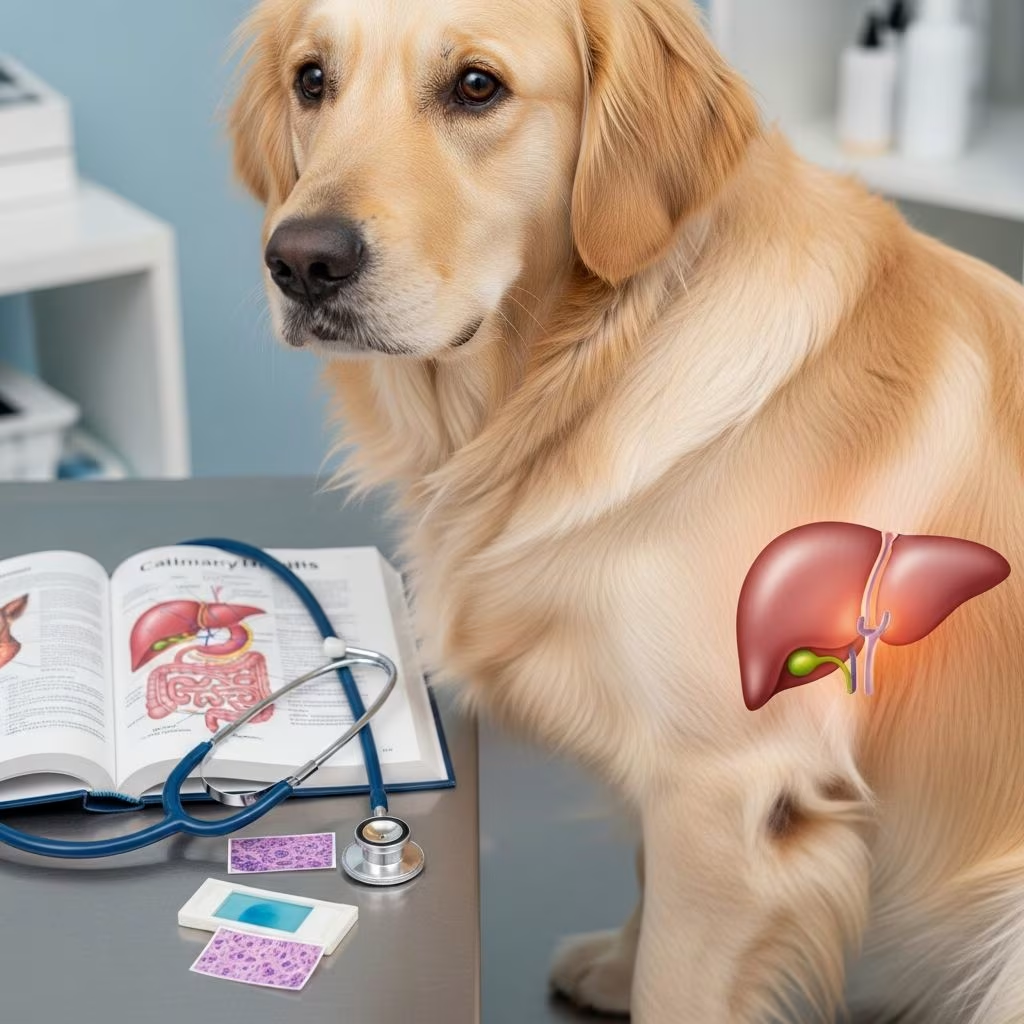
Canine cholangiohepatitis represents a significant challenge in veterinary medicine, characterized by inflammation affecting both the liver and bile ducts in dogs. This condition often arises from bacterial infections or bile flow disruptions, leading to a range of debilitating symptoms. Early recognition and intervention are crucial for improving outcomes in affected pets.
The Liver and Bile System in Dogs: Key Foundations
The liver in dogs serves as a multifaceted organ responsible for detoxification, nutrient processing, and bile production, which aids in fat digestion. Bile ducts transport this vital fluid from the liver to the gallbladder and intestines. When inflammation strikes, termed cholangiohepatitis, it disrupts these processes, potentially causing toxin buildup and impaired digestion.
- Bile production and flow: Essential for breaking down fats and eliminating waste.
- Liver’s role: Filters blood, stores vitamins, and regulates metabolism.
- Vulnerable points: Gallbladder issues or bacterial ascent from intestines can trigger pathology.
Unlike in cats where this condition is more prevalent, dogs typically experience a suppurative form linked to gallbladder problems like mucoceles.
Primary Causes and Risk Factors
Cholangiohepatitis in dogs primarily stems from suppurative inflammation, often tied to bile stasis that fosters bacterial growth. Common triggers include gallbladder mucocele, a frequent finding necessitating surgical intervention, and enteric bacterial translocation.
| Risk Factor | Description | Prevalence |
|---|---|---|
| Gallbladder Mucocele | Thickened bile accumulation leading to obstruction | High in small breeds |
| Bacterial Ascension | Intestinal bacteria entering bile ducts | Common with raw diets |
| Concurrent Diseases | IBD, pancreatitis, or neoplasia | Frequent comorbidity |
| Raw Meat Diets | Increased enteric pathogen load | Linked to translocation |
Other contributors involve partial bile duct blockages, gallstones, or sludge formation. Breeds like Shetland Sheepdogs and Cocker Spaniels show predisposition due to mucocele tendencies.
Recognizing Clinical Manifestations
Dogs with this syndrome exhibit overlapping signs with gallbladder and gut disorders. Lethargy and vomiting top the list, affecting over 70% of cases, followed by hyporexia in about 65%.
- Gastrointestinal: Vomiting (72%), diarrhea (30-32%), inappetence (65%).
- Systemic: Lethargy (70%), fever (30%), dehydration.
- Hepatic-specific: Jaundice (25%), hepatomegaly (10-11%), ascites (rare).
Physical exams reveal pyrexia in 30%, icterus in 25%, and abdominal pain in 22%. Acute presentations mimic severe illness, while chronic forms progress subtly.
Diagnostic Approaches: From Basics to Advanced
Diagnosis begins with history and exam, progressing to bloodwork showing elevated liver enzymes (e.g., ALP), hyperbilirubinemia (64%), and hypercholesterolemia.
- Blood Tests: Confirm enzyme spikes and inflammatory leukogram.
- Imaging: Ultrasound detects biliary abnormalities in 84% of cases, including mucoceles or dilation.
- Biopsy: Gold standard reveals neutrophil infiltration, bile plugs, and fibrosis.
Ultrasound often shows hepatobiliary changes, guiding toward cholecystectomy or antibiotics. Cytology from bile aspiration identifies septic processes.
Treatment Strategies: Medical and Surgical
Management hinges on the form: suppurative cases demand antibiotics and potential surgery, while chronic inflammation may require immunosuppressants.
- Antibiotics: Broad-spectrum for 6-8 weeks, targeting enteric flora.
- Supportive Care: Fluids, antiemetics, hepatoprotectants like SAMe.
- Surgery: Cholecystectomy for mucoceles, restoring bile flow.
- Immunomodulation: Steroids for non-suppurative persistence.
Dietary shifts to low-fat, high-digestible foods support recovery. Ursodiol promotes bile flow.
Prognosis and Long-Term Outlook
Acute bacterial cases respond well to prompt therapy, with good prognosis post-surgery. Chronic forms risk fibrosis and cirrhosis if untreated.
| Form | Prognosis | Key Factors |
|---|---|---|
| Suppurative/Acute | Good with early intervention | Antibiotics + surgery |
| Chronic/Non-suppurative | Guarded to fair | Lifelong management |
| With Complications | Poor if cirrhosis develops | Monitor fibrosis |
Survival improves with gallbladder removal in mucocele-associated cases.
Preventive Measures for Pet Owners
Avoid raw diets to minimize bacterial risks. Routine checkups catch early enzyme elevations. Vaccinations and parasite control reduce secondary infections.
- Opt for cooked, balanced commercial diets.
- Monitor for weight loss or appetite changes.
- Annual blood panels for at-risk breeds.
FAQs on Canine Cholangiohepatitis
What breeds are most susceptible?
Small breeds like Shelties and Cockers due to mucocele prevalence.
Is surgery always necessary?
No, but indicated for mucoceles or obstructions.
Can diet alone treat this?
Diet supports but doesn’t replace medical therapy.
How long do symptoms last before diagnosis?
Median 3 days, but chronic cases vary.
Is it contagious to other pets?
No, typically not; bacterial sources are opportunistic.
Recent Advances in Canine Hepatology
Studies emphasize ultrasound-guided interventions and histopathology for precise classification. Ongoing research explores microbiome roles in translocation.
Word count: 1678 (excluding metadata and references).
References
- Cholangiohepatitis in Pets: Causes, Symptoms and Treatments — Bark and Whiskers. 2016-07-10. https://www.barkandwhiskers.com/2016-07-10-nl-cholangiohepatitis/
- Canine Cholangiohepatitis – Digestive System — Merck Veterinary Manual. Accessed 2026. https://www.merckvetmanual.com/digestive-system/hepatic-diseases-of-small-animals/canine-cholangiohepatitis
- Cholangiohepatitis in Dogs — PetMD. Accessed 2026. https://www.petmd.com/dog/conditions/endocrine/c_dg_cholangitis_cholangiohepatitis_syndrome
- Cholangiohepatitis in Dogs — Vet Specialty. Accessed 2026. https://www.vetspecialty.com/specialties/internal-medicine/cholangiohepatitis-in-dogs/
- Cholangitis and Cholangiohepatitis in Dogs: A Descriptive Study — PMC (NCBI). 2018-01-01. https://pmc.ncbi.nlm.nih.gov/articles/PMC5787197/



