

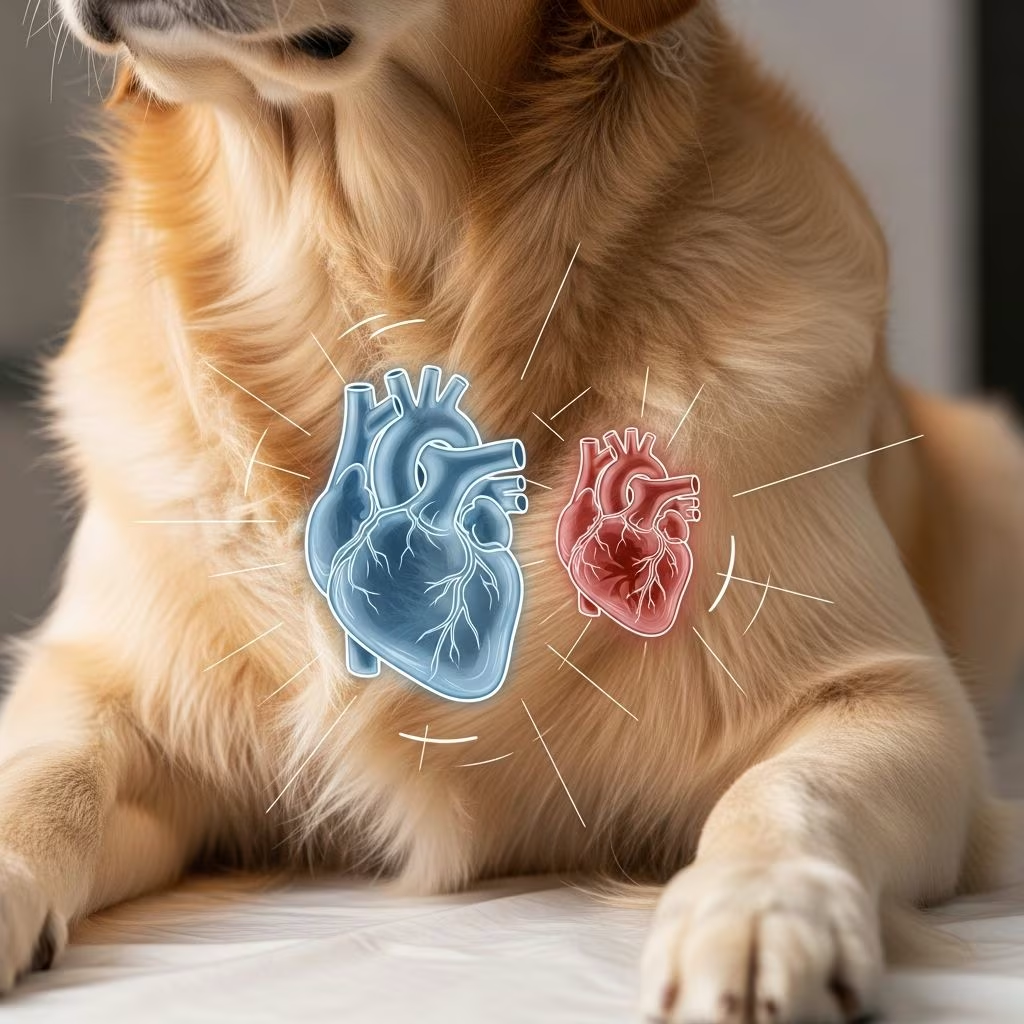
The cardiovascular system in dogs is a remarkable network responsible for transporting oxygen-rich blood throughout the body while removing waste products. Comprising the heart, arteries, veins, and capillaries, this system ensures every organ functions optimally. When disorders disrupt this balance, they can lead to severe health complications. This guide delves into the structure of a dog’s heart, prevalent cardiovascular conditions, diagnostic approaches, treatment protocols, and preventive measures to help dog owners safeguard their pets’ well-being.
Understanding the Anatomy of a Dog’s Heart
A dog’s heart is a muscular, cone-shaped organ positioned obliquely within the thoracic cavity, with its broader base oriented toward the head and the pointed apex resting against the chest wall. This positioning allows efficient pumping action. The heart features four chambers: two upper atria that receive blood and two lower ventricles that pump it out. Surrounding the heart is the pericardium, a protective sac with fibrous and serous layers that reduce friction during contractions.
Blood circulation begins with deoxygenated blood entering the right atrium via the cranial and caudal venae cavae. It then passes through the tricuspid valve into the right ventricle, which propels it through the pulmonary valve to the lungs for oxygenation. Oxygenated blood returns via pulmonary veins to the left atrium, flows through the mitral valve to the left ventricle, and is pumped out through the aortic valve into the aorta for systemic distribution.
- Key Chambers: Right atrium and ventricle handle deoxygenated blood; left side manages oxygenated flow.
- Valves: Tricuspid, pulmonary, mitral, and aortic prevent backflow.
- Coronary Arteries: Supply the heart muscle itself, with the septal branch nourishing much of the interventricular septum.
The left ventricle’s wall is notably thicker to generate higher pressure for arterial circulation, a feature visible in anatomical dissections. The cardiac skeleton, formed by fibrous rings around valve openings, provides structural support and separates atrial and ventricular electrical conduction.
How the Heart Beats: Electrical and Mechanical Processes
The heartbeat originates from the sinoatrial (SA) node, the natural pacemaker located at the junction of the cranial vena cava and right atrium. This node generates electrical impulses at rates of 60-120 beats per minute in resting dogs, varying by size—smaller breeds often have faster rates. These impulses spread across the atria, causing contraction (atrial systole), visible as the P wave on an electrocardiogram (ECG).
The impulse then slows at the atrioventricular (AV) node before traveling via the AV bundle (Bundle of His) and Purkinje fibers to the ventricles, producing the QRS complex and ventricular systole. Each cycle includes diastole (relaxation and filling) and systole (contraction and ejection). Heart sounds—lub-dub—correspond to valve closures: first for AV valves, second for semilunar valves.
| Phase | Description | ECG Wave |
|---|---|---|
| Diastole | Ventricles relax and fill | T wave (repolarization) |
| Systole | Ventricles contract and eject blood | QRS complex |
Autonomic nervous system modulation via vagus nerve and sympathetic inputs adjusts rate and force. In heart failure, reduced baroreceptor sensitivity leads to tachycardia and decreased variability.
Common Heart Disorders in Dogs
Cardiovascular issues affect dogs of all ages and breeds, with congenital defects more common in puppies and acquired diseases in seniors. Heart disease impacts about 10% of dogs over age 7, per veterinary studies.
Congenital Heart Defects
These are structural abnormalities present at birth, such as patent ductus arteriosus (PDA), where a fetal vessel fails to close, causing left-to-right shunting and potential heart enlargement. Ventricular septal defects (VSDs) involve holes in the interventricular septum, allowing blood mixing. Atrial septal defects (ASDs) similarly affect atrial walls. Breeds like German Shepherds and Bulldogs are predisposed.
Acquired Valvular Diseases
Myxomatous mitral valve disease (MMVD), the most prevalent in small breeds like Cavalier King Charles Spaniels, causes valve leakage, leading to volume overload and left atrial enlargement. Chronic progression results in pulmonary edema.
Cardiomyopathies
Dilated cardiomyopathy (DCM) features ventricular dilation and weakened contractions, common in large breeds like Dobermans. Arrhythmogenic right ventricular cardiomyopathy affects the right ventricle’s electrical stability.
Pericardial and Vascular Issues
Pericardial effusion, fluid accumulation around the heart, restricts filling, often due to tumors or infections. Hypertension strains vessels, while thromboembolism blocks arteries.
Recognizing Symptoms of Cardiovascular Problems
Early detection improves outcomes. Watch for:
- Coughing, especially at night or post-exercise.
- Lethargy and exercise intolerance.
- Labored breathing or rapid respiration.
- Weakness, fainting (syncope), or collapse.
- Abdominal swelling from fluid buildup (ascites).
- Blue-tinted gums (cyanosis) indicating poor oxygenation.
Arrhythmias may cause irregular pulses, detectable by owners palpating the femoral artery.
Diagnostic Methods for Heart Conditions
Veterinarians employ a multi-modal approach:
- Auscultation: Listening for murmurs, gallops, or irregular rhythms.
- Radiography: Chest X-rays reveal heart enlargement or lung fluid.
- Echocardiography: Ultrasound assesses chamber size, valve function, and ejection fraction.
- Electrocardiography (ECG): Detects arrhythmias and conduction blocks.
- Blood Tests: Measure natriuretic peptides (NT-proBNP) for heart stress.
Advanced imaging like CT or MRI aids complex cases.
Treatment and Management Strategies
Treatments target underlying causes and symptoms:
- Medications: ACE inhibitors (e.g., enalapril) reduce afterload; diuretics (furosemide) alleviate congestion; pimobendan enhances contractility.
- Surgery: Valve repairs or PDA ligation for congenital issues.
- Pacemakers: For bradyarrhythmias.
- Diet and Lifestyle: Low-sodium diets, weight control, and moderated exercise.
Prognosis varies: MMVD-managed dogs live years; end-stage failure requires palliative care.
Preventive Care and Risk Reduction
Proactive steps extend heart health:
- Annual vet checkups with cardiac screening for seniors.
- Breed-specific monitoring (e.g., genetic testing for DCM).
- Obesity prevention through balanced nutrition.
- Avoid toxins like grapes or rodenticides that induce cardiomyopathy.
- Parasite control to prevent heartworm disease, a major vascular threat.
Regular dental care indirectly supports heart health by curbing bacteremia.
Frequently Asked Questions (FAQs)
What causes most heart problems in dogs?
Age-related degeneration, genetics, and infections top the list, with small breeds prone to valve issues and large ones to muscle weakening.
Can diet influence canine heart disease?
Yes, low-sodium, taurine-rich diets help manage and prevent conditions like DCM.
Is heart disease painful for dogs?
Dogs often don’t show pain overtly, but advanced stages cause distress from fluid buildup and fatigue.
How do I check my dog’s heart rate at home?
Feel the pulse at the inner thigh (femoral artery); normal resting rate is 60-160 bpm depending on size.
When should I seek emergency care?
Immediately for collapse, severe coughing, blue gums, or breathing distress.
Long-term Outlook and Owner Support
With vigilant care, many dogs thrive despite diagnoses. Owners play a crucial role in administering meds, monitoring symptoms, and providing a low-stress environment. Joining support groups or consulting veterinary cardiologists enhances quality of life. Research into gene therapies and novel drugs promises better futures.
References
- The Heart and Arteries — Veterian Key. 2016. https://veteriankey.com/the-heart-and-arteries/
- Dog and Cat Heart Anatomy and Physiology — Long Beach Animal Hospital. 2023. https://lbah.com/heart-anatomy-physiology/
- The Cardiovascular System in Animals — MSD Veterinary Manual. 2024-02-01. https://www.msdvetmanual.com/circulatory-system/cardiovascular-system-introduction/the-cardiovascular-system-in-animals
- Heart Disease Basics — Tufts University Cummings School of Veterinary Medicine. 2023. https://vet.tufts.edu/foster-hospital-small-animals/specialty-services/cardiology/heartsmart/heart-disease-basics
- Introduction to Heart and Blood Vessel Disorders in Dogs — Merck Veterinary Manual. 2024. https://www.merckvetmanual.com/dog-owners/heart-and-blood-vessel-disorders-of-dogs/introduction-to-heart-and-blood-vessel-disorders-in-dogs



