

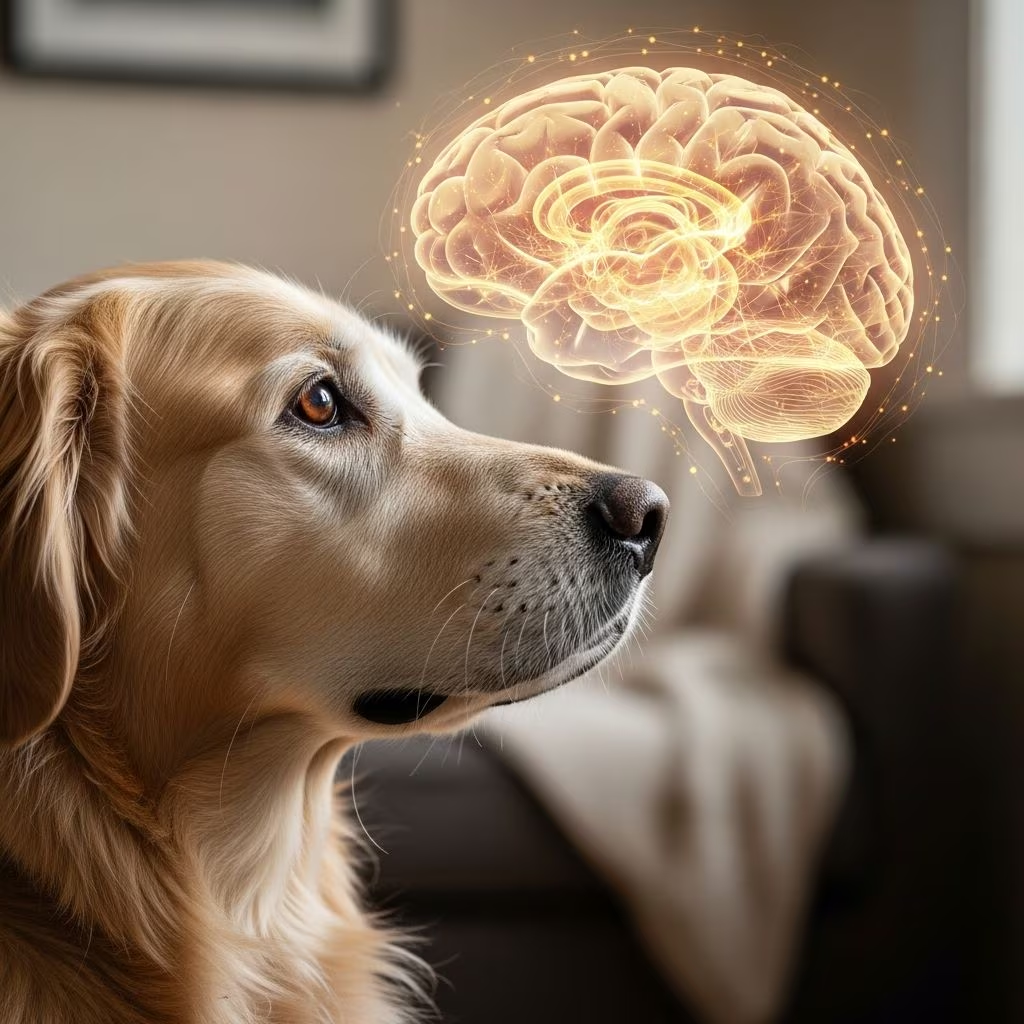
The Reality of Cognitive Changes in Aging Dogs
As dogs enter their senior years, they experience measurable changes in mental function similar to what humans face during aging. Research demonstrates that canine cognitive decline affects a significant portion of the older dog population, with prevalence rates climbing substantially as dogs reach advanced ages. The condition mirrors many physiological and behavioral changes observed in humans with dementia, including disorientation, memory lapses, shifts in activity levels, and physical brain changes such as atrophy.
Unlike sudden illnesses that announce themselves dramatically, cognitive decline in dogs develops gradually. The neurodegenerative process begins years before observable symptoms emerge, making early detection and intervention challenging for pet owners. Understanding these changes is essential for recognizing when your aging companion needs additional support and specialized care.
How the Aging Brain Changes at the Cellular Level
The structural and functional alterations occurring in senior dogs’ brains provide important insights into cognitive aging. Advanced imaging studies reveal that dog brains shrink with age, much like human brains do. This physiological change represents one of the most consistent markers of neurological aging across species.
Beyond visible shrinkage, scientists have discovered that older dogs and those exhibiting dementia-like behaviors accumulate increased levels of amyloid-beta in their brains. This misfolded protein, also implicated in human Alzheimer’s disease, appears to play a central role in cognitive deterioration. The similarity between canine and human neurodegeneration suggests that studying dogs’ naturally occurring cognitive dysfunction may yield valuable insights applicable to human dementia research.
The progression of these changes highlights why senior dogs benefit from regular health monitoring. Brain imaging technology now offers promise as an early detection tool, potentially identifying cognitive problems before they substantially impact quality of life.
Recognizing Cognitive Impairment in Your Aging Dog
Identifying cognitive dysfunction requires understanding the specific ways aging affects canine behavior and mental capabilities. Researchers have identified particular cognitive domains that show predictable decline with age.
Cognitive Skills Most Affected by Age
- Problem-solving ability: Older dogs show measurable declines in their capacity to work through novel challenges and adapt to new situations
- Spatial memory: Dogs experience difficulties with spatial learning and remembering locations of objects or places
- Response flexibility: The ability to adjust behavior when circumstances change diminishes with age
- Attention and focus: Senior dogs may exhibit lapses in attention that are more pronounced than normal age-related changes
- Boldness and playfulness: Personality traits linked to cognitive function often decline predictably
Skills That May Remain Relatively Intact
Interestingly, not all mental abilities deteriorate equally. Research shows that older dogs often maintain capabilities in certain areas. For example, dogs can continue learning new tasks and behaviors well into their senior years, suggesting that preserved cognitive pathways might be leveraged for enrichment and engagement. This selective preservation of abilities offers opportunities for mental stimulation tailored to your aging dog’s remaining strengths.
Prevalence and Risk Progression Across Age Groups
Understanding how common cognitive dysfunction becomes helps pet owners anticipate potential challenges. The incidence of canine cognitive decline increases dramatically with age. Among dogs aged 11 to 12 years, approximately 28% experience some degree of cognitive decline. This prevalence nearly triples in dogs aged 15 to 16 years, reaching approximately 68%.
These statistics underscore the importance of proactive health management during middle and senior years. Early lifestyle modifications and interventions may help delay or reduce the severity of cognitive changes.
The Role of Physical Activity in Brain Longevity
One of the most actionable factors in supporting canine cognitive health is maintaining appropriate physical activity. Research consistently demonstrates that physical activity protects brain aging in humans and other species. Emerging results from large-scale dog studies suggest the same protective benefit applies to canine cognition.
Physical exercise appears to work through multiple mechanisms. Activity supports cardiovascular health, promotes healthy inflammation responses, facilitates neuroplasticity, and may help regulate the accumulation of harmful proteins in the brain. For aging dogs, regular exercise tailored to their capabilities can represent one of the most accessible and effective interventions.
Pet owners participating in research initiatives now use specialized wearable devices designed for dogs—functioning similarly to human fitness trackers—to monitor activity levels and ensure senior companions receive adequate daily movement. These tools help establish whether individual dogs achieve appropriate exercise targets for their age and health status.
Diagnostic Tools and Detection Methods
Modern veterinary science offers increasingly sophisticated approaches to identifying and monitoring cognitive decline. Healthcare professionals and researchers employ multiple assessment strategies to detect cognitive changes early.
Cognitive Testing Approaches
Veterinary researchers have developed standardized cognitive tests that measure specific mental abilities. These assessments include treat-finding challenges, spatial memory tasks, and learning exercises that objectively quantify cognitive function. Some tests evaluate how quickly dogs learn associations, while others assess memory retention and problem-solving when faced with novel scenarios.
These cognitive batteries prove particularly valuable because they provide objective measurements rather than relying solely on owner observations. Objective data helps veterinarians distinguish normal aging from pathological decline and track progression over time.
Biomarker Research and Blood Testing
Emerging biomarker research offers potential for earlier detection through blood and cerebrospinal fluid analysis. Scientists examine whether specific proteins or other biological markers in blood samples predict cognitive decline before behavioral symptoms become apparent. This approach aligns with similar research directions in human neurodegenerative disease.
Specialized biomarker testing may soon enable veterinarians to identify dogs entering early stages of cognitive decline, creating opportunities for timely intervention.
Brain Imaging Technology
Advanced imaging provides direct visualization of brain structure and function. MRI scans reveal brain shrinkage, abnormal accumulations, and other physical changes associated with cognitive decline. Some research facilities even conduct functional studies using equipment like fMRI machines to observe how aging affects brain activity patterns.
MRI imaging shows promise as an early detection tool, potentially identifying cognitive problems before they significantly impact daily function. As this technology becomes more accessible through veterinary practices, it may become a standard component of cognitive screening for senior dogs.
Research Initiatives Advancing Canine Cognitive Understanding
Large-scale research projects have revolutionized understanding of canine aging. These initiatives combine citizen science approaches with rigorous scientific methodology, enlisting thousands of pet dogs to contribute to knowledge about cognitive aging.
Multi-institutional collaborations between universities track numerous aspects of individual dogs’ lives over extended periods, including health history, lifestyle factors, genetic information, and cognitive performance. This longitudinal approach enables scientists to identify correlations between specific factors and cognitive outcomes.
Additionally, some research programs study medication interventions designed to slow cognitive decline. Clinical trials examining compounds like rapamycin have shown promise in improving heart function in aging dogs, with ongoing larger trials investigating broader impacts on cognitive health.
Translational Insights: What Dog Research Reveals About Human Brain Aging
The study of canine cognitive dysfunction contributes significantly to human neuroscience. Unlike laboratory mice often genetically modified to develop dementia artificially, dogs naturally develop cognitive impairment resembling human Alzheimer’s disease. This spontaneous disease progression in animals living in real-world environments provides a more translatable model.
Dogs and humans share numerous similarities relevant to aging research: high genetic diversity, exposure to comparable environmental factors, variable lifestyles, and access to sophisticated healthcare systems with detailed medical records. These parallels make dogs exceptionally valuable for understanding how lifestyle, environment, and genetics influence cognitive aging trajectories.
Discoveries about protective factors in dogs—such as physical activity benefits and the role of social engagement—have direct applicability to human aging research and may inform intervention strategies for humans experiencing age-related cognitive changes.
Practical Strategies for Supporting Your Senior Dog’s Cognitive Health
While cognitive aging is natural, numerous interventions can help maintain quality of life and potentially slow decline.
Environmental and Lifestyle Modifications
- Maintain consistent routines: Predictable daily schedules reduce confusion and anxiety
- Provide mental stimulation: Puzzle feeders, scent games, and training exercises engage cognitive pathways
- Ensure adequate sleep: Senior dogs benefit from uninterrupted rest periods in quiet, comfortable spaces
- Support social interaction: Regular, gentle engagement with family members and appropriate socialization maintains neural connections
- Minimize stress: Reducing exposure to loud noises and chaotic situations protects stressed brains
Health Monitoring and Veterinary Care
Regular veterinary checkups become increasingly important as dogs age. Veterinarians can assess cognitive function, identify emerging problems, and discuss intervention options tailored to individual needs. Annual or semi-annual visits allow tracking of changes over time and timely treatment adjustments.
Frequently Asked Questions About Canine Brain Aging
When should I expect cognitive changes in my aging dog?
Cognitive decline can begin years before observable symptoms emerge, but clinical signs typically become more apparent in dogs aged 11 years and older. Early screening during middle-age visits helps establish baseline cognitive function for comparison.
Is cognitive dysfunction the same as Alzheimer’s disease?
Canine cognitive dysfunction mirrors many features of human Alzheimer’s disease, including similar brain pathology and behavioral changes, but they are distinct conditions. The canine version offers researchers valuable insights into human disease mechanisms.
Can cognitive decline be reversed?
Currently, no treatment fully reverses established cognitive decline. However, early interventions, lifestyle modifications, and emerging therapies may slow progression and maintain quality of life longer.
How accurate are cognitive tests in predicting decline?
Modern cognitive assessments provide objective measurements of specific mental abilities. Combined with biomarker testing and imaging, they offer reasonable predictive value, though individual variation means some dogs may progress differently than test results suggest.
Looking Forward: Future Directions in Canine Cognitive Research
The field continues advancing rapidly. Researchers aim to identify early intervention strategies that could slow or prevent cognitive deterioration. Larger, longer-term studies are investigating medications, supplements, and lifestyle modifications with potential neuroprotective effects.
As detection tools improve and intervention options expand, the future likely holds enhanced ability to maintain cognitive function in aging dogs, allowing more seniors to enjoy extended periods of mental clarity and quality interaction with their families.
References
- Inside the Brain of Aging Dogs — BrainFacts.org, 2023. https://www.brainfacts.org/thinking-sensing-and-behaving/aging/2023/inside-the-brain-of-aging-dogs-020723
- Biomarker Research in Aging Dogs (BioRAD): A Brain Aging Study in Dogs — Colorado State University College of Veterinary Medicine and Biomedical Sciences. https://vetmedbiosci.colostate.edu/vth/clinical-trials/biomarker-research-in-aging-dogs-biorad-a-brain-aging-study-in-dogs/
- Research on Aging: A Natural Fit for One Health Approach — American Veterinary Medical Association. https://www.avma.org/news/research-aging-natural-fit-one-health-approach
- Characterizing Dog Cognitive Aging Using Spontaneous Problem-Solving — PubMed Central, National Center for Biotechnology Information. https://pmc.ncbi.nlm.nih.gov/articles/PMC11872874/



