

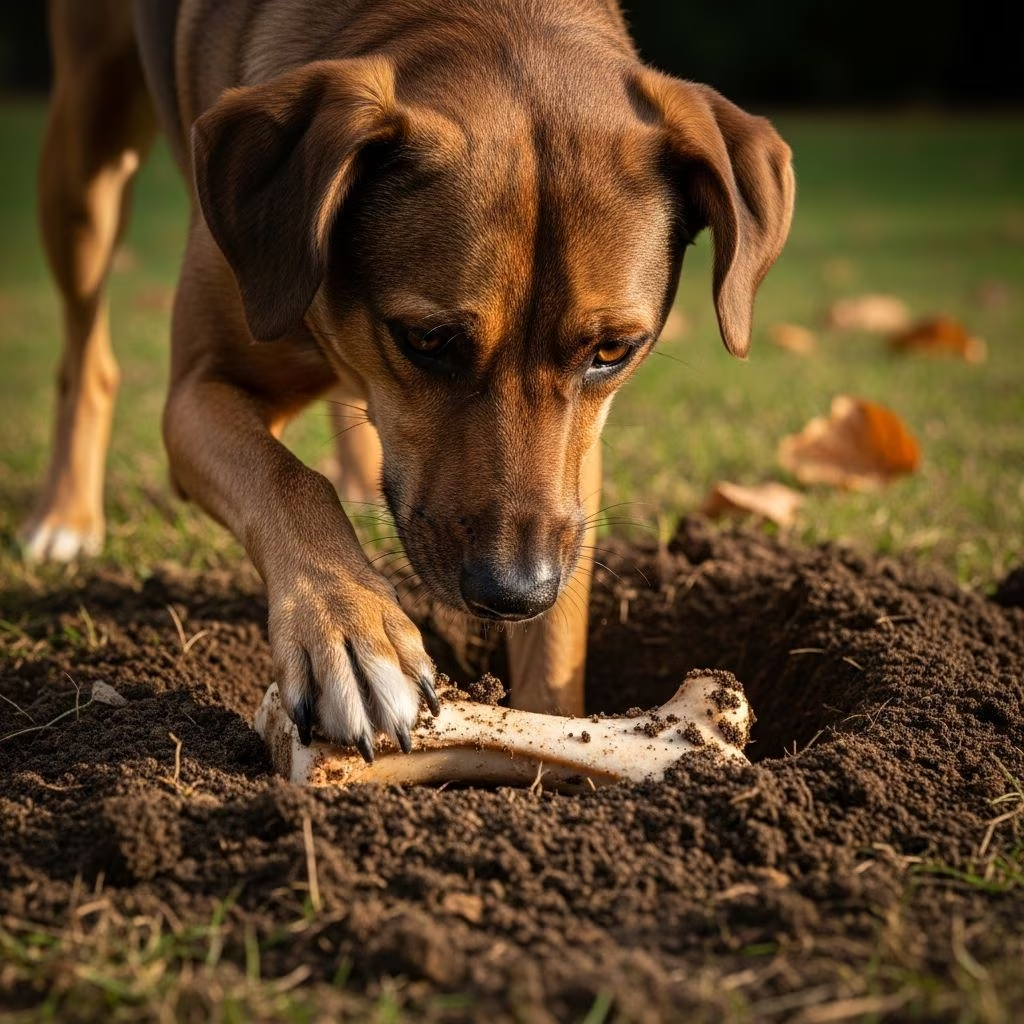
If you’ve ever watched your dog frantically paw at your carpet, couch cushions, or backyard dirt while seemingly protecting an invisible treasure, you’ve witnessed one of canine behavior’s most curious yet perfectly natural manifestations. The act of burying bones and treats represents far more than simple playfulness—it reflects thousands of years of evolutionary programming hardwired into your dog’s brain. Understanding this behavior requires exploring the intersection of ancestral survival mechanisms, individual personality traits, and environmental influences that shape how your modern companion interacts with valued possessions.
The Evolutionary Blueprint: Why Ancient Instincts Persist
Dogs didn’t spontaneously develop the urge to bury bones in suburban backyards. Rather, this behavior emerged from survival imperatives that governed their wild ancestors. Wolves and feral canines faced unpredictable food availability, forcing them to adopt strategic resource management approaches. When hunting proved successful and food became abundant, these animals would cache surplus meals in hidden locations, ensuring nutritional reserves during periods when prey proved scarce. This caching behavior dramatically improved their survival odds, allowing populations to persist through seasonal fluctuations and unsuccessful hunts.
Despite thousands of years of domestication and selective breeding for companionship rather than hunting prowess, your dog retains these fundamental survival instincts. The genetic instructions that guided their wild ancestors continue influencing modern canine behavior, even when such behaviors serve no practical purpose in contemporary household settings. A dog fed twice daily from a reliable supply experiences no actual threat of starvation, yet the neurological pathways driving the impulse to cache resources remain intact and functional.
Interestingly, this behavioral tendency manifests with particular intensity in certain breeds. Dogs originally developed for hunting purposes—including terriers, hounds, and sporting breeds—demonstrate heightened bone-burying frequency compared to herding or non-sporting dogs. This disparity reflects selective breeding practices that amplified resource-preservation instincts in hunting lines, as successful hunters needed to conserve kills and leftovers between meals.
Breed-Specific Predispositions and Digging Drives
Understanding breed-specific tendencies provides valuable context for interpreting your dog’s behavior. Terriers and dachshunds, originally developed to hunt underground animals such as gophers and badgers, carry particularly intense digging drives encoded in their genetics. These breeds’ ancestors literally excavated their prey from burrows, making digging not merely recreational but fundamental to their hunting methodology. In modern household environments devoid of burrowing prey, these dogs redirect their powerful digging instincts toward available soft substrates—garden soil, carpet, furniture, and blankets.
The American Kennel Club even recognized this deep-seated drive by creating Earthdog, a competitive sport specifically designed for underground hunting breeds. The sport provides appropriate outlets for these dogs’ intense digging and hunting compulsions, channeling instinctive behaviors into sanctioned activities. Dogs unable to access such outlets often manifest their drives through destructive home and yard behaviors that frustrate owners unaware of their genetic predispositions.
Resource Guarding and Territorial Possession
Beyond simple food storage, bone burial serves important psychological functions related to resource control and territorial security. Resource guarding—the protective behavior dogs exhibit toward valued possessions—manifests on a spectrum from mild to severe. Some dogs simply hide bones away, while others growl or exhibit aggressive responses toward animals approaching their cached treasures.
In multi-pet households, this behavior takes on particular significance. Dogs burying bones are essentially creating private stockpiles inaccessible to competing animals, allowing them to maintain individual resource security. This behavior reflects dogs’ fundamental need to feel confident about possession and availability of valuable items. By hiding bones and treats, they reduce anxiety about losing access to prized resources, addressing both practical concerns about food availability and psychological needs for security and control.
When multiple animals share a home, the drive to secure individual resources becomes especially compelling. A dog that buries bones is essentially saying, “This treasure belongs to me and I’m protecting my investment.” While this behavior can escalate into problematic resource guarding, burying alone typically represents a non-aggressive way for dogs to manage shared-space anxieties.
Enrichment Through Digging and Hiding Activities
Dogs possess substantial cognitive and physical energy requirements that domestic routines don’t always adequately satisfy. Digging and burying activities provide valuable mental and physical stimulation, especially for breeds originally developed for active hunting or working roles. The sensory experiences involved—manipulating soil texture, feeling resistance against paws, experiencing the satisfaction of successful burial—engage multiple cognitive and physical systems simultaneously.
For many dogs, particularly those in insufficiently enriched environments, burying becomes a self-directed form of entertainment and exercise. The activity provides:
- Tactile stimulation through manipulation of various materials and substrates
- Problem-solving engagement as dogs determine optimal hiding strategies
- Physical exercise involving sustained digging movements
- Mental satisfaction from successfully completing instinctive behaviors
- Delayed-gratification practice through hiding items for later retrieval
When dogs lack adequate mental stimulation and physical exercise outlets, self-directed behaviors like burying intensify significantly. A well-exercised, mentally stimulated dog exhibits substantially less compulsive digging than an under-stimulated counterpart, suggesting that environmental enrichment levels directly influence behavioral frequency.
Stress Relief and Anxiety Management Through Burying
Beyond resource management and entertainment, bone burying serves important stress-regulation functions for many dogs. Anxious or stressed canines often exhibit increased digging and burying behaviors, using the repetitive physical activity as a coping mechanism. This phenomenon parallels human anxiety-reduction techniques—the focused physical engagement provides temporary psychological relief from underlying stressors.
Dogs experiencing separation anxiety, routine disruptions, or situational stress frequently increase burying behaviors as a self-soothing strategy. The repetitive digging motions appear to produce calming neurochemical effects, similar to how rhythmic human activities reduce anxiety. Additionally, creating hidden reserves provides psychological comfort, as the dog essentially creates a “safety net” of resources inaccessible to perceived threats.
When dogs bury items in blankets, pillows, or furniture rather than soil, they’re employing adaptive strategies for expressing these instincts despite environmental constraints. A dog without yard access to soft soil will substitute available household materials, demonstrating how persistent these behavioral drives remain regardless of contextual appropriateness.
Practical Strategies for Managing Bone-Burying Behavior
Whether bone burying constitutes a problem requiring intervention depends primarily on individual tolerance and the behavior’s intensity. Mild burying that causes no property damage or safety concerns may warrant acceptance as harmless instinctive expression. However, excessive digging that damages yards, creates safety hazards, or escalates into destructive behavior targeting furniture warrants intervention strategies.
Increase Physical and Mental Enrichment
A consistently under-exercised dog possesses abundant energy and mental engagement capacity, making bone burying and digging attractive outlets for that excess stimulation. Substantially increasing physical exercise through extended walks, running sessions, swimming, or play reduces available energy for destructive burying behaviors. Simultaneously, providing mental enrichment through puzzle toys, scent work, and training sessions engages cognitive systems, reducing reliance on self-directed activities.
Dogs demonstrating burying behaviors specifically for mental stimulation benefit particularly from interactive toys designed to channel digging drives appropriately. Snuffle mats, dig boxes, and puzzle toys allow expression of instinctive behaviors within acceptable parameters. These tools satisfy the psychological need to dig and hide while protecting furniture and landscaping from damage.
Modify Resource Availability
Since dogs bury bones and treats partly from an instinct to preserve surplus resources, reducing available resources can diminish burying motivation. Rather than providing multiple toys simultaneously, offer one or two at a time, rotating them weekly to maintain interest without overwhelming the dog with choices. Similarly, avoid providing bones immediately after meals when the dog’s nutritional needs are already satisfied. Instead, offer bones at dedicated times when the dog is genuinely interested in consuming rather than caching them.
This strategy addresses the underlying resource-surplus trigger, reducing the psychological impetus to cache items. Dogs with realistic assessment of resource scarcity exhibit less compulsive burying than those perceiving unlimited supply.
Create Designated Digging Zones
Rather than attempting to eliminate burying entirely—an approach often doomed to failure given the behavior’s deep neurological roots—many behaviorists recommend providing appropriate outlets for these instincts. Designated digging areas using soft, easily excavated soil or sand boxes allow dogs to satisfy digging drives without destroying landscaping or furniture. Encouraging digging in these zones through buried toys or treats channels the behavior productively.
Address Underlying Stress and Anxiety
When bone burying accompanies signs of stress, anxiety, or behavioral changes, consulting veterinary or professional behavioral resources becomes appropriate. Dogs exhibiting separation anxiety or stress-related burying benefit from targeted anxiety-management protocols, potentially including medication, behavior modification training, or environmental changes addressing underlying stressors.
Recognizing Problem Behaviors Versus Normal Expression
Distinguishing between normal instinctive behavior and problematic conduct requiring intervention involves assessing several factors. Excessive digging that damages property, constant burying despite consistent intervention, or burying accompanied by aggressive resource guarding warrants professional evaluation. Additionally, burying that escalates into other destructive behaviors—such as couch excavation or wall damage—suggests the behavior has become excessive and requires management.
Conversely, occasional burying in appropriate locations, limited impact on property, and absence of aggressive resource guarding typically represent acceptable behavioral expression requiring no intervention beyond acceptance and appreciation for your dog’s ancestral connections.
Frequently Asked Questions
Is bone burying normal dog behavior?
Yes, bone burying represents entirely normal, instinctive behavior rooted in ancestral survival strategies. Dogs inherit this behavior from wild canine ancestors and continue exhibiting it despite domestication and reliable food availability.
Why do some dogs bury bones while others don’t?
Individual differences in burying behavior reflect genetic predispositions, breed heritage, temperament, environmental enrichment levels, and stress factors. Hunting breeds typically demonstrate higher burying frequency than non-hunting breeds, but individual variation remains substantial within breed groups.
Should I stop my dog from burying bones?
Whether to intervene depends on the behavior’s frequency, intensity, and impact. Occasional harmless burying requires no intervention, while excessive digging causing property damage or safety concerns warrants management strategies. Consulting your veterinarian helps assess whether burying represents normal expression or problematic behavior requiring professional guidance.
What does it mean if my dog buries items indoors?
Indoor burying using blankets, cushions, or pillows represents adaptive burying behavior when yard access to soil isn’t available. Dogs substitute available soft materials, demonstrating how persistent these instincts remain. This behavior typically indicates normal instinctive expression rather than problematic conduct.
Can training eliminate bone-burying behavior?
Complete elimination through training alone proves extremely difficult given the behavior’s deep instinctual roots. Instead, behavior modification focuses on managing frequency, intensity, and appropriateness. Providing outlets through designated digging zones and adequate enrichment proves more successful than attempting complete suppression.
References
- Why Do Dogs Bury Bones? — Kinship. Accessed 2026. https://www.kinship.com/dog-behavior/why-do-dogs-bury-bones
- Why Do Dogs Bury Bones? – Primitive Instincts — YouTube. Accessed 2026. https://www.youtube.com/watch?v=yfo2eVHseNA
- Why Do Dogs Bury Bones? The Answer Is Surprisingly Simple — American Kennel Club. Accessed 2026. https://www.akc.org/expert-advice/training/why-do-dogs-bury-bones/
- Why Do Dogs Bury Bones & Treats? — A Pup Above. Accessed 2026. https://apupabove.com/blogs/all/why-dogs-bury-bones
- Why Does My Dog Bury or Hide His Toys? — Petmate. Accessed 2026. https://www.petmate.com/blogs/petmate-academy/why-does-my-dog-bury-or-hide-his-toys
- Why Do Dogs Bury Bones? An Expert Explains — Purina US. Accessed 2026. https://www.purina.com/articles/dog/behavior/understanding-dogs/why-do-dogs-bury-bones



