

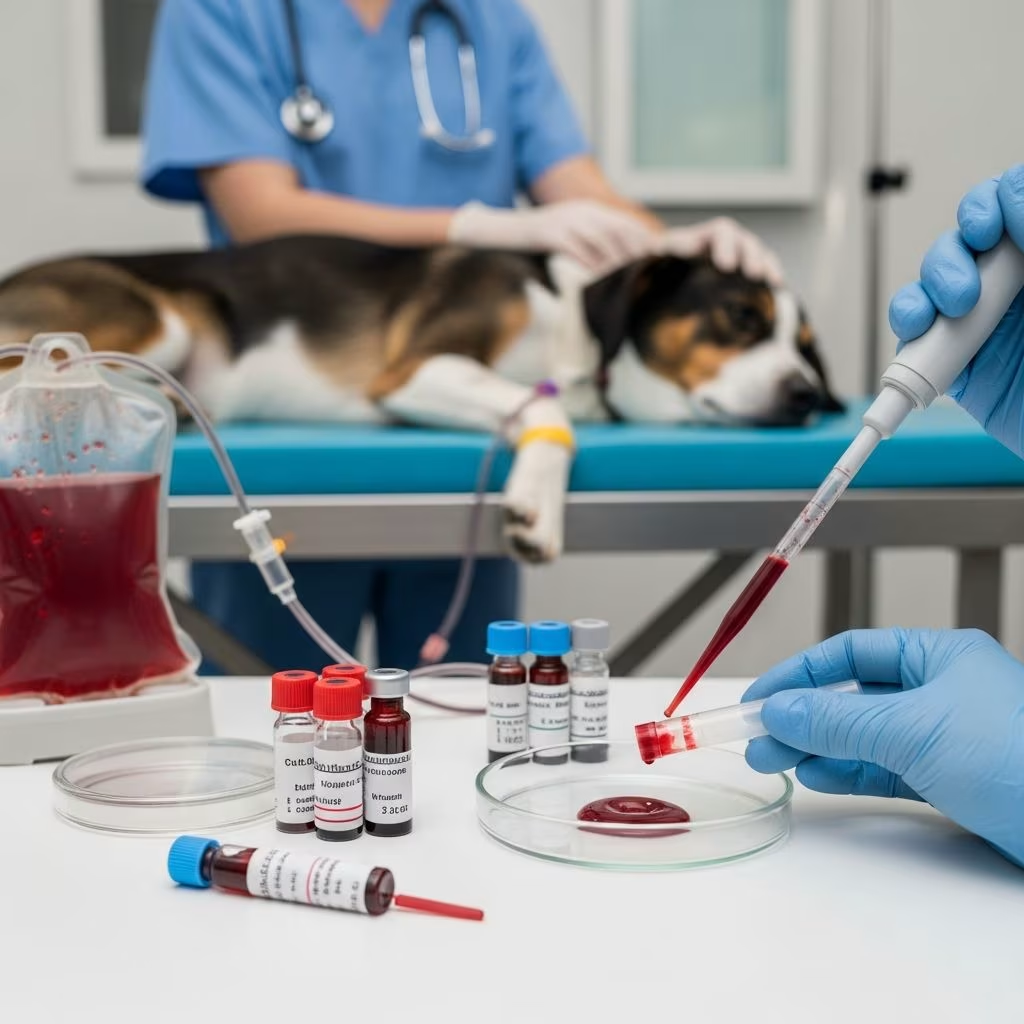
Dogs possess a complex array of blood groups that play a critical role in veterinary medicine, particularly during transfusions for anemia, trauma, or surgical blood loss. Unlike human blood types limited to A, B, AB, and O, canines have over 12 distinct blood group systems, with the Dog Erythrocyte Antigen (DEA) system being the most studied and clinically relevant. Understanding these groups ensures safer treatments and highlights the importance of blood typing before any transfusion.
The Science Behind Dog Blood Groups
Canine blood types are determined by specific antigens—proteins or carbohydrates—on the surface of red blood cells. These antigens trigger immune responses if mismatched during transfusions. The DEA system includes eight primary types: DEA 1 (formerly subdivided into 1.1, 1.2, and 1.3, now unified as DEA 1 with varying expression levels), DEA 3, 4, 5, 6, 7, and 8. Emerging groups like Dal (prevalent in Dalmatians but found in others), Kai 1, and Kai 2 add further complexity.
DEA 1 stands out due to its high immunogenicity; dogs lacking this antigen can develop strong antibodies against it after initial exposure, making repeat transfusions risky without matching. Approximately 40-60% of dogs are DEA 1 positive, with significant breed variations. DEA 4 is nearly universal, present in over 99% of dogs, making it less of a concern but still typed in precise scenarios.
Key Blood Types and Their Clinical Relevance
- DEA 1: The most critical. DEA 1-negative dogs (8-20% of population) are ideal universal donors as their blood can safely go to any recipient without triggering anti-DEA 1 antibodies. Positive dogs must receive from positives only after sensitization.
- DEA 4: High-frequency antigen; DEA 4-only dogs (lacking others) serve as universal donors in some contexts, common in breeds like Dobermans.
- DEA 5 and 7: Less common; natural antibodies exist in negatives (10-50%), posing minor risks.
- Dal and Kai Systems: Dal-negative rare outside Dalmatians (10% in surveys); Kai 1/2 influence IgM/IgG responses.
| Blood Type | Prevalence | Clinical Notes |
|---|---|---|
| DEA 1+ | 40-60% | Requires matching; high antigenicity |
| DEA 1- | 40-60% | Universal donor |
| DEA 4+ | >98% | High frequency, low risk |
| Dal- | ~10% | Breed-specific risks (e.g., Dalmatians) |
Breed-Specific Blood Type Patterns
Blood type distribution varies markedly by breed, influencing donor recruitment. Surveys across Europe and the US show patterns like 80% of dogs sharing DEA 4+, DEA 5-, Dal+, Kai 1+/2- regardless of DEA 1 status. Boxers, Cane Corsos, and Dobermans are predominantly DEA 1- (71-90%), ideal for donor pools. Greyhounds often carry DEA 3 (20%) and 5 (30%), while Golden Retrievers and Labs lean DEA 1+.
Other DEA 1- frequent breeds include Airedales, Bassett Hounds, Border Collies, German Shepherds, and Staffies. Pugs and Dalmatians show significant dependencies (p<0.001). These insights guide targeted typing for breeding and emergencies.
Why Blood Typing Matters in Emergencies
In trauma or hemolytic conditions, rapid transfusion saves lives, but untyped blood risks acute reactions. First transfusions may succeed without typing (98% DEA 1.1 compatible chance), but survivors develop antibodies, dooming future matches. Pre-typing donors and recipients via immunochromatographic strips, gel columns, or card agglutination ensures compatibility. Puppies inherit independently, so typing is advised early, especially in at-risk breeds.
The Transfusion Process Step-by-Step
- Pre-Transfusion Screening: Type donor/recipient for DEA 1, crossmatch (major: recipient serum + donor cells; minor: reverse).
- Collection: From eligible donors (healthy, 1-8 years, >25kg, heartworm-free) via jugular venipuncture.
- Administration: Slow initial rate (0.25ml/kg/hr for 25 mins), monitor vitals; full volume 10-20ml/kg over 2-4 hours.
- Monitoring: Watch for fever, vomiting, hemolysis, or anaphylaxis.
Storage uses CPD-A bags (21-35 days refrigerated); fresh whole blood preferred for platelets.
Risks and Complications of Mismatched Transfusions
Mismatches cause immediate (anaphylaxis, hemoglobinuria) or delayed (hemolysis 5-21 days post) reactions. DEA 1 incompatibilities are most severe, with naturally occurring antibodies rare except for DEA 3/5/7. Sensitized dogs reject 100% mismatched units. Prevention: Always type and crossmatch, especially repeats.
Dog Blood Donor Programs: How to Get Involved
Many clinics run donor programs seeking DEA 1- dogs from listed breeds. Benefits: Free services, health checks. Owners test via vet labs (e.g., PennGen). UK programs prioritize DEA 1 typing. Home-prepared dogs need screening; Greyhounds from tracks are prime candidates.
Advances in Canine Blood Banking
New kits detect Dal/Kai rapidly. Frozen plasma storage expands options. Research uncovers more antigens, refining standards set in 1970s. Breed surveys aid global donor maps.
Frequently Asked Questions (FAQs)
Can all dogs donate blood?
No, only healthy, typed, compatible dogs; DEA 1- preferred.
How often can a dog donate?
Every 2-3 months, with iron supplements.
Is puppy blood typing necessary?
Yes, for breeds like Boxers; types set at birth.
What if my dog needs a transfusion urgently?
Vets use typed blood banks or DEA 1- donors.
Are there side effects from donations?
Rare; monitored collections ensure safety.
References
- What!! Dogs have different blood types too!! How Dog Blood Groups Work — Bark to Basics. 2024-01-15. https://www.barktobasics101.org/bark-to-basics-canintidbits/2024/1/15/what-dogs-have-different-blood-types-too-how-dog-blood-groups-work
- Survey of Blood Groups DEA 1, DEA 4, DEA 5, Dal, and Kai 1/Kai 2 in Dogs from Germany — Frontiers in Veterinary Science (PennGen Laboratory, University of Pennsylvania). 2020-03-04. https://www.frontiersin.org/journals/veterinary-science/articles/10.3389/fvets.2020.00085/full
- Blood types – eClinpath — eClinpath. N/A. https://eclinpath.com/hemostasis/transfusion-medicine/blood-types/
- Dog blood types | Pet Blood Bank UK — Pet Blood Bank UK. N/A. https://www.petbloodbankuk.org/pet-owners/dog-blood-donation/dog-blood-types/
- Canine blood groups and their importance in veterinary transfusion medicine — PubMed (Veterinary Clinics of North America: Small Animal Practice). 1996-05. https://pubmed.ncbi.nlm.nih.gov/8619269/
- Canine Blood Types | Blood Donation Center – IndyVet — IndyVet. N/A. https://indyvet.com/canine-blood-types-blood-donation-center/
- Blood Groups and Blood Transfusions in Dogs – Dog Owners – MSD Veterinary Manual — MSD Veterinary Manual. N/A. https://www.msdvetmanual.com/dog-owners/blood-disorders-of-dogs/blood-groups-and-blood-transfusions-in-dogs



