

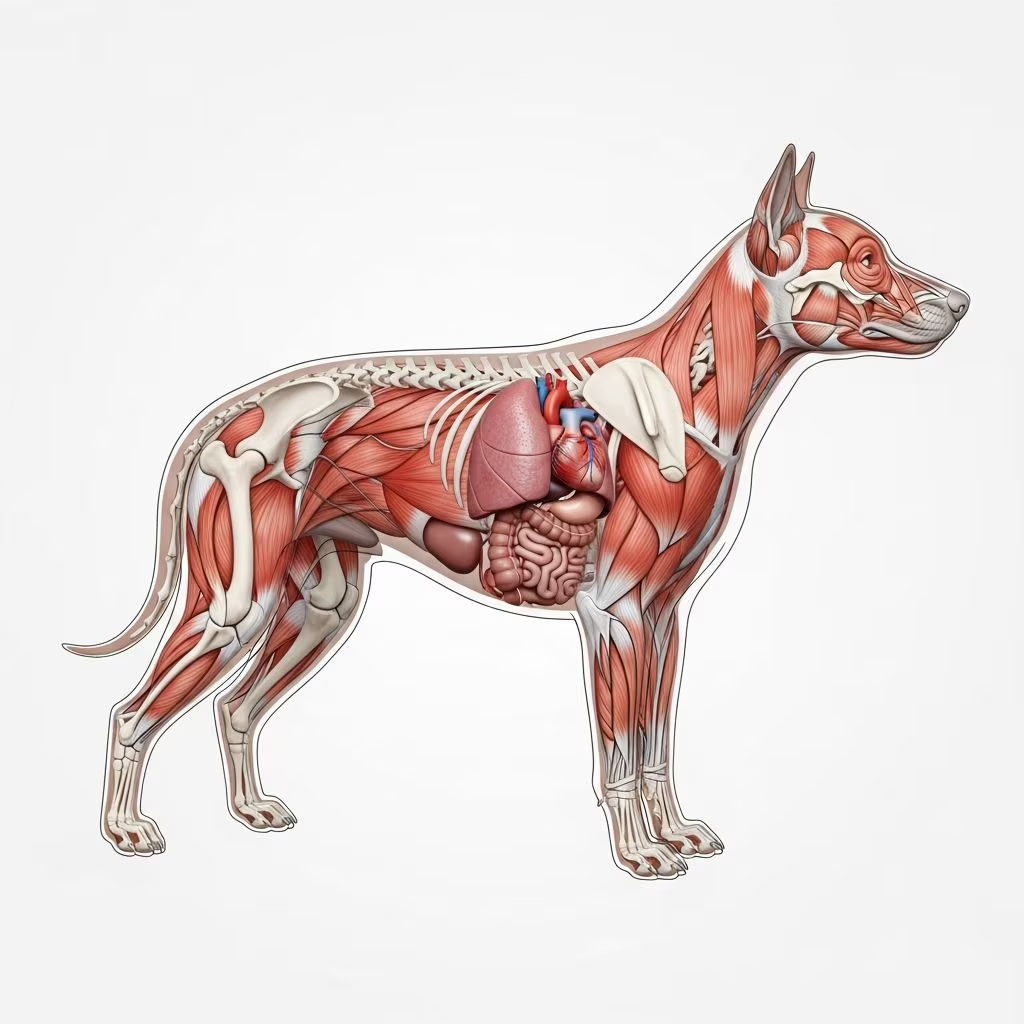
Dogs possess a remarkable skeletal and muscular framework adapted for agility, strength, and endurance. Understanding their anatomy empowers owners to detect health issues early and provide optimal care.
The Skeletal Foundation of Dogs
The canine skeleton comprises approximately 319 to 320 bones, varying slightly with tail length, surpassing the human count of 206. This structure supports the body, safeguards organs, facilitates movement, and houses bone marrow for blood cell production.
Key components include the axial skeleton (skull, spine, ribs) and appendicular skeleton (limbs and girdles). The forelimbs support 60% of body weight, reflecting dogs’ quadrupedal design for stability.
- Skull: Protects the brain with variations like dolichocephalic (long-snouted, e.g., Afghan Hound), mesocephalic (moderate), and brachycephalic (short-snouted) shapes, influencing breathing and behavior.
- Vertebral Column: Flexible spine with cervical, thoracic, lumbar, sacral, and caudal regions for mobility.
- Rib Cage: Encases heart and lungs, with 13 pairs of ribs typically.
Muscular System Powering Movement
Dogs boast around 700 muscles, enabling precise control, speed, and power. These connect via tendons to bones, allowing contraction for locomotion and posture maintenance.
Major groups include skeletal muscles for voluntary actions and smooth muscles for organ function. The triceps brachii, with attachment at the ulna’s olecranon process, acts as a key anti-gravity muscle.
| Muscle Group | Primary Function | Key Bones Involved |
|---|---|---|
| Forelimb Muscles | Support weight, flexion/extension | Humerus, radius, ulna |
| Hindlimb Muscles | Propulsion, jumping | Femur, tibia, fibula |
| Core Muscles | Stability, breathing | Spine, ribs |
Front Limb Mechanics
The forelimb features the pectoral girdle (scapula, no clavicle in most breeds) for flexible shoulder movement. Bones progress from scapula to humerus, radius/ulna (ulna longest bone), carpus (wrist with seven bones), metacarpals, and digits.
Sesamoid bones align tendons at joints, enhancing efficiency. The anconeal process on the ulna bolsters elbow stability during weight-bearing. Common issues like elbow dysplasia affect large breeds, causing lameness from early joint irregularities.
- Shoulder: Glenoid fossa of scapula articulates with humerus.
- Elbow: Hinge joint prone to dysplasia.
- Wrist (Carpus): Radial carpal bone akin to human scaphoid/lunate fusion.
Hind Limb Structure and Function
Hindlimbs drive forward momentum via pelvic girdle (fused ilium, ischium, pubis), femur, tibia/fibula, tarsus (hock), metatarsals, and digits. The patella (kneecap) stabilizes the stifle (knee).
The tarsus includes talus, calcaneus, and four tarsal bones; talus ridges fit tibial grooves for secure hock motion. First metatarsal may be vestigial. Sesamoids optimize extensor/flexor tendon action.
Paw pads vary: digit pads (four per paw), metacarpal/metatarsal pad, and front carpal pad for traction and shock absorption.
Understanding Anatomic Planes
Canine anatomy uses three planes for orientation:
- Sagittal (Median): Divides left/right; midline is median sagittal.
- Dorsal: Separates top (dorsal)/bottom (ventral).
- Transverse: Cranial (headward)/caudal (tailward) split.
Dogs excel in sagittal motion but limit dorsal/transverse, unlike humans.
Vital Organs and Internal Systems
Beyond musculoskeletal, dogs have specialized organs. The thorax (chest) houses heart/lungs; abdomen contains digestive/reproductive organs. Muzzle includes nose/lips for scent/feeding.
- Cardiovascular: Four-chambered heart pumps oxygenated blood.
- Respiratory: Lungs in rib cage; brachycephalics face breathing challenges.
- Digestive: Mouth, esophagus, stomach, intestines for nutrient processing.
Sensory and External Features
Dogs’ ears vary (erect, floppy) for sound detection. Eyes provide binocular vision; tails aid balance/communication. Skin covers with fur for protection/thermoregulation.
Health Implications of Anatomy
Knowledge aids issue spotting: lameness signals joint problems; breathing difficulties indicate brachycephalic issues. Breed variations affect susceptibility—long-headed dogs less startled, short-headed more human-oriented.
Regular checks of limbs, spine, and pads prevent injuries. Nutrition supports bone/muscle health.
Frequently Asked Questions
How many bones does a dog have?
Around 319-320, more than humans due to tail and limb adaptations.
What is a dog’s knee called?
The stifle is the hindlimb knee, with patella as kneecap.
Why do dogs have dewclaws?
Dewclaws are vestigial first digits aiding grip/traction.
How does dog paw anatomy differ front to back?
Front has carpal pad; both have digit/metacarpal or metatarsal pads.
What causes common limb issues in dogs?
Dysplasia from abnormal joint growth, especially in large breeds.
Practical Tips for Owners
- Monitor gait for early lameness detection.
- Support joint health with weight management, supplements.
- Use anatomy knowledge for grooming, massage.
- Consult vets for breed-specific risks.
References
- 2024 Ultimate Guide to Dog Anatomy — VetCheck. 2024. https://vetcheck.it/dog_anatomy/
- Canine Anatomy — Veterian Key. N/A. https://veteriankey.com/canine-anatomy/
- A Brief Guide To Dog Anatomy — My Pet Nutritionist. N/A. https://mypetnutritionist.com/post/a-brief-guide-on-dog-anatomy/
- A Dog Owner’s Guide to Canine Anatomy — Benefab Products. N/A. https://benefabproducts.com/blogs/blog/a-dog-owner-s-guide-to-canine-anatomy



