

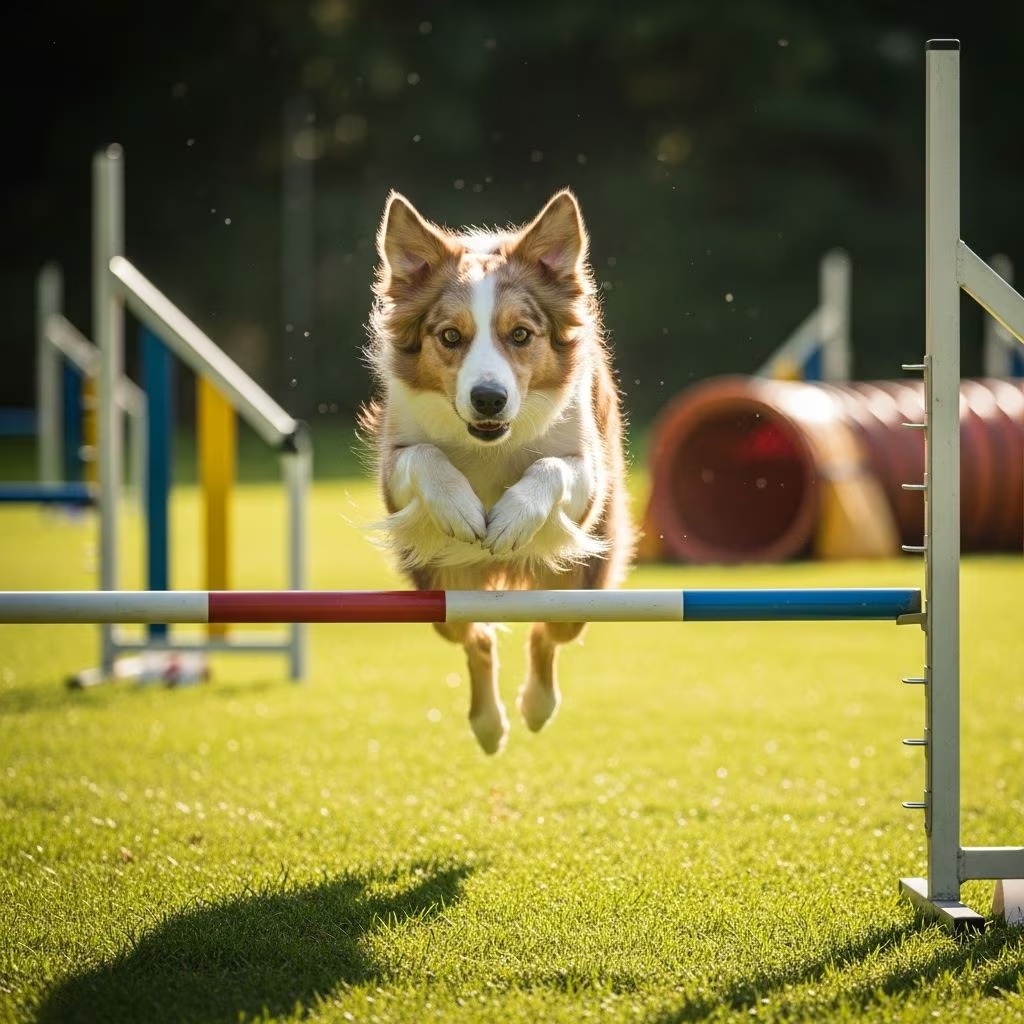
Agility training has become one of the most dynamic and rewarding activities for dog owners seeking to enhance their pets’ physical fitness, mental acuity, and behavioral discipline. This sport involves guiding your dog through a timed obstacle course featuring various physical challenges designed to test speed, accuracy, and obedience. More than just a competitive pursuit, agility training strengthens the bond between handler and dog while providing exceptional mental and physical stimulation that benefits dogs of all ages and backgrounds.
Understanding the Fundamentals of Canine Agility
Canine agility is fundamentally a collaborative sport where you direct your dog through a pre-set course containing between 14 and 20 distinct obstacles while working against the clock. The sport requires seamless communication between handler and canine partner, with handlers using verbal cues, visual signals, and body language to guide their dogs through the course sequence. Dogs are scored based on faults incurred—such as missed obstacles, hesitations, or refusals—combined with their completion time to produce a final score.
What makes agility uniquely valuable is its accessibility. Any healthy dog, regardless of breed, can participate in this activity, though certain breeds with higher energy levels and intelligence, such as Border Collies and Australian Shepherds, often excel in competitive settings due to their natural athleticism and focus. The sport transcends breed boundaries, allowing mixed-breed dogs and those from smaller breeds to thrive when trained appropriately.
Establishing a Strong Foundation Through Obedience
Before introducing your dog to agility obstacles, establishing a comprehensive foundation in basic obedience is non-negotiable. Dogs must reliably respond to fundamental commands including sit, stay, come, heel, and down in various environments and conditions. This obedience foundation serves as the psychological framework upon which all agility skills are built.
Structured obedience classes provide several advantages beyond teaching commands. They expose your dog to working around other dogs and people, develop focus in distracting environments, and establish you as a confident leader capable of directing your dog’s behavior. Enrollment in a reputable obedience training program creates an environment where your dog learns to distinguish between household behavior and formal training contexts, essential for later success in competitive agility.
Developing Physical Coordination and Spatial Awareness
Before progressing to full obstacle navigation, dedicating time to developing your dog’s coordination, body awareness, and confidence is essential. Teaching specific tricks and exercises builds the neuromuscular foundation required for complex agility movements.
Beneficial preparatory exercises include:
- Nose targeting: Teaching your dog to touch their nose to your hand or a designated target improves spatial awareness and directional control necessary for precise obstacle navigation.
- Backward movement: Having your dog walk backward builds rear-end awareness and strengthens muscles used in takeoff and landing during jumping sequences.
- Spinning and pivoting: Directional spins in both clockwise and counterclockwise directions promote flexibility and the tight turning capabilities essential for weave pole navigation.
- Bowing: This stretch-based trick extends your dog’s back muscles and enhances overall flexibility required for climbing and descending obstacles.
- Hoop jumping: Introducing horizontal jumping through hoops familiarizes your dog with the jumping concept before encountering higher obstacles.
Mastering Handler Communication and Movement
Effective agility performance depends less on handler speed and more on clear, consistent communication. Your dog must understand how to work comfortably on both your left and right sides, anticipate directional changes, and respond to distance signals while maintaining focus on course navigation.
Develop these handling competencies through progressive training:
- Lateral positioning: Use treats and toys to motivate your dog to maintain position beside you while you walk, jog, and eventually run at varied speeds.
- Directional casting: Teach your dog to move away from you in specific directions by tossing treats or toys where you want them to travel, establishing non-verbal communication patterns.
- Wrapping techniques: Practicing wraps around objects—having your dog curve tightly around jumps or poles—creates the foundation for executing tight turns and directional changes during course sequences.
- Distance work: Gradually increase the space between you and your dog, teaching them to maintain focus and respond to signals even when separated from you by significant distances.
Selecting and Preparing Appropriate Equipment
Quality equipment selection significantly impacts training safety and effectiveness. Essential agility obstacles include jumps, tunnels, weave poles, and contact obstacles like A-frames and seesaws. While commercial equipment from pet retailers offers durability and standardization, functional training equipment can be constructed economically using PVC pipes for jumps and sturdy cardboard boxes as tunnel alternatives.
| Obstacle Type | Purpose | Training Considerations |
|---|---|---|
| Jumps | Develop explosive power and precision | Begin at ankle height, progress gradually to chest height for larger breeds |
| Tunnels | Build confidence and speed | Use collapsed tunnels initially, gradually extend length |
| Weave poles | Enhance agility and precise footwork | Space poles appropriately for your dog’s stride length |
| A-frame | Develop climbing confidence and body awareness | Start with steep angle, ensure contact zone understanding |
| Seesaw (teeter-totter) | Build balance and trust | Weight-triggered descent can intimidate; practice patience |
| Dog walk | Develop balance and rear-end confidence | Begin at low height, focus on contact zone accuracy |
Regardless of equipment quality, safety infrastructure is paramount. Non-slip surfaces on ramps prevent injuries, padding around landing zones reduces impact stress, and appropriate spacing between obstacles allows safe transitions. Always inspect equipment before training sessions to identify and address potential hazards.
Progressive Introduction to Obstacles
Once your dog demonstrates solid obedience and handling skills, gradually introduce specific obstacles using positive reinforcement and incremental difficulty progression. Begin with contact obstacles—those requiring your dog’s paws to touch designated zones—before advancing to jumping sequences.
Effective obstacle introduction follows this framework:
- Familiarization: Allow your dog to investigate the obstacle without pressure, building comfort through exploration.
- Low-difficulty execution: Guide your dog through the obstacle at its minimum difficulty level using treats and encouragement.
- Repetition: Practice the obstacle multiple times in short sessions, building confidence without fatigue.
- Gradual progression: Incrementally increase height, distance, or complexity as your dog demonstrates competence and enthusiasm.
- Variable practice: Present obstacles in different sequences and locations to prevent repetitive stress and maintain engagement.
Building Course Sequences and Competition Skills
After your dog proficiently navigates individual obstacles, introduce sequencing—linking multiple obstacles together in specific patterns. Begin with simple two to three-obstacle combinations before advancing to full courses that incorporate all obstacle types in varied arrangements.
Sequencing practice develops critical competition skills including jump-to-jump transitions, quick directional changes, and obstacle recognition within complex course layouts. Timing and rhythm become increasingly important as sequences become more complex; your dog must learn to anticipate upcoming obstacles and adjust stride patterns accordingly.
Training sessions should generally last 15 to 20 minutes to maintain your dog’s focus and prevent overexertion. Short, intense sessions outperform lengthy training periods in terms of learning retention and injury prevention.
Physical Conditioning and Stamina Development
Agility training demands substantial cardiovascular fitness and muscular endurance. Before intensive obstacle training, assess your dog’s current fitness level through regular running and play sessions. Begin with activities like jogging alongside your dog, fetch games, and swimming to establish baseline stamina and identify any physical limitations.
Gradually increase training intensity and duration, monitoring for signs of fatigue, limping, or behavioral changes indicating discomfort. Dogs with pre-existing joint conditions, respiratory issues, or structural abnormalities require veterinary clearance before beginning agility training and may benefit from modified training protocols.
Professional Training and Class Enrollment
While many dog owners successfully train their pets independently, professional agility instructors provide invaluable expertise, immediate feedback, and access to standardized equipment and courses. Local dog agility facilities often offer beginner classes specifically designed to introduce dogs to obstacles, establish proper technique, and develop competition readiness.
Professional trainers identify compensatory movement patterns, technique inefficiencies, and physical limitations that might escape an untrained handler’s notice. They also provide motivation and structure that can accelerate learning progression and prevent common training plateaus.
Frequently Asked Questions About Canine Agility Training
At what age can dogs begin agility training?
Dogs can begin basic obedience training at 8-12 weeks of age. Obstacle training should be delayed until skeletal maturity, typically occurring between 12-18 months depending on breed, to protect developing growth plates from impact stress.
Are certain dog breeds better suited for agility sports?
While Border Collies, Australian Shepherds, and similar high-energy breeds excel in agility, any healthy dog can participate. Smaller breeds and mixed-breed dogs often compete successfully when trained appropriately for their size and physical capabilities.
Can dogs with previous injuries participate in agility training?
Dogs with orthopedic conditions, prior injuries, or chronic health issues require veterinary evaluation before beginning agility training. Modified training protocols may allow participation while minimizing injury risk.
How long does it typically take to prepare a dog for competitive agility?
Timeline varies considerably based on the dog’s age, obedience foundation, and prior training experience. Dogs with solid obedience backgrounds may compete within 6-12 months of beginning obstacle training, while those requiring foundational obedience work may require 18-24 months of development.
What equipment is essential for home-based agility training?
Beginners can create functional training courses using tunnels, weave poles, and low jumps. PVC pipes, sturdy cardboard boxes, and pool noodles provide economical alternatives to commercial equipment while maintaining training effectiveness.
Measuring Progress and Preventing Common Challenges
Consistent tracking of your dog’s development through video recordings, written notes, and regular assessment sessions helps identify progress areas and recognize emerging challenges before they become ingrained problems. Video analysis particularly reveals subtle technique issues, timing inconsistencies, and movement inefficiencies.
Common training plateaus—including refusal of specific obstacles, inconsistent speed, and attention difficulties—often stem from inadequate foundation skills, excessive training intensity, or handler communication errors rather than the dog’s inherent ability. Revisiting foundational training frequently resolves these issues more effectively than force or punishment-based approaches.
Conclusion: Beyond Competition
Agility training transcends competitive sport, offering dogs profound physical and mental enrichment while strengthening the partnership between dog and handler. The discipline develops mutual trust, clear communication, and shared accomplishment that benefits daily interactions beyond the training course. Whether pursued competitively or recreationally, canine agility training represents an exceptional avenue for channeling your dog’s energy, developing their potential, and creating lasting memories through collaborative athletic endeavor.
References
- The Ultimate Guide to Dog Agility Training — Ultimate’s Pet Food. 2024. https://www.ultimatespetfood.com/the-ultimate-guide-to-dog-agility-training/
- Mastering Dog Agility Training: A Comprehensive Guide for Beginners — San Antonio Dog Trainers. 2024. https://sanantoniodogtrainers.com/mastering-dog-agility-training-a-comprehensive-guide-for-beginners/
- Agility Training for Dogs: How to Get Started — Purina. 2024. https://www.purina.com/articles/dog/behavior/training/agility-training-for-dogs
- Complete Guide to Dog Agility | Beginner Training & Trials — Sniffspot. 2024. https://www.sniffspot.com/blog/dog-enrichment/beginners-guide-to-agility-with-dogs
- Get Started – American Kennel Club – Agility — American Kennel Club. 2024. https://www.akc.org/sports/agility/getting-started/
- A Beginner’s Guide to Dog Agility — 3 Lost Dogs. 2024. https://www.3lostdogs.com/a-beginners-guide-to-dog-agility/



