
Canine ACL Injuries: Recognition and Diagnosis Guide
Learn how to identify ACL tears in dogs and understand the diagnostic process
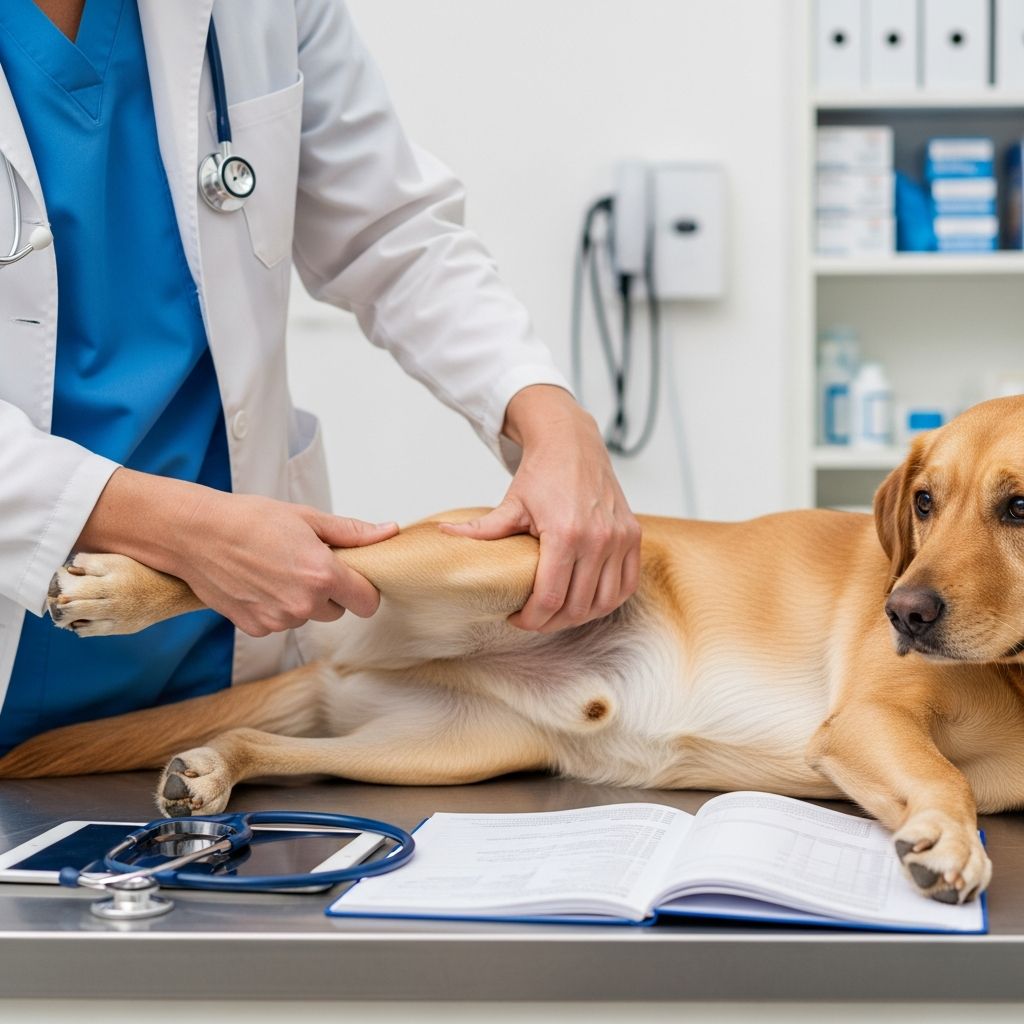
Understanding Canine Anterior Cruciate Ligament Injuries: Detection and Assessment
The anterior cruciate ligament (ACL), also called the cranial cruciate ligament (CCL) in veterinary medicine, is a critical structure that stabilizes the knee joint in dogs. When this ligament tears or ruptures, it causes significant pain and functional impairment. Unlike acute injuries that occur suddenly, many canine ACL injuries develop gradually through chronic degeneration. Understanding the clinical presentation of these injuries and the diagnostic approach veterinarians use can help dog owners identify problems early and seek appropriate treatment.
Recognizing Physical Signs of ACL Damage
The manifestations of a torn ACL in dogs vary depending on whether the tear is partial or complete, and whether it developed suddenly or over time. Observant owners who understand these indicators can facilitate faster diagnosis and treatment initiation.
Primary Indicators of Knee Injury
- Limping and Weight-Bearing Difficulties: One of the earliest and most obvious signs is reluctance to bear weight on the affected hind leg. Dogs with complete tears often refuse to place the limb on the ground or demonstrate severe, sudden limping that appears immediately following the inciting event or activity.
- Abnormal Gait Patterns: Dogs may exhibit a stiff or stilted walking pattern, particularly noticeable when they first rise after resting. A characteristic “toe-touching” posture, where only the toes contact the ground, often develops as the dog attempts to minimize pressure on the injured joint.
- Difficulty with Position Changes: Rising from sitting or lying down becomes progressively more challenging. Many dogs exhibit reluctance or inability to climb stairs, jump onto furniture, or enter vehicles—activities that require significant knee flexion and weight-bearing through the hind limbs.
- Visible Swelling: Inflammation around the knee joint is frequently observable, manifesting as visible enlargement on the inner or outer aspect of the knee. The joint may feel thickened and firm upon palpation.
Behavioral and Activity Changes
- Reduced Physical Activity: Dogs with ACL damage demonstrate markedly decreased enthusiasm for play, exercise, and normal daily activities. This reduction reflects both pain and functional limitation, leading to an overall more sedentary lifestyle.
- Increased Self-Directed Attention: Excessive licking or chewing of the affected knee or leg region indicates discomfort. Dogs often focus considerable attention on the injured area, which may result in secondary skin irritation.
- Pain-Related Behaviors: Vocalization during movement, reluctance to be touched on the leg, or yelping when the joint is manipulated all suggest significant pain associated with the injury.
Musculoskeletal Changes
Chronic ACL injuries produce structural changes in the affected limb. Muscle atrophy—a noticeable decrease in muscle mass around the thigh and leg—develops as the dog favors the injured limb and reduces its use. This atrophy becomes evident when comparing the affected leg to the unaffected opposite limb. Additionally, dogs may adopt an awkward sitting posture in which they hold the painful leg out to the side or refuse to sit with legs positioned normally.
A decreased range of motion in the knee joint becomes apparent during veterinary examination. In some cases, owners may detect a popping sound or feel abnormal movement when the dog walks or moves the joint, potentially indicating concurrent damage to the meniscus (cartilage within the joint).
Understanding the Progression from Partial to Complete Tears
Many dogs experience a history of mild, intermittent lameness and stiffness that waxes and wanes before developing a complete tear. These episodes of subtle symptoms often precede the acute presentation by months or even years. During this chronic phase, owners may have sought treatment through conservative management including nonsteroidal anti-inflammatory medications, joint supplements, physical therapy, acupuncture, or laser therapy.
The progression from partial to complete tear occurs as chronic inflammation and ligament degeneration continue over time. Eventually, the weakened ligament cannot withstand normal stress, and rupture occurs. This explains why some dogs present with a sudden onset of severe lameness when the underlying injury has actually been developing gradually.
The Veterinary Diagnostic Approach
Initial History and Physical Examination
Diagnosis begins when owners describe their dog’s history to the veterinarian. Key information includes the onset of lameness (sudden versus gradual), previous episodes of limping, any known trauma or injury, and response to previous treatments.
During the physical examination, the veterinarian performs a comprehensive head-to-tail assessment while specifically evaluating the affected limb. The clinician observes the dog’s gait and posture, palpates both knees to compare them, assesses pain responses, and evaluates the range of motion in the knee joint. Decreased comfortable range of motion and decreased thigh muscle circumference are documented findings in ACL injuries.
Physical Tests for Ligament Stability
Two primary manual tests help identify ACL damage by assessing abnormal joint movement:
| Test Name | Procedure | Positive Indication |
|---|---|---|
| Cranial Drawer Test | Veterinarian places one hand on the patella (kneecap) and the other on the tibia (shin bone). While stabilizing the femur, gentle pressure is applied to move the tibia forward relative to the femur. | Significant forward movement of the tibia mimics a drawer sliding open from a dresser, indicating ligament instability. |
| Tibial Compression Test | One hand grasps the end of the femur with the index finger over the patella, while the other hand holds the foot and flexes the ankle joint. | Forward movement of the tibia during ankle flexion indicates ACL damage. |
These tests are most accurate when the dog is relaxed or sedated, as pain and muscle tension can produce false-negative results. For this reason, veterinarians often recommend mild sedation or anesthesia to obtain reliable results, particularly in anxious or tense dogs.
Imaging Studies
Radiographs (X-rays) serve multiple diagnostic purposes. While they may not directly visualize the torn ACL, they reveal secondary changes associated with the injury, including joint swelling, arthritis, and bone abnormalities. Veterinarians often obtain radiographs of both knees on at least one view, allowing direct comparison between the affected and unaffected joints to identify subtle abnormalities more easily.
The radiographic appearance may show changes related to the dog’s tibial plateau anatomy. Because dogs have a sloping tibial plateau, the femur tends to slide downward and backward on this slope during weight-bearing—a biomechanical factor contributing to ACL tears.
X-rays also serve the crucial function of ruling out other conditions that produce similar clinical signs, such as fractures, hip dysplasia, or other orthopedic abnormalities.
Advanced Imaging Modalities
For cases where standard physical examination and radiographs don’t provide definitive diagnosis—particularly in partial tears—advanced imaging becomes necessary. Magnetic resonance imaging (MRI) provides detailed visualization of soft tissue structures, including the ligament itself, and can definitively identify partial tears and meniscal damage.
Arthroscopy represents the gold standard for definitive diagnosis. This minimally invasive surgical technique involves inserting a small camera into the joint to directly visualize the ligament and assess the degree of damage. Arthroscopy provides direct visualization of the extent of tear (partial versus complete) and identifies any concurrent meniscal injuries that might affect treatment decisions.
Diagnostic Challenges and Considerations
Complete ACL tears are generally straightforward to diagnose through the combination of physical examination findings and standard imaging. However, partial tears present diagnostic challenges and may be missed by physical examination or standard radiography alone.
Dogs experiencing acute, severe pain may not tolerate thorough physical examination without sedation. Muscle guarding and protective tension can produce false-negative drawer tests, making sedation essential for accurate assessment in these cases.
The presentation varies based on the injury’s nature. Acute injuries from specific traumatic incidents produce sudden, severe lameness, while chronic degenerative tears may show more subtle initial signs that gradually worsen over time.
Distinguishing ACL Tears from Other Knee Injuries
Understanding how ACL tears differ from other orthopedic conditions helps owners identify when veterinary assessment is warranted.
| Feature | ACL Tear | Simple Sprain |
|---|---|---|
| Onset of Lamping | Usually sudden and severe in complete tears | Gradual onset, mild to moderate |
| Weight Bearing | Dog may refuse to bear weight or show severe limping | Dog may still walk or run cautiously |
| Swelling | Significant swelling around knee joint common | Mild swelling may appear |
| Joint Stability | Joint feels unstable upon gentle movement | Joint generally feels stable |
| Pain Response | Marked pain response; yelping or withdrawal when joint touched; pain evident at rest | Discomfort mainly during movement; tolerates gentle handling |
| Audible Signs | Popping sound at injury may occur; sudden lamping following incident | Sprains rarely involve popping sounds; limp onset gradual |
The Importance of Early Detection
Early recognition of ACL injury signs facilitates prompt veterinary evaluation and diagnosis. Dogs identified early in the disease process may benefit from conservative management approaches, preventing progression to complete rupture in some cases. Even when surgery becomes necessary, early intervention often results in better outcomes, as chronic ACL insufficiency leads to progressive arthritis and further tissue damage.
Owners who notice subtle changes in their dog’s mobility, enthusiasm for activity, or limb use should seek veterinary evaluation promptly. What initially appears as minor stiffness or occasional reluctance to jump can represent early ACL pathology.
Frequently Asked Questions
What causes ACL tears in dogs?
ACL injuries result from both sudden traumatic events and chronic degeneration. Repeated stress on the knee joint weakens the ligament over time, eventually leading to rupture even during normal activity. Certain breeds predisposed to knee problems and overweight dogs face increased risk.
Can small dogs recover without surgery?
Small dogs or those with partial tears may sometimes improve with conservative management including rest, anti-inflammatory medications, and physical therapy. However, larger dogs or those with complete tears typically require surgical intervention for optimal long-term outcomes.
How quickly should I seek veterinary care if I suspect ACL injury?
Acute, severe lameness warrants prompt evaluation. Even subtle or intermittent signs deserve assessment, as early diagnosis can influence treatment options and outcomes. Delaying diagnosis allows progressive arthritic changes to develop.
Will my dog develop arthritis after an ACL injury?
ACL injuries typically lead to progressive arthritis in the affected knee over time, regardless of treatment approach. However, proper management—whether surgical or conservative—can slow this progression and maintain better function.
Can both knees be affected?
Yes, bilateral ACL injuries occur in some dogs. Dogs with a torn ACL in one knee face increased risk for damage to the opposite knee due to altered weight distribution and increased stress.
Conclusion: Moving Forward with Diagnosis
Recognition of ACL injury signs combined with appropriate veterinary diagnostic evaluation enables timely intervention. Understanding the range of clinical presentations—from subtle, progressive lameness to acute, severe dysfunction—empowers dog owners to advocate for their pets’ orthopedic health. The veterinary diagnostic approach combining history, physical examination, and imaging studies provides comprehensive assessment necessary for developing effective treatment plans tailored to each dog’s specific situation.
References
- Torn ACL in Dogs: Signs, Symptoms, Surgery Options — Toe Grips. Accessed 2026. https://toegrips.com/torn-acl-in-dogs-diagnosis-recovery/
- Dog ACL Tear (Cranial Cruciate Ligament Tear) — TopDog Health. Accessed 2026. https://topdoghealth.com/library/orthopedic-condition/articles/acl-tears/
- Orthopedic Vet Guide: ACL Injuries in Dogs – Diagnosis & Care — Harvester Animal Clinic. Accessed 2026. https://harvesteranimalclinic.com/top-notch-veterinary-orthopedic-surgery-in-st-peters-mo/acl-injuries-in-dogs-diagnosis-treatment-and-recovery-with-an-orthopedic-vet/
- How to Tell If Your Dog Has a Torn ACL and What to Do Next — Stack Vet Hospital. Accessed 2026. https://stackvethospital.com/how-to-tell-if-your-dog-has-a-torn-acl-and-what-to-do-next/
- Torn ACL in Dogs: Signs, Diagnosis, and How Orthopedic Surgery Can Help — VMC Rancho. Accessed 2026. https://vmcrancho.com/veterinary-surgery-rancho-cordova-ca/torn-acl-in-dogs-signs-diagnosis-and-how-orthopedic-surgery-can-help/
- Spot the Difference: Key Signs of a Dog ACL Tear vs a Simple Sprain — Aspen Animal Wellness. Accessed 2026. https://aspenanimalwellness.com/dog-acl-tear-vs-sprain/
- Canine Cruciate Ligament Injury — Colorado State University Veterinary Teaching Hospital. Accessed 2026. https://vetmedbiosci.colostate.edu/vth/services/orthopedic-medicine/canine-cruciate-ligament-injury/
Similar Articles








Read full bio of medha deb




