

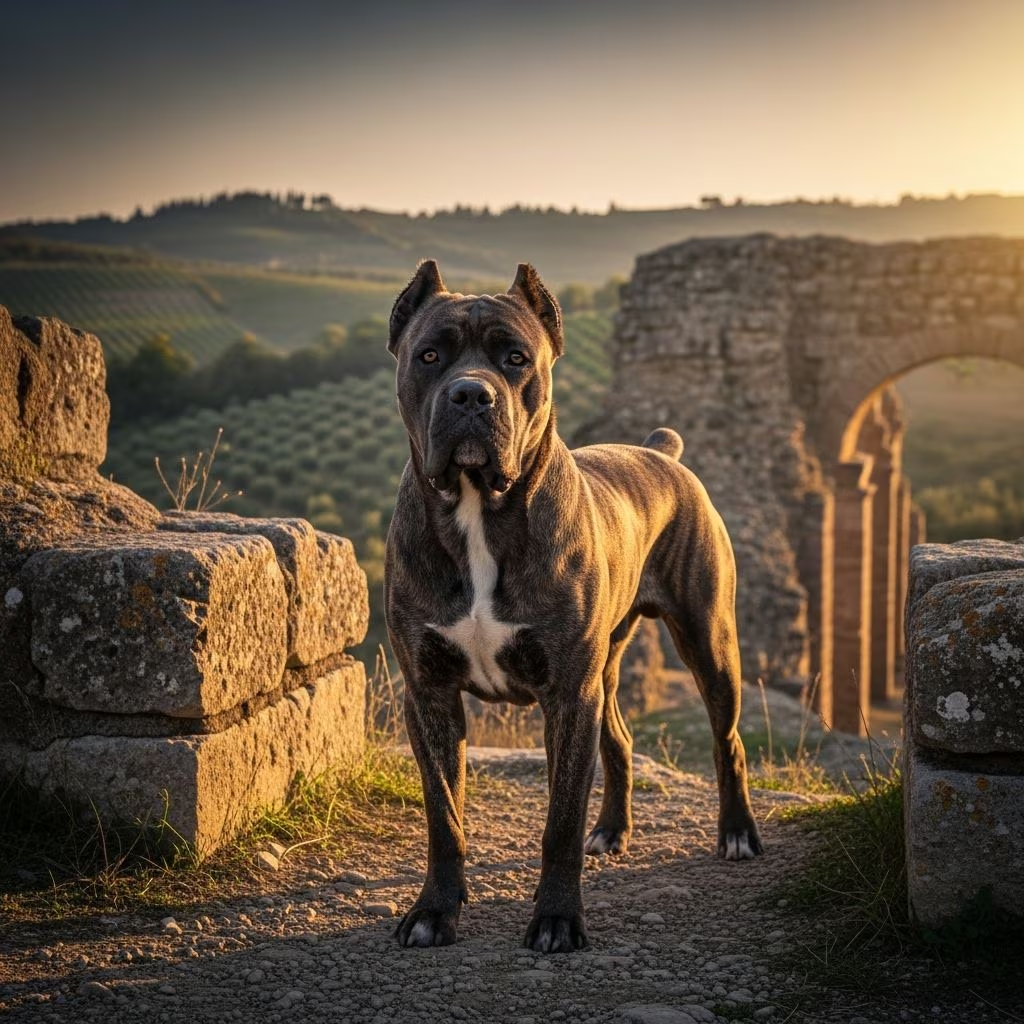
The Cane Corso stands as one of the world’s most distinguished dog breeds, embodying centuries of Italian heritage and Roman legacy. These powerful, muscular dogs represent far more than their imposing physical presence; they are living connections to ancient warfare, agricultural innovation, and the evolution of human-canine relationships. Understanding this breed requires exploring their multifaceted history, unique temperament characteristics, and the specialized care they demand from their owners.
Tracing Ancestry Through the Centuries
The Cane Corso’s lineage extends back to ancient Rome, where massive war dogs called Molossians served as military assets for Roman legions. These formidable canines were brought to Italy after Roman conquests in Greece and Macedonia, where they were strategically crossed with indigenous Italian dog breeds. The result of this deliberate breeding program produced two distinct variations: the lighter Cane Corso and the heavier Neapolitan Mastiff, both of which maintained the warrior spirit of their ancestors.
The name itself carries historical significance, with “Cane” meaning dog and “Corso” deriving from the Latin word for guardian or protector. This nomenclature perfectly captures the breed’s primary function throughout history. During the height of the Roman Empire, these dogs were not merely pets or status symbols; they were strategic military assets trained to perform specific battlefield roles. Historical accounts describe Cane Corsi serving as “piriferi”—dogs outfitted with buckets of flaming oil strapped to their backs who would charge across enemy lines to create chaos and devastation.
Evolution from Warrior to Working Companion
When the Roman Empire collapsed in 476 A.D., the Cane Corso faced an identity crisis. These warrior dogs suddenly found themselves without the military purpose that had defined their existence for centuries. However, the skills developed during Rome’s imperial expansion proved remarkably transferable to civilian life. The breed’s natural intelligence, strength, and protective instincts made them invaluable in peaceful agricultural societies.
Throughout medieval and Renaissance Italy, Cane Corsi became indispensable members of rural communities. Their responsibilities expanded dramatically to include:
- Protecting livestock from predators including wolves and wild boar
- Hunting large game such as deer, bears, and wild hogs
- Guarding family homes and property from human intruders
- Assisting with cattle herding and livestock management
- Performing specialized agricultural tasks on working farms
One particularly notable responsibility involved distraction tactics during pig husbandry. When sows hid in thickets to give birth, farmers employed Cane Corsi to grab the animal’s snout or ear, allowing farmers to safely retrieve newborn piglets. This seemingly niche task demonstrates the breed’s adaptability and the farmers’ creative utilization of their dogs’ natural abilities.
The Breed’s Near-Extinction and Modern Revival
The nineteenth and twentieth centuries proved catastrophic for the Cane Corso breed. As agricultural practices modernized and industrialization transformed rural economies, the demand for working dogs diminished substantially. The World Wars further devastated the population, as resources became scarce and breeding programs ceased. By the mid-twentieth century, the Cane Corso had become virtually extinct outside of remote Italian villages, relegated to regional obscurity.
The breed’s survival depended on passionate enthusiasts who recognized the cultural and genetic importance of preserving these magnificent animals. Beginning in the 1970s, dedicated breeders conducted extensive searches through rural southern Italy, particularly in Puglia, seeking surviving specimens that still embodied the breed’s original characteristics. These recovery efforts proved successful, and through careful selective breeding starting around 1980, the modern Cane Corso was systematically reconstructed.
This revival movement transformed the breed from near-extinct relic to increasingly recognized companion animal. Today, while still less common than some major breeds, Cane Corsi have gained considerable popularity among dog enthusiasts worldwide who appreciate their historical significance and exceptional qualities.
Understanding the Cane Corso Temperament
Prospective owners must recognize that the Cane Corso temperament reflects their complex heritage. These dogs combine the protective instincts of ancient guardians with the intelligence and loyalty of modern family companions. However, this combination requires experienced, knowledgeable ownership.
The breed exhibits naturally dominant personality traits and possesses an intense protective drive directed toward family members and property. Cane Corsi are instinctively suspicious of unfamiliar people and changing situations, characteristics that served them well as security animals but can prove challenging in modern environments. Their strong-willed nature means they require confident, consistent leadership from owners who understand canine psychology and pack dynamics.
Paradoxically, despite their formidable appearance and protective instincts, Cane Corsi often display surprising gentleness with their immediate families. They form deep bonds with family members and show remarkable sensitivity to their owners’ emotional states. Many owners report that their Cane Corsi possess intuitive understanding of household dynamics and respond protectively only when genuinely necessary.
The breed is not recommended for first-time dog owners, as their complex temperament and substantial size demand experience and understanding. A novice owner lacking confidence might struggle to establish the necessary authority structure, potentially resulting in behavioral problems or excessive protective aggression.
Training and Socialization Requirements
Successfully integrating a Cane Corso into a family environment demands commitment to comprehensive training and ongoing socialization. Early and consistent socialization proves critical to developing a stable, well-adjusted dog capable of distinguishing between genuine threats and normal social interactions.
The breed’s high trainability—a characteristic inherited from their eagerness to please handlers—makes them receptive to properly executed training programs. Their desire to satisfy their owners serves as a powerful motivational tool in obedience training. However, this trainability must be channeled through structured, professional guidance that establishes clear boundaries and appropriate behavioral expectations.
Socialization should begin early in puppyhood and continue throughout the dog’s life. Exposing young Cane Corsi to diverse people, environments, animals, and experiences helps normalize these situations and reduces the likelihood of inappropriate protective responses. Without adequate socialization, the breed’s natural wariness can evolve into reactivity or aggression.
Physical Characteristics and Health Considerations
The Cane Corso presents an impressive physical profile, combining substantial size with athletic muscularity. These large mastiff-type dogs typically live 12 years or more, with proper care and attention to health management. Their short coats require minimal grooming, making their maintenance relatively straightforward compared to longer-haired breeds.
Several health conditions warrant attention in the breed. Responsible breeders conduct genetic health screening to minimize hereditary problems. Prospective owners should verify that breeders have performed appropriate health testing on parent dogs before acquiring puppies.
Common Health Considerations:
- Hip and elbow dysplasia—developmental joint conditions affecting mobility
- Bloat (gastric dilatation-volvulus)—life-threatening emergency condition requiring immediate veterinary intervention
- Heart conditions—including dilated cardiomyopathy in some bloodlines
- Progressive retinal atrophy—degenerative eye condition potentially leading to vision loss
Exercise and Lifestyle Needs
Despite their impressive size, Cane Corsi have moderate exercise requirements—substantially less demanding than many smaller, high-energy breeds. They excel as house dogs rather than kennel dogs, functioning best when integrated into family environments where they can observe and participate in household activities.
Daily walks, play sessions, and mental stimulation through training or puzzle toys satisfy their exercise needs adequately. Their protective nature means they naturally patrol properties, and many Cane Corsi find satisfaction in simply supervising their domain from a favorite vantage point. Excessive exercise, particularly high-impact activities in young dogs, should be avoided to prevent joint stress and developmental problems.
Frequently Asked Questions About Cane Corsi
Are Cane Corsi dangerous dogs?
Cane Corsi are not inherently dangerous, but they possess significant protective instincts and substantial physical power. Proper training, socialization, and responsible ownership are essential to ensure safe integration into communities.
How do Cane Corsi interact with children?
Well-socialized Cane Corsi often display remarkable patience and protectiveness toward children in their families. However, their size and strength mean supervision around young children is always necessary to prevent accidental injuries.
Can Cane Corsi live in apartments?
While not ideal apartment dwellers, Cane Corsi can adapt to smaller living spaces if they receive adequate daily exercise and mental stimulation. Their moderate activity level makes them more apartment-compatible than many large breeds.
What distinguishes Cane Corsi from Neapolitan Mastiffs?
While both descended from Roman war dogs, Cane Corsi are lighter and more athletic, whereas Neapolitan Mastiffs are heavier with more pronounced wrinkles and loose skin. Temperament differences exist, with Cane Corsi generally being more active.
Selecting a Responsible Breeder
Given the breed’s complex history and specific care requirements, obtaining a puppy from a responsible breeder proves crucial. Reputable breeders maintain knowledge of bloodlines, conduct appropriate health testing, and can provide accurate temperament assessments. They screen potential owners carefully and remain involved with puppies throughout their lives.
Prospective owners should expect detailed questionnaires and willingness from breeders to discuss their breeding philosophy, health guarantees, and support systems. Visiting breeding facilities and meeting parent dogs allows buyers to observe health, temperament, and living conditions firsthand.
The Cane Corso Legacy Today
The Cane Corso represents a remarkable journey from ancient warrior to modern family companion. Their resurgence from near-extinction demonstrates the dedication of breed enthusiasts committed to preserving canine heritage. Today’s Cane Corsi carry forward thousands of years of selective breeding, adaptation, and human-canine partnership.
For the right owner—someone with experience, confidence, and commitment to proper training and socialization—a Cane Corso offers incomparable loyalty, protection, and companionship. These magnificent dogs deserve ownership that honors their distinguished history and complex needs, ensuring they can thrive as both family members and guardians of their households.
References
- Cane Corso Breed History — Phog Haven Cane Corso. https://www.phoghavencanecorso.com/breed-history
- Cane Corso Dog Breed History & Characteristics — Dutch.com. https://www.dutch.com/blogs/dogs/cane-corso-breed-profile
- History of the Cane Corso — Fenrir Canine Leaders. https://fenrircanineleaders.com/blogs/articles/history-of-the-cane-corso
- Cane Corso History: From Ancient Italy to the Brink of Extinction — American Kennel Club. https://www.akc.org/expert-advice/dog-breeds/cane-corso-history/
- Breed Information — Corsarii Cane Corso Kennels. https://canecorso.co.nz/breed-information
- Cane Corso — Wikipedia. https://en.wikipedia.org/wiki/Cane_Corso



