
Canary-Winged Parakeet: Care, Personality & Guide
Complete guide to canary-winged parakeets: personality, care, diet, and why they make delightful pet companions.
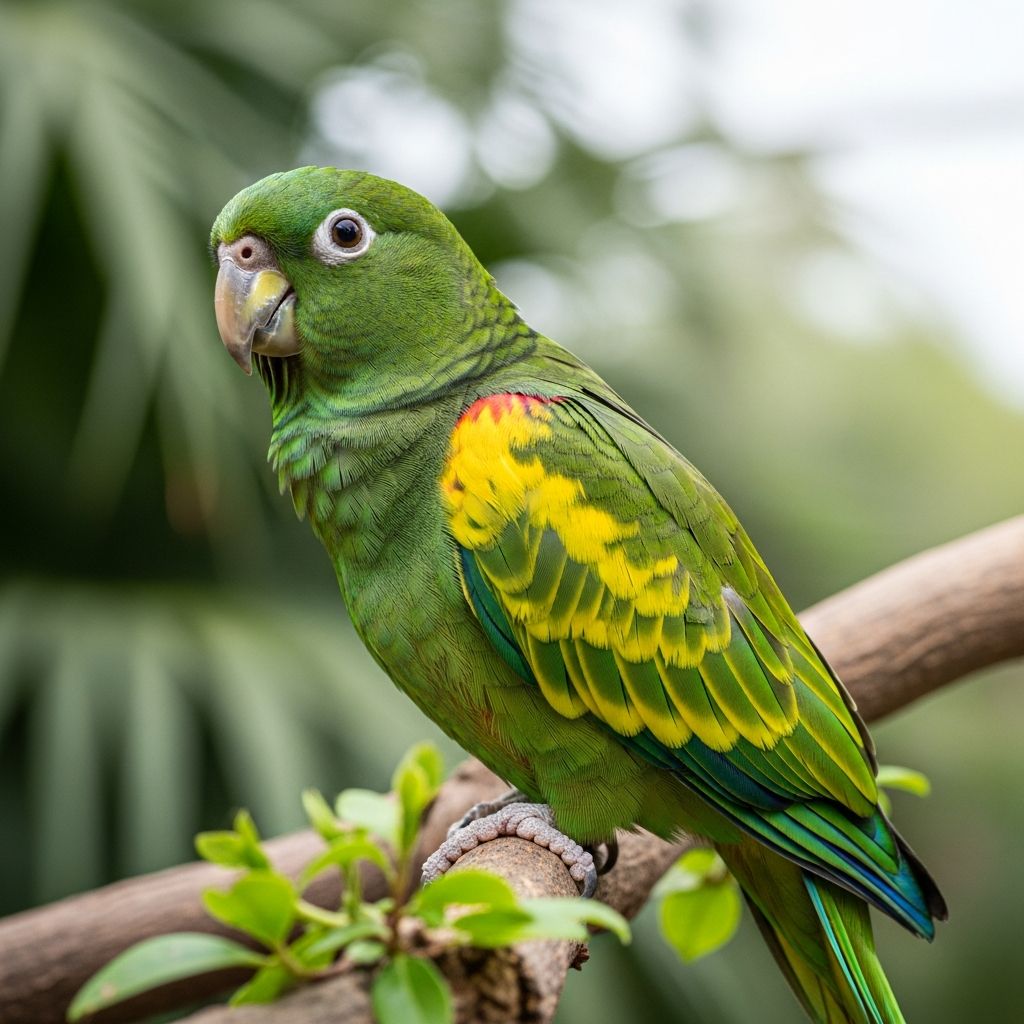
The canary-winged parakeet is a captivating small parrot that has earned admiration among bird enthusiasts for its charm, intelligence, and affectionate nature. These diminutive birds, native to South America, have become increasingly popular as pet companions due to their engaging personalities and striking appearance. Whether you are considering bringing one into your home or simply wish to learn more about these delightful creatures, this comprehensive guide covers everything you need to know about canary-winged parakeets.
What Is A Canary-Winged Parakeet?
The canary-winged parakeet, scientifically known as Brotogeris versicoluris and also called the white-winged parakeet, is a small parrot native to South America. These birds are slightly larger than budgies and lovebirds but noticeably smaller than cockatiels, making them an ideal size for many households. The canary-winged parakeet is primarily olive-green in coloration, with distinctive yellow feathering along the edges of the wings and prominent white patches on the wings that become particularly visible when the bird extends its wings in flight.
Canary-winged parakeets are sometimes affectionately referred to as “bee parakeets” due to their small size combined with their swift, darting flight patterns that resemble bees buzzing through the air. This nickname perfectly captures the essence of these agile fliers, who can cover significant distances with impressive speed and maneuverability.
Native Region & Natural Habitat
In their natural environment, canary-winged parakeets are found throughout the Amazon Basin, with their range extending across southeast Colombia, eastern Ecuador, eastern Peru, northern Bolivia, and Brazil. These adaptable birds inhabit various types of forest ecosystems, including tropical rainforests, secondary growth forests, and forest edges where they encounter diverse food sources.
In the wild, canary-winged parakeets are highly social birds, often observed in flocks of up to 100 individuals. They are diurnal creatures, remaining active during daylight hours as they forage for sustenance. Their primary diet consists of fruits, seeds, nuts, berries, and blossoms. These birds have become known to forage in large groups, and their feeding habits sometimes bring them into conflict with farmers, as they occasionally consume cultivated crops, leading some agricultural communities to view them as pests.
Personality & Behavior
Canary-winged parakeets are renowned for their charming and highly social personalities. In the wild, these birds form lifelong monogamous pairs and are known for their strong bonds with their mates, a testament to their capacity for deep social connections. This natural tendency toward companionship translates remarkably well into captivity, where they typically bond closely with their human caretakers.
As pet companions, canary-winged parakeets are described as affectionate, intelligent, playful, and bold. Hand-raised babies tend to be particularly delightful, becoming truly joyful additions to a household. These birds actively seek interaction with their owners and seem to genuinely enjoy spending time with all family members. Many owners report that their canary-winged parakeets will give as much affection and attention as they receive in return, making them ideal for families who can provide consistent engagement and companionship.
These skilled climbers relish a variety of physical and mental challenges. They frequently perch on their favorite people, snuggle in their hair, and demonstrate a genuine desire to participate in their owners’ daily activities. Canary-winged parakeets are intelligent birds capable of learning tricks and responding positively to training, making them engaging and interactive pets for experienced bird owners.
Speech & Sound Characteristics
While canary-winged parakeets are not renowned for being prolific talkers like some larger parrot species, they excel remarkably at whistling. These birds can learn to mimic an impressive array of tunes and musical phrases, delighting their owners with their melodic abilities. They possess a wide range of vocalizations that include chirps, whistles, and screeches.
Canary-winged parakeets are generally more vocal than budgies and cockatiels, and their calls can be shrill and loud at times. However, single pet birds typically produce less noise than multiple birds kept together. With appropriate attention from their owners, spacious housing, engaging toys, and a healthy diet, canary-winged parakeets tend to engage in less frequent loud calling behavior.
Care & Feeding Requirements
Housing Needs
A canary-winged parakeet requires a spacious cage, flight cage, or aviary that allows plenty of room for exercise and flight. The minimum recommended cage size is at least 24 by 24 inches, though larger accommodations are always preferable for these active, inquisitive birds. The bar spacing should be no greater than 3/4 inches to ensure safety.
Multiple perches of varying diameters and materials are essential for maintaining optimal foot health and preventing soreness or foot-related issues. Perch materials should include wood dowels, natural branches, cotton rope, and other varied textures. Avoid sandpaper-covered perches, as these can be uncomfortable and potentially harmful. Include a ladder perch to provide extra climbing opportunities, as canary-winged parakeets are skilled climbers who enjoy this enrichment.
Position perches strategically throughout the cage at varying heights, being careful not to place them directly above food or water bowls to prevent contamination. Incorporate a misting bottle and/or large crock for birdbaths, as these birds appreciate regular bathing opportunities for maintaining healthy plumage.
Enrichment & Toys
Canary-winged parakeets are playful and inquisitive by nature, requiring plenty of toys and climbing opportunities for mental stimulation and environmental enrichment. A stimulating environment helps prevent behavioral problems and supports their overall well-being. Rotate toys regularly to maintain interest and engagement.
Cage Maintenance
Maintaining a clean living environment is crucial for your bird’s health. The cage should be spot-cleaned daily to remove soiled material and food debris. A comprehensive cleaning should be performed weekly using a liner at the bottom of the enclosure that can be easily replaced. Proper sanitation prevents the development of bacterial and fungal infections.
Temperature & Environment
Canary-winged parakeets are sensitive to extreme temperature fluctuations. They are comfortable in average household temperatures between 65°F and 80°F. Avoid exposing these birds to cold air conditioning, particularly immediately after bathing or misting, as temperature shock can be harmful to their health.
Dietary Needs
A well-balanced diet is fundamental to maintaining your canary-winged parakeet’s health and vitality. Their diet should consist primarily of high-quality pellets formulated specifically for small parrots, supplemented with fresh vegetables, leafy greens, limited fruit portions, and occasional seeds. This balanced approach ensures they receive essential nutrients including vitamins and minerals necessary for optimal health.
Calcium supplementation may be beneficial, particularly for breeding birds or those with specific nutritional needs. A fluorescent UVB bulb and appropriate housing for the bulb should be provided to support vitamin D synthesis and calcium metabolism. Fresh, clean water should be available at all times.
Health & Common Conditions
Like all pet birds, canary-winged parakeets are susceptible to various health issues. Common conditions affecting this species include:
- Psittacosis — A bacterial infection that can affect the respiratory system
- Vitamin Deficiencies — Particularly Vitamin A deficiency, which results from poor diet and impacts vision and immune function
- Aspergillosis — A fungal respiratory infection that can develop from poor environmental conditions
- Psittacine Beak and Feather Disease (PBFD) — A viral disease affecting feather and beak health
Preventive care is essential for maintaining your bird’s health. Provide a nutritious diet, maintain excellent cage hygiene, ensure appropriate temperatures, and schedule regular veterinary check-ups with an avian veterinarian. Early detection of health problems significantly improves treatment outcomes.
Canary-Winged Parakeet Populations In The Wild
Native to the Amazon River basin from Colombia through Brazil, canary-winged parakeets have a significant wild population that remains relatively stable. However, feral populations have become established in certain regions outside their native range, including California, Florida, and Puerto Rico. These introduced populations resulted from escaped or released captive birds. Feral canary-winged parakeets have adapted to their new environments and are known to consume blossoms, nectar, fruits, and food from bird feeders, similar to their natural foraging behaviors.
Variations: White-Winged vs. Yellow-Chevroned Parakeets
Recently, what was commonly referred to as the canary-winged parakeet has been taxonomically separated into two distinct species: the white-winged parakeet (Brotogeris versicoluris) and the yellow-chevroned parakeet (Brotogeris chiriri). While similar in appearance and both commonly kept as pets, these species possess distinct differences.
The most notable physical distinction is the white patch on the secondary and inner primaries visible on the white-winged parakeet, which is absent on the yellow-chevroned parakeet. Plumage coloration differs significantly, with the yellow-chevroned parakeet displaying much brighter yellow-green coloring compared to the darker, more forest green of the white-winged parakeet. Additionally, the white-winged parakeet has a larger bare facial pattern than its yellow-chevroned counterpart. The underside of the tail in white-winged parakeets shows a strong blue wash, while the nominate yellow-chevroned parakeet displays green tail undersides, though certain subspecies may show a blue wash less pronounced than that of the white-winged variety.
Why Canary-Winged Parakeets Are Scarce Today
Canary-winged parakeets were once extremely plentiful and inexpensive during the 1970s and 1980s, when they were imported to the United States by the tens of thousands. However, the passage of the Wild Bird Conservation Act in 1992 ended wild importation of these birds, fundamentally changing their availability in the pet market. No longer imported from the wild, canary-winged parakeets are now exclusively domestically raised through captive breeding programs.
The scarcity of canary-winged parakeets in today’s pet market can be traced back to the early years of importation. Because the birds were so abundant and inexpensive, many breeders did not concentrate on establishing reliable breeding programs. This lack of early breeding initiative has resulted in their relative rarity today compared to other small parrot species.
Frequently Asked Questions
Q: Are canary-winged parakeets good pets for beginners?
A: Canary-winged parakeets make wonderful pets for experienced bird owners who can provide spacious housing, proper care, balanced diet, and ample positive social interaction. They require more commitment than budgies but less than larger parrots, making them suitable for dedicated mid-level bird enthusiasts.
Q: How long do canary-winged parakeets live?
A: Canary-winged parakeets can live up to 20 years in captivity with proper care, making them a long-term commitment for potential owners.
Q: Can canary-winged parakeets learn to talk?
A: While not prolific talkers, canary-winged parakeets excel at whistling and can learn to mimic an impressive array of musical tunes. They are intelligent birds capable of learning tricks and responding to training.
Q: How much space do canary-winged parakeets need?
A: Minimum cage size should be at least 24 by 24 inches, though larger accommodations are preferable. These active birds benefit from flight cages or aviaries that allow ample room for exercise and movement.
Q: What do canary-winged parakeets eat?
A: A balanced diet consists of high-quality pellets, fresh vegetables, leafy greens, limited fruit, and occasional seeds. Calcium supplementation and UVB lighting support optimal nutrition and health.
Q: Are canary-winged parakeets social birds?
A: Yes, extremely social birds by nature. They form lifelong monogamous pairs in the wild and bond closely with their human caretakers in captivity, thriving on interaction and engagement.
Q: Do canary-winged parakeets require veterinary care?
A: Yes, regular check-ups with an avian veterinarian are essential for preventive care and early detection of health issues such as psittacosis, vitamin deficiencies, aspergillosis, and PBFD.
References
- Canary-Winged Parakeet Personality, Food & Care — Lafeber Pet Birds. 2025. https://lafeber.com/pet-birds/species/canary-winged-parakeet/
- The Affectionate Canary-Winged Parakeet — Chewy. 2025. https://www.chewy.com/education/bird/parakeet/the-affectionate-canary-winged-parakeet
- Canary Wing Parakeet Care Guide — PetSmart Learning Center. 2025. https://www.petsmart.com/learning-center/bird-care/canary-wing-parakeet-care-guide
- Canary Care Sheet — PetMD. 2025. https://www.petmd.com/bird/canary-care-sheet
- Canary-Winged Parakeet Care Guide — Buffalo Bird Nerd. 2025. https://www.buffalobirdnerd.com/storage/app/media/PSPCanaryWingedParakeet.pdf
Similar Articles








Read full bio of medha deb


