Canadian Pet Passport Guide: 4 Essential Steps For 2025
Master the steps to secure your pet's travel documents for seamless entry into Canada, covering dogs, cats, and exotics.
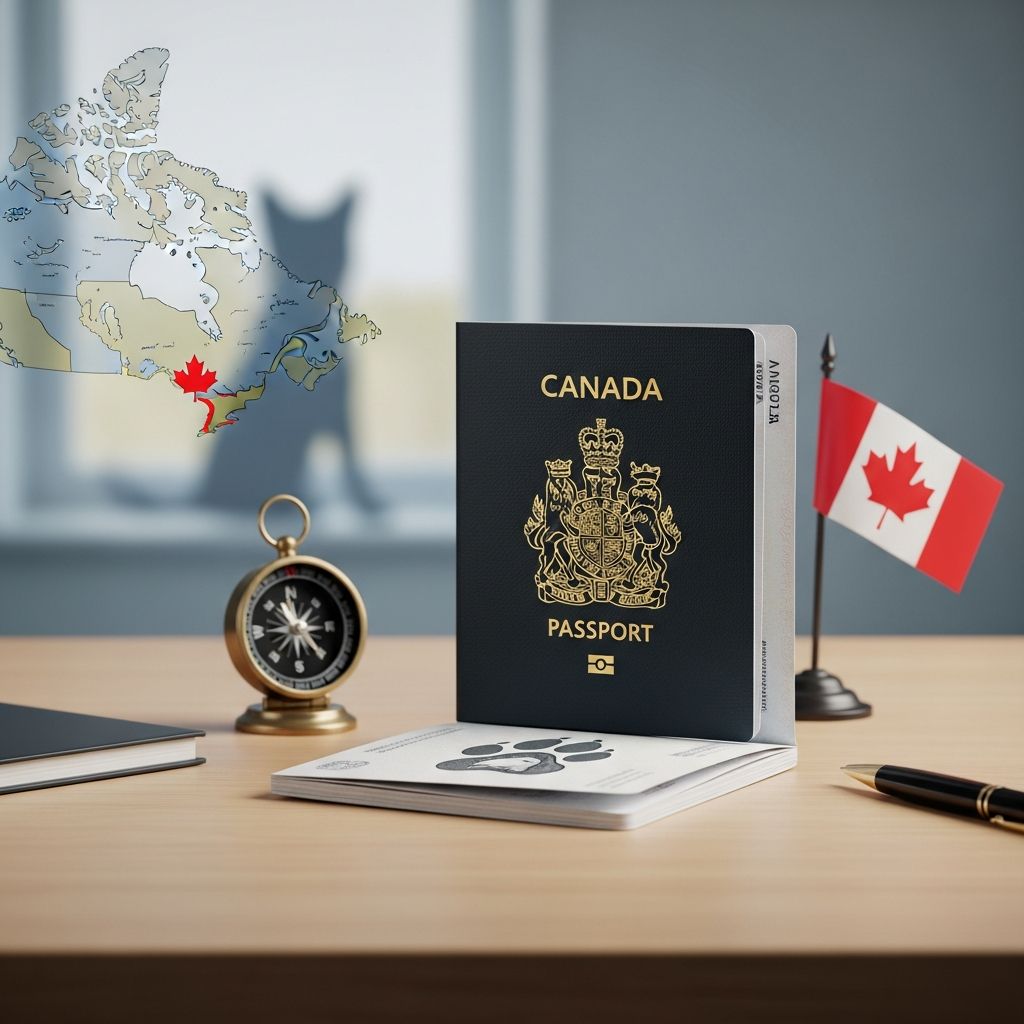
Canadian Pet Passport Guide
Traveling to Canada with your furry companion requires specific preparations to meet import standards set by the Canadian Food Inspection Agency (CFIA). Unlike some nations with formal ‘pet passports,’ Canada relies on vaccination records, health certificates, and identification to ensure animal health and safety. This guide outlines everything pet owners need for dogs, cats, and exotic animals.
Understanding Import Basics for Companion Animals
Canada maintains straightforward yet strict rules for personal pets entering from most countries. Core needs include proof of rabies control and general fitness to travel. Puppies and kittens under certain ages face fewer hurdles when accompanied by owners. Always verify rules based on your origin country, as high-rabies-risk areas trigger extra scrutiny.
- Dogs over 8 months and cats over 3 months typically need rabies vaccination proof.
- Younger pets under 3 months can enter with owners sans formal vaccines, backed by age and ownership evidence.
- Service animals like guide dogs bypass many limits if paired with their handler.
Commercial imports, such as breeding or show dogs, demand additional permits and may face bans from high-risk zones.
Step-by-Step Preparation Process
1. Implant a Microchip for Identification
Though not mandatory for non-commercial pets, a 15-digit ISO 11784-compliant microchip is the gold standard for international travel. Insert it before vaccinations to link all records accurately. Vets or trained professionals handle implantation, providing manufacturer details for database registration. This step prevents mix-ups at borders and aligns with global norms.
2. Secure Rabies Vaccination Documentation
Rabies proof forms the cornerstone of entry. For pets from low-risk countries, a valid certificate in English or French suffices—no waiting period applies, and 3-year boosters are recognized. High-risk origins require the same plus a health statement confirming no local outbreaks. EU pet passports qualify as equivalents. Puppies under 8 months for dogs or 3 for cats may skip this if with owners.
| Pet Type | Age Threshold | Requirement from Low-Risk Country | High-Risk Addition |
|---|---|---|---|
| Dog | Over 8 months | Rabies certificate | Health certificate |
| Cat | Over 3 months | Rabies certificate or vet cert | Rabies-free declaration |
| Puppy/Kitten | Under 3 months | Age/ownership proof | N/A |
3. Obtain a Veterinary Health Certificate
A licensed vet issues this document, detailing microchip number, rabies details (including manufacturer and expiry), and a declaration of travel fitness. It must affirm no contagious diseases or origin from restricted rabies zones. Airlines or specific routes may mandate it; print on legal paper for some international forms. Government endorsement is needed for certain exports.
4. Use Official Online Tools for Compliance
The Government of Canada’s pet travel portal simplifies planning. Answer queries on species, age, travel purpose (personal vs. commercial), and origin to receive tailored checklists. This ensures no surprises at inspection.
Special Considerations for Different Pet Types
Dogs: Breed and Commercial Restrictions
Dogs from high-rabies countries face entry bans for commercial purposes, including resale or shows. Personal dogs need only rabies proof if healthy. Under-8-month commercial pups require air cargo and agents. Always check for humane transport.
Cats: Simpler Entry Pathways
Cats mirror dogs but escape commercial dog bans. Over-3-months need rabies or a vet certificate with 6-month rabies-free origin proof. Core vaccines like those for rhinotracheitis help but aren’t required.
Exotic and CITES-Listed Species
Reptiles, birds, or endangered pets demand extra. CITES permits protect wildlife trade; Canada’s Certificate of Ownership acts as a 3-year ‘pet passport’ for frequent travelers, allowing multiple re-entries. Verify destination acceptance. Turtles need zoo/lab proof and import permits.
Service and Assistance Animals
Guide, hearing, or mobility dogs enter freely when with their trained user. Provide endorsement papers confirming status—no rabies or quarantine hurdles apply. Keep health records handy.
Recommended Additional Health Measures
Beyond mandates, vaccinate dogs against distemper, parvovirus, and kennel cough; cats against calicivirus and panleukopenia. These prevent issues en route or post-arrival. Schedule a pre-travel vet exam for parasites or illnesses.
- Administer rabies 30+ days prior if possible for full efficacy.
- Update all shots; retain detailed logs.
- Consider travel anxiety meds if needed.
Navigating Border Crossings and Airlines
At ports, CFIA officers inspect documents and pet condition. Sick animals risk denial. For flights, check carrier policies—many require crates and health checks. Drive-ins from the US often need just rabies proof for adults.
Post-2025 updates emphasize microchips and digital forms for US-Canada flows, influencing bidirectional prep.
Frequently Asked Questions
Do all pets need microchips to enter Canada?
No, but it’s highly recommended for identification, especially internationally.
What’s the youngest age for rabies vaccination requirement?
Dogs: 8 months; cats: 3 months. Younger ones need only proof of age/ownership.
Can I bring my pet without a health certificate?
Yes, if from low-risk areas with rabies proof; airlines may still require it.
How do I get a CITES pet passport?
Apply for Canada’s Certificate of Ownership via Environment Canada for 3-year validity.
Are there bans on certain dog breeds?
No nationwide bans, but check provincial rules and airline restrictions.
Planning Tips for Stress-Free Travel
Start 1-2 months early: microchip, vaccinate, certify. Pack copies of all docs, plus ownership proof. Acclimate pets to carriers. Research destination lodging pet policies. For returns from Canada, US CDC forms now mandate microchips and receipts for dogs.
Consult your vet and CFIA site for latest changes, as rules evolve with health threats.
References
- Canada Pet Import Requirements — PetTravel.com. 2023. https://www.pettravel.com/information/pet-passports/canada-pet-import-requirements/
- Pet Travel From the United States to Canada — USDA APHIS. 2024-01-15. https://www.aphis.usda.gov/pet-travel/us-to-another-country-export/pet-travel-us-canada
- Travel documents for your pets — Government of Canada. 2025. https://travel.gc.ca/travelling/documents/travel-documents-for-your-pets
- Canada Pet Travel Requirements — WorldCare Pet Transport. 2025-03-11. https://worldcarepet.com/2025/03/11/canada-pet-travel-requirements/
- Travelling with your dog — Canadian Food Inspection Agency. 2024. http://inspection.canada.ca/en/travelling-pets-food-plants/travelling-pets/dog-travel
Similar Articles








Read full bio of medha deb