

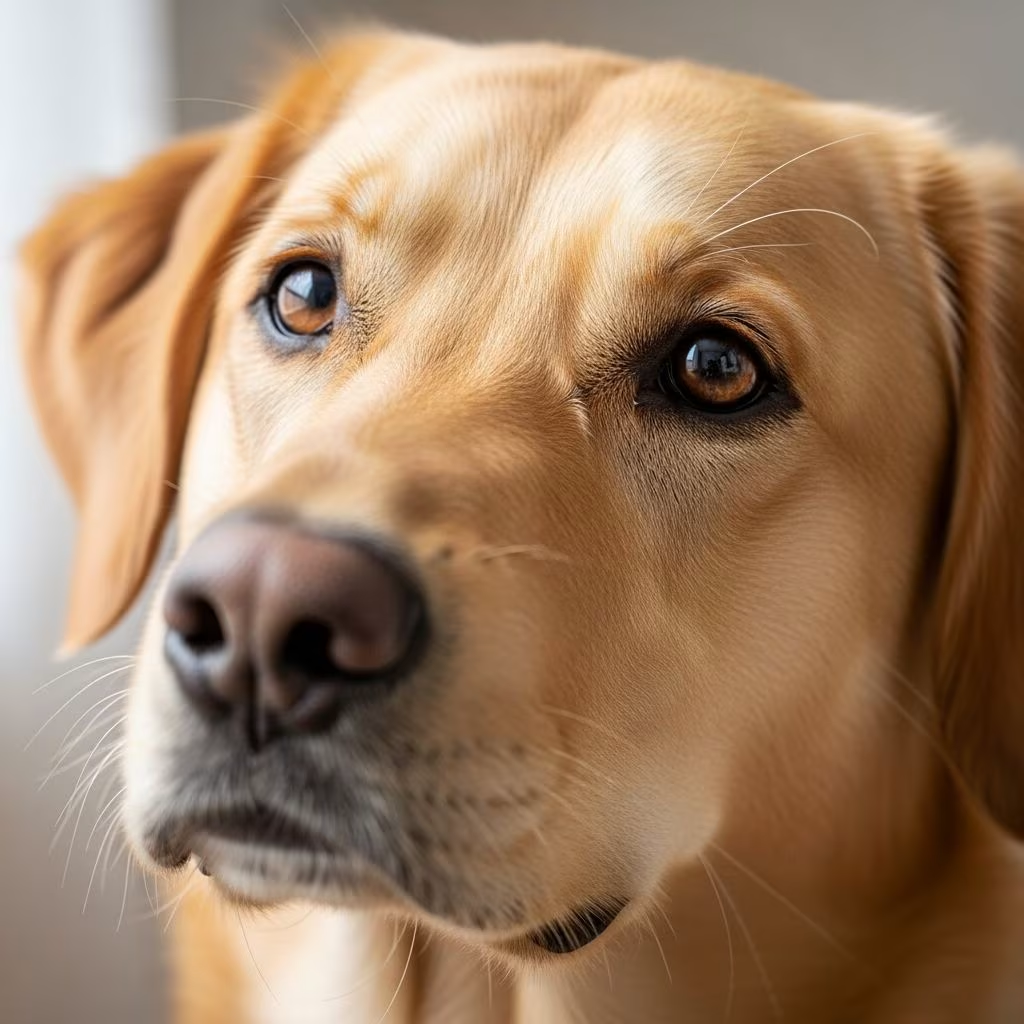
Many dog parents are convinced their pups know exactly how they feel just by looking at them. Science now supports this belief: research suggests that dogs can distinguish different human facial expressions and adjust their behavior in response. Understanding how this works can help you build a stronger, more compassionate relationship with your dog.
This article explores what studies reveal about dogs and human facial cues, why evolution and domestication made dogs so emotionally tuned in to us, how dogs use their own body language to respond, and what you can do to make your communication clearer and kinder.
Can Dogs Understand Human Facial Expressions?
The evidence increasingly points to yes: dogs do pay attention to human faces and can tell different expressions apart.
Experimental work has shown that pet dogs can distinguish between happy and angry human facial expressions, often using previous real-life experiences with people to interpret these cues. In one study with both pet dogs and free-ranging village dogs, animals behaved differently toward a person who looked happy versus angry while eating and dropping food: they looked away more and showed avoidance when confronted with an angry face, indicating that they understand at least some of the emotional meaning behind the expression.
Veterinarians and behavior experts also see daily signs of this emotional awareness in practice. Many report that a significant number of dogs change their behavior in response to their guardian’s mood, such as becoming more clingy, cautious, or playful depending on whether their human appears sad, stressed, or relaxed.
What studies tell us about dogs and our faces
- Dogs distinguish positive vs. negative affect: Research suggests dogs can tell the difference between broadly positive expressions (such as smiles) and negative ones (like anger), and they behave more cautiously in the presence of angry faces.
- Dogs remember emotional encounters: Dogs do not only react in the moment; they also seem to store information about emotional interactions with specific people, helping them predict who is safe, kind, or potentially threatening in future encounters.
- Dogs prefer friendly faces: In laboratory settings, dogs often show a preference for looking at or approaching smiling, relaxed humans versus those with tense or angry expressions, suggesting they can use facial cues to identify a friendly presence.
Everyday examples of dogs reading your face
- Your dog moves closer or leans in when you cry or look upset.
- Your pup bounces around more eagerly when you smile and widen your eyes.
- They hesitate, slow down, or avoid eye contact if you frown or look tense.
These behaviors are not random; they reflect your dog’s attempt to respond to what they perceive as your emotional state.
How Do Dogs Tune Into Our Feelings So Well?
Dogs are often described as natural empaths. Their ability to read human emotion is not accidental; it is likely the result of thousands of years of co-evolution and domestication, during which dogs that were better at understanding people had an advantage.
Co-evolution and domestication
Over time, dogs that could interpret human behavior and emotional cues were more likely to receive care, food, and protection. This process favored animals that were:
- More tolerant of human proximity
- Better at predicting human actions
- More responsive to human signals like pointing, gaze, and facial expressions
Research comparing pet dogs with free-ranging village dogs suggests that the capacity to interpret basic human facial expressions is not limited to animals raised closely with people. Both groups can adjust their behavior based on whether a person looks happy, neutral, or angry, which points to a robust, species-wide skill shaped by evolutionary pressures.
Dogs are expert observers
Dogs constantly gather information about us, even when we are not aware of it. They rely on a combination of:
- Facial expressions: Changes around the eyes, mouth, and forehead that indicate tension, relaxation, or happiness.
- Body posture: How we hold ourselves, move, and orient our bodies communicates confidence, fear, or anger.
- Vocal tone: Pitch, intensity, and rhythm of our voice often matter more to dogs than the specific words.
- Scent: Dogs can detect hormonal and physiological changes linked with stress or fear, such as shifts in cortisol levels, through smell.
Because of this intense observation, dogs can notice subtle changes that humans easily miss: a small shift in your shoulders, a brief tightening around your mouth, or a slight change in breathing can all serve as emotional cues.
Why dogs may seem more emotionally sensitive than people
Many dog guardians feel that their pup understands them better than other humans do. There are several reasons this might be true:
- Dogs spend large portions of their day simply watching us, so they accumulate a detailed history of our patterns.
- They are not distracted by language content, allowing them to focus on nonverbal information like tone and posture.
- They depend on us for nearly everything, so being highly tuned into our emotional shifts is in their best interest.
How Dogs Respond: Facial and Body Cues They Use With Us
Dogs do not only understand our facial expressions; they also respond with their own complex set of signals. These include changes in their face, posture, and movement that communicate their emotional state and intentions.
Appeasement signals and emotional responses
One striking example of canine sensitivity to human emotion involves mouth-licking. In a controlled study, dogs licked their mouths more frequently when shown photos of angry human faces, but not when they merely heard angry voices without seeing the expression. Mouth-licking is typically an appeasement signal between dogs, used to show peaceful intentions or reduce tension during potentially uncomfortable interactions.
When a dog offers this behavior in response to an angry human face, it may be their way of saying:
- “I don’t want conflict.”
- “I’m trying to calm things down.”
- “Please don’t be upset with me.”
More facial expressions when you’re paying attention
Dogs also seem to change how expressive they are depending on whether a human is watching. A study from the University of Portsmouth’s Dog Cognition Centre found that dogs produced more facial movements when a person was attentive compared with when that person was turned away or distracted. These expressions included:
- Eyebrow movements and blinking
- Nose licking
- Changes in ear position
- Subtle mouth changes
This pattern suggests that at least some canine facial expressions are not purely automatic reflections of internal emotion; they may also be used strategically when communicating with humans.
Key dog body language cues to watch
Facial cues are only part of the picture. To understand how your dog feels in response to your expressions, you need to interpret their entire body. Here are some core signals:
| Body Part / Cue | Common Meaning | When You Might See It |
|---|---|---|
| Tail wagging | Can indicate excitement, arousal, or tension, not only happiness | Fast, low wag when nervous; loose, wide wag when relaxed and friendly |
| Tail position | High can mean alert or confident; tucked may signal fear or discomfort | Tail tucked under body when scolded or sensing anger |
| Body posture | Loose muscles and curves show relaxation; stiffness often reflects stress or alertness | Dog becomes stiff and still when hearing an angry voice or seeing a tense face |
| Ear position | Ears forward often indicate interest; flattened ears can signal fear or appeasement | Ears pinned back when you shout, lean over, or frown |
| Vocalizations | Whines, barks, and growls communicate excitement, anxiety, or warning | Whining when you appear upset, or quiet, low growling if feeling threatened |
You Can Improve Communication With Your Dog
Knowing that dogs can read your face and overall emotional state, it becomes important to use that knowledge thoughtfully. The goal is not to hide your feelings but to be aware of how your expressions and tone may affect your dog, especially in moments of stress, training, or discipline.
Be mindful of your emotional presence
When you are frustrated, angry, or anxious, your dog may interpret your facial tension and body language as either a direct threat or a sign that something bad is happening. Over time, this can heighten their own anxiety. You can support clearer, calmer communication by:
- Taking a pause before interacting with your dog when you are very upset.
- Softening your facial expression and relaxing your shoulders during training.
- Using a warm, steady voice instead of shouting or sudden loud corrections.
Observe your dog as carefully as they observe you
Experts in human–animal relationships emphasize that dogs are capable of complex social understanding, and that we should reciprocate their attention by respecting their signals. This means:
- Noticing when your dog looks away, licks their lips, or yawns repeatedly during an interaction.
- Recognizing early signs of stress, such as stiffening or tail tucking, and giving your dog space.
- Paying attention to what situations reliably cause your dog to become worried (e.g., loud arguments, stern faces, intense eye contact).
Responding to these signals—by stepping back, lowering your voice, or changing the environment—shows your dog that you are listening. Over time, this can make them feel safer and more willing to engage.
Practical tips to strengthen two-way communication
- Use your dog’s name thoughtfully: Acknowledge them when they enter a room or seek your attention. This reinforces their sense of being seen and heard.
- Pair positive facial expressions with rewards: Smile, relax your face, and use a gentle voice during play, training, and feeding. This helps your dog associate your happy expressions with good outcomes.
- Stay consistent: Mixed signals—such as smiling while using a harsh tone—can confuse your dog. Aim for alignment between your face, voice, and actions.
- Support during stressful events: During vet visits, new environments, or loud events, deliberately project calm and reassurance through your posture and face to help your dog feel secure.
Stay Positive: Why Your Expressions Matter
Dogs can respond powerfully to your facial cues—from licking their lips and looking away when you look angry, to wagging, cuddling, or play-bowing when you appear relaxed and happy. Their ability to discern human expressions is one more proof of the deep emotional bond between humans and dogs.
While researchers still have much to learn about exactly what dogs understand and how, several key points are clear:
- Dogs can distinguish between at least some basic human facial expressions, such as happy versus angry.
- They adjust their behavior based on what they see, often using appeasement signals in response to negative expressions.
- They use more facial expressions when humans are paying attention, indicating a social component to their communication with us.
- Your consistent, positive, and respectful responses can make your dog feel safer, more confident, and more connected to you.
Ultimately, your dog is likely more emotionally perceptive than you give them credit for. By staying aware of your own expressions and learning to read theirs, you honor the unique, interspecies partnership that humans and dogs have built over thousands of years.
Frequently Asked Questions (FAQs)
Q: Do all dogs read facial expressions equally well?
A: Not necessarily. While research suggests both pet dogs and free-ranging village dogs can distinguish human facial expressions in broad terms, individual ability varies with genetics, early socialization, and life experience. Dogs that grow up closely interacting with humans and receiving consistent, positive feedback about our cues are generally better at interpreting faces and body language.
Q: Can dogs tell when I am sad just by looking at me?
A: Studies show that dogs respond differently to different emotional expressions and often show comforting behaviors—such as approaching, leaning, or licking—when their guardian appears distressed. They likely use a combination of facial cues, vocal tone, and body posture, along with prior experience, to recognize that you are sad and to adjust their behavior.
Q: Does my dog understand why I am angry or just that I look angry?
A: Current research indicates that dogs can recognize the emotional valence (positive vs. negative) of your expression but not the specific reason behind it. In other words, they can tell that you are upset and may react with appeasement or avoidance, but they do not necessarily understand the context, such as a bad day at work versus frustration about a chewed shoe.
Q: How can I help a nervous dog feel safer around my expressions?
A: For sensitive or anxious dogs, it is helpful to lower your overall intensity. Soften your facial muscles, avoid looming over them, blink slowly, turn your body slightly to the side, and speak calmly. Reward relaxed behavior with treats or gentle praise so your dog learns that your presence and expressions predict safety and good experiences. If fear is severe, consult a veterinarian or qualified behavior professional for guidance.
Q: Should I avoid showing negative emotions around my dog?
A: It is unrealistic to hide all negative emotions, and dogs cope best with authenticity paired with predictability. Instead of suppressing feelings, focus on not directing anger or frustration at your dog and on maintaining consistent routines. If you notice your dog becoming stressed—signaled by lip-licking, yawning, or turning away—give them a calm space and reduce the intensity of your expressions and voice.
References
- Albuquerque N, Guo K, Wilkinson A, Resende B, Mills DS. Mouth-licking by dogs as a response to emotional stimuli. — Behavioural Processes. 2018-02-01. https://doi.org/10.1016/j.beproc.2017.12.004
- Nagasawa M, Mitsui S, En S, et al. Oxytocin-gaze positive loop and the coevolution of human–dog bonds. — Science. 2015-04-17. https://doi.org/10.1126/science.1261022
- D’Aniello B, Alterisio A, Scandurra A, Petremolo E, Iommelli MR, Aria M. Village dogs match pet dogs in reading human facial expressions. — Frontiers in Psychology. 2023-07-06. https://pubmed.ncbi.nlm.nih.gov/37431468/
- Kaminski J, Waller BM, Diogo R, Hartstone-Rose A, Burrows AM. Evolution of facial muscle anatomy in dogs and wolves. — Proceedings of the National Academy of Sciences. 2019-07-02. https://doi.org/10.1073/pnas.1820653116
- Albuquerque N, Guo K, Wilkinson A, Savalli C, Otta E, Mills DS. Dogs recognize dog and human emotions. — Biology Letters. 2016-02-10. https://doi.org/10.1098/rsbl.2015.0883



