

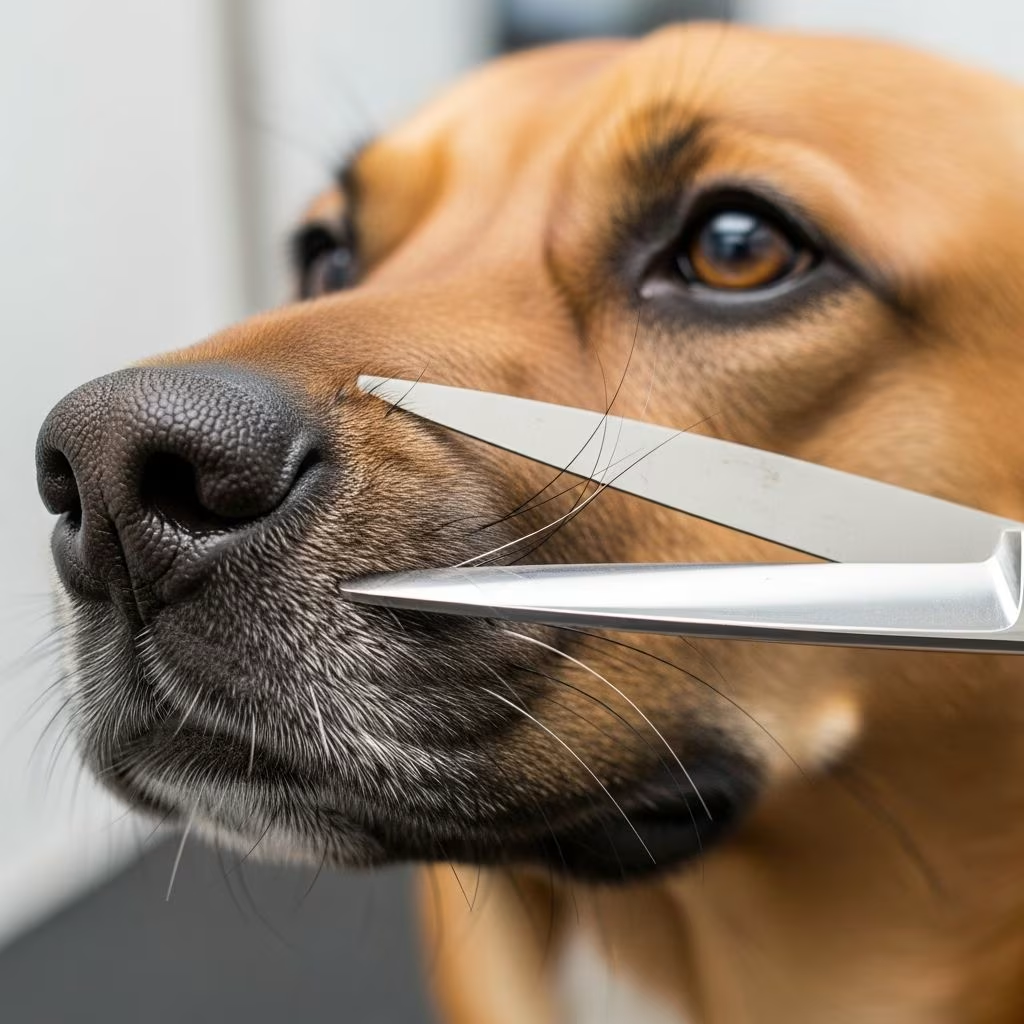
Dog whiskers, or vibrissae, are specialized hairs essential for sensory perception, and cutting them can lead to disorientation, stress, and reduced spatial awareness in dogs. While they do grow back, veterinarians strongly advise against routine trimming due to their critical role in navigation and protection.
What Are Dog Whiskers?
Dog whiskers are not ordinary fur; they are thick, coarse hairs embedded deeply in hair follicles connected to numerous nerve endings and blood vessels, making them highly sensitive sensory organs. Located on the muzzle, above the eyes, chin, and ears, these vibrissae detect subtle air currents, vibrations, and nearby objects even in low light.
Unlike regular fur, whiskers do not grow continuously and fall out naturally when damaged, serving as a dog’s primary tool for environmental awareness. They help dogs judge distances, avoid obstacles, and protect sensitive areas like eyes from debris.
The Function of Dog Whiskers
Whiskers act as radar-like sensors, transmitting tactile information directly to a dog’s brain via nerve clusters at their roots. They detect minute changes in air pressure from movement, allowing dogs to sense objects inches away without sight.
- Navigation and Spatial Awareness: Whiskers help dogs maneuver in tight spaces, detect walls or furniture in darkness, and gauge object proximity.
- Protection: Supraorbital whiskers above the eyes trigger a blink reflex to shield from incoming threats.
- Hunting and Play: They aid in tracking prey or toys by sensing air disturbances.
- Communication: Whisker positions signal emotions, from relaxation to alertness.
Disrupting these functions by cutting whiskers impairs a dog’s ability to interact confidently with its surroundings.
Why Do Dogs Have Whiskers?
Evolutionarily, whiskers enhance survival by providing sensory data in scenarios where vision fails, such as dense foliage or nighttime. In domestic settings, they prevent injuries during exploration, eating, or grooming.
Dogs with trimmed whiskers often bump into objects, hesitate before movements, or show anxiety, underscoring their indispensable role. Veterinary experts emphasize that whiskers are functional organs, not cosmetic features.
Can You Cut Dog Whiskers?
Technically, yes, whiskers can be cut, and they regrow in 2-3 months, but it is not recommended except in rare medical cases. Cutting disrupts sensory input, causing temporary disorientation similar to human blindfolding.
Veterinarians view routine trimming as unnecessary and potentially harmful, equating it to amputating a sensory organ. Show dog grooming sometimes involves whisker removal for aesthetics, but this practice raises welfare concerns and is banned in some European countries.
What Happens If You Cut a Dog’s Whiskers?
Immediate effects include confusion, reduced confidence, and clumsiness as the dog loses spatial cues. Dogs may paw at their face, avoid activity, or become irritable due to sensitivity at whisker follicles.
| Short-Term Effects | Long-Term Risks |
|---|---|
| Disorientation, bumping into objects | Increased injury risk to eyes/face |
| Anxiety, stress behaviors like panting | Altered behavior, reduced playfulness |
| Heightened sensitivity/pain at base | Potential aggression from stress |
Regrowth restores function, but repeated cutting prolongs vulnerability.
Effects of Cutting Dog Whiskers
Physically, severed whiskers leave follicles tender, risking infection if irritated. Emotionally, sensory deprivation heightens stress hormones, leading to withdrawal or hyperactivity. Studies on sensory loss in animals confirm parallels to balance disruption in humans.
In breeds with long whiskers, like Schnauzers, effects are pronounced, amplifying navigation challenges. Owners report dogs acting “lost” post-trim, validating veterinary warnings.
Should You Trim Your Dog’s Whiskers?
No, unless directed by a vet for matted whiskers or medical issues. Aesthetic trimming offers no benefit and compromises welfare. Professional groomers increasingly preserve whiskers, prioritizing health over looks.
Alternatives include careful brushing to maintain neatness without cutting.
Are There Times When Trimming Is Okay?
Rarely: if whiskers are damaged, infected, or interfering with treatment, minimal trimming under veterinary guidance is acceptable. For shows, ethical groomers avoid it or use temporary solutions. Always monitor recovery closely.
How to Groom Around Dog Whiskers Safely
Grooming should enhance, not remove, whiskers. Use these techniques:
- Gather Tools: Round-tipped scissors, fine comb, good lighting.
- Prep Dog: Calm with treats; work in short sessions.
- Clean Gently: Wipe with damp cloth; comb to detangle fur around whiskers.
- Trim Minimally: Only stray hairs, never whiskers; cut tips if absolutely needed.
- Monitor: Stop if stress signs appear (yawning, lip-licking).
Avoid clippers or sharp tools to prevent nicks.
Common Mistakes When Trimming Dog Whiskers
- Over-Trimming: Removing too much impairs senses; trim sparingly.
- Wrong Tools: Sharp scissors risk cuts; use rounded tips.
- Rushing: Haste causes errors; take time.
- Ignoring Stress: Forcing leads to trauma; pause and reassure.
Do Dog Whiskers Grow Back?
Yes, whiskers regrow from follicles in weeks to months, depending on breed and health. Full sensory restoration takes longer as nerves reconnect. Nutrition supports faster regrowth.
Dog Whisker Care Tips
- Regular gentle cleaning with pet-safe wipes.
- Check for damage during brushing.
- Balanced diet with omega-3s for hair health.
- Professional grooming focused on preservation.
- Avoid rough play near face.
Frequently Asked Questions (FAQs)
Can you cut a dog’s whiskers?
It’s possible but not advised; it causes sensory disruption. Only trim if medically necessary.
Do dog whiskers grow back?
Yes, in 2-3 months, restoring full function.
What happens if you cut a dog’s whiskers?
Disorientation, stress, and injury risk increase temporarily.
Is it okay to trim dog whiskers for grooming?
Veterinarians recommend against it for routine care.
How can I keep my dog’s whiskers healthy?
Gently clean, avoid trimming, and inspect regularly.
References
- Effects of Cutting Dog Whiskers: What Dog Owners Should Know — GouGou Pets. 2023. https://gougoupets.com/blogs/news/effects-of-cutting-dog-whiskers-what-dog-owners-should-know
- Stop Trimming Dogs’ Whiskers for the Show Ring – The Animal Doctor — UExpress (Dr. Debora Lichtenberg). 2022-12-18. https://www.uexpress.com/pets/animal-doctor/2022/12/18
- Can You Cut Dog Whiskers? — Whole Dog Journal. 2023. https://www.whole-dog-journal.com/health/can-you-cut-dog-whiskers/



