

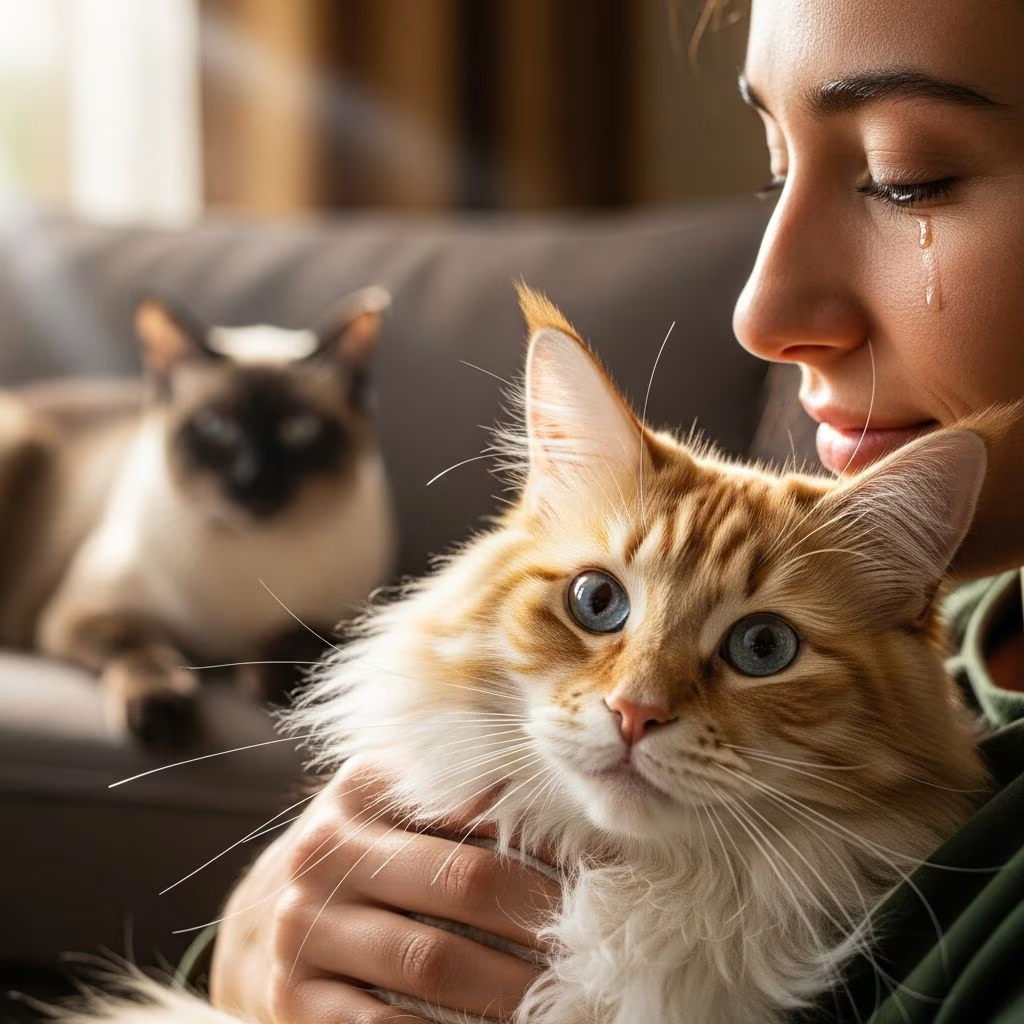
Many people dream of owning a cat but worry about allergies. A common question arises: can you be allergic to some cats but not others? The answer is yes. Cat allergies stem primarily from a specific protein called **Fel d 1**, produced in a cat’s saliva, skin glands, and urine. This protein varies significantly between individual cats, regardless of breed, leading to different reactions in people.
While no cat is completely hypoallergenic, certain breeds produce lower levels of Fel d 1 or shed less, making them better for allergy sufferers. Factors like grooming habits, coat type, and even gender influence allergen spread. This article breaks down the science, breed differences, and strategies to enjoy cat ownership despite allergies.
What Causes Cat Allergies?
Cat allergies affect up to 10-20% of the population worldwide, triggered by exposure to cat allergens. The primary culprit is **Fel d 1**, a protein accounting for 96% of cat allergy reactions. Produced mainly in salivary glands, it spreads via saliva during grooming onto the fur and dander.
Other minor allergens include Fel d 2 through Fel d 8, with Fel d 4 (a urinary protein in saliva) being notable. Symptoms range from mild itching and sneezing to severe asthma attacks, including watery eyes, nasal congestion, coughing, wheezing, rashes, and chest tightness.
All cats produce Fel d 1, but levels vary genetically. Males, especially unneutered ones, produce more due to higher salivary output. Individual variation means siblings from the same litter can differ dramatically—one might trigger severe reactions while another causes none.
Why Are You Allergic to Some Cats But Not Others?
The myth of breed-specific hypoallergenic cats persists, but science shows **individual cat variation** is key. Allergen production is genetically controlled, with wide differences within breeds. You might tolerate your friend’s Domestic Shorthair but react to a neighbor’s Siamese.
Coat length doesn’t directly correlate; long-haired breeds like Siberian produce less Fel d 1 despite shedding. Hairless cats like Sphynx still produce allergens via skin oils, requiring frequent baths. Spend time with a cat before adopting to test reactions, as breed alone isn’t predictive.
- Genetic Factors: Fel d 1 production is hereditary; some cats naturally produce 10x less.
- Gender Influence: Intact males produce up to 10x more Fel d 1 than females or neutered males.
- Age and Health: Kittens produce less initially; older or stressed cats may produce more.
- Environmental Spread: Cats that groom less or have coats trapping dander spread fewer allergens.
No Truly Hypoallergenic Cats Exist
Despite marketing, **no cat breed is 100% hypoallergenic**. The World Health Organization recognizes eight cat allergens, all present in every cat. Breeds labeled ‘hypoallergenic’ simply produce less Fel d 1 or shed minimally, reducing exposure.
Variation within breeds means a ‘low-allergen’ Siberian might still bother severe sufferers, while a high-producing mixed breed causes no issues. Scientific consensus: test individually.
Best Cat Breeds for People with Allergies
Certain breeds consistently show lower Fel d 1 levels or reduced shedding. Here’s a curated list based on veterinary and allergy research:
| Breed | Key Traits | Allergen Notes |
|---|---|---|
| Siberian | Thick long coat, playful, dog-like | Produces significantly less Fel d 1; top choice for moderate allergies |
| Balinese | Long-haired Siamese, vocal, affectionate | Low Fel d 1 due to genetics; minimal shedding |
| Sphynx | Hairless, wrinkly skin, warm | No fur to trap allergens but skin oils need weekly baths |
| Russian Blue | Short dense coat, calm, loyal | Low Fel d 1, sheds little |
| Devon Rex | Curly short coat, pixie-like | Fine coat traps less dander; regular grooming needed |
| Cornish Rex | Even shorter wavy coat, active | Minimal allergens due to coat structure |
| Bengal | Short spotted coat, energetic | Pelt-like fur sheds less; high energy |
| Oriental Shorthair | Sleek short coat, vocal | Low Fel d 1 production |
These breeds may suit mild to moderate allergies. For severe cases, hairless options like Sphynx minimize airborne particles.
Cat Breeds to Avoid If Allergic
Some breeds produce high Fel d 1 or shed heavily, worsening symptoms:
- Persian: Long thick fur traps allergens; heavy shedding.
- Maine Coon: Dense coat, high shedder.
- Siamese: Short fur but elevated Fel d 1.
- Himalayan: High Fel d 1 from Siamese/Persian mix.
- Ragdoll: Low shed but not truly low-allergen.
- Abyssinian: Significant Fel d 1 producer.
Domestic Shorthairs/Longhairs vary individually—no breed guarantee.
Tips for Reducing Cat Allergens in Your Home
Minimize exposure with these evidence-based strategies:
- Frequent Cleaning: Vacuum weekly with HEPA filters; wash bedding in hot water.
- Bathe Your Cat: Weekly baths reduce allergens by 84% (per studies); use gentle cat shampoo.
- Groom Regularly: Brush to remove dander; restrict to allergen-free zones like non-carpeted rooms.
- Air Purification: HEPA air purifiers capture 99% of airborne allergens.
- Neutering: Reduces Fel d 1 in males by up to 90%.
- Allergy Medications: Antihistamines, nasal sprays, or immunotherapy shots.
Products neutralizing Fel d 1 (e.g., Purina LiveClear) can reduce active allergens by 47% after 3 weeks.
Allergy Testing and Medical Advice
Consult an allergist for skin prick or blood tests confirming cat allergy severity. Immunotherapy (allergy shots) desensitizes over 3-5 years, with 80-90% success.
For mild cases, over-the-counter remedies suffice; severe asthma requires prescription inhalers. Always speak to a doctor before adopting.
Frequently Asked Questions (FAQs)
Can you be allergic to some cats and not others?
Yes, due to varying Fel d 1 production in individual cats. Test exposure before adopting.
Are there truly hypoallergenic cats?
No, but breeds like Siberian and Balinese produce less Fel d 1.
Does coat length affect cat allergies?
Not directly; it’s Fel d 1 levels and shedding that matter.
Can neutering reduce cat allergens?
Yes, neutered males produce far less Fel d 1.
How do I test if I’m allergic to a specific cat?
Spend 30-60 minutes in close contact; monitor symptoms over days.
What’s the best hypoallergenic cat breed?
Siberian for low Fel d 1; Sphynx for minimal dander.
Owning a cat with allergies is possible with the right breed, home management, and medical support. Prioritize individual testing for the best match.
References
- The best and worst cat breeds for allergy sufferers — Purely Pets Insurance. 2023. https://www.purelypetsinsurance.co.uk/blogs/understanding-cat-allergies/
- Allergy to cats — Wikipedia (citing WHO/IUIS). 2024-01-10. https://en.wikipedia.org/wiki/Allergy_to_cats
- 12 ‘Hypoallergenic’ Cats for People With Allergies — PetMD. 2024. https://www.petmd.com/cat/general-health/hypoallergenic-cat-breeds
- The 12 Best Hypoallergenic Cat Breeds for People with Allergies — Pumpkin.care. 2023. https://www.pumpkin.care/post/hypoallergenic-cat-breeds
- Hypoallergenic Cats? | Coping with a Cat Allergy — Blue Cross. 2024. https://www.bluecross.org.uk/advice/cat/hypoallergenic-cats
- Neutralizing Allergens – Fact vs Fiction — Purina Institute. 2023. https://www.purinainstitute.com/science-of-nutrition/neutralizing-allergens/fact-vs-fiction
- Allergic to your cat? Easy tips to prevent and control your allergy — Ohio State University Veterinary Med. 2022. https://vet.osu.edu/sites/default/files/documents/allergic%20to%20your%20cat.pdf



